
James B. Williams
Author of From the Mind of God to the Mind of Man : A Layman's Guide to How We Got Our Bible
About the Author
Works by James B. Williams
From the Mind of God to the Mind of Man : A Layman's Guide to How We Got Our Bible (1999) 153 copies
The Life of Matthew Henry and the Concise Commentary on the Gospels (A Pure Gold Classic) (2004) 22 copies
A Shepherd's Story 3 copies
Tagged
Common Knowledge
- Date of death
- 2004
Members
Reviews
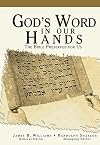
Summary: The translations of the Bible that today’s Christians possess are the Word of God, and believers should have confidence in them. The history of Fundamentalist leaders is clear in their confidence in multiple translations that they were the Bible in that they accurately reflected the inspired autographa. More than just Fundamentalism though, respected leaders throughout church history have affirmed the same. Those who try to marshal Scriptural support for some idea of supernatural show more preservation do so by pulling verses out of context. God preserves His word but does so by providential means. Consequently, we have an abundance of Biblical manuscripts available to us today. These manuscripts come from two particular families, the Alexandrian and the Byzantine. They come from different eras and in different forms. The Textus Receptus itself is a subset of the Byzantine family of texts. These manuscripts have proven through comparison to be remarkably reliable with the vast majority of differences having to do with spelling, tenses, and other minor issues. Still, the differences themselves require the practice of textual criticism which responsible men have done through the ages. In the end, the differences are minor, rare, and provide no concern for issues of doctrine. Our translations seek to remain faithful to both the original and receptor languages. This inevitably brings linguistics into the work which is balanced by theological concerns. Thankfully, God has preserved His Word. That preservation is done by providential means, not miraculous. That enables us to do the work for which He has called us. It gives us confidence that we do possess the Word of God.
Pros: This book is written in a way that it is accessible for both laymen and pastors. Several chapters are very well written and tightly argued. The King James issue is sufficiently addressed.
Cons: The use of multiple authors produces some unevenness in the text, both in content and in quality. In places, the book is too deferential to poor quality positions.
Evaluation: This is a useful book that has a place for those who are pursuing the King James issue among fundamentalism in greater depth. Other works are better at introducing, explaining, and refuting. The strength here is the appeal within fundamentalism. show less
Pros: This book is written in a way that it is accessible for both laymen and pastors. Several chapters are very well written and tightly argued. The King James issue is sufficiently addressed.
Cons: The use of multiple authors produces some unevenness in the text, both in content and in quality. In places, the book is too deferential to poor quality positions.
Evaluation: This is a useful book that has a place for those who are pursuing the King James issue among fundamentalism in greater depth. Other works are better at introducing, explaining, and refuting. The strength here is the appeal within fundamentalism. show less
You May Also Like


Statistics
- Works
- 13
- Members
- 342
- Popularity
- #69,720
- Rating
- 4.3
- Reviews
- 1
- ISBNs
- 9