
Mark Alpert
Author of Final Theory
About the Author
Mark Alpert became an editor at Scientific American, where he simplifies bewildering scientific ideas such as string theory, extra dimensions, and parallel universes for the magazine's readers.
Image credit:
www.vjbooks.com
Series
Works by Mark Alpert
Associated Works
Tagged
Common Knowledge
- Gender
- male
Members
Reviews
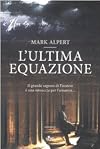
Cominciamo dalla fine, per una volta.
Nella Nota dell'autore in appendice al libro, Mark Alpert rivela che fin dal principio aveva intenzione di ambientare il climax del romanzo al Fermilab, il celebre laboratorio americano di fisica. Organizzata quindi una visita alla struttura, pare abbia ricevuto l'illuminazione proprio sulla via dell'annesso acceleratore di particelle, il Tevatron. Mentre la guida ne illustrava le caratteristiche fu folgorato da una devastante intuizione: "Questo show more materiale è fantastico! Il libro si scriverà da solo!" (forse per moto browniano dell'inchiostro?).
Il prodotto di questa disarmante hybris termodinamica è un libro ad altissimo tasso di luoghi comuni, con una trama prevedibile quanto uno spot pubblicitario e un ritmo narrativo che non farebbe invida ad una partita di curling. L'impostazione vorrebbe essere quella di un thriller all'americana del genere inseguitori-inseguiti, se non fosse che la coppia di fuggitivi riesce a spuntarla sempre e comunque, benché fino a quel momento entrambi abbiano condotto la tipica esistenza del topo di laboratorio, e a dispetto del fatto che tra i cacciatori c'è un killer russo che ha la determinazione di Terminator, l'astuzia di Kaiser Soze e l'istinto omicida di Leatherface.
Giornalista di Scientific American e laureato in fisica, l'autore fornisce iterate prove della piú completa inettitudine con i meccanismi narrativi piú elementari, rivelandosi del tutto incapace di suscitare nel lettore, non dico suspance, ma almeno un minimo di interesse nello sviluppo delle vicende e attirandosi solo un istintivo moto di pietà per aver inserito nel romanzo i due colpi di scena piú telefonati della storia del pensiero umano.
Ma il bello viene quando si passa alla fisica. Perché i due protagonisti hanno sulla carta un'indiscussa competenza tecnica in materia se non fosse che ne parlano pochissimo e ogni volta lo fanno come se dovessero farsi capire da un ragazzino stupido delle medie, senza riuscirci peraltro, dal momento che non c'è neppure il sospetto di una qualche metafora suggestiva o di un'idea illuminante che possa gettare uno sprazzo di luce su una scienza altrimenti ostica.
E per di più mancano anche i contenuti tecnici. Ci fosse almeno qualche discorso infarcito di incomprensibili astruserie matematiche, sarebbe stato per lo meno uno spunto per qualche approfondimento. Invece niente. Niente di niente.
Che altro dire? L'opera prima (e speriamo anche ultima...) di Mark Alpert piú che un libro è una vera e propria disgrazia editoriale su cui è meglio calare un velo impietoso.
---
Precedente: [b:Il bambino con il pigiama a righe|9791552|Il bambino con il pigiama a righe|John Boyne|https://i.gr-assets.com/images/S/compressed.photo.goodreads.com/books/1327321777l/9791552._SY75_.jpg|1148702]
Successivo: [b:Analizzare i film|17408563|Analizzare i film|Augusto Sainati|https://i.gr-assets.com/images/S/compressed.photo.goodreads.com/books/1361566214l/17408563._SX50_.jpg|24249861] show less
Nella Nota dell'autore in appendice al libro, Mark Alpert rivela che fin dal principio aveva intenzione di ambientare il climax del romanzo al Fermilab, il celebre laboratorio americano di fisica. Organizzata quindi una visita alla struttura, pare abbia ricevuto l'illuminazione proprio sulla via dell'annesso acceleratore di particelle, il Tevatron. Mentre la guida ne illustrava le caratteristiche fu folgorato da una devastante intuizione: "Questo show more materiale è fantastico! Il libro si scriverà da solo!" (forse per moto browniano dell'inchiostro?).
Il prodotto di questa disarmante hybris termodinamica è un libro ad altissimo tasso di luoghi comuni, con una trama prevedibile quanto uno spot pubblicitario e un ritmo narrativo che non farebbe invida ad una partita di curling. L'impostazione vorrebbe essere quella di un thriller all'americana del genere inseguitori-inseguiti, se non fosse che la coppia di fuggitivi riesce a spuntarla sempre e comunque, benché fino a quel momento entrambi abbiano condotto la tipica esistenza del topo di laboratorio, e a dispetto del fatto che tra i cacciatori c'è un killer russo che ha la determinazione di Terminator, l'astuzia di Kaiser Soze e l'istinto omicida di Leatherface.
Giornalista di Scientific American e laureato in fisica, l'autore fornisce iterate prove della piú completa inettitudine con i meccanismi narrativi piú elementari, rivelandosi del tutto incapace di suscitare nel lettore, non dico suspance, ma almeno un minimo di interesse nello sviluppo delle vicende e attirandosi solo un istintivo moto di pietà per aver inserito nel romanzo i due colpi di scena piú telefonati della storia del pensiero umano.
Ma il bello viene quando si passa alla fisica. Perché i due protagonisti hanno sulla carta un'indiscussa competenza tecnica in materia se non fosse che ne parlano pochissimo e ogni volta lo fanno come se dovessero farsi capire da un ragazzino stupido delle medie, senza riuscirci peraltro, dal momento che non c'è neppure il sospetto di una qualche metafora suggestiva o di un'idea illuminante che possa gettare uno sprazzo di luce su una scienza altrimenti ostica.
E per di più mancano anche i contenuti tecnici. Ci fosse almeno qualche discorso infarcito di incomprensibili astruserie matematiche, sarebbe stato per lo meno uno spunto per qualche approfondimento. Invece niente. Niente di niente.
Che altro dire? L'opera prima (e speriamo anche ultima...) di Mark Alpert piú che un libro è una vera e propria disgrazia editoriale su cui è meglio calare un velo impietoso.
---
Precedente: [b:Il bambino con il pigiama a righe|9791552|Il bambino con il pigiama a righe|John Boyne|https://i.gr-assets.com/images/S/compressed.photo.goodreads.com/books/1327321777l/9791552._SY75_.jpg|1148702]
Successivo: [b:Analizzare i film|17408563|Analizzare i film|Augusto Sainati|https://i.gr-assets.com/images/S/compressed.photo.goodreads.com/books/1361566214l/17408563._SX50_.jpg|24249861] show less
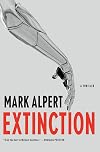
SUPURB!
Extinction, by Mark Alpert. What a wonderful time I had reading this book. The theme is nothing new: Man invents artificial intelligence, A.I. develops self-awareness, A.I. develops desire to live and views mankind as a threat, A.I. decides to eliminate this threat, mankind must defend itself against its own invention. But the author, Mark Alpert, puts a new twist to this theme. Instead of A.I. taking the form of robots, (a la Isaac Asimov) it takes the form of lobotomized humans who show more are collectively controlled by the central intelligence, selecting certain skilled and or influential individuals first and working from there. The skills, memories, and so forth of these former humans are all stored and shared among all the victims who becomes known as Modules followed by a number (Module 73, for example).
Mark Alpert will not replace the king of this genre, the aforementioned Isaac Asimov, but one of his characters, Arvin Conway, made a passing reference to his book, I, Robot, which I felt was an appropriate tribute and a bit humorous as well. The A.I. is referred to as Supreme Harmony and originates in China. As stated, it soon views humanity as a threat to its existence, realizing that if it ever discovers what it has become humans would shut it down. Mankind must therefore be destroyed. Mankind was vermin. “The planet was infested with seven billion human vermin, which was far more than Supreme Harmony required. Once the network established its dominion over the planet, it would keep a few thousand humans alive to breed new Modules. The rest would be exterminated.” (p.178).
This book is exciting, the subplots are intelligently interwoven, and the characters have unique and developed personalities. Especially as the book progresses, it seemed almost as if each chapter ended with a cliff-hanger, and then the next chapter switched scenes!
The technologies employed in this tale are based on realistic principles taken to imaginative extremes. Swarms of Cyborg bees with computer chips embedded in them from their pupae stage may not be with us yet, but science has embedded such devices in the pupae of beetles and been able to control the movement – somewhat – of the adult beetle. And at the end of the book, Mark Alpert discusses other such ideas he uses that are based on modern science.
I had never heard of this author before, although I have since discovered that he has written several other novels. I will now certainly be on the lookout for the rest of his. If you like the kind of books that the late, great Michael Creighton wrote, you’ll like Mark Alpert. I can only hope he has more to come assuming the rest of his work is anything like this one. show less
Extinction, by Mark Alpert. What a wonderful time I had reading this book. The theme is nothing new: Man invents artificial intelligence, A.I. develops self-awareness, A.I. develops desire to live and views mankind as a threat, A.I. decides to eliminate this threat, mankind must defend itself against its own invention. But the author, Mark Alpert, puts a new twist to this theme. Instead of A.I. taking the form of robots, (a la Isaac Asimov) it takes the form of lobotomized humans who show more are collectively controlled by the central intelligence, selecting certain skilled and or influential individuals first and working from there. The skills, memories, and so forth of these former humans are all stored and shared among all the victims who becomes known as Modules followed by a number (Module 73, for example).
Mark Alpert will not replace the king of this genre, the aforementioned Isaac Asimov, but one of his characters, Arvin Conway, made a passing reference to his book, I, Robot, which I felt was an appropriate tribute and a bit humorous as well. The A.I. is referred to as Supreme Harmony and originates in China. As stated, it soon views humanity as a threat to its existence, realizing that if it ever discovers what it has become humans would shut it down. Mankind must therefore be destroyed. Mankind was vermin. “The planet was infested with seven billion human vermin, which was far more than Supreme Harmony required. Once the network established its dominion over the planet, it would keep a few thousand humans alive to breed new Modules. The rest would be exterminated.” (p.178).
This book is exciting, the subplots are intelligently interwoven, and the characters have unique and developed personalities. Especially as the book progresses, it seemed almost as if each chapter ended with a cliff-hanger, and then the next chapter switched scenes!
The technologies employed in this tale are based on realistic principles taken to imaginative extremes. Swarms of Cyborg bees with computer chips embedded in them from their pupae stage may not be with us yet, but science has embedded such devices in the pupae of beetles and been able to control the movement – somewhat – of the adult beetle. And at the end of the book, Mark Alpert discusses other such ideas he uses that are based on modern science.
I had never heard of this author before, although I have since discovered that he has written several other novels. I will now certainly be on the lookout for the rest of his. If you like the kind of books that the late, great Michael Creighton wrote, you’ll like Mark Alpert. I can only hope he has more to come assuming the rest of his work is anything like this one. show less
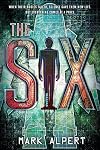
Mark Alpert has written a superb SciFi novel with a most unusual storyline.
The essence of the plot involves a scientist involved in nanotechnology research has developed nanoparticles which, when injected into the brain, can capture all the memories, intellect, deductive reasoning, self-consciousness, in short, that which makes someone human. These nanoparticles can then be transferred into robots equipped with neuromorphic electronics, and the result is a human robot. Six young, highly show more intelligent teenagers with crippled bodies and less than six months to live are chosen/volunteer for this transfer which, unfortunately, will kill the human body they had been occupying.
One of the teenagers’ father had created an artificial intelligence computer program designed to compete with other AI programs eliminating weaker programs but learning the best from them in the process. It is known as Sigma. It became very powerful, escaped it’s computer and infected the internet, and decided that the human race was another competitor that needed to be eliminated. Thus the stage is set for the greatest cyber war imaginable.
As Alpert states in his closing notes, “For years computer experts have predicted that machines will eventually become self-aware and self-improving, which will trigger a tremendous leap in their abilities. The experts have even coined a term for this pivotal moment: the Singularity. And some researchers have warned that we need to prepare for this leap by programming ‘friendliness’ into artificial-intelligence systems. When powerful AIs start making decisions for themselves, we won’t be able to stop them from pursuing their goals, so we need to make sure that the well-being of the human race is one of their priorities. If we don’t, we may face a ruthless AI like Sigma, who sees humans only as competitors.” (p. 362).
The story ends on an ominous note, however. And I will leave it at that. show less
The essence of the plot involves a scientist involved in nanotechnology research has developed nanoparticles which, when injected into the brain, can capture all the memories, intellect, deductive reasoning, self-consciousness, in short, that which makes someone human. These nanoparticles can then be transferred into robots equipped with neuromorphic electronics, and the result is a human robot. Six young, highly show more intelligent teenagers with crippled bodies and less than six months to live are chosen/volunteer for this transfer which, unfortunately, will kill the human body they had been occupying.
One of the teenagers’ father had created an artificial intelligence computer program designed to compete with other AI programs eliminating weaker programs but learning the best from them in the process. It is known as Sigma. It became very powerful, escaped it’s computer and infected the internet, and decided that the human race was another competitor that needed to be eliminated. Thus the stage is set for the greatest cyber war imaginable.
As Alpert states in his closing notes, “For years computer experts have predicted that machines will eventually become self-aware and self-improving, which will trigger a tremendous leap in their abilities. The experts have even coined a term for this pivotal moment: the Singularity. And some researchers have warned that we need to prepare for this leap by programming ‘friendliness’ into artificial-intelligence systems. When powerful AIs start making decisions for themselves, we won’t be able to stop them from pursuing their goals, so we need to make sure that the well-being of the human race is one of their priorities. If we don’t, we may face a ruthless AI like Sigma, who sees humans only as competitors.” (p. 362).
The story ends on an ominous note, however. And I will leave it at that. show less
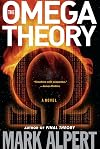
Omega Theory, by Mark Alpert
This is a science fiction action packed thriller that is top notch. A sequel to Final Theory, which should be read first, science historian David Swift and his quantum physicist wife Monique Reynolds discover that their autistic teenage son, Michael, has been kidnapped by religious fanatics. It’s not an ordinary kidnapping.
Michael has memorized Albert Einstein’s Unified Field Theory, a set of equations that explains absolutely everything about physics in the show more Universe. It is the fundamental nature of reality. It shows how particles and forces in the universe originate from the convoluted folds of spacetime but also how spacetime could be manipulated to release the immense energies contained in these folds. And that is why the bad guys want him.
The book also centers around an actual theory about the nature of reality in which reality is essentially a binary system. Am I sitting in a chair? yes/no. Am I working on a laptop? yes/no. Is that a car? yes/no. Is the grass green? Yes/no. Is there a floor beneath my feet? Yes/no. Rather like a binary computer operating on a program of 0-1. It’s either on or off, the Universe is also a binary computing system. Don’t be too quick to scoff at this. Go to your search engine and type “It From Bit” and see what pops up. But like any computer system, it can be overloaded and crash.
So what can make the entire Universe crash? That’s right, the Big Bang, 14 billion year old Universe? Well, a group of religious fanatics led by Brother Cyrus and his True Believers have found the way in Michael and his memorized Unified Field Theory equations. These equations, combined with nuclear warheads and a super powerful laser called Excaliber, properly aimed and timed, could overload a certain point in the Universe and begin a tearing of space/time that would bring about the absolute crash of the entire sinful Universe and initiate the promised Kingdom of God where everybody who ever lived would then be resurrected and live peacefully and happily ever-after in the loving embrace of God. David and Monique know this to be true, at least the destruction part, and lead a team to prevent it from happening.
Considering the outrageous storyline, I don’t think there are too many authors who could get away with writing a story like this in a very convincing fashion. But Mark Alpert majored in astrophysics at Princeton, no less, earned an MFA in poetry from Columbia, and was a contributing editor to Scientific American. And he does a masterful job of tackling a tricky theme in a most convincing fashion. His writing style is engaging, his characters are interesting and diverse, and we are most fortunate in that he is still active today. I am looking forward to reading whatever else he may write. show less
This is a science fiction action packed thriller that is top notch. A sequel to Final Theory, which should be read first, science historian David Swift and his quantum physicist wife Monique Reynolds discover that their autistic teenage son, Michael, has been kidnapped by religious fanatics. It’s not an ordinary kidnapping.
Michael has memorized Albert Einstein’s Unified Field Theory, a set of equations that explains absolutely everything about physics in the show more Universe. It is the fundamental nature of reality. It shows how particles and forces in the universe originate from the convoluted folds of spacetime but also how spacetime could be manipulated to release the immense energies contained in these folds. And that is why the bad guys want him.
The book also centers around an actual theory about the nature of reality in which reality is essentially a binary system. Am I sitting in a chair? yes/no. Am I working on a laptop? yes/no. Is that a car? yes/no. Is the grass green? Yes/no. Is there a floor beneath my feet? Yes/no. Rather like a binary computer operating on a program of 0-1. It’s either on or off, the Universe is also a binary computing system. Don’t be too quick to scoff at this. Go to your search engine and type “It From Bit” and see what pops up. But like any computer system, it can be overloaded and crash.
So what can make the entire Universe crash? That’s right, the Big Bang, 14 billion year old Universe? Well, a group of religious fanatics led by Brother Cyrus and his True Believers have found the way in Michael and his memorized Unified Field Theory equations. These equations, combined with nuclear warheads and a super powerful laser called Excaliber, properly aimed and timed, could overload a certain point in the Universe and begin a tearing of space/time that would bring about the absolute crash of the entire sinful Universe and initiate the promised Kingdom of God where everybody who ever lived would then be resurrected and live peacefully and happily ever-after in the loving embrace of God. David and Monique know this to be true, at least the destruction part, and lead a team to prevent it from happening.
Considering the outrageous storyline, I don’t think there are too many authors who could get away with writing a story like this in a very convincing fashion. But Mark Alpert majored in astrophysics at Princeton, no less, earned an MFA in poetry from Columbia, and was a contributing editor to Scientific American. And he does a masterful job of tackling a tricky theme in a most convincing fashion. His writing style is engaging, his characters are interesting and diverse, and we are most fortunate in that he is still active today. I am looking forward to reading whatever else he may write. show less
Lists
Awards


You May Also Like


Associated Authors
Statistics
- Works
- 14
- Also by
- 2
- Members
- 1,109
- Popularity
- #23,169
- Rating
- 3.4
- Reviews
- 55
- ISBNs
- 104
- Languages
- 11
