
Matt Bai
Author of All the Truth Is Out: The Week Politics Went Tabloid
About the Author
Image credit: Matt Bai
Works by Matt Bai
The Argument: Billionaires, Bloggers, and the Battle to Remake Democratic Politics (2007) 97 copies, 4 reviews
Associated Works
Tagged
Common Knowledge
- Birthdate
- 1968-09-09
- Gender
- male
- Occupations
- journalist
columnist - Organizations
- The New York Times
The New York Times Magazine
Yahoo News - Nationality
- USA
- Birthplace
- Trumbull, Connecticut, USA
- Associated Place (for map)
- Connecticut, USA
Members
Reviews
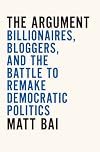
An entertaining look at some of the faces and factors remaking the Democratic Party, but also frustrating. Bai has a thesis here, that I'm not convinced is entirely fair, and he does hammer away at it - that the "new progressive movement" has no ideas of how to govern, and is instead obsessed with mere tactics that they think will win elections, as if just electing more Democrats will solve all the nation's problems.
Admittedly, you'd be hard pressed to look at the 2006 midterm elections and show more see evidence of any grand ideas the Democrats ran on, and Bai is not impressed with the efforts of the people he spent time around while researching this book to come up with such ideas. But such activity is out there, such as at the Center for American Progress which Bai himself mentions a couple of times but essentially glides over (maybe he should have spent more time in their offices and less hanging out with the rich venture capitalists and Hollywood types), and at the Truman National Security Project, which focuses on how Democrats should deal with the national security challenges currently facing our nation.
Bai also matches the stereotype of the traditional media political journalist (he's a NY Times writer) who looks down his traditional nose at the emergence of the new media forms (such as blogs). He writes that the blogs, in fact, are the dark side of the new progressive movement - as if there would be anything close to the current, vital progressive movement currently taking shape and beginning to remake the party without the blogs and new media. And why are they the dark side? Because they're fiercely partisan, mainly. How media types can lecture the Democratic Party and its constituent parts for not being bipartisan enough in 2008, after 2 terms of the most ruthlessly partisan GOP government I can ever think of, during much of which time the national Democratic party frequently bent itself over to acquiesce in a "bipartisan" way, I don't know.
So Bai fails to convincingly prove his thesis and suffers from traditional media biases, but his emphasis on focusing on developing new ideas and programs for the 21st century is at least on the right track. And his profiling of the people he did choose to spend most of his time around - especially the wealthy donors who created the Democracy Alliance in an effort to build up the progressive infrastructure - is an interesting read. show less
Admittedly, you'd be hard pressed to look at the 2006 midterm elections and show more see evidence of any grand ideas the Democrats ran on, and Bai is not impressed with the efforts of the people he spent time around while researching this book to come up with such ideas. But such activity is out there, such as at the Center for American Progress which Bai himself mentions a couple of times but essentially glides over (maybe he should have spent more time in their offices and less hanging out with the rich venture capitalists and Hollywood types), and at the Truman National Security Project, which focuses on how Democrats should deal with the national security challenges currently facing our nation.
Bai also matches the stereotype of the traditional media political journalist (he's a NY Times writer) who looks down his traditional nose at the emergence of the new media forms (such as blogs). He writes that the blogs, in fact, are the dark side of the new progressive movement - as if there would be anything close to the current, vital progressive movement currently taking shape and beginning to remake the party without the blogs and new media. And why are they the dark side? Because they're fiercely partisan, mainly. How media types can lecture the Democratic Party and its constituent parts for not being bipartisan enough in 2008, after 2 terms of the most ruthlessly partisan GOP government I can ever think of, during much of which time the national Democratic party frequently bent itself over to acquiesce in a "bipartisan" way, I don't know.
So Bai fails to convincingly prove his thesis and suffers from traditional media biases, but his emphasis on focusing on developing new ideas and programs for the 21st century is at least on the right track. And his profiling of the people he did choose to spend most of his time around - especially the wealthy donors who created the Democracy Alliance in an effort to build up the progressive infrastructure - is an interesting read. show less
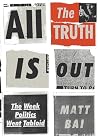
Sometimes gut-wrenching, this is a fascinating exploration of why, how, and when politics and the coverage of politics changed, drastically and irreversibly. Chalked up to whim or coincidence, or to a force that was building, the fact is that the relationship between presidential hopefuls (and politicians in general, perhaps) and journalists was forever changed in the 1980s, and arguably, in 1987 to be exact. As the popularization of television changed the way that politics and politicians show more Could be reported, so too did a scandal surrounding Gary Hart's personal life change the way that reporters could and would follow politicians. And whether these changes are chalked up to whim and coincidence or to a force that was building in society, and sure to come at some point, the fact is that the change happening as it did and when it did had consequences that are hard to fathom.
Bai's All the Truth is Out is something of a dissection, but also much more. As the world watches the primaries of 2016, where entertainment and values and opposite forces have maybe never before been more in play, it's difficult to read this book and not feel some form of regret. But for every individual out there who's sitting back and occasionally wondering, 'How did we get to this point?', I firmly believe that this is a must-read. The author's examination and presentation of history, policy, and game-changing values & questions is utterly masterful.
It's hard for me to imagine who shouldn't be interested in reading this book, simply enough, and I believe there's a lot to be said for knowing -- and understanding -- where we've come from, and all of the material presented in this fascinating, heartbreaking, worthwhile book.
Obviously, absolutely recommended. show less
Bai's All the Truth is Out is something of a dissection, but also much more. As the world watches the primaries of 2016, where entertainment and values and opposite forces have maybe never before been more in play, it's difficult to read this book and not feel some form of regret. But for every individual out there who's sitting back and occasionally wondering, 'How did we get to this point?', I firmly believe that this is a must-read. The author's examination and presentation of history, policy, and game-changing values & questions is utterly masterful.
It's hard for me to imagine who shouldn't be interested in reading this book, simply enough, and I believe there's a lot to be said for knowing -- and understanding -- where we've come from, and all of the material presented in this fascinating, heartbreaking, worthwhile book.
Obviously, absolutely recommended. show less
Most people hate the current political culture of lies, vapid empty suits, and the demonizing of those on any side of a political argument by those on some other side. We dislike what has become of our press, both national and local. We distrust our political leaders more than we ever have before.
We have to ask ourselves - do we have the government, the leadership, that we deserve?
Does character count?
Matt Bai's book did something that's more rare than it should be - it caused me to rethink show more what I thought I knew of a situation, and caused me to reevaluate some personal ideas about our culture. It's a very thoughtful work, very readable despite packing an incredible amount of factual reporting and complex analysis into remarkably few pages.
As someone who was an adult voter in 1987 during the Gary Hart "scandal", and as someone who read a lot about politics and who considered myself at the least an informed citizen, I had no doubt that I knew and understood what happened to Gary Hart and his campaign. I shook my head and moaned about the loss to our country of such a talented and brilliant man, and said what many people have said in the last 27 years - "How could such a smart man do something so dumb?"
Of course Gary Hart had an affair with Donna Rice, right? Of course he challenged the national press corp to "follow me around", didn't he? We all know that that hilarious photo of him wearing the "Monkey Business" tshirt with Rice on his lap caused him to drop out of the 1988 presidential campaign, no doubt in our minds.
This book not only brings a long-needed reassessment and reclarification of that facts of that time, Bai is also very convincing in his arguments that this one "media event" was perhaps the turning point in our informing press becoming our entertaining press, our leaders becoming soulless followers of public opinion, (rightfully) frightened of uttering a misplaced word, tap-dancing for our approval rather illuminating and elevating our condition.
You really should read this book. Only in the last chapter does Bai expound more on just what those changes has wrought in recent years. The last two paragraphs of the book are extremely touching and, I believe, deserved.
Does character count? Of course. It's what we consider to be "character" that's causing many of our current problems. show less
We have to ask ourselves - do we have the government, the leadership, that we deserve?
Does character count?
Matt Bai's book did something that's more rare than it should be - it caused me to rethink show more what I thought I knew of a situation, and caused me to reevaluate some personal ideas about our culture. It's a very thoughtful work, very readable despite packing an incredible amount of factual reporting and complex analysis into remarkably few pages.
As someone who was an adult voter in 1987 during the Gary Hart "scandal", and as someone who read a lot about politics and who considered myself at the least an informed citizen, I had no doubt that I knew and understood what happened to Gary Hart and his campaign. I shook my head and moaned about the loss to our country of such a talented and brilliant man, and said what many people have said in the last 27 years - "How could such a smart man do something so dumb?"
Of course Gary Hart had an affair with Donna Rice, right? Of course he challenged the national press corp to "follow me around", didn't he? We all know that that hilarious photo of him wearing the "Monkey Business" tshirt with Rice on his lap caused him to drop out of the 1988 presidential campaign, no doubt in our minds.
This book not only brings a long-needed reassessment and reclarification of that facts of that time, Bai is also very convincing in his arguments that this one "media event" was perhaps the turning point in our informing press becoming our entertaining press, our leaders becoming soulless followers of public opinion, (rightfully) frightened of uttering a misplaced word, tap-dancing for our approval rather illuminating and elevating our condition.
You really should read this book. Only in the last chapter does Bai expound more on just what those changes has wrought in recent years. The last two paragraphs of the book are extremely touching and, I believe, deserved.
Does character count? Of course. It's what we consider to be "character" that's causing many of our current problems. show less
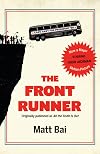
A great look into a pivotal campaign - a campaign that most don't give its full due. Examines the move toward the unholy marriage between tabloid and political journalism, and its implications for today. Highly recommended for all political junkies and media critics (especially if you're a fan of Neil Postman and his insights).
Awards


You May Also Like


Associated Authors
Statistics
- Works
- 4
- Also by
- 4
- Members
- 274
- Popularity
- #84,602
- Rating
- 4.0
- Reviews
- 11
- ISBNs
- 16