

Coe Booth
Author of Tyrell
About the Author
Image credit: 2007 LA Times Festival of Books Copyright © 2007 Ron Hogan
Series
Works by Coe Booth
Associated Works
Black Enough: Stories of Being Young and Black in America (2019) — Contributor — 649 copies, 15 reviews
Tagged
Common Knowledge
- Canonical name
- Booth, Coe
- Birthdate
- -03-21
- Gender
- female
- Education
- The New School (MFA|creative writing, 2005)
(BA, 1996) - Occupations
- author
teacher
Child Protective Services Caseworker - Nationality
- USA
- Birthplace
- New York, New York, USA
- Places of residence
- New York, New York, USA
Basel, Switzerland - Associated Place (for map)
- USA
Members
Reviews
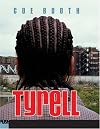
Summary and Evaluation: Tyrell is newly-homeless again, and he and his mom and his younger brother are bounced to the motel with the worst reputation in the whole of the NYC Housing Department. He’s getting pressure from his mother to be the man of the house and make money, presumably by selling drugs, which is what landed his father in jail, pressure from his little brother, who is all but abandoned by their mother, pressure from his girlfriend, the cute Catholic Novisha, who wants him to show more go back to school and not be a source of shame to her, and pressure from Jasmine, a new piece of tail he meets at the motel, who wants him to be her male companionship. This title is getting really great reviews, and I really don’t understand why; the book is astonishingly misogynistic, with all the female characters serving as problems for Tyrell. Women are never allies, or caretakers, or even ultimately worth his time; they should not be trusted or treated with much respect; they are useful for sexual release but ultimately condemned for their own sexuality. At one point, Tyrell reflects on what he has learned from his father: although he largely regards his father as a bad role model, his advice on beating women is taken to heart. Tyrell’s mother is the epitomal (and fictional) Reagan Welfare Queen; there is no discussion of the faults of the system that make it necessary for her to fiddle her dole, just condemnation. All of these problems are, I think, mistaken for authenticity by many reviewers because the author is a Black woman who has worked with homeless and at-risk youth and still lives in the Bronx. I found the book very difficult to stomach.
Booktalk Hook: I would be uncomfortable having this book in my library, and I don’t think I could booktalk it. We receive enough racism and misogyny from the culture at large; it doesn’t need to be reinforced by mediocre fiction. show less
Booktalk Hook: I would be uncomfortable having this book in my library, and I don’t think I could booktalk it. We receive enough racism and misogyny from the culture at large; it doesn’t need to be reinforced by mediocre fiction. show less

Written from the first-person POV of its protagonist, Booth’s novel tells the story of Tyrell Green, a 15-year-old boy from the NYC (housing) “projects” who is trying to get together enough money to allow him, his mom, and brother to move into a new place after the three were evicted from their apartment for defaulting on the rent. Tyrell has already been taken into foster care (with his brother) once, when his mother was regularly leaving the then younger boys unattended. He doesn’t show more want to go through that again, as he’s certain he and his brother will be split up.
The family’s current troubles began when “Pops”, Tyrell’s dad, landed in jail for the third time. A DJ with sophisticated sound equipment, he’d recently been making his living by holding popular “parties” in buildings that weren’t otherwise used at night. (A pal of his helped out by disabling security systems.) Along with the paying “guests” who attended these events, there were drug peddlers and hookers. As a result, Pops has been convicted for pimping girls, violating parole, and a few other things to boot. Later, Tyrell will identify his own biggest mistake as “looking up to my pops so much . . . yeah, he cool and everything, but he be messing up so much that sometimes I wish I ain’t even care ‘bout the man . . . he knew he was gonna get hisself locked up again, but he ain’t did nothin’ to make sure we was gonna be a’ight while he gone. And now, ‘cause of him, I gotta be the man. I gotta make the money to take care of my moms and brother. I gotta put my freedom on the line.”
Tyrell’s mother is useless as a parent. Social services isn’t overly eager to assist her, as she committed social security/welfare fraud a few years back. The authorities have only treated her leniently because of her “retarded” eight-year-old son, Troy. (Tyrell suspects his mom paid an unscrupulous doctor to do the paperwork that would allow her a government handout for the boy. As far as Tyrell’s concerned, there’s nothing wrong with his little brother that a bit of stability and some decent parenting couldn’t fix.) “Moms” is used to being “taken care of” by her husband—even if it means a smack or two when she whines too much. To Tyrell’s immense frustration and anger, she is directionless without a man to order her around, and she makes no effort to find a job. Tyrell tries to step in to fill the void left by his father. He instructs his mother as to when to do the laundry, contact teachers, and social workers. He also scolds her for not minding her young son and for taking off to have fun. She wouldn’t mind seeing her older son sell pot to bring in some easy money for the family—something that Tyrell is resisting. He is determined to avoid making his father’s mistakes.
For now, courtesy of New York City’s Emergency Assistance Unit, the family is staying in the squalid, roach-infested Bennett Motel. It’s the dead of winter and good shelters are in short supply. Tyrell becomes friends with Jasmine, an attractive, formerly “wild” Latino girl his own age, who is also staying at the motel. Even though her life is also in chaos, Jasmine continues to attend school. It’s an alternative-education storefront operation, as Jasmine was kicked out of her two previous high schools for behaviour. She’d like to see Tyrell get back to school—he’s been out for several weeks—but she supports him in his scheme to make money: a cleaner variation of his dad’s warehouse parties.
Although Tyrell is powerfully attracted to Jasmine, he is determined to stay faithful to his 14-year-old girlfriend, Novisha, who attends a Catholic high school and seems to be toeing the religious line as to how far she’ll go with her boyfriend. Novisha does volunteer work with the elderly, and she plans to attend college. Tyrell has to take long train rides from “the Bennett” to his home turf, the Bronx, to see this girl, and he’s troubled by signs that she’s growing apart from him. Novisha’s ashamed that he is not in school, and, having watched her mom refuse to let go of her unreliable father, the girl rejects the idea of “being taken care of” by a man. However, this is the code Tyrell lives by: a man shows love by providing materially for and protecting his girl.
Grittily realistic with language and sexual content that make it best suited to mature teenagers, Tyrell is an exploration of generational family dysfunction, family loyalty, and a young African American youth’s understanding of masculinity. It presents the reader with a sympathetic—rough but vulnerable—protagonist who’s facing a world of challenges. He’s a kid with a warm heart and a sense of right and wrong. He’s got so many things stacked against him, you wonder how he keeps going. One doesn’t often see circumstances like his depicted in young adult literature. Although it has dated slightly since its publication in 2006, I’m not surprised that this novel by Coe Booth (a trained social worker who is herself from the Bronx) won the Los Angeles Time’s Book Prize for Young Adult Fiction in 2007. Booth’s characters, especially her protagonist, are well drawn. The reader cares for Tyrell and wants to see if he will succeed. Booth has apparently written a second book about Tyrell and his neighbourhood. I’d be interested in checking it out. show less
The family’s current troubles began when “Pops”, Tyrell’s dad, landed in jail for the third time. A DJ with sophisticated sound equipment, he’d recently been making his living by holding popular “parties” in buildings that weren’t otherwise used at night. (A pal of his helped out by disabling security systems.) Along with the paying “guests” who attended these events, there were drug peddlers and hookers. As a result, Pops has been convicted for pimping girls, violating parole, and a few other things to boot. Later, Tyrell will identify his own biggest mistake as “looking up to my pops so much . . . yeah, he cool and everything, but he be messing up so much that sometimes I wish I ain’t even care ‘bout the man . . . he knew he was gonna get hisself locked up again, but he ain’t did nothin’ to make sure we was gonna be a’ight while he gone. And now, ‘cause of him, I gotta be the man. I gotta make the money to take care of my moms and brother. I gotta put my freedom on the line.”
Tyrell’s mother is useless as a parent. Social services isn’t overly eager to assist her, as she committed social security/welfare fraud a few years back. The authorities have only treated her leniently because of her “retarded” eight-year-old son, Troy. (Tyrell suspects his mom paid an unscrupulous doctor to do the paperwork that would allow her a government handout for the boy. As far as Tyrell’s concerned, there’s nothing wrong with his little brother that a bit of stability and some decent parenting couldn’t fix.) “Moms” is used to being “taken care of” by her husband—even if it means a smack or two when she whines too much. To Tyrell’s immense frustration and anger, she is directionless without a man to order her around, and she makes no effort to find a job. Tyrell tries to step in to fill the void left by his father. He instructs his mother as to when to do the laundry, contact teachers, and social workers. He also scolds her for not minding her young son and for taking off to have fun. She wouldn’t mind seeing her older son sell pot to bring in some easy money for the family—something that Tyrell is resisting. He is determined to avoid making his father’s mistakes.
For now, courtesy of New York City’s Emergency Assistance Unit, the family is staying in the squalid, roach-infested Bennett Motel. It’s the dead of winter and good shelters are in short supply. Tyrell becomes friends with Jasmine, an attractive, formerly “wild” Latino girl his own age, who is also staying at the motel. Even though her life is also in chaos, Jasmine continues to attend school. It’s an alternative-education storefront operation, as Jasmine was kicked out of her two previous high schools for behaviour. She’d like to see Tyrell get back to school—he’s been out for several weeks—but she supports him in his scheme to make money: a cleaner variation of his dad’s warehouse parties.
Although Tyrell is powerfully attracted to Jasmine, he is determined to stay faithful to his 14-year-old girlfriend, Novisha, who attends a Catholic high school and seems to be toeing the religious line as to how far she’ll go with her boyfriend. Novisha does volunteer work with the elderly, and she plans to attend college. Tyrell has to take long train rides from “the Bennett” to his home turf, the Bronx, to see this girl, and he’s troubled by signs that she’s growing apart from him. Novisha’s ashamed that he is not in school, and, having watched her mom refuse to let go of her unreliable father, the girl rejects the idea of “being taken care of” by a man. However, this is the code Tyrell lives by: a man shows love by providing materially for and protecting his girl.
Grittily realistic with language and sexual content that make it best suited to mature teenagers, Tyrell is an exploration of generational family dysfunction, family loyalty, and a young African American youth’s understanding of masculinity. It presents the reader with a sympathetic—rough but vulnerable—protagonist who’s facing a world of challenges. He’s a kid with a warm heart and a sense of right and wrong. He’s got so many things stacked against him, you wonder how he keeps going. One doesn’t often see circumstances like his depicted in young adult literature. Although it has dated slightly since its publication in 2006, I’m not surprised that this novel by Coe Booth (a trained social worker who is herself from the Bronx) won the Los Angeles Time’s Book Prize for Young Adult Fiction in 2007. Booth’s characters, especially her protagonist, are well drawn. The reader cares for Tyrell and wants to see if he will succeed. Booth has apparently written a second book about Tyrell and his neighbourhood. I’d be interested in checking it out. show less
As a Young Adult librarian, I inwardly (barely) frown upon any teenager's craving for the so-called street/hip-hop/urban fiction that has become a force to be reckoned with in the literary world. These books glorify an opportunisitic, materialistic, sexist, violent, and sometimes criminal world that teens live or wish to live. Lest you think me some suburb-rised cultural elitest, let me set you straight. I'm straight up 'hood born and 'hood raised. I've seen some of these stories close up in show more real life and there's nothing good about them, so I'm baffled by the embrace of them.
Tyrell, Coe Booth's debut novel, is urban/street/ghetto fiction taken to a higher level. It exposes the ugly side of project-life, hustling, and using sex as a tool. The protagonist, 15-year-old Tyrell, is trying to keep his family and life together as he is trying to escape homelessness. But he is constantly angered and frustrated by a trifling mom, an incarcerated dad, a mistrustful girlfriend, and a needy female pal. Yet, by the end of the story, Tyrell finds light at the end of the tunnel.
The ending doesn't pretend that the rest of Tyrell's life (or his little brother's, mother's, father's or friends') won't be a hard struggle, but it does give hope that Tyrell won't succumb to the vices (emotional and physical) that traps everyone around him. Tyrell is both sad and uplifting without being preachy. It is the perfect realistic fiction for today's teens. show less
Tyrell, Coe Booth's debut novel, is urban/street/ghetto fiction taken to a higher level. It exposes the ugly side of project-life, hustling, and using sex as a tool. The protagonist, 15-year-old Tyrell, is trying to keep his family and life together as he is trying to escape homelessness. But he is constantly angered and frustrated by a trifling mom, an incarcerated dad, a mistrustful girlfriend, and a needy female pal. Yet, by the end of the story, Tyrell finds light at the end of the tunnel.
The ending doesn't pretend that the rest of Tyrell's life (or his little brother's, mother's, father's or friends') won't be a hard struggle, but it does give hope that Tyrell won't succumb to the vices (emotional and physical) that traps everyone around him. Tyrell is both sad and uplifting without being preachy. It is the perfect realistic fiction for today's teens. show less
A painful but honest and moving narrative that almost left me feeling broken but held out just enough hope to get by on. Tyrell himself is a fascinating character with real flaws and strengths. Too often characters have "flaws" that aren't really flaws, or else their flaws are real but make them inaccessible. I really cared about Tyrell even as I saw him making mistakes, and I cheered when he succeeded.
Note: Quite a lot of mature content. Appropriate for the story, but be warned.
Note: Quite a lot of mature content. Appropriate for the story, but be warned.
Lists
Awards


You May Also Like


Associated Authors
Statistics
- Works
- 5
- Also by
- 1
- Members
- 1,484
- Popularity
- #17,304
- Rating
- 4.1
- Reviews
- 58
- ISBNs
- 39
- Languages
- 1
- Favorited
- 1