
Jacen Burrows
Author of Neonomicon
About the Author
Image credit: Jacen Burrows at the 2012 New York Comic Con, October 14, 2012 at the Jacob K. Javits Convention Center in Manhattan. © Luigi Novi / Wikimedia Commons
Series
Works by Jacen Burrows
Providence Omnibus 1 copy
Associated Works
Black Panther [2016] #14 - Avengers of the New World, Part 02 (2017) — Illustrator — 17 copies, 1 review
God is Dead #43 — Cover artist, some editions — 3 copies
Tagged
Common Knowledge
- Canonical name
- Burrows, Jacen
- Birthdate
- 1972-09-11
- Gender
- male
- Education
- Savannah College of Art and Design (Degree|Sequential Art and Illustration)
- Occupations
- comicbook artist
- Nationality
- USA
- Birthplace
- San Diego, California, USA
- Places of residence
- Tacoma, Washington, USA
- Associated Place (for map)
- USA
Members
Reviews
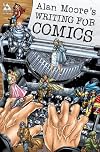
In Alan Moore’s Writing for Comics, Moore outlines his philosophy for comic book writing based upon his years of experience in the medium. He cautions that he does not intend to teach readers how to write like him, but rather to offer some general advice that may be useful. As Avatar Press originally published this as a book in 2003, it’s interesting to see how a decade-and-a-half have borne out his musings.
Moore writes, “In the end, it is effect which governs the success of an show more individual piece of artwork or a whole artform, and while abstract critical considerations concerning the inherent quality of a work might give us a few useful handles with which to grasp and appreciate a work more fully, art still succeeds or fails in terms of the actual effect it has upon the individual members of its audience. If it stimulates or excites them, they will respond to it. If it doesn’t, they’ll go and look for something that does. Comics have a capacity for effect that they haven’t begun to take advantage of, and are held back by narrow and increasingly obsolete notions of what constitutes a comic story. In order for comics to move forward as a medium, these notions must change” (pgs. 5-6). In this, Moore’s comments seem particularly prescient given Marvel and DC’s struggles to break out of the usual pattern of large events, reboots, and nostalgia that dominate a great deal of their storytelling. That said, many of the smaller and independent comics have succeeded in finding new types of stories to tell and new ways to tell them, generating greater effect.
Discussing comic book history, Moore summarizes the approach to characterization from the Golden Age of the 1940s and 50s to the Silver Age of the 1960s and 70s, writing, “The earliest approach found in comics was that of simple one-dimensional characterization, usually consisting of ‘This person is good’ or ‘This person is bad.’ For the comics of the time and the comparatively simple world that they were attempting to entertain, this was perfectly adequate. By the early 1960s, however, times had changed and a new approach was needed. Thus, Stan Lee invented two-dimensional characterization: ‘This person is good but has bad luck with girlfriends,’ and ‘This person is bad but might just reform and join the Avengers if enough readers write in asking for it’” (pg. 23). Moore concludes, however, that progress has been minimal since that point with characters remaining two-dimensional.
Arguing that plot should enhance character and theme, Moore writes, “Pick up an average current comic and put it to your ear and you can almost hear the process at work: Plot, plot, plot, plot, plot, plot…it sounds like someone wading through mud and it very often reads like it, too. An obsession with the demands of a concrete and linear plotline is often one of the most dependable ways to crush all the life and energy from your story and make it simply an exercise in mechanical narration” (pg. 29, ellipses in original).
Finally, in his conclusion, Moore argues that the advice may have been good for those starting out, but that readers should ignore things like his promotion of a certain panel structure as, in hindsight, that was on its way out even as he wrote. Further, he offers advice for those who are already writing, urging them to take risks, avoid cliché, and, above all else, work on being good human beings because then they’ll leave the kind of work that will be impactful. Though the book has passed its 15th anniversary and Avatar Press has it in its 9th printing, it remains valuable for those seeking to break into the popular culture industry. The majority of the book also serves as a time capsule for those studying comics of the late 1980s and early 1990s. show less
Moore writes, “In the end, it is effect which governs the success of an show more individual piece of artwork or a whole artform, and while abstract critical considerations concerning the inherent quality of a work might give us a few useful handles with which to grasp and appreciate a work more fully, art still succeeds or fails in terms of the actual effect it has upon the individual members of its audience. If it stimulates or excites them, they will respond to it. If it doesn’t, they’ll go and look for something that does. Comics have a capacity for effect that they haven’t begun to take advantage of, and are held back by narrow and increasingly obsolete notions of what constitutes a comic story. In order for comics to move forward as a medium, these notions must change” (pgs. 5-6). In this, Moore’s comments seem particularly prescient given Marvel and DC’s struggles to break out of the usual pattern of large events, reboots, and nostalgia that dominate a great deal of their storytelling. That said, many of the smaller and independent comics have succeeded in finding new types of stories to tell and new ways to tell them, generating greater effect.
Discussing comic book history, Moore summarizes the approach to characterization from the Golden Age of the 1940s and 50s to the Silver Age of the 1960s and 70s, writing, “The earliest approach found in comics was that of simple one-dimensional characterization, usually consisting of ‘This person is good’ or ‘This person is bad.’ For the comics of the time and the comparatively simple world that they were attempting to entertain, this was perfectly adequate. By the early 1960s, however, times had changed and a new approach was needed. Thus, Stan Lee invented two-dimensional characterization: ‘This person is good but has bad luck with girlfriends,’ and ‘This person is bad but might just reform and join the Avengers if enough readers write in asking for it’” (pg. 23). Moore concludes, however, that progress has been minimal since that point with characters remaining two-dimensional.
Arguing that plot should enhance character and theme, Moore writes, “Pick up an average current comic and put it to your ear and you can almost hear the process at work: Plot, plot, plot, plot, plot, plot…it sounds like someone wading through mud and it very often reads like it, too. An obsession with the demands of a concrete and linear plotline is often one of the most dependable ways to crush all the life and energy from your story and make it simply an exercise in mechanical narration” (pg. 29, ellipses in original).
Finally, in his conclusion, Moore argues that the advice may have been good for those starting out, but that readers should ignore things like his promotion of a certain panel structure as, in hindsight, that was on its way out even as he wrote. Further, he offers advice for those who are already writing, urging them to take risks, avoid cliché, and, above all else, work on being good human beings because then they’ll leave the kind of work that will be impactful. Though the book has passed its 15th anniversary and Avatar Press has it in its 9th printing, it remains valuable for those seeking to break into the popular culture industry. The majority of the book also serves as a time capsule for those studying comics of the late 1980s and early 1990s. show less
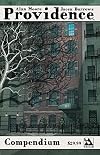
This was a solid four stars until the last two episodes, but great books know how to stick the landing, and Moore blew me away with the effacement of the narrator, the montage of HPL's influence through the decades since, and then amazingly, you realise that that influence is much more profound than you first thought — turns out to have changed everything — and suddenly we're all in Lovecraft Country, either changed, or dead. It was the episode-ending commonplace book sections that were show more holding me back initially, but in fact they're our insight into this most obtuse of narrators. The story is about authors losing control of their stories, of stories writing authors, of humans as mere instruments — like in HPL — but it's also a sumptuous unification or encapsulation of the oeuvre. A compendium of ghastly delights. show less
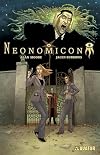
Ah, you want dark ... this is dark. Well within the spirit of the Lovecraftian tradition and an added dash of American FBI TV drama with serial killer characteristics. Alan Moore even gets in a bit of Kenneth Grant on the side.
However, since many of you in America have more of a problem with sex than gory violence, be warned ... this is a work of sexual horror with explicit scenes of truly unpleasant sexual violence.
The scene of reptilian jissum flying through a wide arc as the FBI heroine show more jerks off the monster to save herself from yet another rape is not for the faint-hearted. There is a certain Sadean quality to one long section.
Moore is, as he gets older, increasingly interested in the sexual imagination and it is not unconnected to his interest in magick. For him, magick is creating something out of nothing and extreme sexual imagination is magick.
From Promethea through Lost Girls to this, the intensity grows but it is an honest intensity that should disturb the reader not as wrong or sick but as an expression of the wild capabilities of the full imagination.
There is also a genuine twist to the usual Lovecraftian story line that any aficionado of the horror genre will pick up as a borrowing from another trope of demonic literature (no spoilers here).
Let us just say that hybridisation is a theme that turns back on itself as the hybridisation of literary memes into new creative activity.
This graphic novel is genuinely horrific and far from 'adolescent'. Moore is also well served by the classic comic book style of Jacen Burrows which captures the Lovecraftian iconography of the tale well. Recommended but with the standard caveat that it is for mature minds only. show less
However, since many of you in America have more of a problem with sex than gory violence, be warned ... this is a work of sexual horror with explicit scenes of truly unpleasant sexual violence.
The scene of reptilian jissum flying through a wide arc as the FBI heroine show more jerks off the monster to save herself from yet another rape is not for the faint-hearted. There is a certain Sadean quality to one long section.
Moore is, as he gets older, increasingly interested in the sexual imagination and it is not unconnected to his interest in magick. For him, magick is creating something out of nothing and extreme sexual imagination is magick.
From Promethea through Lost Girls to this, the intensity grows but it is an honest intensity that should disturb the reader not as wrong or sick but as an expression of the wild capabilities of the full imagination.
There is also a genuine twist to the usual Lovecraftian story line that any aficionado of the horror genre will pick up as a borrowing from another trope of demonic literature (no spoilers here).
Let us just say that hybridisation is a theme that turns back on itself as the hybridisation of literary memes into new creative activity.
This graphic novel is genuinely horrific and far from 'adolescent'. Moore is also well served by the classic comic book style of Jacen Burrows which captures the Lovecraftian iconography of the tale well. Recommended but with the standard caveat that it is for mature minds only. show less
Excellent modern evocation of the Cthulhu mythos, using meta-fiction and Moore's trademark deep knowledge of the occult to give it real weight. I am so hoping this is the beginning of a new series, or at least that Moore will write further Lovecraftian tales.
After reading some other reviews though, I think a lot of people have missed the point. All those who reckon they know and love Alan Moore's works - have you read Promethea? I find that to be his best work, and some of the knowledge in show more that shines through here. Sometimes there is more information in artwork in a single pane than there is in all the dialogue on a double page.
Also, if you only read Lovecraft for the horror, you're going to miss the point here also. This is occult, folks, and if you do not have at least a passing knowledge of the Qabalah, you're only going to see a fraction of the story on offer. It is short, but there is much to be found, for the true seeker ;-) show less
After reading some other reviews though, I think a lot of people have missed the point. All those who reckon they know and love Alan Moore's works - have you read Promethea? I find that to be his best work, and some of the knowledge in show more that shines through here. Sometimes there is more information in artwork in a single pane than there is in all the dialogue on a double page.
Also, if you only read Lovecraft for the horror, you're going to miss the point here also. This is occult, folks, and if you do not have at least a passing knowledge of the Qabalah, you're only going to see a fraction of the story on offer. It is short, but there is much to be found, for the true seeker ;-) show less
Lists
Awards


You May Also Like
Associated Authors
Statistics
- Works
- 40
- Also by
- 62
- Members
- 2,980
- Popularity
- #8,558
- Rating
- 3.5
- Reviews
- 109
- ISBNs
- 78
- Languages
- 7