

Jonathan Case
Author of Green River Killer
About the Author
Image credit: via Helioscope
Works by Jonathan Case
HCF 2018 OVER THE GARDEN WALL 3 copies
Future Quest #2 — Illustrator — 2 copies
Sea Freak Chapter 2 1 copy
Sea Freak Chapter 3 1 copy
Associated Works
House of Night: The Graphic Novel, #4 — Illustrator — 9 copies
Tagged
Common Knowledge
- Gender
- male
- Nationality
- USA
- Places of residence
- Portland, Oregon, USA
- Associated Place (for map)
- Oregon, USA
Members
Reviews
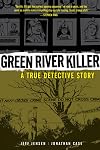
During the 80s and early 90s a monster killed scores of women in the Seattle/Tacoma area. His name was Gary Leon Ridgway, aka The Green River Killer. Told in illustrated form, this thorough and totally fascinating account, focuses on Detective Tom Jensen, as he doggedly pursued this heinous butcher, through 2 frustrating decades.
Yes, this is a bleak, lurid subject, but if you are interested in true-crime stories, you can’t get any better. An added bonus, the author is Jensen’s son, who show more witnessed first hand his father obsession with capturing Ridgway. show less
Yes, this is a bleak, lurid subject, but if you are interested in true-crime stories, you can’t get any better. An added bonus, the author is Jensen’s son, who show more witnessed first hand his father obsession with capturing Ridgway. show less
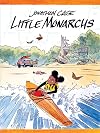
You'd think a story with people worried about being killed by sunlight would involve vampires . . . but nope.
You'd think a post-apocalypse story with people running around waving butterfly nets must be about how the stark conditions have driven them insane . . . but nope.
You'd think loading the story with educational material about the life cycles and migratory routes of monarch butterflies would tend to bog things down . . . but . . . well, yeah, yeah, it does. But that's mostly the first show more third of the book, and things improve considerably in the back end.
In a kiddy variation on Cormac McCarthy's The Road, Flora and Elvire, a woman and a ten-year-old girl, wander a post-apocalyptic landscape in the year 2101. Humanity has been driven to the brink of extinction due to a change in the quality of sunlight that causes a fatal change in heart rhythms (?!), so most people live deep underground during the day to block the lethal rays. But Flora has developed a medicine from monarch butterflies that gives temporary protection so she and Elvire can walk in daylight, and she is working on a permanent cure.
There are dangerous natural disasters to survive, but of course the most hazardous part of their lives is deciding which surviving humans to fear and and which to trust. About a third of the way through they break out of their insular science fair mode, where there are too many expositional pages of text, and start interacting with other people so the story can finally start building up some momentum. By the end, I was quite engaged with their ups and downs and really pulling for them to catch a break.
(Another project! I'm trying to read all the picture books and graphic novels on the kids section of NPR's Books We Love 2022.) show less
You'd think a post-apocalypse story with people running around waving butterfly nets must be about how the stark conditions have driven them insane . . . but nope.
You'd think loading the story with educational material about the life cycles and migratory routes of monarch butterflies would tend to bog things down . . . but . . . well, yeah, yeah, it does. But that's mostly the first show more third of the book, and things improve considerably in the back end.
In a kiddy variation on Cormac McCarthy's The Road, Flora and Elvire, a woman and a ten-year-old girl, wander a post-apocalyptic landscape in the year 2101. Humanity has been driven to the brink of extinction due to a change in the quality of sunlight that causes a fatal change in heart rhythms (?!), so most people live deep underground during the day to block the lethal rays. But Flora has developed a medicine from monarch butterflies that gives temporary protection so she and Elvire can walk in daylight, and she is working on a permanent cure.
There are dangerous natural disasters to survive, but of course the most hazardous part of their lives is deciding which surviving humans to fear and and which to trust. About a third of the way through they break out of their insular science fair mode, where there are too many expositional pages of text, and start interacting with other people so the story can finally start building up some momentum. By the end, I was quite engaged with their ups and downs and really pulling for them to catch a break.
(Another project! I'm trying to read all the picture books and graphic novels on the kids section of NPR's Books We Love 2022.) show less
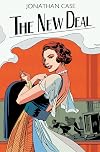
It’s 1936 and the height of the Great Depression but you wouldn’t know it at the Waldorf Astoria…unless, of course you’re a bellhop or a maid and you have to be constantly at the beck and call of the spoiled rich guests or the constant demands of management. When Nina Booth arrives in grand style with her trunk and her bird cage, bellhop Frank O’Malley is immediately smitten. But she’s way out of his league. Besides, he’s been unlucky at the poker table and he better pay up or show more else. Meanwhile, Theresa, an African American maid with acting aspirations (she’s in Orson Welles’ stage production of Macbeth staged with an all-black cast) has her own troubles. When a very expensive jewel-encrusted dog collar goes missing, the help is immediately suspected and the owner of the collar wants Theresa fired immediately despite her pleas of innocence. Fortunately (maybe), Nina steps in and asks to have Theresa assigned as her personal maid. But Nina may be more than just your average spoiled rich girl and Frank and Theresa may be in a whole lot deeper than they ever could have imagined.
Okay, I’ll admit it, I’m a huge fan of graphic novels and The New Deal is a fine example of why. Published by Dark Horse and written and beautifully illustrated by Jonathan Case, this, his latest graphic novel, is one heck of a fun heist story as well as an homage to the classic caper films of the era. With Case’s attention to both the costumes of the period as well as the Art Deco details of the architecture, it is also a feast for the eyes. show less
Okay, I’ll admit it, I’m a huge fan of graphic novels and The New Deal is a fine example of why. Published by Dark Horse and written and beautifully illustrated by Jonathan Case, this, his latest graphic novel, is one heck of a fun heist story as well as an homage to the classic caper films of the era. With Case’s attention to both the costumes of the period as well as the Art Deco details of the architecture, it is also a feast for the eyes. show less
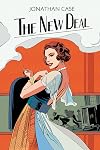
A slight but fun caper set in 1930s New York City, where bellhop Frank, maid Theresa, and socialite Nina get caught up in some shenanigans at the Waldorf Astoria. The art is lovely, but in terms of characters/relationships, I feel like everything wrapped up just as things were getting going. (Still, fodder here for a future polycule, y/y?)
Lists
Awards


You May Also Like


Associated Authors
Statistics
- Works
- 18
- Also by
- 10
- Members
- 737
- Popularity
- #34,455
- Rating
- 3.8
- Reviews
- 40
- ISBNs
- 32
- Languages
- 5
- Favorited
- 1