
Chuck Close (1940–2021)
Author of Chuck Close: Face Book
About the Author
Image credit: Art Card courtesy of Simon Fieldhouse
Works by Chuck Close
Chuck Close: Editions : a catalog raisonné and exhibition : The Butler Institute of American Art, Youngstown, Ohio, Se (1989) 6 copies
Chuck Close, recent work : [exhibition] October 26-24 November, 1979, the Pace Gallery (1977) 4 copies
CHUCK CLOSE: RECENT WORK 3 copies
Handmade paper editions 2 copies
Chuck Close 1 copy
art & antiques 1 copy
Associated Works
All I Did Was Ask: Conversations with Writers, Actors, Musicians, and Artists (2004) — Contributor — 603 copies, 13 reviews
Theories and Documents of Contemporary Art: A Sourcebook of Artists' Writings (1995) — Contributor — 418 copies, 1 review
Tagged
Common Knowledge
- Canonical name
- Close, Chuck
- Legal name
- Close, Charles Thomas
- Birthdate
- 1940-07-05
- Date of death
- 2021-08-19
- Gender
- male
- Education
- University of Washington, Seattle (B.A., 1962)
Yale University (M.F.A., 1964) - Occupations
- teacher
artist - Organizations
- American Academy of Arts and Letters (Art, 1992)
- Awards and honors
- Gold Medal, American Academy of Arts and Letters (Graphic Art, 2004)
- Cause of death
- congestive heart failure
dementia - Nationality
- USA
- Birthplace
- Monroe, Washington, USA
- Places of residence
- Monroe, Washington, USA
Bridgehampton, New York, USA - Associated Place (for map)
- USA
Members
Reviews
"Why do you only paint faces?"
"Why doesn't anyone in your art smile?"
"When you were paralyzed, were you afraid you wouldn't be able to paint again?"
These are some of the questions artist Chuck Close answers in his new autobiography for children. Filled with his portraits of mostly ordinary people, this book let's readers into Close's extraordinary life.
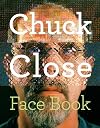
Born right here in Washington state in 1940, Close began taking art lessons at age 8. His severe dyslexia and prosopagnosia (face blindness) show more made school difficult, and so he put the full force of his attention into art. Over the years, Close developed his distinctive portraiture style featuring giant canvases filled with neutral faces, including many self-portraits. One great feature of this book is a section of Close's self-portraits divided horizontally into thirds so readers can mix and match his different works (you can see an example of this on the book's cover).
For 8- to 12-year-old budding artists and art lovers, there's no better non-fiction to read this summer. It's an inspirational story of an artist who overcame significant hardship to achieve success and fame. show less
"Why doesn't anyone in your art smile?"
"When you were paralyzed, were you afraid you wouldn't be able to paint again?"
These are some of the questions artist Chuck Close answers in his new autobiography for children. Filled with his portraits of mostly ordinary people, this book let's readers into Close's extraordinary life.
Born right here in Washington state in 1940, Close began taking art lessons at age 8. His severe dyslexia and prosopagnosia (face blindness) show more made school difficult, and so he put the full force of his attention into art. Over the years, Close developed his distinctive portraiture style featuring giant canvases filled with neutral faces, including many self-portraits. One great feature of this book is a section of Close's self-portraits divided horizontally into thirds so readers can mix and match his different works (you can see an example of this on the book's cover).
For 8- to 12-year-old budding artists and art lovers, there's no better non-fiction to read this summer. It's an inspirational story of an artist who overcame significant hardship to achieve success and fame. show less
I was fascinated by this book. It's structured as a Q&A with Chuck Close where he reflects on his process and his work. The book is beautifully designed. Starting with his problems in school, dealing with dyslexia and prosopagnosia, and then later after "the event" left him unable to move from the chest down.
Loved this quote from Close, "Inspiration is for amateurs. Artists just show up and get to wrok. Every idea occurs while you are working. If you are sitting around waiting for show more inspiration, you could sit there forever." (36) show less
Loved this quote from Close, "Inspiration is for amateurs. Artists just show up and get to wrok. Every idea occurs while you are working. If you are sitting around waiting for show more inspiration, you could sit there forever." (36) show less
Recommended Ages: Gr. 3-7
Plot Summary:
Intro: successful artist who wasn't good at math or reading, had spinal artery collapse leaving him paralyzed from the chest down
How did you become such a great artist?
What made you start to draw?
You liked to draw, so did you try cartooning?
Did you go to art school?
Why do you only paint faces?
Why do you make so many self-portraits?
Do you work from live models or photographs?
How do you start a painting? Do you put one color on first?
Where did you get the show more idea to use a grid?
Why are some of your faces in color and others in black and white?
Why doesn't anyone in your art smile?
Why are your paintings so big?
Have you ever painted anyone famous?
How did you find your style?
How do you make your pictures look so real?
Why do you sometimes use abstrat shapes in your "pixelated" pictures?
How long does it take you to make a painting?
Do others help you make your art?
Do you ever make paintings on paper?
When you were paralyzed, were you afraid you wouldn't be able to paint again?
Did you ever want to give up?
Did the Event change how you work in your studio?
Which artists have influenced you?
Do you have any advice for young artists?
Includes timeline, resources, glossary, and index.
Setting: studio in New York
Characters:
Chuck Close
paints his good friends who are artists
painted Bill Clinton
Recurring Themes: art, self portraits, dyslexia, face blindness, grids, quadriplegic, hard work, practice, learning disabilities
Controversial Issues: none
Personal Thoughts: This is a great introduction to Chuck Close and to the art process. It might be a nice read aloud to resource classes who struggle with math or reading. I really liked the part where you could look through all of the self-portraits and mix and match them. However, there were a few times I wish the artwork would be enlarged so I could see detail better, or more photos could have been included in the process. But as an introduction, it was good. There was one page that I read the wrong section first because of the page layout but because each section is so short, it was easy to finish the section then go back and read the paragraph I missed.
Genre: informational text, biography
Pacing:
Characters:
Frame:
Storyline:
Activity: self-portrait show less
Plot Summary:
Intro: successful artist who wasn't good at math or reading, had spinal artery collapse leaving him paralyzed from the chest down
How did you become such a great artist?
What made you start to draw?
You liked to draw, so did you try cartooning?
Did you go to art school?
Why do you only paint faces?
Why do you make so many self-portraits?
Do you work from live models or photographs?
How do you start a painting? Do you put one color on first?
Where did you get the show more idea to use a grid?
Why are some of your faces in color and others in black and white?
Why doesn't anyone in your art smile?
Why are your paintings so big?
Have you ever painted anyone famous?
How did you find your style?
How do you make your pictures look so real?
Why do you sometimes use abstrat shapes in your "pixelated" pictures?
How long does it take you to make a painting?
Do others help you make your art?
Do you ever make paintings on paper?
When you were paralyzed, were you afraid you wouldn't be able to paint again?
Did you ever want to give up?
Did the Event change how you work in your studio?
Which artists have influenced you?
Do you have any advice for young artists?
Includes timeline, resources, glossary, and index.
Setting: studio in New York
Characters:
Chuck Close
paints his good friends who are artists
painted Bill Clinton
Recurring Themes: art, self portraits, dyslexia, face blindness, grids, quadriplegic, hard work, practice, learning disabilities
Controversial Issues: none
Personal Thoughts: This is a great introduction to Chuck Close and to the art process. It might be a nice read aloud to resource classes who struggle with math or reading. I really liked the part where you could look through all of the self-portraits and mix and match them. However, there were a few times I wish the artwork would be enlarged so I could see detail better, or more photos could have been included in the process. But as an introduction, it was good. There was one page that I read the wrong section first because of the page layout but because each section is so short, it was easy to finish the section then go back and read the paragraph I missed.
Genre: informational text, biography
Pacing:
Characters:
Frame:
Storyline:
Activity: self-portrait show less
I dug this book for the most part. I enjoyed Close's answers to kids' questions- he is far more guileless than his art led me to believe. I liked the mix and match pieces of his portraits. There's something not there, though, and I can't put my finger on it exactly, but this book didn't scratch all the itch it created somehow. It's breathtakingly hard to talk about the creative process, and even harder to do so when one's audience is children whose natural bullshit detectors are set to show more maximum gain. For my money, Close does a good job. show less
Awards


You May Also Like


Associated Authors
Statistics
- Works
- 41
- Also by
- 4
- Members
- 446
- Popularity
- #54,978
- Rating
- 3.8
- Reviews
- 16
- ISBNs
- 28
- Languages
- 2