
Charles S. Cockell
Author of The Equations of Life: How Physics Shapes Evolution
About the Author
Works by Charles S. Cockell
Taxi from Another Planet: Conversations with Drivers about Life in the Universe (2022) 31 copies, 1 review
Impossible Extinction: Natural Catastrophes and the Supremacy of the Microbial World (2003) 24 copies
Extra-Terrestrial Liberty an Enquiry Into the Nature and Causes of Tyrannical Government Beyond the Earth (2013) 3 copies
Associated Works
Tagged
Common Knowledge
- Canonical name
- Cockell, Charles S.
- Other names
- Cockell, Charles
- Birthdate
- 1967-05-21
- Gender
- male
- Education
- University of Bristol
University of Oxford - Occupations
- microbiologist
astrobiologist
geomicrobiologist - Organizations
- Open University
British Antarctic Survey
University of Edinburgh
UK Centre for Astrobiology
Astrobiology Society of Britain
NASA Ames Research Center (show all 8)
Earth and Space Foundation
Association of Mars Explorers - Nationality
- UK
- Associated Place (for map)
- UK
Members
Reviews
Taxi from Another Planet: Conversations with Drivers about Life in the Universe by Charles S. Cockell
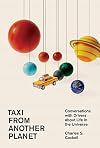
Charles Cockell takes a lot of cabs. He therefore has a lot of conversations with taxi drivers. As an astrobiologist, he is prone to want to talk about his domain – life elsewhere. This combination makes for an engaging book called Taxi From Another Planet. It is a fun topic and he approaches it with just the right dollops of seriousness and amusement. In 18 chapters, each headed up by where the taxi ride was from and to, Cockell uses his conversation with the driver to deliver a lecture show more on a specific topic: space travel, evolution, the stuff of life, why aliens have not appeared in these parts, and so on.
This is not my first review of a book by an astrobiologist. I find them attractive because it seems to be a paradox in itself – a biologist with nothing to study. So I want to read what they have to offer. Cockell is heavily involved in planning for space travel. He contributes to conferences and projects to investigate and populate other planets, notably Mars, which comes up often throughout the book.
He is expectedly enthusiastic about space travel. There is no question he would hop aboard the first flight offered to him. He can’t wait to see it all for himself. On the other hand, he is totally realistic about what is involved and what awaits.
Travelling to Mars for a monthlong vacation in a timeshare will not work. It would take about two years to get there, and two more to get back. If you think sitting in an airplane for 22 hours to get to Hong Kong from New York is all but unbearable, imagine two years. Once there, life quickly becomes unexciting, he thinks. The same weather – orange, with occasional gusts of red – becomes old really quickly.
Windows cannot open, as there is no oxygen to breathe outside. Every venture outdoors involves bulky equipment and life support. He does not say this, but it is really a one way trip. Those born on Mars and likely those who have been there a long time will find life on Earth impossible. They will be confined to wheelchairs here, as their leg and back muscles and their very bones won’t be able to support their bodies. Everything they try to lift here will weigh three times as much as it did on Mars, starting with their own shoes. The impurities in the unfiltered fresh air would likely prove toxic to someone who has only breathed office air all their life.
In addition, Mars has no radiation shield – no magnetic field to deflect the radiation from the sun. This has the effect of killing anything that tries to live on its surface. It is because Mars has lost its nuclear reactor. It must have run through all the uranium in its core, and petered out. The result is the loss of its atmosphere, surface water, and life.
Cockell does not discuss it, but Earth is undergoing the same process. Normally, the electromagnetic field reverses itself every few hundred thousand years. But it has become so weak, the latest pole reversal is hundreds of thousands of years overdue. Long before the sun turns into a gas giant, long before the Andromeda galaxy crashes through our Milky Way, the Earth will die from losing the nuclear reactor at its core. It will become another Mars.
He thinks of Martian living not as an escape from Earth (PLANet B), but a sort of honor, making humans the first multi-planetary species. But it is clearly not the solution to waiting out the Earth’s self-recovery from all the damage mankind is doing so we can come back and pick up where we left off a hundred thousand years later. Which seems to be the rationale for colonizing Mars.
Venus is even worse. Venus is on constant broil. This is the Greenhouse Effect so many like to deny as a hoax. Cockell says it is a free laboratory experiment in the Greenhouse Effect gone wild. We have no way at all of living on Venus. And if we’re not careful…
Intergalactic travel is yet worse still. It will require a gigantic ark of a spaceship, capable to maintaining a whole society of people, who need to eat, work and play together to keep from going mad. It will be a psychological disaster for the newly born to realize they have only one job in life – produce another generation that will also never leave the ship, as the journey will take at least a thousand years, depending on the state of technology. Their education will be for nothing; same for their careers. They will never go outside, never breathe fresh air, and never be alone. But they will be bored and depressed. They will be prisoners, born into the slavery of life on a spaceship. Cockell says “Given the fragility of the human mind and physique, we still cannot be sure that a crew of thousands, even tens of thousands, could stave off deterioration across ages and ages of travel.”
This is also a very good reason why aliens have not visited Earth. First, they would have to know about it, a large if in the scheme of things. It is only in the last hundred years that we have made our presence known with radio waves. Then they would have to decide to visit. Then they would have to travel, facing the same long haul we would have to make. They probably have their own problems to deal with. So intergalactic travel is likely too big a commitment for life in the universe. At least as far as Earth is concerned.
The lightest moment comes when Cockell asks readers to imagine a real episode of Star Trek. “In the first year of the mission, boredom sets in. The craft leaps across the universe, warp-speeding from one dead solar system to another. By year three, Captain Kirk has taken to drugs and spends much of his time listening to albums by The Doors, while his languid crew sit around watching B-movies and daydreaming about the better jobs they might have had in banking or real estate.”
And yet, Cockell is ready to go.
The book begins with a fanciful question from a cabbie – do you think there are cab drivers on other planets? After thinking about it for a chapter, Cockell says there must be, and he gives the reasons why. He also thinks we will be able to communicate with aliens because we both speak science. And science, notably physics, will be the same for all, all over the universe. That could be the basis for beginning to understand our languages.
But he doesn’t consider that aliens might not use language at all. They might not be carbon-based, a huge prejudice of most scientists. Earth did not always have oxygen in the air, and that did not stop evolution. Oxygen is a byproduct of cyanobacteria, which make the air seem blue. The advent of cyanobacteria actually killed off all other life on Earth, until new life that could tolerate oxygen evolved. Other planets might harbor life based on other combinations of elements. Their lifeforms might draw sustenance purely from their sun reacting with their atmosphere. They might communicate with what pass for eyes. We don’t know. But to assume they will basically have to be similar to us is just arrogance.
And then there is God. The laws of physics don’t mesh well with a universal God, overseeing and manipulating every single being and atom. “This sort of thing used to be a mystery, creating an opening for some sort of superior intelligence, God or otherwise, whose hand must have been at play in directing the workings of the animals. As long as life’s guiding principles were unfathomable, it made sense that there was a puppeteer pulling the strings. But we now see much more clearly that the forms taken by life, and the activities undertaken by living things, are not so difficult to explain … From bird flocks to herds of wilderbeest, we find the same principles at work, not the will of an awesome power. Nothing lies outside explanation; there is no élan vital. Humans and all other life on Earth and anywhere else in the universe are the organic manifestation of physical equations: mathematics given biological form.”
So what then is the purpose of life? “The quest to understand life in the universe is itself the purpose.”
One chapter I did not like was on quantum physics. Cockell tries to be cute, claiming to see real ghosts everywhere. By this he is referring to the properties of solo electrons that allow them to appear in two places at once, never be seen as a solid mass, and be both particle and wave at the same time. Also, atoms are largely empty space. From this he can winkingly say everything is a ghost, not solid and mostly transparent.
But this is only true of free, unassigned electrons. Once an electron is part of something larger, it loses those properties and behaves like a good citizen, doing whatever is required of it for the greater good. Just like people losing certain freedoms when they join a team. The team has rules, and they supersede the rules enjoyed by free agents. My left foot is not both on my leg and at the McDonalds in Times Square at the same time, even though it is chock full of electrons. Nor can my foot pass through a perforated metal screen like a wave can. Nor can the screen pass through my foot without a lot of force and bloodletting. It is absurd to claim that everything is a ghost in the real world. This is a misunderstanding of the very basic properties of the universe.
The taxi drivers come in all shapes and sizes. Some older, some younger, and a lot of women in Scotland and England. They have opinions and are not shy about sharing them. One worried aliens would take jobs away. Others couldn’t get excited about space travel at all. And sometimes, Cockell didn’t want to talk. That’s the thing about being human. It is less certain than even astrobiology. And we can see just how certain astrobiology is, right here.
David Wineberg show less
This is not my first review of a book by an astrobiologist. I find them attractive because it seems to be a paradox in itself – a biologist with nothing to study. So I want to read what they have to offer. Cockell is heavily involved in planning for space travel. He contributes to conferences and projects to investigate and populate other planets, notably Mars, which comes up often throughout the book.
He is expectedly enthusiastic about space travel. There is no question he would hop aboard the first flight offered to him. He can’t wait to see it all for himself. On the other hand, he is totally realistic about what is involved and what awaits.
Travelling to Mars for a monthlong vacation in a timeshare will not work. It would take about two years to get there, and two more to get back. If you think sitting in an airplane for 22 hours to get to Hong Kong from New York is all but unbearable, imagine two years. Once there, life quickly becomes unexciting, he thinks. The same weather – orange, with occasional gusts of red – becomes old really quickly.
Windows cannot open, as there is no oxygen to breathe outside. Every venture outdoors involves bulky equipment and life support. He does not say this, but it is really a one way trip. Those born on Mars and likely those who have been there a long time will find life on Earth impossible. They will be confined to wheelchairs here, as their leg and back muscles and their very bones won’t be able to support their bodies. Everything they try to lift here will weigh three times as much as it did on Mars, starting with their own shoes. The impurities in the unfiltered fresh air would likely prove toxic to someone who has only breathed office air all their life.
In addition, Mars has no radiation shield – no magnetic field to deflect the radiation from the sun. This has the effect of killing anything that tries to live on its surface. It is because Mars has lost its nuclear reactor. It must have run through all the uranium in its core, and petered out. The result is the loss of its atmosphere, surface water, and life.
Cockell does not discuss it, but Earth is undergoing the same process. Normally, the electromagnetic field reverses itself every few hundred thousand years. But it has become so weak, the latest pole reversal is hundreds of thousands of years overdue. Long before the sun turns into a gas giant, long before the Andromeda galaxy crashes through our Milky Way, the Earth will die from losing the nuclear reactor at its core. It will become another Mars.
He thinks of Martian living not as an escape from Earth (PLANet B), but a sort of honor, making humans the first multi-planetary species. But it is clearly not the solution to waiting out the Earth’s self-recovery from all the damage mankind is doing so we can come back and pick up where we left off a hundred thousand years later. Which seems to be the rationale for colonizing Mars.
Venus is even worse. Venus is on constant broil. This is the Greenhouse Effect so many like to deny as a hoax. Cockell says it is a free laboratory experiment in the Greenhouse Effect gone wild. We have no way at all of living on Venus. And if we’re not careful…
Intergalactic travel is yet worse still. It will require a gigantic ark of a spaceship, capable to maintaining a whole society of people, who need to eat, work and play together to keep from going mad. It will be a psychological disaster for the newly born to realize they have only one job in life – produce another generation that will also never leave the ship, as the journey will take at least a thousand years, depending on the state of technology. Their education will be for nothing; same for their careers. They will never go outside, never breathe fresh air, and never be alone. But they will be bored and depressed. They will be prisoners, born into the slavery of life on a spaceship. Cockell says “Given the fragility of the human mind and physique, we still cannot be sure that a crew of thousands, even tens of thousands, could stave off deterioration across ages and ages of travel.”
This is also a very good reason why aliens have not visited Earth. First, they would have to know about it, a large if in the scheme of things. It is only in the last hundred years that we have made our presence known with radio waves. Then they would have to decide to visit. Then they would have to travel, facing the same long haul we would have to make. They probably have their own problems to deal with. So intergalactic travel is likely too big a commitment for life in the universe. At least as far as Earth is concerned.
The lightest moment comes when Cockell asks readers to imagine a real episode of Star Trek. “In the first year of the mission, boredom sets in. The craft leaps across the universe, warp-speeding from one dead solar system to another. By year three, Captain Kirk has taken to drugs and spends much of his time listening to albums by The Doors, while his languid crew sit around watching B-movies and daydreaming about the better jobs they might have had in banking or real estate.”
And yet, Cockell is ready to go.
The book begins with a fanciful question from a cabbie – do you think there are cab drivers on other planets? After thinking about it for a chapter, Cockell says there must be, and he gives the reasons why. He also thinks we will be able to communicate with aliens because we both speak science. And science, notably physics, will be the same for all, all over the universe. That could be the basis for beginning to understand our languages.
But he doesn’t consider that aliens might not use language at all. They might not be carbon-based, a huge prejudice of most scientists. Earth did not always have oxygen in the air, and that did not stop evolution. Oxygen is a byproduct of cyanobacteria, which make the air seem blue. The advent of cyanobacteria actually killed off all other life on Earth, until new life that could tolerate oxygen evolved. Other planets might harbor life based on other combinations of elements. Their lifeforms might draw sustenance purely from their sun reacting with their atmosphere. They might communicate with what pass for eyes. We don’t know. But to assume they will basically have to be similar to us is just arrogance.
And then there is God. The laws of physics don’t mesh well with a universal God, overseeing and manipulating every single being and atom. “This sort of thing used to be a mystery, creating an opening for some sort of superior intelligence, God or otherwise, whose hand must have been at play in directing the workings of the animals. As long as life’s guiding principles were unfathomable, it made sense that there was a puppeteer pulling the strings. But we now see much more clearly that the forms taken by life, and the activities undertaken by living things, are not so difficult to explain … From bird flocks to herds of wilderbeest, we find the same principles at work, not the will of an awesome power. Nothing lies outside explanation; there is no élan vital. Humans and all other life on Earth and anywhere else in the universe are the organic manifestation of physical equations: mathematics given biological form.”
So what then is the purpose of life? “The quest to understand life in the universe is itself the purpose.”
One chapter I did not like was on quantum physics. Cockell tries to be cute, claiming to see real ghosts everywhere. By this he is referring to the properties of solo electrons that allow them to appear in two places at once, never be seen as a solid mass, and be both particle and wave at the same time. Also, atoms are largely empty space. From this he can winkingly say everything is a ghost, not solid and mostly transparent.
But this is only true of free, unassigned electrons. Once an electron is part of something larger, it loses those properties and behaves like a good citizen, doing whatever is required of it for the greater good. Just like people losing certain freedoms when they join a team. The team has rules, and they supersede the rules enjoyed by free agents. My left foot is not both on my leg and at the McDonalds in Times Square at the same time, even though it is chock full of electrons. Nor can my foot pass through a perforated metal screen like a wave can. Nor can the screen pass through my foot without a lot of force and bloodletting. It is absurd to claim that everything is a ghost in the real world. This is a misunderstanding of the very basic properties of the universe.
The taxi drivers come in all shapes and sizes. Some older, some younger, and a lot of women in Scotland and England. They have opinions and are not shy about sharing them. One worried aliens would take jobs away. Others couldn’t get excited about space travel at all. And sometimes, Cockell didn’t want to talk. That’s the thing about being human. It is less certain than even astrobiology. And we can see just how certain astrobiology is, right here.
David Wineberg show less
Is biology universal?
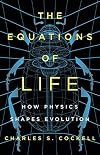
Sitting under my rock as I do, I had no idea there were astrobiologists. For a couple of decades now, apparently. One of them, Charles Cockell has written a book called The Equations of Life. Not only does it examine extraterrestrial life, but it firmly places physics underlying all of biology. Biology is totally dependent on physics.
Every lifeform seems to work along basic principles of physics or quantum physics. It’s all about processing electrons for their energy. show more The basic building blocks of life, amino acids, sugars and fatty acids are apparently raining down on planets all over the universe. Asteroids transport them. And water, which we like to think is our extraordinary trump card, is found commonly all over. The ingredients for life are everywhere. So there must be life out there, and there must be work for astrobiologists.
Cockell finds that life is pretty much going to be carbon-based, regardless of the planet or galaxy. Silicon-based life is possible, for example, but is just unlikely because of silicon’s inherent weaknesses. Silicon-based life is probably doomed to be primitive. Carbon however, is not only everywhere, it binds with everything appropriate to life. It’s the odds-on favorite for creating life. And will win the Darwinian battle.
The book takes a very long time to get to the good stuff. There is a lengthy examination of the ladybug, and how its wings and legs express physics equations. There is an in-depth examination of anthills and the sociology of their builders. These are interspersed with physics equations, partially explained, barely applied, and skippable. There is a great deal of basic biology and chemistry, including a long discourse on the periodic table. It is, despite Cockell’s efforts, rather flat.
Back in outer space, we do not know if the DNA/RNA system is universal, or how a DNA/RNA mutation system might perform in other environments, gravities, atmospheres, climates and seasons. But at the physics level, it is easier to predict. It’s the relationship of atmosphere to gravity to body mass that dictates it. This does not limit lifeforms; it enhances variations. Anything is possible, as long as it obeys the laws of physics. So, Cockell says, if there were a small planet with lesser gravity, and a thicker atmosphere, the top animals might be flying beings of human size. Maybe they wouldn’t have invented the automobile and burnt up all the carbon. Maybe they’d have really advanced flying machines. That’s the fun part of astrobiology. There is far too little of it in The Equations of Life.
Meanwhile, back on Earth, while we can’t say biology is universal right now, we can say that physics is. Everything that acts can be reduced to an equation. Is that good news. or what?
David Wineberg show less
Sitting under my rock as I do, I had no idea there were astrobiologists. For a couple of decades now, apparently. One of them, Charles Cockell has written a book called The Equations of Life. Not only does it examine extraterrestrial life, but it firmly places physics underlying all of biology. Biology is totally dependent on physics.
Every lifeform seems to work along basic principles of physics or quantum physics. It’s all about processing electrons for their energy. show more The basic building blocks of life, amino acids, sugars and fatty acids are apparently raining down on planets all over the universe. Asteroids transport them. And water, which we like to think is our extraordinary trump card, is found commonly all over. The ingredients for life are everywhere. So there must be life out there, and there must be work for astrobiologists.
Cockell finds that life is pretty much going to be carbon-based, regardless of the planet or galaxy. Silicon-based life is possible, for example, but is just unlikely because of silicon’s inherent weaknesses. Silicon-based life is probably doomed to be primitive. Carbon however, is not only everywhere, it binds with everything appropriate to life. It’s the odds-on favorite for creating life. And will win the Darwinian battle.
The book takes a very long time to get to the good stuff. There is a lengthy examination of the ladybug, and how its wings and legs express physics equations. There is an in-depth examination of anthills and the sociology of their builders. These are interspersed with physics equations, partially explained, barely applied, and skippable. There is a great deal of basic biology and chemistry, including a long discourse on the periodic table. It is, despite Cockell’s efforts, rather flat.
Back in outer space, we do not know if the DNA/RNA system is universal, or how a DNA/RNA mutation system might perform in other environments, gravities, atmospheres, climates and seasons. But at the physics level, it is easier to predict. It’s the relationship of atmosphere to gravity to body mass that dictates it. This does not limit lifeforms; it enhances variations. Anything is possible, as long as it obeys the laws of physics. So, Cockell says, if there were a small planet with lesser gravity, and a thicker atmosphere, the top animals might be flying beings of human size. Maybe they wouldn’t have invented the automobile and burnt up all the carbon. Maybe they’d have really advanced flying machines. That’s the fun part of astrobiology. There is far too little of it in The Equations of Life.
Meanwhile, back on Earth, while we can’t say biology is universal right now, we can say that physics is. Everything that acts can be reduced to an equation. Is that good news. or what?
David Wineberg show less

This was fascinating until the final two chapters.
Well done book about the constraints of physics on the evolution of life and the implications for the possibilities of life among the stars.
Lists
RAS (1)
Awards

You May Also Like


Associated Authors
Statistics
- Works
- 23
- Also by
- 1
- Members
- 305
- Popularity
- #77,180
- Rating
- 3.5
- Reviews
- 5
- ISBNs
- 58
- Languages
- 3