
Larry L. Constantine
Author of Software for Use: A Practical Guide to the Models and Methods of Usage-Centered Design (ACM Press)
About the Author
Works by Larry L. Constantine
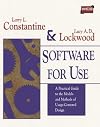
Software for Use: A Practical Guide to the Models and Methods of Usage-Centered Design (ACM Press) (1999) 85 copies, 2 reviews
Infinite Loop: Stories About the Future by the People Creating It: Software Development's Own Anthology of Science Fiction (1994) — Editor; Contributor — 12 copies
Software for Use: A Practical Guide to the Models and Methods of Usage-Centered Design (2008) 2 copies
Group marriage 1 copy
Tagged
Common Knowledge
- Canonical name
- Constantine, Larry L.
- Legal name
- Constantine, Larry LeRoy
- Other names
- Samson, Lior (pen name)
- Birthdate
- 1943
- Gender
- male
- Occupations
- Software engineer
professor - Organizations
- ACM (Fellow, 2007)
Industrial Designers Society of America (Member)
Usability Professionals' Association (Member)
IEEE Computer Society (Member)
Science Fiction and Fantasy Writers of America (Member) - Awards and honors
- Stevens Award (2009)
Simon Rockower Award (2011) - Nationality
- USA
- Associated Place (for map)
- USA
Members
Reviews
Software for Use: A Practical Guide to the Models and Methods of Usage-Centered Design by Larry L. Constantine
This is a classic that was a great leap forward for the art of designing for usability. And it came just at the right time as the web went mainstream.
I remember having the privilege of taking one of Larry Constantine's courses back around 2000 (I loved the course so much I bought the book, as they say;-). That was when he converted me to the "Essential Use Case" technique, which to this day is my preferred mode of thinking about user interaction.
Almost ten years later, we are still learning show more of course. We have a new generation of design leaders - Robert Hoekman, Steve Krug etc - but it is telling to see just how well Software for Use has stood the test of time. Aside from the fact that examples tend to (necessarily) refer to contemporary but now obsolete software and widgets, the core philosophy and advice is just as relevant today. show less
I remember having the privilege of taking one of Larry Constantine's courses back around 2000 (I loved the course so much I bought the book, as they say;-). That was when he converted me to the "Essential Use Case" technique, which to this day is my preferred mode of thinking about user interaction.
Almost ten years later, we are still learning show more of course. We have a new generation of design leaders - Robert Hoekman, Steve Krug etc - but it is telling to see just how well Software for Use has stood the test of time. Aside from the fact that examples tend to (necessarily) refer to contemporary but now obsolete software and widgets, the core philosophy and advice is just as relevant today. show less
Software for Use: A Practical Guide to the Models and Methods of Usage-Centered Design by Larry L. Constantine
This is a classic that was a great leap forward for the art of designing for usability. And it came just at the right time as the web went mainstream.
I remember having the privilege of taking one of Larry Constantine's courses back around 2000 (I loved the course so much I bought the book, as they say;-). That was when he converted me to the "Essential Use Case" technique, which to this day is my preferred mode of thinking about user interaction.
Almost ten years later, we are still learning show more of course. We have a new generation of design leaders - Robert Hoekman, Steve Krug etc - but it is telling to see just how well Software for Use has stood the test of time. Aside from the fact that examples tend to (necessarily) refer to contemporary but now obsolete software and widgets, the core philosophy and advice is just as relevant today. show less
I remember having the privilege of taking one of Larry Constantine's courses back around 2000 (I loved the course so much I bought the book, as they say;-). That was when he converted me to the "Essential Use Case" technique, which to this day is my preferred mode of thinking about user interaction.
Almost ten years later, we are still learning show more of course. We have a new generation of design leaders - Robert Hoekman, Steve Krug etc - but it is telling to see just how well Software for Use has stood the test of time. Aside from the fact that examples tend to (necessarily) refer to contemporary but now obsolete software and widgets, the core philosophy and advice is just as relevant today. show less
It was a well told tale about the crazy things things geeks get up to.
Some of the stuff was a little too neat to be believed, but overall it worked. Some good plot twists.
Some of the stuff was a little too neat to be believed, but overall it worked. Some good plot twists.
Awards

You May Also Like


Associated Authors
Statistics
- Works
- 19
- Members
- 314
- Popularity
- #75,176
- Rating
- 3.7
- Reviews
- 3
- ISBNs
- 21
- Languages
- 1