
Stig Dagerman (1923–1954)
Author of A Burnt Child
About the Author
Stig Dagerman (1923-1954) was the literary wunderkind of his generation in Sweden. Surpassed in Swedish literature perhaps only by August Strindberg in terms of his work's compressed intensity, Dagerman's remarkable literary output came to an abrupt end when he committed suicide at the age of show more thirty-one. Gri Somnen(Sleep Walking) By Karin Mamma Anderson, 1986. The Artist is Represented by Galleri Magnus Karlsson, Stockholm and the David Zwirner Gallery, New York Photo by Buknowskis Auctions Author Photograph Courtesy of Norstedts Agency. show less
Disambiguation Notice:
(nor) Ref. Bjørn Ranelid har skrevet en "biografi"
Works by Stig Dagerman
Den yttersta dagen 5 copies
Föräldrabesvär 4 copies
Svenska radiopjäser. 1955 2 copies
Matar a un niño 1 copy
To Kill A Child 1 copy
Käärme : Romaani 1 copy
Judasdramer 1 copy
Dramer om dömda 1 copy
Associated Works
Meesters der Zweedse vertelkunst — Author, some editions — 10 copies
Tagged
Common Knowledge
- Legal name
- Dagerman, Stig Halvard
- Other names
- Dagerman, Stig
- Birthdate
- 1923-10-05
- Date of death
- 1954-11-04 [1954]
- Gender
- male
- Occupations
- journalist
novelist
short story writer
playwright - Short biography
- Stig Dagerman was one of the most popular Swedish writers of the 1940s, enjoying phenomenal success with novels, short stories, a book about postwar Germany, plays, poems, satirical verses, essays, and journalism.
- Nationality
- Sweden
- Birthplace
- Älvkarleby, Sweden
- Places of residence
- Älvkarleby (Uppsala), Zweden
Danderyd, Zweden - Place of death
- Stockholm, Sweden
- Burial location
- Älvkarleby kyrkogård, Älvkarleby, Sweden
- Disambiguation notice
- Ref. Bjørn Ranelid har skrevet en "biografi"
- Associated Place (for map)
- Älvkarleby, Sweden
Members
Reviews
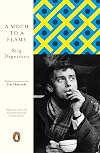
Written in 1948, this Swedish classic typifies Nordic literature in its sparse darkness and tension throughout.
This slim novel begins on the day of the protagonist's mother's funeral. She is a woman who was generally not well liked by neighbours or family, but as his mother the young man loved her and is bereft by her loss. As the novel develops, his grief and confusion is heightened as his father brings the woman he was having an affair with whilst his wife was still alive into the young show more man's life, and he becomes bent on getting his revenge on his father and his lover.
The first part of the novel I found to be quite difficult as the grief of the young man is pronounced and makes for bleak reading, but it slowly begins to reveal itself as a novel of some brilliance. Dagerman keeps the reader in an enthralled state of tension as the young man becomes more and more erratic and unreliable in thought and action as he tries to make sense of his grief and his confused feelings towards his father, his father's lover and his own fiancee.Through his thoughts, Dagerman explores the complexity of love and hate and how they are inextricably linked as two sides of the same coin.
Sadly Dagerman took his own life in his early 30s, and it feels as if some of his own wrestlings with life seep their way into the inner turmoil of the protagonist as he tries to make sense of what is unfolding around him.
4 stars - a dark and gripping novel that keeps you tense throughout. show less
This slim novel begins on the day of the protagonist's mother's funeral. She is a woman who was generally not well liked by neighbours or family, but as his mother the young man loved her and is bereft by her loss. As the novel develops, his grief and confusion is heightened as his father brings the woman he was having an affair with whilst his wife was still alive into the young show more man's life, and he becomes bent on getting his revenge on his father and his lover.
The first part of the novel I found to be quite difficult as the grief of the young man is pronounced and makes for bleak reading, but it slowly begins to reveal itself as a novel of some brilliance. Dagerman keeps the reader in an enthralled state of tension as the young man becomes more and more erratic and unreliable in thought and action as he tries to make sense of his grief and his confused feelings towards his father, his father's lover and his own fiancee.Through his thoughts, Dagerman explores the complexity of love and hate and how they are inextricably linked as two sides of the same coin.
Sadly Dagerman took his own life in his early 30s, and it feels as if some of his own wrestlings with life seep their way into the inner turmoil of the protagonist as he tries to make sense of what is unfolding around him.
4 stars - a dark and gripping novel that keeps you tense throughout. show less

Uno scrittore tormentato e semi-sconosciuto e una serie di racconti bellissimi e tragici, per i quali la sola idea di lieto fine è da considerarsi offensiva. Personaggi dai contorni netti, lucidissimi nel loro male di vivere, soprattutto i bambini, che sono piccoli solo nell'età ma non nella comprensione dell'orrore in cui si trovano a vivere.
I was surprised by "A Moth to a Flame". I had read another work by Dagerman ("Island of the Doomed") and enjoyed it a great deal (5 stars) but it didn't prepare me for this currently reviewed work. This work stunned me. The prose is deceptively simple but the power of the prose is overwhelming.
We are slowly drawn into the emotional life of the main character (Bengt). What at first seems to be a quirky but fundamentally understandable emotional life leads us into an increasingly uneasy show more place. The author toys with our initial empathy. As the title implies we become more and more anxious about where this is headed. We have become the ones who are at risk. The conclusion finally releases us but doesn't completely heal the pain of our journey.
Dagerman's work is masterful. He manages our mood in addition to the plot with a simplicity which disguises it's power. We find, despite our fears, we must read more. A remarkable talent and an equally remarkable novel. show less
We are slowly drawn into the emotional life of the main character (Bengt). What at first seems to be a quirky but fundamentally understandable emotional life leads us into an increasingly uneasy show more place. The author toys with our initial empathy. As the title implies we become more and more anxious about where this is headed. We have become the ones who are at risk. The conclusion finally releases us but doesn't completely heal the pain of our journey.
Dagerman's work is masterful. He manages our mood in addition to the plot with a simplicity which disguises it's power. We find, despite our fears, we must read more. A remarkable talent and an equally remarkable novel. show less
German Autumn by Stig Dagerman. Dagerman, a Swedish journalist, gives a fascinating look at Germany immediately after the fall of the Third Reich. Reeling from destruction, hunger, and all manner of tragedy, Dagerman gives insight into the hearts and minds of the German citizens and their reactions to the chaos that followed after the Allied invasion of Germany. While the control of the Third Reich over Germany may have ended, Germans experienced another war.. a war of poverty, hunger, and show more conscience. This slim volume is enlightening and thought-provoking. As Albert Einstein said, "The only source of knowledge is experience.” show less
Lists
Awards


You May Also Like


Associated Authors
Statistics
- Works
- 61
- Also by
- 3
- Members
- 1,810
- Popularity
- #14,213
- Rating
- 3.9
- Reviews
- 54
- ISBNs
- 215
- Languages
- 17
- Favorited
- 11
