
Danielle Evans
Author of The Office of Historical Corrections: A Novella and Stories
About the Author
Works by Danielle Evans
Associated Works
The Goodness of St. Rocque and Other Stories (1899) — Introduction, some editions — 26 copies, 1 review
Tagged
Common Knowledge
- Other names
- Evans, Danielle Valore
- Birthdate
- 1983
- Gender
- female
- Education
- Columbia University (Anthropology)
University of Iowa (Writers’ Workshop)
Wisconsin Institute for Creative Writing (fellow) - Occupations
- teacher of fiction writing (American University, College of Arts and Sciences)
- Awards and honors
- National Book Foundation "5 Under 35" (2011)
- Agent
- Ayesha Pande
- Nationality
- USA
- Birthplace
- Virginia, USA
- Places of residence
- Washington, D.C., USA
Falls Church, Virginia, USA
Fairfax, Virginia, USA
Arlington, Virginia, USA
New York, USA
Cleveland, Ohio, USA - Associated Place (for map)
- Virginia, USA
Members
Reviews
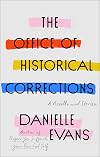
Holy shit. A beautiful and horrifying series of 6 short stories and a novella. The book focuses on themes of race, culture, history, and gender in tottally unique and insightful ways. Who gets to tell us the truths of American History, and what is the cost of setting these stories straight.
I really enjoyed the short stories Richard of York Gave Battle in Vain and Anything Could Disappear.
The Office of Historical Corrections was a really fascinating look into family histories and the show more relationships we make. The ending was astonishing.
Read more short stories and novellas! show less
I really enjoyed the short stories Richard of York Gave Battle in Vain and Anything Could Disappear.
The Office of Historical Corrections was a really fascinating look into family histories and the show more relationships we make. The ending was astonishing.
Read more short stories and novellas! show less
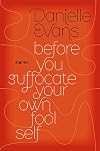
I’m not all that crazy about volumes of short stories unless they are very, very good. (Flannery O’Connor for example.) I was willing to take a flyer on Before You Suffocate Your Own Fool Self given the high praise the young author Danielle Evans had received, but I remained skeptical.
It was a true pleasure to find that several of her stories fall into the category of very, very good indeed, and even her weaker stories are engaging. She focuses on characters who are balancing between show more shifting worlds – many are teenage girls in that odd realm where adolescence shades into adulthood, one is a soldier returning from Iraq to try and pick up with his life, another a girl with a white mother and African American father who must spend the summer with her wealthy, Palisade Hills Country Club-member grandmother, one an African American student at Columbia University watching as her white roommate finances her education by serving as an egg donor to childless couples.
The complexities of race and class in America are themes throughout Before You Suffocate Your Own Fool Self, but Evans is never polemic, clichéd, or tedious. She is relentlessly honest with her characters and with the reader, unsentimental but kind. When you watch the people in her stories make terrible decisions, you realize that you could have found yourself making exactly the same mistakes.
The first story, “Virgins” was originally published in the The Paris Review and it is honed and polished to perfection – it shows the evidence of a young author having worked and re-worked a narrative until every word hums like a vibrating tuning fork. It’s arguably the best of the pieces in the book and I’m sure it’s no accident the volume begins with this story. “Robert E. Lee is Dead” is the final story and to my mind it’s almost as strong as “Virgins.” Both look at a pair of teenage girls at an irrevocable moment of transition. Both are pitch perfect and deeply moving. I would highly recommend Before You Suffocate Your Own Fool Self to just about anyone, as long as you enjoy fiction, you’re going to enjoy this. show less
It was a true pleasure to find that several of her stories fall into the category of very, very good indeed, and even her weaker stories are engaging. She focuses on characters who are balancing between show more shifting worlds – many are teenage girls in that odd realm where adolescence shades into adulthood, one is a soldier returning from Iraq to try and pick up with his life, another a girl with a white mother and African American father who must spend the summer with her wealthy, Palisade Hills Country Club-member grandmother, one an African American student at Columbia University watching as her white roommate finances her education by serving as an egg donor to childless couples.
The complexities of race and class in America are themes throughout Before You Suffocate Your Own Fool Self, but Evans is never polemic, clichéd, or tedious. She is relentlessly honest with her characters and with the reader, unsentimental but kind. When you watch the people in her stories make terrible decisions, you realize that you could have found yourself making exactly the same mistakes.
The first story, “Virgins” was originally published in the The Paris Review and it is honed and polished to perfection – it shows the evidence of a young author having worked and re-worked a narrative until every word hums like a vibrating tuning fork. It’s arguably the best of the pieces in the book and I’m sure it’s no accident the volume begins with this story. “Robert E. Lee is Dead” is the final story and to my mind it’s almost as strong as “Virgins.” Both look at a pair of teenage girls at an irrevocable moment of transition. Both are pitch perfect and deeply moving. I would highly recommend Before You Suffocate Your Own Fool Self to just about anyone, as long as you enjoy fiction, you’re going to enjoy this. show less
 This review was written for LibraryThing Early Reviewers.
A stunning, immersive series of stories (and a novella). In "Boys Go to Jupiter," college freshman Claire is photographed in a Confederate flag bikini purchased by the boy she's dating to annoy her stepmother; when a photo on social media riles her campus, Claire doubles down instead of apologizing; but behind Claire's floundering is her grief over her own dead mother, and the loss, through estrangement, of her "second mother," her best friend's mother who also battled cancer, but survived. show more In "Anything Could Disappear," Vera is on a bus to New York to help her former employer with a drug deal when a woman leaves one of her children on the bus with Vera; after a halfhearted attempt to see if anyone is looking for the boy, Vera takes care of him for several months, before searching again and returning him to his father, then disappearing again. In "Why Won't Women Just Say What They Want," a male artist leaves public apologies for all of the women he has wronged. And in "The Office of Historical Corrections," Cassie works at the Institute for Public History, and is sent to correct a correction made by her former colleague and lifelong friend/competition, Genevieve. In Wisconsin, the women discover there is more to the story - including, likely, a Black woman who passed as white, whose grandson is a violent white supremacist.
Epigraphs: James Baldwin and Lucille Clifton
"Happily Ever After"
...sometimes all it took to become something was to want it. (12)
"Alcatraz"
...wonder what she wanted me to do with a cautionary tale in which the caution was against growing up. (87)
"They're still your family," I insisted.
"They are NOT my family," my mother said. "We're just related." (92)
...you take nothing for granted when the price of it is etched across the face of the person you love the most, when you are born into a series of loans and know you will never by up to the cost of the debt. (95)
Here is what you have to understand about my mother's childhood: it wasn't one. (99)
"Anything Could Disappear"
Vera got good at pretending not to notice people who didn't want to be seen. (139)
"The Office of Historical Corrections"
She thought the insistence on victims without wrongdoers was at the base of the whole American problem, the lie that supported all the others. (186)
Midwest nice was a steady, polite gaslighting I found sinister, a forced humility that prevented anyone from speaking up when they'd been diminished or disrespected, lest they be labeled an outsider. (194)
Things started quickly between us but then didn't seem to know where to go. (200)
"...because you know how white people love their history right up until it's true." (Genie to Cassie, 222)
"You know how to be careful and you know how to do the right thing, but you've never known how to do both." (Genevieve to Cassie, 223)
I left...with the anticlimactic sense that my job was both done and forever undoable, a simple matter of reconciling the record books and an impossible matter of making any kind of actual repair. (239)
...the loop of history that was always a noose if you looked at it long enough. (249)
"The beauty of motherhood is that all the choices are wrong." (Genevieve, 258)
"People can convince themselves of anything if they want badly enough to believe it."
"Why are you doing any of this then? If you don't think telling people the truth makes a difference?" (259) show less
Epigraphs: James Baldwin and Lucille Clifton
"Happily Ever After"
...sometimes all it took to become something was to want it. (12)
"Alcatraz"
...wonder what she wanted me to do with a cautionary tale in which the caution was against growing up. (87)
"They're still your family," I insisted.
"They are NOT my family," my mother said. "We're just related." (92)
...you take nothing for granted when the price of it is etched across the face of the person you love the most, when you are born into a series of loans and know you will never by up to the cost of the debt. (95)
Here is what you have to understand about my mother's childhood: it wasn't one. (99)
"Anything Could Disappear"
Vera got good at pretending not to notice people who didn't want to be seen. (139)
"The Office of Historical Corrections"
She thought the insistence on victims without wrongdoers was at the base of the whole American problem, the lie that supported all the others. (186)
Midwest nice was a steady, polite gaslighting I found sinister, a forced humility that prevented anyone from speaking up when they'd been diminished or disrespected, lest they be labeled an outsider. (194)
Things started quickly between us but then didn't seem to know where to go. (200)
"...because you know how white people love their history right up until it's true." (Genie to Cassie, 222)
"You know how to be careful and you know how to do the right thing, but you've never known how to do both." (Genevieve to Cassie, 223)
I left...with the anticlimactic sense that my job was both done and forever undoable, a simple matter of reconciling the record books and an impossible matter of making any kind of actual repair. (239)
...the loop of history that was always a noose if you looked at it long enough. (249)
"The beauty of motherhood is that all the choices are wrong." (Genevieve, 258)
"People can convince themselves of anything if they want badly enough to believe it."
"Why are you doing any of this then? If you don't think telling people the truth makes a difference?" (259) show less

A collection of six short stories and one novella of about 100 pages, all of which deal, in some fashion or other, with the complicated and often enraging experiences of being Black and/or female in America.
Several of the short stories do a particular kind of literary-fiction thing that doesn't always work for me, where they feel like they have just enough of something that feels sort of plot-shaped to be unsatisfying when they don't resolve in a plotty way, after all. But Evans' writing is show more so clear and sharp and insightful that it swept any such dissatisfaction quite effectively aside. That was true for the titular novella, too, which for a while I thought might have the opposite problem -- too much focus on a slowly developing plot whose basic premise I had some trouble buying, perhaps -- but which certainly won me over by the end, having turned out to have a great deal to say and an impactful way of saying it. And then there's the story "Why Won't Women Just Say What they Want," which could be described as a sort of parable about the #metoo movement and male 'apologies,' which was just unreservedly brilliant in a way that hit me like a ton of bricks. show less
Several of the short stories do a particular kind of literary-fiction thing that doesn't always work for me, where they feel like they have just enough of something that feels sort of plot-shaped to be unsatisfying when they don't resolve in a plotty way, after all. But Evans' writing is show more so clear and sharp and insightful that it swept any such dissatisfaction quite effectively aside. That was true for the titular novella, too, which for a while I thought might have the opposite problem -- too much focus on a slowly developing plot whose basic premise I had some trouble buying, perhaps -- but which certainly won me over by the end, having turned out to have a great deal to say and an impactful way of saying it. And then there's the story "Why Won't Women Just Say What they Want," which could be described as a sort of parable about the #metoo movement and male 'apologies,' which was just unreservedly brilliant in a way that hit me like a ton of bricks. show less
Lists
Awards


You May Also Like


Associated Authors
Statistics
- Works
- 3
- Also by
- 7
- Members
- 1,546
- Popularity
- #16,659
- Rating
- 4.0
- Reviews
- 74
- ISBNs
- 18
- Languages
- 1
- Favorited
- 1
