
David Goodis (1917–1967)
Author of Shoot the Piano Player
About the Author
Works by David Goodis
David Goodis, tome 2 : Obsession, La lune dans le caniveau, La blonde au coin de la rue, Descente aux enfers, Beauté bleue (1994) 5 copies
The Plunge [short story] 4 copies
Caravan To Tarim 2 copies
HLo Iscassinatore 1 copy
Black Lizard 1 copy
A lua nasce sarjeta 1 copy
ROMANZI 1 copy
Skuggor över Manhattan 1 copy
David Goodis: Retour à la vie; La garce; La police est accusée; Cassidy's girl; Épaves (1993) 1 copy
℗La ℗fuga: romanzo 1 copy
Goodis David 1 copy
Associated Works
Tagged
Common Knowledge
- Legal name
- Goodis, David Loeb
- Birthdate
- 1917-03-02
- Date of death
- 1967-01-07
- Gender
- male
- Education
- Temple University
- Occupations
- author
screenwriter - Cause of death
- stroke ("cerebral vascular accident" on death certificate)
- Nationality
- USA
- Birthplace
- Philadelphia, Pennsylvania, USA
- Place of death
- Philadelphia, Pennsylvania, USA
- Burial location
- Roosevelt Memorial Park, Trevose, Bucks County, Pennsylvania, USA
- Associated Place (for map)
- Pennsylvania, USA
Members
Reviews

“Dark Passage" is a hugely underrated and stylish film-noir that sees Vincent Parry (Humphrey Bogart), as an innocent man falsely convicted of killing his wife, breaking out of San Quentin in an effort to prove his innocence... or perhaps to get revenge. He’s assisted by the beautiful Irene Jansen (Lauren Bacall) who may have her own particular motivations in regard Parry. Directed with a real flourish by Delmer Daves who shoots the first forty minutes of the film from Parry’s show more perspective, which means that we don’t actually see Bogart’s face until well into the movie. That Daves manages to keep this approach riveting says much about his skilful direction and Bogart’s power as an actor. The views of 1940s San Francisco and the Golden Gate Bridge are splendidly captured giving a real feeling of place and locale. Sidney Hickox's stylish cinematography adds finesse to look of the city as it does to the interiors and in particularly to Irene’s apartment and it modernist look. Franz Waxman's swing score is also a powerful presence in the film adding to that palpable sense of time and place. Bogart is excellently supported by the rest of the cast - the radiant Bacall who easily holds her own with her powerful leading man. Perhaps the strongest performance, however, is from Agnes Moorehead who is suitably grating as Parry's nemesis, the twisted Madge Rapf. A great performance that helps elevate “Dark Passage” into the pantheon of classic noir. show less
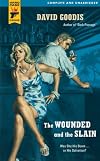
David Goodis was the noir poet of Philadelphia. His books are known for being dark, dreary, tales of a man all alone, perhaps accused or suspected of a crime, with what seems like half a city against him, as he falls further and further into the muck and mire to escape the hoods that are after him. His books are nearly always top-notch. "The Wounded and The Slain," although it deals with depression, angst, unhappiness, bitterness, and the like, somehow feels a bit brighter than most of show more Goodis' work. Perhaps that is because of the setting, which, for most of the book, takes place in Jamaica at a beach resort. Perhaps his writing is a bit livelier here. This work is easily approachable and easily read in one or two sittings.
James and Cora Bevin are an unhappily married couple who live in New York City. She is frigid. He is unhappy and has turned first to prostitutes and then to the bottle and then to pyschoanalysis. They are both bitterly unhappy with each other and with their lives and yet have never managed to quit each other. Goodis does an excellent job of capturing their history and background in a short chapter. They are in Jamaica for a change of scenery, a chance to recapture their early romance, the spark which has long since disappeared.
Goodis really captures James' angst, his wallowing in self-pity, his drowning himself in bottle after bottle of rum, while Cora never wants to leave the room and is embarressed time and again by James' drunken performances at the hotel. She finds herself attracted to a stranger who aims to take her away from James and James senses it and seems ready to let her go. He heads into the Kingston slums to find another bar, to drown himself, to lose himself. He is admittedly suicidal at times and perhaps he's thinking he will get mugged and it will be all over.
But James and Cora are not the horrible people the publisher's blurb would lead you to believe. They are both basically decent but troubled people. The book contains streams of consciousness from both and their inner conversations will lead the reader to wonder which, if either, is sane and which will have a complete nervous breakdown.
James does something in the slums. He at first tries to walk away from it, but his conscience forces him to come to terms with it and there is a point at which this flawed being finds redemption. Throughout it all, though, you never know when James will just give up and drown in the muck and the mire. show less
James and Cora Bevin are an unhappily married couple who live in New York City. She is frigid. He is unhappy and has turned first to prostitutes and then to the bottle and then to pyschoanalysis. They are both bitterly unhappy with each other and with their lives and yet have never managed to quit each other. Goodis does an excellent job of capturing their history and background in a short chapter. They are in Jamaica for a change of scenery, a chance to recapture their early romance, the spark which has long since disappeared.
Goodis really captures James' angst, his wallowing in self-pity, his drowning himself in bottle after bottle of rum, while Cora never wants to leave the room and is embarressed time and again by James' drunken performances at the hotel. She finds herself attracted to a stranger who aims to take her away from James and James senses it and seems ready to let her go. He heads into the Kingston slums to find another bar, to drown himself, to lose himself. He is admittedly suicidal at times and perhaps he's thinking he will get mugged and it will be all over.
But James and Cora are not the horrible people the publisher's blurb would lead you to believe. They are both basically decent but troubled people. The book contains streams of consciousness from both and their inner conversations will lead the reader to wonder which, if either, is sane and which will have a complete nervous breakdown.
James does something in the slums. He at first tries to walk away from it, but his conscience forces him to come to terms with it and there is a point at which this flawed being finds redemption. Throughout it all, though, you never know when James will just give up and drown in the muck and the mire. show less

David Goodis’s Dark Passage is most famous today because of the WB film starring Humphrey Bogart and Lauren Bacall. Goodis sold the rights to film it for $25,000 and secured for himself immortality by doing so. To those who read, however, and especially those who enjoy a good crime noir, Goodis’s name would be known and bandied about during discussions of the genre, regardless.
Anyone familiar with the very good film based on the book knows that for the first forty minutes or so of the show more movie, we are in Parry’s (Bogart’s) shoes during the prison break and the ensuing escape. We never see Parry’s face during this portion of the film. Goodis’s entire novel is the equivalent of that portion of the film, the reader placed into Parry’s head, “hearing” him panic, reason out things, fight his fear and paranoia, and finally, figure out who killed his unfaithful wife and framed him for the murder.
Tightly constructed and narratively claustrophobic, Dark Passage is a unique narrative that won’t appeal to everyone. It is more likely to appeal to fans of the genre, and fans of the greatest writer of suspense, Cornell Woolrich. Goodis here seems to be influenced by Woolrich’s work. Parry even has an entire conversation in his head with his only friend, who has just been murdered, which is very Woolrichian.
One can almost picture Agnes Morehead as the shrill and annoying Madge Rapf, and Bacall as the lovely and lonely Irene, whose motives for helping Parry hide out at the outset, and later so that his face can heal when he has it altered, are at first unclear. Those motives will be seem more ambiguous for anyone who hasn’t seen the 40s film, but that’s not many.
There is loneliness here, and not just Parry’s, and there is that feeling of the little guy fighting against fate which permeated Woolrich’s work during this period. While Goodis doesn’t quite reach the level of Woolrich noir, this is very good, and there are moments when he comes close. A tricky and ultimately dooming confrontation with a guy referred to as Studebaker for much of the book, and the color of a car, set in motion an exciting conclusion. It is here, at the end, when Goodis throws the reader a Deadline at Dawn type of lifeline that makes this a memorable read.
While the narrative style of nearly every thought in Parry’s head can become too overblown at times, at other times it’s marvelous, both cerebrally claustrophobic and entertainingly mesmerizing. This seminal noir novel will have you looking up Patavilca, Peru on your globe, and wondering…
Because Goodis seemed to be channeling Woolrich, but didn’t quite reach that lofty plateau, this is 4.5 stars for me. But it is such a terrific read, I’m rounding up. A unique novel (unless you’ve read Woolrich), and like Woolrich, not for everyone. Fans of 1940s and '50s noir/suspense, however, must have a go at it to sample the full spectrum of what the genre has to offer. show less
Anyone familiar with the very good film based on the book knows that for the first forty minutes or so of the show more movie, we are in Parry’s (Bogart’s) shoes during the prison break and the ensuing escape. We never see Parry’s face during this portion of the film. Goodis’s entire novel is the equivalent of that portion of the film, the reader placed into Parry’s head, “hearing” him panic, reason out things, fight his fear and paranoia, and finally, figure out who killed his unfaithful wife and framed him for the murder.
Tightly constructed and narratively claustrophobic, Dark Passage is a unique narrative that won’t appeal to everyone. It is more likely to appeal to fans of the genre, and fans of the greatest writer of suspense, Cornell Woolrich. Goodis here seems to be influenced by Woolrich’s work. Parry even has an entire conversation in his head with his only friend, who has just been murdered, which is very Woolrichian.
One can almost picture Agnes Morehead as the shrill and annoying Madge Rapf, and Bacall as the lovely and lonely Irene, whose motives for helping Parry hide out at the outset, and later so that his face can heal when he has it altered, are at first unclear. Those motives will be seem more ambiguous for anyone who hasn’t seen the 40s film, but that’s not many.
There is loneliness here, and not just Parry’s, and there is that feeling of the little guy fighting against fate which permeated Woolrich’s work during this period. While Goodis doesn’t quite reach the level of Woolrich noir, this is very good, and there are moments when he comes close. A tricky and ultimately dooming confrontation with a guy referred to as Studebaker for much of the book, and the color of a car, set in motion an exciting conclusion. It is here, at the end, when Goodis throws the reader a Deadline at Dawn type of lifeline that makes this a memorable read.
While the narrative style of nearly every thought in Parry’s head can become too overblown at times, at other times it’s marvelous, both cerebrally claustrophobic and entertainingly mesmerizing. This seminal noir novel will have you looking up Patavilca, Peru on your globe, and wondering…
Because Goodis seemed to be channeling Woolrich, but didn’t quite reach that lofty plateau, this is 4.5 stars for me. But it is such a terrific read, I’m rounding up. A unique novel (unless you’ve read Woolrich), and like Woolrich, not for everyone. Fans of 1940s and '50s noir/suspense, however, must have a go at it to sample the full spectrum of what the genre has to offer. show less

Reading Goodis was prompted by various descriptions of Shoot The Piano Player, especially intrigued that Truffaut and other French New Wave directors held his work in high regard. It proved a fortuitous introduction. Goodis has a distinctive voice in the noir canon, I look forward to reading more.
Within Dark Passage and Nightfall I see an abiding interest in setting up an unlikely premise, to the point of straining credulity, and then carefully and realistically exploring how regular people show more would behave when faced with such circumstances. Neither story features a detective or even a protagonist in control, but (a different cinema reference now) closer to Hitchcock's everyman mistaken for someone else. Whereas Hitchcock often leavened his treatments with dry humour, Goodis (in these two novels at least) holds out hope -- not to provide a Hollywood ending, nor even to taunt his characters, but seemingly part of his realism. Sometimes that hope pans out, other times it doesn't. Either way it's not a con, for the character or the reader.
That approach (unlikely premise treated realistically once set in motion) could be seen in The Burglar and The Moon in the Gutter, as well.
2020-08 DARK PASSAGE
It was impossible not to compare to the Bogart film, and would have selected this to read first even were it not sequenced that way in the LOA edition. Discovering that Goodis's Down There was the source for Truffaut's film clinched my interest in Goodis: that was two interesting noir films, both adapted from the same novelist. Predictably Goodis's book has its own story, and I noticed points of agreement and other points of divergence, but in most cases I was happy with the choices of author and director.
Hope here plays out distinctly from the filmed version, and I think for the better. The novel ends with Parry's phone call, not yet a triumph, but holding out promise of a reunion. That's more important to the story (if not to Parry) than the reunion itself.
Goodis's narrative voice, unlike Chandler or Hammett or Macmurray, is not the tough guy but delivered with a jazz inflection. Uncertain I would have put a finger on it myself, but editor Polito remarked it and once primed, examples appear as though keyed. A striking example the repetition of phrases, especially as words in a character's mouth or in their mind as opposed to those of the narrator. The repetition conveys both a manic state of mind, but also a sense of riffing on a theme, improvising as Parry attempts to figure out a way forward, a way out of a jam; or questions his past decisions in moments of panic or claustrophobia. (Parry cites specific jazz 78s, too, Goodis slyly hinting at his jazz motifs.)
2020-09 NIGHTFALL
A wackier setup even than Dark Passage, and Goodis makes the most of it, doling it out in pieces and keeping the reader in suspense along with amnesiac Vanning. Hope is held out as a possibility of settling down, a solid relationship, nothing celebrity or fairy tale, but the imagined life of a regular joe. Goodis plays with this prospect, hope experienced by Vanning as a seesaw as first Martha appears legit, then as complicit, back and forth.
It was inevitable that someday this thing should catch up with him, and although he had sensed that all along, he had tried to stretch it as far as possible. That was a wholly natural way to take it, and he couldn't condemn himself for acting in a natural way. [217]
2021-02 THE BURGLAR
The premise here seems less contrived than others, at first glance: the criminal gang as substitute family. Goodis adds his trademark loony twist through the generational aspect of that family, with Harbin (the titular burglar) in a borderline incestuous relationship with the daughter of his mentor and father figure, the burglar who adopted him and raised him as a career thief. As usual, the internal tensions and the various characters' attempts to extricate themselves unfold realistically from this unreal starting point, and suggest an allegorical reading. Similar, too, is the pervasive melancholy shot through with glimpses of hope, which play out in various directions, the reader along for the ride. Here the primary (but by no means the sole) example is Harbin's link to a woman outside the family, the promise of a clean break. The pattern is found with each of the four members of the gang, not only Harbin, and each falls hard for someone they aren't in a relationship with.
Goodis's description of his protagonist criminal is a ringer for Goodis himself, as flagged by editor Polito: "The way he operated was quiet and slow, very slow, always unarmed, always artistic without knowing or interested in knowing that it was artistic, always accurate with it and always extremely unhappy with it." [337]
2021-02 THE MOON IN THE GUTTER
A Cannery Row setup, and the opening chapters show signs of Goodis's prolific production: prose is hackneyed in description, scenes, and dialogue. Stevedore Kerrigan obsesses over the murder of his sister, to the point of threatening his current situation. Again a push to leave the current family situation, and even a prospect of it, but again the impossibility of breaking away from the anchors of past identity and past behaviour.
Did Goodis write this novel any different, under any more pressure or circumstances? Maybe not, but while the inventiveness remains (especially with the complicated backstory and cast of characters), I didn't find the story ultimately persuasive.
//
to read:
STREET OF NO RETURN show less
Within Dark Passage and Nightfall I see an abiding interest in setting up an unlikely premise, to the point of straining credulity, and then carefully and realistically exploring how regular people show more would behave when faced with such circumstances. Neither story features a detective or even a protagonist in control, but (a different cinema reference now) closer to Hitchcock's everyman mistaken for someone else. Whereas Hitchcock often leavened his treatments with dry humour, Goodis (in these two novels at least) holds out hope -- not to provide a Hollywood ending, nor even to taunt his characters, but seemingly part of his realism. Sometimes that hope pans out, other times it doesn't. Either way it's not a con, for the character or the reader.
That approach (unlikely premise treated realistically once set in motion) could be seen in The Burglar and The Moon in the Gutter, as well.
2020-08 DARK PASSAGE
It was impossible not to compare to the Bogart film, and would have selected this to read first even were it not sequenced that way in the LOA edition. Discovering that Goodis's Down There was the source for Truffaut's film clinched my interest in Goodis: that was two interesting noir films, both adapted from the same novelist. Predictably Goodis's book has its own story, and I noticed points of agreement and other points of divergence, but in most cases I was happy with the choices of author and director.
Hope here plays out distinctly from the filmed version, and I think for the better. The novel ends with Parry's phone call, not yet a triumph, but holding out promise of a reunion. That's more important to the story (if not to Parry) than the reunion itself.
Goodis's narrative voice, unlike Chandler or Hammett or Macmurray, is not the tough guy but delivered with a jazz inflection. Uncertain I would have put a finger on it myself, but editor Polito remarked it and once primed, examples appear as though keyed. A striking example the repetition of phrases, especially as words in a character's mouth or in their mind as opposed to those of the narrator. The repetition conveys both a manic state of mind, but also a sense of riffing on a theme, improvising as Parry attempts to figure out a way forward, a way out of a jam; or questions his past decisions in moments of panic or claustrophobia. (Parry cites specific jazz 78s, too, Goodis slyly hinting at his jazz motifs.)
2020-09 NIGHTFALL
A wackier setup even than Dark Passage, and Goodis makes the most of it, doling it out in pieces and keeping the reader in suspense along with amnesiac Vanning. Hope is held out as a possibility of settling down, a solid relationship, nothing celebrity or fairy tale, but the imagined life of a regular joe. Goodis plays with this prospect, hope experienced by Vanning as a seesaw as first Martha appears legit, then as complicit, back and forth.
It was inevitable that someday this thing should catch up with him, and although he had sensed that all along, he had tried to stretch it as far as possible. That was a wholly natural way to take it, and he couldn't condemn himself for acting in a natural way. [217]
2021-02 THE BURGLAR
The premise here seems less contrived than others, at first glance: the criminal gang as substitute family. Goodis adds his trademark loony twist through the generational aspect of that family, with Harbin (the titular burglar) in a borderline incestuous relationship with the daughter of his mentor and father figure, the burglar who adopted him and raised him as a career thief. As usual, the internal tensions and the various characters' attempts to extricate themselves unfold realistically from this unreal starting point, and suggest an allegorical reading. Similar, too, is the pervasive melancholy shot through with glimpses of hope, which play out in various directions, the reader along for the ride. Here the primary (but by no means the sole) example is Harbin's link to a woman outside the family, the promise of a clean break. The pattern is found with each of the four members of the gang, not only Harbin, and each falls hard for someone they aren't in a relationship with.
Goodis's description of his protagonist criminal is a ringer for Goodis himself, as flagged by editor Polito: "The way he operated was quiet and slow, very slow, always unarmed, always artistic without knowing or interested in knowing that it was artistic, always accurate with it and always extremely unhappy with it." [337]
2021-02 THE MOON IN THE GUTTER
A Cannery Row setup, and the opening chapters show signs of Goodis's prolific production: prose is hackneyed in description, scenes, and dialogue. Stevedore Kerrigan obsesses over the murder of his sister, to the point of threatening his current situation. Again a push to leave the current family situation, and even a prospect of it, but again the impossibility of breaking away from the anchors of past identity and past behaviour.
Did Goodis write this novel any different, under any more pressure or circumstances? Maybe not, but while the inventiveness remains (especially with the complicated backstory and cast of characters), I didn't find the story ultimately persuasive.
//
to read:
STREET OF NO RETURN show less
Lists
Awards


You May Also Like


Associated Authors
Statistics
- Works
- 65
- Also by
- 16
- Members
- 3,349
- Popularity
- #7,626
- Rating
- 3.8
- Reviews
- 97
- ISBNs
- 177
- Languages
- 8
- Favorited
- 14
