
Joan Halifax
Author of Being with Dying: Cultivating Compassion and Fearlessness in the Presence of Death
About the Author
Roshi Joan Halifax, PH.D., is a Buddhist teacher, Zen priest, and anthropologist. She is the author of Being with Dying and The Fruitful Darkness. She is also the founder, abbot, and head teacher of Upaya Institute and Zen Center in Santa Fe, New Mexico.
Image credit: Photo by George Jisho Robertson / Flickr.
Works by Joan Halifax
Being with Dying: Cultivating Compassion and Fearlessness in the Presence of Death (1997) 272 copies, 4 reviews
Associated Works
Wise Women: Over Two Thousand Years of Spiritual Writing by Women (1996) — Contributor — 231 copies, 1 review
Not Too Late: Changing the Climate Story from Despair to Possibility (2023) — Contributor — 174 copies, 4 reviews
Most Intimate: A Zen Approach to Life's Challenges (2014) — Foreword, some editions — 32 copies, 1 review
Inspired Lives: The Best of Real Life Yoga from Ascent Magazine (2005) — Contributor, some editions — 12 copies
Zen and the Art of African Initiation : Lunch with Bokara TV Series [video recording] (2005) — Guest — 1 copy
Tagged
Common Knowledge
- Birthdate
- 1942-07-30
- Gender
- female
- Education
- Tulane University
- Occupations
- anthropologist
dharma teacher - Organizations
- Ojai Foundation
Upaya Zen Center
Mind and Life Institute
Zen Peacemakers Order - Relationships
- Grof, Stanislav (former husband)
- Nationality
- USA
- Birthplace
- Hanover, New Hampshire, USA
- Places of residence
- Santa Fe, New Mexico, USA
Mali
Mexico - Associated Place (for map)
- USA
Members
Reviews
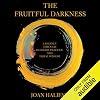
Joan Halifax is a fascinating Buddhist teacher I enjoy learning from, so I was excited to purchase The Fruitful Darkness: A Journey Through Buddhist Practice and Tribal Wisdom on Audible. In this book, the author — a Buddhist teacher, anthropologist, and activist — draws on her experiences with indigenous peoples and spiritual traditions across Africa, Asia, and the Americas. She weaves together encounters with Tibetan Buddhist meditators, Mexican shamans, Native American elders, and show more other wisdom keepers. The book explores "the fruitful darkness" — the shadow side of existence, suffering, and the unknown — as a fertile ground for compassion, insight, and reconnection with the Earth. It is part autobiography, part philosophical reflection, and part cultural critique, urging us to realign with nature, ancient wisdom traditions, and inner stillness amidst modern disconnection.
Thich Nhat Hanh wrote a lovely foreword to the book, and I thought it was an excellent introduction to the content. Overall, I found this book very special and meaningful. Learning Joan's lessons through her personal experiences felt intimate and immediate. I appreciated her desire to explore various traditions and weave them into Buddhist practice. The constant thread of nature as a theme was soothing.
Unfortunately, the narration by Judith West is terrible. I was immediately disappointed by the tone of voice, and it made it very difficult to focus on the content. I feel sad that I likely missed some of Joan's experiences and messages because the narration was so distracting. Honestly, I would have abandoned the audiobook, but I've learned it's hard for me to quit a book I've paid for. I usually enjoy Audible productions, but that wasn't the case here.
While I will absolutely continue to seek out Joan's work, I'll be keeping a sharp eye out for anything narrated by Judith West and swiftly avoiding those.
I have photos and additional information that I'm unable to include here. It can all be found on my blog, in the link below.
A Book And A Dog show less
Thich Nhat Hanh wrote a lovely foreword to the book, and I thought it was an excellent introduction to the content. Overall, I found this book very special and meaningful. Learning Joan's lessons through her personal experiences felt intimate and immediate. I appreciated her desire to explore various traditions and weave them into Buddhist practice. The constant thread of nature as a theme was soothing.
Unfortunately, the narration by Judith West is terrible. I was immediately disappointed by the tone of voice, and it made it very difficult to focus on the content. I feel sad that I likely missed some of Joan's experiences and messages because the narration was so distracting. Honestly, I would have abandoned the audiobook, but I've learned it's hard for me to quit a book I've paid for. I usually enjoy Audible productions, but that wasn't the case here.
While I will absolutely continue to seek out Joan's work, I'll be keeping a sharp eye out for anything narrated by Judith West and swiftly avoiding those.
I have photos and additional information that I'm unable to include here. It can all be found on my blog, in the link below.
A Book And A Dog show less
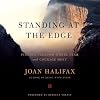
Listening to this book was profoundly meaningful. I've admired Roshi Joan Halifax for her balance of earthy sensibility and intentional spirit-ness (which I use distinctively from spirituality). The book examines five "edge-states": altruism, empathy, integrity, respect, and engagement. In recognition of Thich Nhat Hanh's wise caution: "no mud, no lotus", Halifax unpacks each of these edge-states to dig into when altruism goes awry, when we can suffer empathic distress, recognizing empathy show more as a precursor to compassion (but not compassion itself), when mouthing off is just sanctimony and not principled moral outrage (integrity), and so much more. It would be enough for her just to speak to her own experiences--as a social justice advocate, a volunteer at maximum security penitentiaries, a hospice caregiver, a medical anthropologist and psychologist, founder of the Upaya Zen Center, and probably half a dozen other things I don't even know about. She brings in amazing stories, but also grounds a lot of what she shares in neuroscience and psychology. Roshi Joan is quick to credit all the various figures from whom she has learned (formally, and informally), and it is worth listening to the acknowledgements at the end of the book, because she says each name with intentionality and it is a very impressive list. She integrates introductions to concepts like Stephen Karpman's Drama Triangle, pathological altruism, the Hungry Ghost (in Buddhism), Darwin's original concept of natural selection unmodified by Spencer, David Halberstam's account of the self-immolation of Thích Quảng Đức in 1963, horizontal hostility/peer-aggression, Clark Strand's concept of meditating inside the life you have -- the list goes on. And even with all of this in there, her gentle but firm narration keeps it all digestible and meaningful.
Far from a feel-good self-help book, this is truly an honest investigation of what it is to be human. She offers some suggestions for practice, but ultimately she uses powerful metaphors (ending with a astounding story about her experiences at a charnel ground), storytelling, historical documentation, and scientific investigation, to help us grapple with our own condition(s). She holds up others: Fannie Lou Hamer, Florynce Kennedy, Laurance Rockefeller, and so many others. She shares their stories as well as her own. Roshi Joan offers a contemplative practice model to help guide us through these moments that challenge us at the edge, but one that is centered in active presence and acknowledgment of systemic injustice and our individual biases. This is not a stick-your-head-in-the-sand approach, but instead one of intentional centeredness to create spaces of mutuality and trust. I'll be returning to this often. show less
Far from a feel-good self-help book, this is truly an honest investigation of what it is to be human. She offers some suggestions for practice, but ultimately she uses powerful metaphors (ending with a astounding story about her experiences at a charnel ground), storytelling, historical documentation, and scientific investigation, to help us grapple with our own condition(s). She holds up others: Fannie Lou Hamer, Florynce Kennedy, Laurance Rockefeller, and so many others. She shares their stories as well as her own. Roshi Joan offers a contemplative practice model to help guide us through these moments that challenge us at the edge, but one that is centered in active presence and acknowledgment of systemic injustice and our individual biases. This is not a stick-your-head-in-the-sand approach, but instead one of intentional centeredness to create spaces of mutuality and trust. I'll be returning to this often. show less
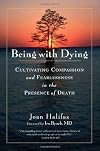
Joan Halifax has done amazing work with the the dying process. She has devoted her life to helping people as they die and their caregivers and family. In this wonderful book, Joan tells heartfelt stories of dying people. She engages the reader, using Buddhist teachings, to explore their own impending deaths. Joan makes talking about dying a much easier topic. She offers meditations at the end of each chapter.
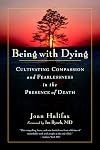
Joan Halifax has written a wonderful book offering help to those who are dying and their caregivers. I recently lost my mother to breast cancer and my emotions and thoughts are so jumbled and scary, I'm on a journey to come to peace with it all. My anger has overwhelmed me; my despair and depression have crippled me; and my loneliness has dominated my days. This book has reassured me about myself personally and has validated my 2 years of care giving--care giving that left me feeling show more inadequate, impotent, and had me believing I was a horrible daughter and person who now doesn't deserve to have any happiness in my life because I didn't do enough. I still have a long ways to go in my own spiritual recovery, but, this book will be one I go back to frequently on those dark days when I'm beating myself up. I just wish I would have found this book before my mom passed away. Before my whole world changed. I recommend this to every single human being walking this earth. Because someday, you will experience Being with Dying.
I miss my mom. show less
I miss my mom. show less
Lists
You May Also Like


Associated Authors
Statistics
- Works
- 20
- Also by
- 7
- Members
- 978
- Popularity
- #26,341
- Rating
- 4.0
- Reviews
- 15
- ISBNs
- 48
- Languages
- 7
- Favorited
- 1