
Christopher Hitchens (1949–2011)
Author of God Is Not Great
About the Author
Christopher Hitchens was born in Portsmouth, England on April 13, 1949. He was a contributing editor to Vanity Fair and wrote for numerous other publications throughout his lifetime. He was the author of numerous books including No One Left to Lie To, For the Sake of Argument, Prepared for the show more Worst, God Is Not Great, Hitch-22: A Memoir, and Arguably. He died due to complication from esophageal cancer on December 15, 2011 at the age of 62. (Bowker Author Biography) show less
Image credit: Christopher Hitchens, 22 avr. 2011
Works by Christopher Hitchens
The Quotable Hitchens: From Alcohol to Zionism – The Very Best of Christopher Hitchens (2011) 277 copies, 4 reviews
Blaming the Victims: Spurious Scholarship and the Palestinian Question (1988) — Editor — 238 copies, 2 reviews
American Presidents Eminent Lives Boxed Set: George Washington, Thomas Jefferson, Ulysses S. Grant (2005) — Contributor — 34 copies, 1 review
Hitch Attacks: "No One Left to Lie", "The Missionary Position", "The Trial of Henry Kissinger" (2012) 4 copies
Hitch's Books: What he read, what he loved, and what he sent "windmilling across the room in a spasm of boredom and annoyance" (2014) 3 copies
Christopher Hitchens 2 copies
Ο θεός δεν είναι μεγάλος 1 copy
Cartas a um jovem dissidente 1 copy
Greenspan Shrugged 1 copy
une portée de chiens 1 copy
Mortality PB 1 copy
Can Atheism Save Europe? 1 copy
God Is Not Great: How Religion Poisons Everything / Hitch-22: A Memoir / Arguably: Essays (2017) 1 copy
'French lessons' in AFR, 27 Oct 2006 [review of Horne's 'A Savage War of Peace: Algeria 1954-1962'] 1 copy
Associated Works
Brave New World & Brave New World Revisited (1932) — Foreword, some editions — 4,873 copies, 45 reviews
Black Lamb and Grey Falcon: A Journey through Yugoslavia (1941) — Introduction, some editions — 1,936 copies, 28 reviews
Safe Area Goražde: The War in Eastern Bosnia 1992-1995 (2000) — Introduction, some editions — 1,181 copies, 33 reviews
Everyday Drinking: The Distilled Kingsley Amis (1983) — Introduction, some editions — 487 copies, 8 reviews
Booknotes: America's Finest Authors on Reading, Writing, and the Power of Ideas (1997) — Contributor — 457 copies, 5 reviews
Life, Liberty, and the Pursuit of Happiness: Ten Years of the Claremont Review of Books (2012) — Contributor — 16 copies
The Atlantic Monthly July / August 2011 (Feature) the Annual Ideas Issue, the Trouble with Good Parents, the Case for Alternative Medicine, and More (2011) — Contributor — 1 copy
Harper's Magazine 1989 Oct. — Contributor — 1 copy
Tagged
Common Knowledge
- Canonical name
- Hitchens, Christopher
- Legal name
- Hitchens, Christopher Eric
- Birthdate
- 1949-04-13
- Date of death
- 2011-12-15
- Gender
- male
- Education
- The Leys School
Balliol College, University of Oxford (BA|1970 ∙ 3rd class degree, Philosophy-Politics-Economics) - Occupations
- journalist
social critic - Organizations
- National Secular Society
International Socialism (journal)
Times Higher Education
New Statesman
The Nation
Evening Standard (show all 15)
Daily Express
Harper's Magazine
The Spectator
The Times Literary Supplement
New York Newsday
Vanity Fair
The Atlantic Monthly
Slate
The New School - Awards and honors
- Lannan Literary Award (Nonfiction, 1991)
Richard Dawkins Award (2011)
LennonOno Grant for Peace (2012)
National Magazine Award for Columns (2007, 2011, 2012)
The Orwell Prize – Special Prize (2012) - Relationships
- Hitchens, Peter (brother)
Amis, Martin (friend) - Cause of death
- esophageal cancer
- Nationality
- USA (naturalized 2007)
UK (birth) - Birthplace
- Portsmouth, Hampshire, England, UK
- Places of residence
- Washington, D.C., USA
Malta
England, UK - Place of death
- Houston, Texas, USA
- Associated Place (for map)
- England, UK
Members
Discussions
He's in a better place now. in Pro and Con (December 2011)
Reviews
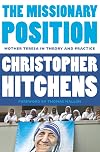
Hitchens builds a case against Mother Teresa’s image of saintly self-sacrifice helping the poor of Calcutta and the world.
the iconic nature of this woman is such that this book is in the minority when it comes to literature about her. in fact, it’s taken me years to obtain a copy through a library. i have requested it be ordered twice now from my own public library who have said that “funds are not available for new purchases” or they obtain it via interlibrary loan from somewhere show more else. either way, they have refused to put this book in their collection. appropriately and ironically, the library i finally obtained this from was a public library that services a county which is the location for a prominent Catholic university.
a short book, this is more of a “hey, i think we should really be looking into this more” than a piece of investigative journalism. through Mother Teresa’s own quotes, the accounts of people who worked for her, visiting doctors, and a few other documents, Hitchens makes the argument that she is not deserving of her status as icon of compassion and generosity. in fact, she was a staunch champion of the Catholic church’s most regressive and anti-humanitarian doctrines. she worked tireless for perhaps the world’s oldest and most corrupt organization. she consorted with some of the world’s worst purveyors of human suffering (eg the Duvalier’s of Haiti), con artists, and criminals and took money from anyone and everyone she could despite their affiliations to deplorable acts against humanity or denying that she catered to the rich. she amassed millions of dollars and refused to use it to improve conditions within her own missions. she believed that “the world is being much helped by the suffering of the poor.” one physician who visited her facilities in Calcutta remarked that her “approach is clearly separate from the hospice movement. I know which one I prefer.” this after learning that the Missionaries of Charity routinely denied “patients” pain medication other than aspirin and medical diagnosis to determine curability and treatments. another medical professional watched in disbelief as Sisters washed and re-used needles saying that “there’s no point” in sterilizing them since they were dying anyway.
it’s a must read not just for anti-religious or anti-Catholic or ant-bad medical practices readers but because this demonstrates the insidious power and ubiquity of public opinion. Mother Teresa has become synonymous with charity and compassion and gentleness but this is demonstrably not so. breaking open social illusions of this kind can help us tremendously in the fight against disinformation and mindless conformity. understanding that the familiar trope of Mother Teresa which comforts us in knowing someone like her exists, that we can rely on to be there for us when a pithy rejoinder is needed or just a solacing comment about someone’s moral character is not as it appears can lead to the dissolution of many kinds of deception- self-inflicted and otherwise. it is an exercise in critical thinking to explode myths and outright lies like this but more importantly it exposes our willingness to be bamboozled, to be succored by pleasing images despite their falseness, to wallow in the happy safeness of a mythopoeic entity come to life. show less
the iconic nature of this woman is such that this book is in the minority when it comes to literature about her. in fact, it’s taken me years to obtain a copy through a library. i have requested it be ordered twice now from my own public library who have said that “funds are not available for new purchases” or they obtain it via interlibrary loan from somewhere show more else. either way, they have refused to put this book in their collection. appropriately and ironically, the library i finally obtained this from was a public library that services a county which is the location for a prominent Catholic university.
a short book, this is more of a “hey, i think we should really be looking into this more” than a piece of investigative journalism. through Mother Teresa’s own quotes, the accounts of people who worked for her, visiting doctors, and a few other documents, Hitchens makes the argument that she is not deserving of her status as icon of compassion and generosity. in fact, she was a staunch champion of the Catholic church’s most regressive and anti-humanitarian doctrines. she worked tireless for perhaps the world’s oldest and most corrupt organization. she consorted with some of the world’s worst purveyors of human suffering (eg the Duvalier’s of Haiti), con artists, and criminals and took money from anyone and everyone she could despite their affiliations to deplorable acts against humanity or denying that she catered to the rich. she amassed millions of dollars and refused to use it to improve conditions within her own missions. she believed that “the world is being much helped by the suffering of the poor.” one physician who visited her facilities in Calcutta remarked that her “approach is clearly separate from the hospice movement. I know which one I prefer.” this after learning that the Missionaries of Charity routinely denied “patients” pain medication other than aspirin and medical diagnosis to determine curability and treatments. another medical professional watched in disbelief as Sisters washed and re-used needles saying that “there’s no point” in sterilizing them since they were dying anyway.
it’s a must read not just for anti-religious or anti-Catholic or ant-bad medical practices readers but because this demonstrates the insidious power and ubiquity of public opinion. Mother Teresa has become synonymous with charity and compassion and gentleness but this is demonstrably not so. breaking open social illusions of this kind can help us tremendously in the fight against disinformation and mindless conformity. understanding that the familiar trope of Mother Teresa which comforts us in knowing someone like her exists, that we can rely on to be there for us when a pithy rejoinder is needed or just a solacing comment about someone’s moral character is not as it appears can lead to the dissolution of many kinds of deception- self-inflicted and otherwise. it is an exercise in critical thinking to explode myths and outright lies like this but more importantly it exposes our willingness to be bamboozled, to be succored by pleasing images despite their falseness, to wallow in the happy safeness of a mythopoeic entity come to life. show less
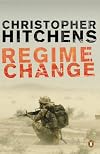
"Much depended on how smart the second wave would be." (pg. 99)
At the start of this short book, Christopher Hitchens writes that, "at the evident risk of seeming ridiculous… I have tried for much of my life to write as if I was composing my sentences to be read posthumously" (pg. 4). It is an effort that, for the most part, he succeeded in carrying out in his career, and much of his work – even his topical stuff – can still be enjoyed now, some eight years after his death. show more Unfortunately, one of Hitchens' strongest advocacies was for the Iraq War, something that has most definitely not aged well. As always, he writes good polemic (the 'appointment in Samarra' analogy, used at the end of the book, is quintessentially Hitchens) but it is not edifying to see Hitchens with his pants down. It is no wonder that Regime Change (published as A Long Short War in the USA) is one of his more obscure books, and long out of print.
It is chastening to read the book, knowing that Hitchens is making arguments on the Iraq intervention that proved to fall woefully short in subsequent years. If something can be said in their favour, it is that they are honestly made, which is a rarity for those who debated the Iraq question. Not for him the seedy evasions of a Chirac or, on the other side, the intelligence-gaming of a Blair (who stoked the fires of war whilst simultaneously cutting the defence budget, a borderline criminal act on the part of the Labour government that meant British soldiers faced IEDs in unarmoured Land Rovers and were reliant on the Americans for helicopter med-evac). Hitchens counted a number of Kurd and Iraqi dissidents among his personal friends, and perhaps he was too close; a self-styled witness to history whose friends failed to claim their moment when it came. He was right that Saddam deserved toppling; it is easy to forget, post-Abu Ghraib and post-ISIS, that Saddam was the go-to ghoul of the Nineties (remember the South Park movie?) and that Iraq was "already deeply traumatized" by his reign (pg. 71). Hitchens yearned for the overthrow of Saddam years (perhaps decades) before it became a neo-con cudgel, and was willing to back Bush and Cheney when they took it up. It is ironic that on page 22 he quotes G. K. Chesterton, saying that "when a man thinks that any stick will do… he is likely to pick up a boomerang." Hitchens' arguments here are not dishonest, only unfortunate. His book is not the shambles other reviewers have depicted it as, even if it does find itself arguing for a viewpoint that would soon play out into clusterfuck.
And that, really, is the crucial point. Had the intervention been a success – or, more accurately, had the initial successful invasion been followed up by a less abject occupation and reconstruction – then we might have been looking at this book as a principled and validated stand. Unfortunately, Bush and his administration won the war but lost the peace, and everyone who had supported it was damned by association. That stick came back a boomerang for Hitchens, at least on this one issue.
It is a shame that the book is so tainted in this way. Even if it's not his best writing, Hitchens' typically pugnacious rebuttals against the anti-war types land, and can still be enjoyed. He recognises that the Western Left had become "a status quo force, relativist and neutralist about totalitarian dictatorships" (pg. 90), and deconstructs many of the lazy arguments about the 'cowboy' Bush (9/11 could have "brought out a touch of the cowboy even in Adlai Stevenson" (pg. 58)) and the 'smear' of 'unilateralism'. He also sticks it to the duplicitous French. We forget nowadays how seedy the international scene was in the immediate post-Cold War period, particularly when Western intellectuals provided (and still provide) cover and delay for despots, with questions "posed by people who would not stay for the answer" (pg. 35). If those smug, anti-war types were right, it was largely on the stopped-clock principle, as their arguments cannot bear the weight of all the garlands heaped on them since (there's a reason they didn't carry the day in 2003). Hitchens is damned not so much by the war as by the arena: it is all but impossible for a Western democracy to prosecute a war in the modern age, under the holier-than-thou media glare and the obstructionist critics "demanding the impossible" (pg. 101). Even today, President Trump is condemned just for authorising the use of a MOAB, or tweeting his satisfaction that an ISIS leader is killed, when once war meant drinking from the skulls of your enemies. Every action, or inaction, becomes a failure in such an environment. Hitchens attempts to cut through all the euphemisms, non sequiturs and pious dishonesty which regularly characterise 'debates' in International Relations, where every mouthpiece seems to be paid by one NGO or another to advance a certain pre-conditioned viewpoint. It's no wonder he got bruised.
Even with this sympathy for the author, it's hard not to feel some embarrassment. I opened this review with a quote that much depended on how smart the second wave in Iraq would be. Unfortunately, it wasn't very smart, and it swamped its advocates. No doubt feeling vindicated after a successful initial invasion and overthrow of Saddam, a punch-drunk Hitchens hastily crows at detractors' claims of a "military quagmire" (pg. 101) and scoffs at the prediction that "Baghdad would become another Stalingrad" (pg. 84). A year later, the name Fallujah would be spread across the news. Such lines cause a pang and, however earnestly they were composed, these are sentences which do not benefit much from being read posthumously. show less
At the start of this short book, Christopher Hitchens writes that, "at the evident risk of seeming ridiculous… I have tried for much of my life to write as if I was composing my sentences to be read posthumously" (pg. 4). It is an effort that, for the most part, he succeeded in carrying out in his career, and much of his work – even his topical stuff – can still be enjoyed now, some eight years after his death. show more Unfortunately, one of Hitchens' strongest advocacies was for the Iraq War, something that has most definitely not aged well. As always, he writes good polemic (the 'appointment in Samarra' analogy, used at the end of the book, is quintessentially Hitchens) but it is not edifying to see Hitchens with his pants down. It is no wonder that Regime Change (published as A Long Short War in the USA) is one of his more obscure books, and long out of print.
It is chastening to read the book, knowing that Hitchens is making arguments on the Iraq intervention that proved to fall woefully short in subsequent years. If something can be said in their favour, it is that they are honestly made, which is a rarity for those who debated the Iraq question. Not for him the seedy evasions of a Chirac or, on the other side, the intelligence-gaming of a Blair (who stoked the fires of war whilst simultaneously cutting the defence budget, a borderline criminal act on the part of the Labour government that meant British soldiers faced IEDs in unarmoured Land Rovers and were reliant on the Americans for helicopter med-evac). Hitchens counted a number of Kurd and Iraqi dissidents among his personal friends, and perhaps he was too close; a self-styled witness to history whose friends failed to claim their moment when it came. He was right that Saddam deserved toppling; it is easy to forget, post-Abu Ghraib and post-ISIS, that Saddam was the go-to ghoul of the Nineties (remember the South Park movie?) and that Iraq was "already deeply traumatized" by his reign (pg. 71). Hitchens yearned for the overthrow of Saddam years (perhaps decades) before it became a neo-con cudgel, and was willing to back Bush and Cheney when they took it up. It is ironic that on page 22 he quotes G. K. Chesterton, saying that "when a man thinks that any stick will do… he is likely to pick up a boomerang." Hitchens' arguments here are not dishonest, only unfortunate. His book is not the shambles other reviewers have depicted it as, even if it does find itself arguing for a viewpoint that would soon play out into clusterfuck.
And that, really, is the crucial point. Had the intervention been a success – or, more accurately, had the initial successful invasion been followed up by a less abject occupation and reconstruction – then we might have been looking at this book as a principled and validated stand. Unfortunately, Bush and his administration won the war but lost the peace, and everyone who had supported it was damned by association. That stick came back a boomerang for Hitchens, at least on this one issue.
It is a shame that the book is so tainted in this way. Even if it's not his best writing, Hitchens' typically pugnacious rebuttals against the anti-war types land, and can still be enjoyed. He recognises that the Western Left had become "a status quo force, relativist and neutralist about totalitarian dictatorships" (pg. 90), and deconstructs many of the lazy arguments about the 'cowboy' Bush (9/11 could have "brought out a touch of the cowboy even in Adlai Stevenson" (pg. 58)) and the 'smear' of 'unilateralism'. He also sticks it to the duplicitous French. We forget nowadays how seedy the international scene was in the immediate post-Cold War period, particularly when Western intellectuals provided (and still provide) cover and delay for despots, with questions "posed by people who would not stay for the answer" (pg. 35). If those smug, anti-war types were right, it was largely on the stopped-clock principle, as their arguments cannot bear the weight of all the garlands heaped on them since (there's a reason they didn't carry the day in 2003). Hitchens is damned not so much by the war as by the arena: it is all but impossible for a Western democracy to prosecute a war in the modern age, under the holier-than-thou media glare and the obstructionist critics "demanding the impossible" (pg. 101). Even today, President Trump is condemned just for authorising the use of a MOAB, or tweeting his satisfaction that an ISIS leader is killed, when once war meant drinking from the skulls of your enemies. Every action, or inaction, becomes a failure in such an environment. Hitchens attempts to cut through all the euphemisms, non sequiturs and pious dishonesty which regularly characterise 'debates' in International Relations, where every mouthpiece seems to be paid by one NGO or another to advance a certain pre-conditioned viewpoint. It's no wonder he got bruised.
Even with this sympathy for the author, it's hard not to feel some embarrassment. I opened this review with a quote that much depended on how smart the second wave in Iraq would be. Unfortunately, it wasn't very smart, and it swamped its advocates. No doubt feeling vindicated after a successful initial invasion and overthrow of Saddam, a punch-drunk Hitchens hastily crows at detractors' claims of a "military quagmire" (pg. 101) and scoffs at the prediction that "Baghdad would become another Stalingrad" (pg. 84). A year later, the name Fallujah would be spread across the news. Such lines cause a pang and, however earnestly they were composed, these are sentences which do not benefit much from being read posthumously. show less
This brief memoir of dying (he died in the process of writing) is devastating, beautiful, and utterly intellectually honest (as one expects from Hitchens.) Hitchens tells us about cancer battling him, and his fight to stay standing. His passionate atheism does not flicker in the face of death, and he slices to smithereens the "what doesn't kill you makes you stronger" cliche. He relates the indignity and pain of diminishing, of losing his ability to eat, to feel sexual desire, and worst of show more all to speak. It is all painful in every sense of the word, but at no point does he roll over and accept. This is a man who loved life, loved his family and his friends, was grateful for every medical professional who worked to save him no matter how painful the attempted cure. He was dying, and he wanted to live, and he never turned to God for a miracle or for succor. He was Hitch to the end. The Forward by Graydon Carther and the Afterword by Hitchens' beloved wife Carol Blue are also moving and edifying. He loved and was loved. May he rest in peace. show less
I started this months ago, maybe years, but got distracted and had to return it to the library. I got it back recently and made sure to prioritize it.
Sex: Are there any religions that don’t have something to say about sex? I am pro-sex myself and think most religions are anti-sex. Most of the religions Hitchens describes also seem anti sex. He links circumcision in men and women to a reduction in sensitivity and sexual pleasure and thinks those are deliberate and serve a religious desire show more to curb desire and throttle sex. He gives vivid descriptions of traditional circumcisions and relates accounts of babies infected with herpes, syphilis, and other STDs by infected mohels.
Pigs: I quite enjoyed the chapter on pork and on the very strong religious feelings for and against the pig. In the anti-pork camp are Judaism, Islam, and some Christian sects, which is a significant number of people, but pork is still the most consumed meat by volume. He makes a link between pigs and people an thinks the prohibition is related to the abandonment of human sacrifice. He claims firefighters don’t like pork because it reminds them of the smell of burning human flesh. I need to find a firefighter and ask about this.
Mother Theresa. Hitchens testified against her canonization, so he has some history with her. His points seem to be 1) She was a hypocrite and flew out of India for advanced medical treatment not provided by her hospices, 2) she actively worked against the interests of women by lobbying against abortion and divorce in many countries, 3) she told him herself that her work was about converting more Catholics and not about helping the poor, 4) There are some accounting questions about where all the money she raised went, and 5) her miracles are pretty clearly BS.
Mormons. They cleaned themselves up, but Joseph Smith and the creation of Mormonism are plain crazy. I do feel compelled to defend them on one point. The Mormon Church does seem more willing to change than many other faiths. They have walked back their position on plural marriage, non-white membership, and a few other points. I think being willing to change with the times is a good thing. However, I can also see how it is a troubling thing in a religion. Does god change his/her/its mind? Should the true believers be unbending in their adherence to doctrine? Or, more reasonably, since doctrine is written by people and people make mistakes, should doctrine be subject to change?
Being ‘good.’ One pro-religion argument is that the morals and traditions of religions cause people to behave and to form a more harmonious society. Hitchens disagrees. First, he says that sword cuts both ways. Religious arguments were made in favor of slavery, conquest of the Americas, apartheid, the crusades, wife beating, and the holocaust. He doesn’t blame all of those on religion (though it’s hard to imagine the crusades without a religious motivation), but notes that lots of participants had religious motivation or justification. Second, he notes that lots of atheists/secularists/humanists and the otherwise non-religious do lots of good in the world.
The counter to the above. Hitchens says that a counter to his arguments about ‘goodness,’ is to say that most of the harm in the world has been caused by avowed atheists like Stalin, Mao, Pol Pot, ect. Those figures did do a lot of damage. Hitchens argues that in most cases they were abetted by religious leaders or ideas. Stalin preserved the Orthodox Church as an arm of the state and its role waxed and waned with Soviet fortunes. Mao sponsored the Cultural Revolution, but used traditional Confucian roles and values to his advantage (Hitchens doesn’t say much about Mao, I think because his argument there is weak). However, Mao, the Kim’s in North Korea, and other personality cults have some elements of religion even as they profess atheism.
What do we know about the real beliefs of our ancestors? He has a short passage wondering about the historical prevalence of atheism or agnosticism. I’ve wondered about this too. As a non-religious person, even in a modern secular society there is strong pressure to conform, to avoid openly questioning religion, and to pay at least some lip service to having faith. All of this was much worse in even the recent past. Admitting that you did not believe in the prevailing faith of your region or culture could have been a death sentence for many of our ancestors. How many of them did not believe, but had to act like they did? Were Ben Franklin, Jefferson, Newton, and other great thinkers real believers, or closet atheists?
The group of strangers. He relates a story of a debate opponent who asked him if: he was alone on the streets of an unfamiliar city and was approached by a group of strangers, would he feel better or worse knowing they had just come from a religious service. I agree with his general sentiment that it’s safer if the strangers didn’t just come from worship, but have beef with the argument. Demographics are more important than faith here. A group of young men is far more dangerous than a gaggle of old ladies regardless of their religious leanings.
New Enlightenment. He ends with a call for a new enlightenment. I’m all for it, but I think we are getting anything but. This is the age of fake news and partisan politics as religion. The left and right in America are something like religions. The right cleaves closely to established Judeo Christian traditions. The left embraces dogmatic secularism and an unpleasant, identity based humanism. Neither side seems to place a premium on truth or discovery.
This was a good book and I will recommend it. show less
Sex: Are there any religions that don’t have something to say about sex? I am pro-sex myself and think most religions are anti-sex. Most of the religions Hitchens describes also seem anti sex. He links circumcision in men and women to a reduction in sensitivity and sexual pleasure and thinks those are deliberate and serve a religious desire show more to curb desire and throttle sex. He gives vivid descriptions of traditional circumcisions and relates accounts of babies infected with herpes, syphilis, and other STDs by infected mohels.
Pigs: I quite enjoyed the chapter on pork and on the very strong religious feelings for and against the pig. In the anti-pork camp are Judaism, Islam, and some Christian sects, which is a significant number of people, but pork is still the most consumed meat by volume. He makes a link between pigs and people an thinks the prohibition is related to the abandonment of human sacrifice. He claims firefighters don’t like pork because it reminds them of the smell of burning human flesh. I need to find a firefighter and ask about this.
Mother Theresa. Hitchens testified against her canonization, so he has some history with her. His points seem to be 1) She was a hypocrite and flew out of India for advanced medical treatment not provided by her hospices, 2) she actively worked against the interests of women by lobbying against abortion and divorce in many countries, 3) she told him herself that her work was about converting more Catholics and not about helping the poor, 4) There are some accounting questions about where all the money she raised went, and 5) her miracles are pretty clearly BS.
Mormons. They cleaned themselves up, but Joseph Smith and the creation of Mormonism are plain crazy. I do feel compelled to defend them on one point. The Mormon Church does seem more willing to change than many other faiths. They have walked back their position on plural marriage, non-white membership, and a few other points. I think being willing to change with the times is a good thing. However, I can also see how it is a troubling thing in a religion. Does god change his/her/its mind? Should the true believers be unbending in their adherence to doctrine? Or, more reasonably, since doctrine is written by people and people make mistakes, should doctrine be subject to change?
Being ‘good.’ One pro-religion argument is that the morals and traditions of religions cause people to behave and to form a more harmonious society. Hitchens disagrees. First, he says that sword cuts both ways. Religious arguments were made in favor of slavery, conquest of the Americas, apartheid, the crusades, wife beating, and the holocaust. He doesn’t blame all of those on religion (though it’s hard to imagine the crusades without a religious motivation), but notes that lots of participants had religious motivation or justification. Second, he notes that lots of atheists/secularists/humanists and the otherwise non-religious do lots of good in the world.
The counter to the above. Hitchens says that a counter to his arguments about ‘goodness,’ is to say that most of the harm in the world has been caused by avowed atheists like Stalin, Mao, Pol Pot, ect. Those figures did do a lot of damage. Hitchens argues that in most cases they were abetted by religious leaders or ideas. Stalin preserved the Orthodox Church as an arm of the state and its role waxed and waned with Soviet fortunes. Mao sponsored the Cultural Revolution, but used traditional Confucian roles and values to his advantage (Hitchens doesn’t say much about Mao, I think because his argument there is weak). However, Mao, the Kim’s in North Korea, and other personality cults have some elements of religion even as they profess atheism.
What do we know about the real beliefs of our ancestors? He has a short passage wondering about the historical prevalence of atheism or agnosticism. I’ve wondered about this too. As a non-religious person, even in a modern secular society there is strong pressure to conform, to avoid openly questioning religion, and to pay at least some lip service to having faith. All of this was much worse in even the recent past. Admitting that you did not believe in the prevailing faith of your region or culture could have been a death sentence for many of our ancestors. How many of them did not believe, but had to act like they did? Were Ben Franklin, Jefferson, Newton, and other great thinkers real believers, or closet atheists?
The group of strangers. He relates a story of a debate opponent who asked him if: he was alone on the streets of an unfamiliar city and was approached by a group of strangers, would he feel better or worse knowing they had just come from a religious service. I agree with his general sentiment that it’s safer if the strangers didn’t just come from worship, but have beef with the argument. Demographics are more important than faith here. A group of young men is far more dangerous than a gaggle of old ladies regardless of their religious leanings.
New Enlightenment. He ends with a call for a new enlightenment. I’m all for it, but I think we are getting anything but. This is the age of fake news and partisan politics as religion. The left and right in America are something like religions. The right cleaves closely to established Judeo Christian traditions. The left embraces dogmatic secularism and an unpleasant, identity based humanism. Neither side seems to place a premium on truth or discovery.
This was a good book and I will recommend it. show less
Lists
Awards


You May Also Like


Associated Authors
Statistics
- Works
- 88
- Also by
- 37
- Members
- 29,871
- Popularity
- #672
- Rating
- 4.0
- Reviews
- 650
- ISBNs
- 437
- Languages
- 16
- Favorited
- 153


