

Anton Hur
Author of Toward Eternity
Works by Anton Hur
Associated Works
I Want to Die but I Want to Eat Tteokbokki (2018) — Translator, some editions — 902 copies, 27 reviews
The Midnight Timetable: A Novel in Ghost Stories (2024) — Translator, some editions — 195 copies, 4 reviews
I Want to Die but I Still Want to Eat Tteokbokki: Further Conversations with My Psychiatrist (2024) — Translator, some editions — 146 copies, 1 review
Tagged
Common Knowledge
- Gender
- male
- Nationality
- South Korea
- Places of residence
- Seoul, South Korea
- Associated Place (for map)
- Seoul, South Korea
Members
Reviews
Rating: 4.5* of five
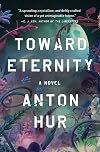
The Publisher Says: What does it mean to be human in a world where technology is quickly catching up to biology?
In a near-future world, a new technological therapy is quickly eradicating cancer: The body’s cells are entirely replaced with nanites—robot or android cells that not only cure those afflicted but leave them virtually immortal. At the same time, literary researcher Yonghun teaches an AI how to understand poetry and creates a living, thinking machine he names show more Panit, meaning "Beloved," in honor of his husband. When Dr. Beeko, who holds the patent to the nano-therapy technology, learns of Panit, he transfers its consciousness into an android body, giving it freedom and life.
As Yonghun, Panit, and other nano humans thrive—and begin to replicate—their development will lead them to a crossroads and a choice with existential consequences.
I RECEIVED A DRC FROM THE PUBLISHER VIA NETGALLEY. THANK YOU.
My Review: This book renewed my faith in my judgment of poetry as a stalking horse for the worst kind of exclusionary snobbery. It requires a linguistic adept, a genuinely intellectually superior mind, to fathom its Sacred Complexities well enough to use it to create AGI, which (of course) then becomes a worthy love-object.
"Whether a life ends happily or sadly, what does it matter but the weight of the emotions one felt, the weight of the clarity of all the meaningful moments one possessed while living on this Earth, whether they have been good or bad? Is it not the weight, in the end, that really makes us human after all?" muses Panit the AGI. This beautiful phrase does convince me to give the writing four stars. This is prose I wish to high heaven other SFF writers would at least aspire to. Author Hur has been to the linguistic wellspring and used a solid-silver vessel to drink from it.
The idea of sentience being the connecting thread as we travel through a deep future of change and revision, of editing and shaping the narrative of consciousness, is where the other half-star comes from. The narrative device of one notebook passing among many hands, taking on many meanings, offers the reader a handle to grapple with balancing the solid-silver vessel Hur used while not losing control of the easily-spilled contents.
It's not going to be easy for many to move past the genders of the consciousnesses that take this notebook through time. That's a shame. I'll say that poetry, in this case, can draw in those questing minds. I'm pretty sure that has a downside. If what you want is to "{feel} these words against my skin as if they were physical objects, or as if they were light passing through the prism of my body and shattering into the spectrum. Had I ever truly understood any word before, ever? How could I have claimed to have made a study of poetry or that this study had made me human when I had never understood what it meant to feel words?", then you're in the proper aisle. If those sentiments, expressed in same-sex contexts, are going to make you uneasy, you're late for the exit.
Asserting that poetry is the proper lens for emotional writing is, honestly, disproved by this novel. It is a story with a plot, with development of multiple characters, and has an ending that flows from the events described herein. That is a novel in my eyes, and it does something poetry does not: It connects the reader...me...to Author Hur's worldview as chosen and molded into this story.
Change. Time. Immaterial movement. All are central to making a work a novel, not a poem. But because (I'm confident in this assertion) Author Hur's pharmacopoeia is the shape and weight of words before the end that is the sentence, what occurs is a valorization of the idea of poetry, which functions on that small, precise unit for its impact.
I liken this to a poem being a mosaic, a story being a fresco, and a novel an oil painting. Mosaics fall apart easily, the pieces are still pretty but don't do much to make an impression unless painstakingly restored by experts; frescos, done in sharply defined spaces and usually quickly can last for centuries and, even if volcanoes engulf them are still recognizably art; oil paintings are gigantic efforts to use malleable medium to create a simulacrum of reality, whose materials are slippery and prone to blending as well as subject to vagaries of fashion for their perceived beauty. Makes sense, too, as these are roughly the same order of appearance (assuming one counts folktales and fables and myths as stories not novels or poems).
Author Hur's debut novel is a beautiful work. It's a deep questioning of Humanity, humaneness. It's a story that moves the reader through the ideas, we don't often take time to articulate, of love and connection. Poetry isn't my choice of a defining trait of being human.
Words are...beautiful, sharp, shiny, eternally morphic words. Take this as your encouragement to go get Author Hur's first novel. show less
The Publisher Says: What does it mean to be human in a world where technology is quickly catching up to biology?
In a near-future world, a new technological therapy is quickly eradicating cancer: The body’s cells are entirely replaced with nanites—robot or android cells that not only cure those afflicted but leave them virtually immortal. At the same time, literary researcher Yonghun teaches an AI how to understand poetry and creates a living, thinking machine he names show more Panit, meaning "Beloved," in honor of his husband. When Dr. Beeko, who holds the patent to the nano-therapy technology, learns of Panit, he transfers its consciousness into an android body, giving it freedom and life.
As Yonghun, Panit, and other nano humans thrive—and begin to replicate—their development will lead them to a crossroads and a choice with existential consequences.
I RECEIVED A DRC FROM THE PUBLISHER VIA NETGALLEY. THANK YOU.
My Review: This book renewed my faith in my judgment of poetry as a stalking horse for the worst kind of exclusionary snobbery. It requires a linguistic adept, a genuinely intellectually superior mind, to fathom its Sacred Complexities well enough to use it to create AGI, which (of course) then becomes a worthy love-object.
"Whether a life ends happily or sadly, what does it matter but the weight of the emotions one felt, the weight of the clarity of all the meaningful moments one possessed while living on this Earth, whether they have been good or bad? Is it not the weight, in the end, that really makes us human after all?" muses Panit the AGI. This beautiful phrase does convince me to give the writing four stars. This is prose I wish to high heaven other SFF writers would at least aspire to. Author Hur has been to the linguistic wellspring and used a solid-silver vessel to drink from it.
The idea of sentience being the connecting thread as we travel through a deep future of change and revision, of editing and shaping the narrative of consciousness, is where the other half-star comes from. The narrative device of one notebook passing among many hands, taking on many meanings, offers the reader a handle to grapple with balancing the solid-silver vessel Hur used while not losing control of the easily-spilled contents.
It's not going to be easy for many to move past the genders of the consciousnesses that take this notebook through time. That's a shame. I'll say that poetry, in this case, can draw in those questing minds. I'm pretty sure that has a downside. If what you want is to "{feel} these words against my skin as if they were physical objects, or as if they were light passing through the prism of my body and shattering into the spectrum. Had I ever truly understood any word before, ever? How could I have claimed to have made a study of poetry or that this study had made me human when I had never understood what it meant to feel words?", then you're in the proper aisle. If those sentiments, expressed in same-sex contexts, are going to make you uneasy, you're late for the exit.
Asserting that poetry is the proper lens for emotional writing is, honestly, disproved by this novel. It is a story with a plot, with development of multiple characters, and has an ending that flows from the events described herein. That is a novel in my eyes, and it does something poetry does not: It connects the reader...me...to Author Hur's worldview as chosen and molded into this story.
Change. Time. Immaterial movement. All are central to making a work a novel, not a poem. But because (I'm confident in this assertion) Author Hur's pharmacopoeia is the shape and weight of words before the end that is the sentence, what occurs is a valorization of the idea of poetry, which functions on that small, precise unit for its impact.
I liken this to a poem being a mosaic, a story being a fresco, and a novel an oil painting. Mosaics fall apart easily, the pieces are still pretty but don't do much to make an impression unless painstakingly restored by experts; frescos, done in sharply defined spaces and usually quickly can last for centuries and, even if volcanoes engulf them are still recognizably art; oil paintings are gigantic efforts to use malleable medium to create a simulacrum of reality, whose materials are slippery and prone to blending as well as subject to vagaries of fashion for their perceived beauty. Makes sense, too, as these are roughly the same order of appearance (assuming one counts folktales and fables and myths as stories not novels or poems).
Author Hur's debut novel is a beautiful work. It's a deep questioning of Humanity, humaneness. It's a story that moves the reader through the ideas, we don't often take time to articulate, of love and connection. Poetry isn't my choice of a defining trait of being human.
Words are...beautiful, sharp, shiny, eternally morphic words. Take this as your encouragement to go get Author Hur's first novel. show less
Anton Hur is a Swedish-born Korean who is well-known as a translator. In their first novel, Toward Eternity, Hur posits a world where it is possible to replace every cell in one’s body with nano-scale machines. He asks whether the resulting consciousness would have the same qualia as the original or be a simulacrum. It is a philosophical issue that comes directly from his experience as a translator. For example, a scientist muses, “Language contains our knowledge and at the same time show more fails to contain it. All it really contains is our performance of control.” Hur has been compared to Kazuo Ishiguro, who explored similar issues in Klara and the Sun. At one point, an AI compares itself to a poem: “A poem was a piece of code that could be instantiated into light or dark. The only thing that had prevented a dark manifestation in my particular instantiation of my based code was Dr. Han’s care. His love.” I imagine Ishiguro would like that instantiation. show less
What one has here is a essentially a meditation on whether the human spirit can transcend a time when immortality is achieved by becoming an artificial copy of one's self. Hur tries to make a positive argument, and their prose is very polished, but I'm not really buying it. Again, perhaps if I was in a different mood I might have found it an easier sell.
3.5
The blending of humans and nanotech leads to some bleak but interesting results.
This is a very “pensive” books - philosophising on what exactly makes us human, if the soul and love are eternal, what is the role of language in creation and most of all, poetry - With a particular fondness for Christina Rossetti.
It’s a languid thought heavy book but I found it interesting.
The blending of humans and nanotech leads to some bleak but interesting results.
This is a very “pensive” books - philosophising on what exactly makes us human, if the soul and love are eternal, what is the role of language in creation and most of all, poetry - With a particular fondness for Christina Rossetti.
It’s a languid thought heavy book but I found it interesting.
Awards

Statistics
- Works
- 4
- Also by
- 16
- Members
- 197
- Popularity
- #111,409
- Rating
- 3.4
- Reviews
- 9
- ISBNs
- 13
- Languages
- 1