
John Kascht
Author of The Mysteries
Works by John Kascht
Tagged
Common Knowledge
- Gender
- male
- Education
- University of St. Thomas
- Occupations
- illustrator
cartoonist
caricaturist - Places of residence
- Honesdale, Pennsylvania, USA
- Associated Place (for map)
- Pennsylvania, USA
Members
Reviews
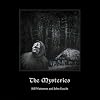
This was a weird little book… I knew better than to expect the frivolity of Watterson’s magnum opus Calvin and Hobbes, but what exactly this was I’m still not too sure. In some ways it mimics the style of a medieval Passion Play, using roughly shaped puppets to illustrate a simple allegorical tale of humanity’s fear, discovery, and then fall, but that is almost too easy an interpretation. The visual palette is starkly monochromatic, heightening the tension as humanity explores the show more Mysteries (an undisclosed group of beings or ideas) and embarks on a primal quest to unravel what exactly they are. While I quite enjoyed this thematic premise and was intrigued by the dramatic style the story set off in, as humanity became more modernized I also became less enthralled with the narrative. Once humanity knows everything, it’s only a matter of time before they lose all sense of whimsy and hope of novelty, so the story became far less enjoyable as I could clearly see they were only headed for an unhappy ending. At least by the finale the universe is left unblemished, with little but a dust-mote memory of the folly of humanity, and we can be left to wonder at what comes next. After all, the next great Mystery could be right around the edge of the galaxy, if we’d only bother to wonder. show less

People fear the forest at first, but when its mysteries become known, they grow over-confident. Their civilization may fall, but the Mysteries will remain.
It's pretty much impossible to separate Watterson from his earlier creation, the beloved comic strip Calvin & Hobbes. If you can, do so before reading this book. Watterson and Kascht's collaboration bears little artistic similarity to C&H, though the messaging is more recognizably Watterson (respect for nature, people are destroying the show more planet and need to be more thoughtful in general, etc.). Each two-page spread is a full page of artwork and a few lines of text -- a picture book for adults, if you will. There's plenty to discover in the black and white illustrations, and I found myself wondering about the media used to create them. There's more story there than I was able to uncover at a quick perusal, but I also don't feel compelled to return to them, or to own this volume. It's a little bleak for my taste. show less
It's pretty much impossible to separate Watterson from his earlier creation, the beloved comic strip Calvin & Hobbes. If you can, do so before reading this book. Watterson and Kascht's collaboration bears little artistic similarity to C&H, though the messaging is more recognizably Watterson (respect for nature, people are destroying the show more planet and need to be more thoughtful in general, etc.). Each two-page spread is a full page of artwork and a few lines of text -- a picture book for adults, if you will. There's plenty to discover in the black and white illustrations, and I found myself wondering about the media used to create them. There's more story there than I was able to uncover at a quick perusal, but I also don't feel compelled to return to them, or to own this volume. It's a little bleak for my taste. show less
Yes, that's that Bill Watterson, of Calvin & Hobbes fame. This is not Calvin & Hobbes, but it is, perhaps, similar, in that it's something very simple-looking that feels like it has a lot more depth behind it.
I suppose one can only describe it as a picture book for adults. (And I do think it's aimed at adults. It's a bit dark for kids, although maybe how appropriate that is depends on the kid.) The black-and-white illustrations are weirdly compelling, dark and atmospheric in a way that may show more leave you feeling interestingly off-balance.
The story is just a few short lines per page and has the feel of a slightly abstract fairy tale. Which may not seem like much, but the ending kind of made the hairs on my neck stand up. It ultimately feels very much like an allegory, but the personal exercise of considering what exactly it's an allegory for is, I think, the most interesting part of reading it. So I won't share any of my thoughts on the matter, but only say that I could see at least of couple of different ways of reading it, including a message I like and approve of and one I don't. I'm going with the former, naturally.
In any case, it is definitely a much bigger experience than it looks like you're likely to get out of this small, slim square of a book. show less
I suppose one can only describe it as a picture book for adults. (And I do think it's aimed at adults. It's a bit dark for kids, although maybe how appropriate that is depends on the kid.) The black-and-white illustrations are weirdly compelling, dark and atmospheric in a way that may show more leave you feeling interestingly off-balance.
The story is just a few short lines per page and has the feel of a slightly abstract fairy tale. Which may not seem like much, but the ending kind of made the hairs on my neck stand up. It ultimately feels very much like an allegory, but the personal exercise of considering what exactly it's an allegory for is, I think, the most interesting part of reading it. So I won't share any of my thoughts on the matter, but only say that I could see at least of couple of different ways of reading it, including a message I like and approve of and one I don't. I'm going with the former, naturally.
In any case, it is definitely a much bigger experience than it looks like you're likely to get out of this small, slim square of a book. show less
An open-ended modern fable with darkly entertaining illustrations that left me unsure what it had to say.
Like most people, I picked it up because I saw Bill Watterson's name on the cover, but I wasn't expecting Calvin & Hobbes. Which is good, it would come out badly in the comparison.
The message, as with any good fable, is open to interpretation and application. But it comes out strong out the gate before doubling back to contradict itself, with the jagged shape making a puzzle piece that show more won't fit any hole in my thinking.
But it's possible it'll really land with some people and it's only a few minutes to read, so I'd still suggest giving it a try. show less
Like most people, I picked it up because I saw Bill Watterson's name on the cover, but I wasn't expecting Calvin & Hobbes. Which is good, it would come out badly in the comparison.
The message, as with any good fable, is open to interpretation and application. But it comes out strong out the gate before doubling back to contradict itself, with the jagged shape making a puzzle piece that show more won't fit any hole in my thinking.
But it's possible it'll really land with some people and it's only a few minutes to read, so I'd still suggest giving it a try. show less
Lists
You May Also Like
Associated Authors
Statistics
- Works
- 1
- Members
- 576
- Popularity
- #43,501
- Rating
- 3.7
- Reviews
- 28
- ISBNs
- 2
- Languages
- 1
