
Sim Kern
Author of The Free People's Village
Works by Sim Kern
Genocide Bad: Notes on Palestine, Jewish History, and Collective Liberation (2025) 78 copies, 4 reviews
Tagged
Common Knowledge
- Gender
- nonbinary
- Education
- Oberlin College (BA|English and Creative Writing)
- Agent
- Kerstin Wolf (D4EO Literary)
- Nationality
- USA
- Places of residence
- Houston, Texas, USA
- Associated Place (for map)
- Texas, USA
Members
Reviews
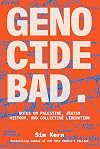
This one is a little longer than “TL;DR.” As it is long, I’ll start with: “Do I recommend it? Umm …” But not because of Kern’s ideas, per se.
Understanding different viewpoints seems worthwhile these days. Living in a neighborhood dotted with “We Stand With Israel” signs and a country whose news feeds tend toward a particular viewpoint, I found the idea of a book by a Jewish author that was forcefully anti-Zionist intriguing, particularly in contrast to a piece by Melanie show more Phillips on the topic which I had seen recently.
Essentially, the author’s argument is that we are the victims of the most effective propaganda war ever (not excluding, and somewhat akin to, the Nazi efforts of the ’30s and ’40s) and that Israel is a colonial power intent on creating an ethnostate.
They make some (I use that qualifier deliberately) good arguments. There’s history, both very recent and not so, that might be eye-opening if you’re not well-conversant on that region. They clearly explain the mechanism of “deference politics” that other authors have somewhat muddied over, a mechanism that pervades American discourse. There’s a wealth of suggested reading, some of which I've read and more that I will try.
It's probably a good idea to keep the author’s context in mind as you go along. Reducing someone to the single dimension of the American political scale is dicey, but since—everyone to the American Right is unspeakable, Obama was a war criminal, Biden and Harris were terrorism-abettors, capitalism is bad, the West is bad, the Global North is bad—I feel somewhere on the Far Left seems applicable. There’s nothing unworkable about reading something by an author with a viewpoint, nor are they necessarily wrong. Just as long as you keep the filter in mind.
Something else to keep in mind … something I’m not convinced the author, themself, remembered … is that two things can be true at the same time. But forewarned …
So why don’t I just say, “Read it”?
Well, on the most picayune level, there’s a lot of “I” in this book. “I started this, that, and the other thing.” “Look at how many TikToks I’ve done.” “Look at how my political awareness has grown.” “Look at my marches and protests.” Not to mention some minor shilling for their science fiction books. It diverted attention away from the issues and toward the author in a way that felt self-aggrandizing.
On a more significant level, there was a muddiness—the closest word I can think of at the moment—to their framework. Ideas were conflated where, instead, they should have been linked. Terminology was confused unnecessarily. As one notable example, they redefine the term “white” from Caucasian or Caucasian-adjacent to something like “privileged and human” on the basis that white people are usually the oppressors and others the oppressed. Yes, that’s the history ... at least, in the West. But I found this lexical effort somewhat ironic since, based on what the author explicitly says and uses as examples elsewhere in the book, Kamala Harris should be called white, Ottoman leaders were white as they enslaved (non-white?) Caucasians, etc. It seems unnecessary at best to confuse things linguistically and muddled in practice. I kept thinking Kern should have read Isabel Wilkerson’s Caste: The Origins of our Discontents for a clearer way of looking at and describing things.
Finally, and this is back to two things can be true at the same time, I feel that Kern is as guilty of unbalanced presentation as their opponents. Take the story of Yahya Sinwar, regarded as the, or one of the, masterminds of October 7. Kern will point out that their book says, “… they abducted over 250 people, most of them civilians, including those thirty children,” and that they condemn this [my emphasis]. However, that’s one solitary sentence amidst pages of implicitly comparing Sinwar to Luke Skywalker, Aragorn, and Katniss. And then they follow that one sentence with, “Do I condemn Yahya Sinwar? I mean truly, who the fuck needs my opinion?”
Well, that seems rather insincere, since wasn’t this book nothing but a mixture of opinion with history? Of course it was.
So that’s why I say, “Umm …” to the question of do I recommend it. I do think the popular narrative and history we're fed about the situation is not even close to 100% accurate. I do think dollars are being spent in our name (as taxpayers) for issues we (as citizens) may not support. I do think Kern gets a lot of this out in the open.
But this book could have been better. show less
Understanding different viewpoints seems worthwhile these days. Living in a neighborhood dotted with “We Stand With Israel” signs and a country whose news feeds tend toward a particular viewpoint, I found the idea of a book by a Jewish author that was forcefully anti-Zionist intriguing, particularly in contrast to a piece by Melanie show more Phillips on the topic which I had seen recently.
Essentially, the author’s argument is that we are the victims of the most effective propaganda war ever (not excluding, and somewhat akin to, the Nazi efforts of the ’30s and ’40s) and that Israel is a colonial power intent on creating an ethnostate.
They make some (I use that qualifier deliberately) good arguments. There’s history, both very recent and not so, that might be eye-opening if you’re not well-conversant on that region. They clearly explain the mechanism of “deference politics” that other authors have somewhat muddied over, a mechanism that pervades American discourse. There’s a wealth of suggested reading, some of which I've read and more that I will try.
It's probably a good idea to keep the author’s context in mind as you go along. Reducing someone to the single dimension of the American political scale is dicey, but since—everyone to the American Right is unspeakable, Obama was a war criminal, Biden and Harris were terrorism-abettors, capitalism is bad, the West is bad, the Global North is bad—I feel somewhere on the Far Left seems applicable. There’s nothing unworkable about reading something by an author with a viewpoint, nor are they necessarily wrong. Just as long as you keep the filter in mind.
Something else to keep in mind … something I’m not convinced the author, themself, remembered … is that two things can be true at the same time. But forewarned …
So why don’t I just say, “Read it”?
Well, on the most picayune level, there’s a lot of “I” in this book. “I started this, that, and the other thing.” “Look at how many TikToks I’ve done.” “Look at how my political awareness has grown.” “Look at my marches and protests.” Not to mention some minor shilling for their science fiction books. It diverted attention away from the issues and toward the author in a way that felt self-aggrandizing.
On a more significant level, there was a muddiness—the closest word I can think of at the moment—to their framework. Ideas were conflated where, instead, they should have been linked. Terminology was confused unnecessarily. As one notable example, they redefine the term “white” from Caucasian or Caucasian-adjacent to something like “privileged and human” on the basis that white people are usually the oppressors and others the oppressed. Yes, that’s the history ... at least, in the West. But I found this lexical effort somewhat ironic since, based on what the author explicitly says and uses as examples elsewhere in the book, Kamala Harris should be called white, Ottoman leaders were white as they enslaved (non-white?) Caucasians, etc. It seems unnecessary at best to confuse things linguistically and muddled in practice. I kept thinking Kern should have read Isabel Wilkerson’s Caste: The Origins of our Discontents for a clearer way of looking at and describing things.
Finally, and this is back to two things can be true at the same time, I feel that Kern is as guilty of unbalanced presentation as their opponents. Take the story of Yahya Sinwar, regarded as the, or one of the, masterminds of October 7. Kern will point out that their book says, “… they abducted over 250 people, most of them civilians, including those thirty children,” and that they condemn this [my emphasis]. However, that’s one solitary sentence amidst pages of implicitly comparing Sinwar to Luke Skywalker, Aragorn, and Katniss. And then they follow that one sentence with, “Do I condemn Yahya Sinwar? I mean truly, who the fuck needs my opinion?”
Well, that seems rather insincere, since wasn’t this book nothing but a mixture of opinion with history? Of course it was.
So that’s why I say, “Umm …” to the question of do I recommend it. I do think the popular narrative and history we're fed about the situation is not even close to 100% accurate. I do think dollars are being spent in our name (as taxpayers) for issues we (as citizens) may not support. I do think Kern gets a lot of this out in the open.
But this book could have been better. show less
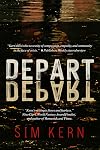
In a work that sits at intersections of climate justice, prejudice, queerness, and social justice, Kern brings together a number of issues that would seem to be far too much for a slim work like this. Yet, Depart Depart is a powerful and beautifully told story, and as difficult as it is to read, the humor and empathy of the central character, Noah Mishner, make it all but impossible to put down and walk away from. Instead, Noah is a character who will carry readers through the journey told show more in the book, and then accompany them outside of the pages to demand that more thought be given to his story.
What makes this book work so well is that no one issue monopolizes either story or reader. What would probably be chaos in another book works here because it is all telescoped into the continuous, lived experience of a single trans man and his found family as they live through the aftermath of a an unprecedented hurricane. Is it overwhelming? Often--for the reader as well as Noah. And that's why it works--because the reader is brought so close to Noah that they cannot deny the way all of these issues are brought together in his life during these days after the storm.
As such, this is one of those books that I know will stick with me. It's a book that ought to be carried around and passed on and talked about--that's how timely and necessary it is, difficult as parts of it may be.
There's a lot here, and readers should be aware that the book doesn't flinch away from confronting lived experiences of transphobia, anti-Semitism, and trauma. But at the same time, this book has such an incredible amount of heart--packed into every page--that it is one I would absolutely recommend to every reader out there. show less
What makes this book work so well is that no one issue monopolizes either story or reader. What would probably be chaos in another book works here because it is all telescoped into the continuous, lived experience of a single trans man and his found family as they live through the aftermath of a an unprecedented hurricane. Is it overwhelming? Often--for the reader as well as Noah. And that's why it works--because the reader is brought so close to Noah that they cannot deny the way all of these issues are brought together in his life during these days after the storm.
As such, this is one of those books that I know will stick with me. It's a book that ought to be carried around and passed on and talked about--that's how timely and necessary it is, difficult as parts of it may be.
There's a lot here, and readers should be aware that the book doesn't flinch away from confronting lived experiences of transphobia, anti-Semitism, and trauma. But at the same time, this book has such an incredible amount of heart--packed into every page--that it is one I would absolutely recommend to every reader out there. show less
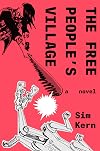
I've struggled to write a review of this queer alternate history novel, ever since I read it, and that's for one simple reason: Sim Kern is a powerhouse voice, and this is a book which everyone should be reading and talking about.
Encapsulating what's best and worst about our world, taking a real look at social justice initiatives on a local level, and building a wonderfully queer world of believable characters and meaningful interaction, this book is one of those which comes across as show more deceptively straight-forward and page-turning. But with each page and each emotion, the impact grows, until one wishes they could turn away from the book, with all its horror and humor, but simply cannot.
I'm not doing justice to this book, but I can tell you that it's a work of nature, and whatever Sim Kern writes next, I'll be in line for it. I hope everyone will read this book and share it with a friend, or a hundred friends. This is a book that needs to be read. But if this review leaves you thinking it's just a thought book, or just a message book, think again: the story here is as fantastic as Kern's voice, and it's the truth and the heart and the characters that make it all ring out with power. show less
Encapsulating what's best and worst about our world, taking a real look at social justice initiatives on a local level, and building a wonderfully queer world of believable characters and meaningful interaction, this book is one of those which comes across as show more deceptively straight-forward and page-turning. But with each page and each emotion, the impact grows, until one wishes they could turn away from the book, with all its horror and humor, but simply cannot.
I'm not doing justice to this book, but I can tell you that it's a work of nature, and whatever Sim Kern writes next, I'll be in line for it. I hope everyone will read this book and share it with a friend, or a hundred friends. This is a book that needs to be read. But if this review leaves you thinking it's just a thought book, or just a message book, think again: the story here is as fantastic as Kern's voice, and it's the truth and the heart and the characters that make it all ring out with power. show less
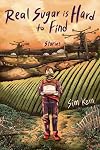
Bleeding with intelligence and trauma, Kern's stories are ones to read, enjoy, and live with to share and re-read. Each story is more unique and fresh than the one that came before it, and while Kern's sensibility for social justice and ecological awareness come through in every one, the lives and worlds of their characters are so real that everything works in tandem. Some of these stories will live with me for ages, and this is the first book in a long time that's made me wish I were still show more teaching so that I could share this work with my students. Kern's language and creativity show what it means to be an author in tune not only with their art, but the world around them, and the results are magnificent.
Among my favorites in the collection are "The Listener", "Unwhole", and "What Can't Be Undone"--and I would recommend all of them, along with the rest of the stories in the collection.
Note that there are some extremely sensitive themes and subjects discussed in the book, and that detailed content warnings can be found at the end of the book, organized by story. (On a side note, I really appreciate Kern's choice to make a note in the beginning that this is the case, alerting readers up front that content warnings are in place, and where to find them, but not putting them at the forefront for readers who may want to go in 'blind'.)
Really, though, there are no words to write an adequate review here. This is a fantastic collection, and it deserves to be read. show less
Among my favorites in the collection are "The Listener", "Unwhole", and "What Can't Be Undone"--and I would recommend all of them, along with the rest of the stories in the collection.
Note that there are some extremely sensitive themes and subjects discussed in the book, and that detailed content warnings can be found at the end of the book, organized by story. (On a side note, I really appreciate Kern's choice to make a note in the beginning that this is the case, alerting readers up front that content warnings are in place, and where to find them, but not putting them at the forefront for readers who may want to go in 'blind'.)
Really, though, there are no words to write an adequate review here. This is a fantastic collection, and it deserves to be read. show less
Lists
Awards


Statistics
- Works
- 5
- Members
- 297
- Popularity
- #78,941
- Rating
- 4.3
- Reviews
- 19
- ISBNs
- 15
