
Christopher Kimball
Author of Fannie's Last Supper: Re-creating One Amazing Meal from Fannie Farmer's 1896 Cookbook
About the Author
Image credit: Photos by dga http://picasaweb.google.com/lh/photo/KiSAqb-Sw_GMwU6HU_Jyhg
Series
Works by Christopher Kimball
Fannie's Last Supper: Re-creating One Amazing Meal from Fannie Farmer's 1896 Cookbook (2010) 352 copies, 85 reviews
Milk Street: Tuesday Nights: More than 200 Simple Weeknight Suppers that Deliver Bold Flavor, Fast (2018) 343 copies, 4 reviews
Milk Street: Cook What You Have: Make a Meal Out of Almost Anything (A Cookbook) (2022) 142 copies, 1 review
The classic cookbook: The best of American home cooking : together in one volume, The cook's bible and The dessert bible (2002) 101 copies
Milk Street Noodles: Secrets to the World’s Best Noodles, from Fettuccine Alfredo to Pad Thai to Miso Ramen (2023) 86 copies
The Milk Street Cookbook: The Definitive Guide to the New Home Cooking, Featuring Every Recipe from Every Episode of the TV Show, 2017-2021 (2020) 84 copies
The Complete Milk Street TV Show Cookbook (2017-2019): Every Recipe from Every Episode of the Popular TV Show (2018) 77 copies
The Milk Street Cookbook: The Definitive Guide to the New Home Cooking, Including Every Recipe from Every Episode of the TV Show, 2017-2020 (2019) 49 copies
The Milk Street Cookbook (5th Anniversary Edition): The Definitive Guide to the New Home Cooking---with Every Recipe from the TV Show (2021) 36 copies
Milk Street 3 copies
Cook's Illustrated, Trial Issue 3 copies
COOK'S COUNTRY December/January 2007 (Magazine. Cook's Illustrated. Recipes. Cook Book. Cheesecake. Mushrooms.) (2007) 2 copies
America's Test Kitchen 30 Minute Suppers (Cooks Illustrated (96 tear-out recipe cards), Winter 2010) (2009) 2 copies
America's Test Kitchen Special Collector's Edition Best-ever Recipes (All time favorite Recipes from our Magazines, cookbooks and TV shows) (2010) 2 copies
Americas Test Kitchen All-Time Best Holiday Recipes: From Our Magazines, Cookbooks, and TV Shows (2011) 2 copies
Milk Street Annual 2021 1 copy
Milk Street Annual 2017 1 copy
Milk Street May-June 2018 1 copy
The Dessert Bible 1 copy
Milk Street Annual 2019 1 copy
COOK'S COUNTRY October/November 2006 (Magazine. Recipes. Cookbook. Cooks Illustrated.) (2006) 1 copy
America's Test Kitchen : Slow Cooker Revolution 2013 , Favorites From the Best-Selling Cookbook 1 copy
Milk Street Annual 2018 1 copy
Milk Street Annual 2020 1 copy
BEST-EVER RECIPES 1 copy
Step By Step Italian Recipes 1 copy
All Time Best Grilling Recipes (Cook`s Illustrated 20th Anniversary Collector`s Edition, 2012) (2012) 1 copy
America's Test Kitchen - Slow Cooker Revolution - Favorites from the Best Selling Cookbook (2013) 1 copy
Cook's Country Charter Issue 1 copy
Cuisine At Home 1 copy
Milk Street 2018 1 copy
Associated Works
Dialogue: A Journal of Mormon Thought - Volume 42, Number 4 (Winter 2009) (2009) — Contributor — 1 copy
Tagged
Common Knowledge
- Birthdate
- 1951-06-05
- Gender
- male
- Organizations
- Cook's Illustrated
America's Test Kitchen
Cook's Country - Short biography
- Christopher Kimball is founder, editor, and publisher of Cook's Illustrated and Cook's Country magazines, and formerly publisher of the now defunct Cook's Magazine. He is the author of The Cook's Bible, The Yellow Farmhouse Cookbook, Dear Charlie, and The Dessert Bible. He is a columnist for the New York Daily News and the Boston-based Tab Communications. He also hosts the syndicated PBS cooking shows America's Test Kitchen and Cook's Country from America's Test Kitchen. Other television appearances include the CBS morning shows Weekend Today and The Early Show, where he is a regular contributor.
Kimball lives in Boston and Vermont with his wife, Adrienne, and their four children (daughters Whitney, Caroline, and Emily, and son Charles). Christopher Kimball is a graduate of Columbia University with a degree in Primitive Art. - Nationality
- USA
- Places of residence
- Vermont, USA
- Associated Place (for map)
- Vermont, USA
Members
Reviews
Fannie's Last Supper: Re-creating One Amazing Meal from Fannie Farmer's 1896 Cookbook by Christopher Kimball
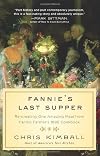
When Christopher Kimball does something ... he does it in spades! In Fannie's Last Supper, he sets out to recreate a twelve-course Gilded Age dinner loosely based on a menu concocted by Fannie Farmer, the creator of one of America's best-selling cookbooks. And he plans to use a wood cook-stove -- for authenticity -- in his own Boston home and serve the meal to 10 celebrities and his wife. (It was taped for a PBS special.)
Mr. Kimball -- known as the ringmaster of America's Test Kitchen on show more PBS -- tests Fannie's recipes. He finds many of them inedible, but digs for the most delectable recipes of the era.
For each of the twelve courses, he not only comes up with great recipes, but also relates bits and pieces of the history of food and cooking in Boston.
I love his writing -- which is witty and a tad irreverent. His story of making calf's foot jelly -- and "brain balls" -- is hilarious. In fact, Fannie's Last Supper is replete with good humor and a dash of the author's self-deprecation.
Fannie's Last Supper is part cookbook, part history ... and just plain good storytelling. I can't wait for the PBS special, which airs on my PBS station on November 21.
Based on copy of the book provided by the publisher. show less
Mr. Kimball -- known as the ringmaster of America's Test Kitchen on show more PBS -- tests Fannie's recipes. He finds many of them inedible, but digs for the most delectable recipes of the era.
For each of the twelve courses, he not only comes up with great recipes, but also relates bits and pieces of the history of food and cooking in Boston.
I love his writing -- which is witty and a tad irreverent. His story of making calf's foot jelly -- and "brain balls" -- is hilarious. In fact, Fannie's Last Supper is replete with good humor and a dash of the author's self-deprecation.
Fannie's Last Supper is part cookbook, part history ... and just plain good storytelling. I can't wait for the PBS special, which airs on my PBS station on November 21.
Based on copy of the book provided by the publisher. show less
 This review was written for LibraryThing Early Reviewers.
Fannie's Last Supper: Re-creating One Amazing Meal from Fannie Farmer's 1896 Cookbook by Christopher Kimball
Even if you are only a little bit like me -- cookbook collector, America's Test Kitchen addict, history of food and social mores lover, Bostonian -- you are bound to enjoy this book as much as I did. Recreating a blow out meal from Fannie Farmer's 1896 Boston Cooking School Cookbook, Kimball uses each of twelve courses to highlight interesting aspects of food, culture, economy and life in Victorian America. Written in accessible entertaining prose, I was charmed throughout by this lovely show more book. We see the impact of science and hygiene, marvel at the diversity of food products available, and chuckle at various hiccoughs along the way. I am the keeper of many of my grandmother's recipes. Kimball brought back so many lovely memories of eating at her table -- oyster stews and snow pudding especially.
There are some recipes included for those who would like to cook along. (Unfortunately, not all of the recipes are included in the book and one is directed to Fannieslastsupper.com for the rest. I printed all of them out as I am in fear that the site may be taken down in the future.) I made the Portsmouth cake (a sponge cake with sliced orange filling and orange frosting) which was a tremendous hit. Minor quibbles are that there was no paginated index for the recipes and some recipes lack any statement as to quantities served. I was reading the advanced uncorrected proof copy, so this may have been addressed in the final version.
Overall, quite enjoyable. show less
There are some recipes included for those who would like to cook along. (Unfortunately, not all of the recipes are included in the book and one is directed to Fannieslastsupper.com for the rest. I printed all of them out as I am in fear that the site may be taken down in the future.) I made the Portsmouth cake (a sponge cake with sliced orange filling and orange frosting) which was a tremendous hit. Minor quibbles are that there was no paginated index for the recipes and some recipes lack any statement as to quantities served. I was reading the advanced uncorrected proof copy, so this may have been addressed in the final version.
Overall, quite enjoyable. show less
This review was written for LibraryThing Early Reviewers.Fannie's Last Supper: Two Years, Twelve Courses, and Creating One Amazing Meal from Fannie Farmer's 1896 Cookbook by Christopher Kimball

I found the entirety of this book to be utterly fascinating. Of course, it probably helps that I love all things Victorian and culinary. Rather than simply documenting the two-year process that led to his recreation of an upper-class Victorian dinner party, Kimball intersperses his narrative with the history of the various the ingredients and methodologies used. The result is an engrossing book that documents a unique period of American history and a very unique dinner party.
This review was written for LibraryThing Early Reviewers.Fannie's Last Supper: Re-creating One Amazing Meal from Fannie Farmer's 1896 Cookbook by Christopher Kimball
I love Cook's Illustrated and I even love Chris Kimball's small essays at the beginning of every issue, but taking his smug, self-congratulatory tone through a novella length work is less appealing. He claims to want to recreate a Victorian era, elegant dinner party by using recipes of the era, specifically from The Fanny Farmer Cookbook. Unfortunately he hates Fanny Farmer and he hates her recipes. He keeps some of her ideas when it will create a clever story that he can make fun of, but he show more trashes and reconstructs almost every recipe. He is convinced that his way is the better way AND tries to claim that his meal is still "authentic". Kimball insists that Fanny Farmer was not a cook, but merely a "business woman", then denigrates almost everything she has accomplished. He drags in snippets of daily Victorian life, but not in any coherent fashion. He creates a Who's Who of personalities to attend this dinner, then seems disappointed that they could not live up to his ideal of manners and conversation. In short, Mr. Kimball is disappointed in life and is bound to tell us all about it. There were passages that I did enjoy and details that I will remember, but overall the book left a very bad taste in my mouth. show less
Lists
Food (2)
Awards


You May Also Like


Associated Authors
Statistics
- Works
- 285
- Also by
- 6
- Members
- 4,802
- Popularity
- #5,231
- Rating
- 3.8
- Reviews
- 114
- ISBNs
- 104
- Languages
- 1
