
Don Kramer
Author of The Pretenders
Series
Works by Don Kramer
Associated Works
Tagged
Common Knowledge
There is no Common Knowledge data for this author yet. You can help.
Members
Reviews
*Book source ~ Library
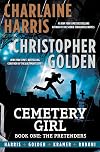
Calexa Rose Dunhill isn’t her name, but since she can’t remember who she is she names herself from the surroundings in which she woke; Calexa from the crypt nearby, Rose from a gravestone and Dunhill from the cemetery. Until she can figure out who killed her, why she woke up in a cemetery, why she can see spirits and who she is she decides it’s safer to make her home in a crypt. With the unobtrusive help of the old caretaker, Mr. Kelner and an old lady, Lucinda show more Cameron, who lives across the street from the cemetery, Calexa survives for months, but is no closer to discovering anything about her past. Then one night she witnesses a murder and she has to make a decision. Let the murderers get away with it or call attention to the cemetery and hope she’s not discovered?
I love this story and the artwork. Who is this girl? Why did someone try to kill her? Why was there no mention of her disappearance in the papers? What the hell is going on? Gah! I need to know! The teens who commit the murder in the cemetery are fucked up. I mean, seriously, what the fuck?! That is just so FUBAR. Calexa’s solution to reporting the murder is brilliant. Anyway, I’m glad Calexa has Mr. Kelner and Lucinda. Now, if they can just figure out the mystery that is her then I’ll be happy. show less
Calexa Rose Dunhill isn’t her name, but since she can’t remember who she is she names herself from the surroundings in which she woke; Calexa from the crypt nearby, Rose from a gravestone and Dunhill from the cemetery. Until she can figure out who killed her, why she woke up in a cemetery, why she can see spirits and who she is she decides it’s safer to make her home in a crypt. With the unobtrusive help of the old caretaker, Mr. Kelner and an old lady, Lucinda show more Cameron, who lives across the street from the cemetery, Calexa survives for months, but is no closer to discovering anything about her past. Then one night she witnesses a murder and she has to make a decision. Let the murderers get away with it or call attention to the cemetery and hope she’s not discovered?
I love this story and the artwork. Who is this girl? Why did someone try to kill her? Why was there no mention of her disappearance in the papers? What the hell is going on? Gah! I need to know! The teens who commit the murder in the cemetery are fucked up. I mean, seriously, what the fuck?! That is just so FUBAR. Calexa’s solution to reporting the murder is brilliant. Anyway, I’m glad Calexa has Mr. Kelner and Lucinda. Now, if they can just figure out the mystery that is her then I’ll be happy. show less
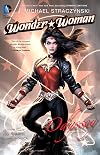
It’s no small feat to redesign an icon, both story-wise and visually. When I heard and saw the new Wonder Woman costume I was highly skeptical – this isn’t Wonder Woman! Sacrilege! But in the end, Straczyinski won me over with smart choices and a fierce but relatable Warrior Princess. Just as Millar’s “Dark Knight” reinvigorated Batman, I feel the same is happening with Odyssey.
This isn't just a reboot, another slightly altered origin story. Straczynski provides a logical and show more compelling reason for this Diana to exist. The timeline has been upset by someone powerful. Diana did not grow up on Themyscira, discovered by the world of men as an adult. Instead, the Amazon are attacked and slaughtered by a great force and the infant Diana is smuggled out with some survivors. But, this isn't how things should necessarily be and Diana has dreams to that effect; she actually sees herself in the original costume. This was a brilliant way to bring Diana into the modern world while also keeping true to her Amazon roots. The plot also gives her a concrete purpose beyond just fighting America’s enemies or villains of the week. She must find the one who set this timeline in motion while also protecting her Amazon sisters from those hunting them. There are a lot of excellent action sequences, and Diana does not escape every encounter unscathed. The fighting has more realism.
Usually, I don't comment on the art unless it has a significant impact on the story (because it’s subjective really). However, since Diana has been drastically redesigned, in this instance it is significant. The new costume is more realistic for fighting, which I can appreciate, though I would have preferred that her iconic symbolism not be downplayed so much. The artwork is bold, with a lot of detail and an incredible use of light and shadows, which complements the story well. Even without stars and stripes, Wonder Woman stands instantly recognizable to the reader.
Overall, I like this Wonder Woman very much and can't wait to read volume 2. Highly recommended! show less
This isn't just a reboot, another slightly altered origin story. Straczynski provides a logical and show more compelling reason for this Diana to exist. The timeline has been upset by someone powerful. Diana did not grow up on Themyscira, discovered by the world of men as an adult. Instead, the Amazon are attacked and slaughtered by a great force and the infant Diana is smuggled out with some survivors. But, this isn't how things should necessarily be and Diana has dreams to that effect; she actually sees herself in the original costume. This was a brilliant way to bring Diana into the modern world while also keeping true to her Amazon roots. The plot also gives her a concrete purpose beyond just fighting America’s enemies or villains of the week. She must find the one who set this timeline in motion while also protecting her Amazon sisters from those hunting them. There are a lot of excellent action sequences, and Diana does not escape every encounter unscathed. The fighting has more realism.
Usually, I don't comment on the art unless it has a significant impact on the story (because it’s subjective really). However, since Diana has been drastically redesigned, in this instance it is significant. The new costume is more realistic for fighting, which I can appreciate, though I would have preferred that her iconic symbolism not be downplayed so much. The artwork is bold, with a lot of detail and an incredible use of light and shadows, which complements the story well. Even without stars and stripes, Wonder Woman stands instantly recognizable to the reader.
Overall, I like this Wonder Woman very much and can't wait to read volume 2. Highly recommended! show less

This is the last JSA collection with a Sandman connection, taking place amidst the chaos of the Infinite Crisis. Apparently, in the previous volume (Black Vengeance, which I skipped) my favorites Hector and Lyta Hall, parents of the second Dream of the Endless, were transported into Hell for defying Nabu, the Lord of Order.
I didn't understand much of what was happening in this book; heroes and locations are thrown at you like mad, and no one takes the time to explain who they are. Hal Jordan show more and Alan Scott chase Air Wave (a superhero who is apparently Hal's cousin), being driven mad by strange transmissions, into space, and end up at the source of the signals. "New Cronus," exclaims Air Wave upon seeing a planet, as though it explains everything. But what's New Cronus? Then Wonder Girl appears, and takes Air Wave with her. Why? Much of the book is just as confusing.
But since I was there for just Hector and Lyta, that was all right: they had no more idea what was going on than I did. Every chapter of Mixed Signals gives a couple more pages to them, as they travel through a desolate mountain range, under assault by demons for reasons they don't understand. In the end, Lyta has a dream that she's talked to their son, and they travel through a portal into the Dreaming, finally safe.
Awww. It's a great moment, and a great ending for these long-suffering characters, though to my knowledge they don't pop up in the Dreaming in any later stories. Their corpses lie on the ground after they travel through the portal-- was it all just a dream of Lyta's? But even it was, would that matter in the Dreaming? From the Silver Scarab to Brute and Glob to the Furies to Nabu, Hector and Lyta have always lost control of their lives to supernatural entities, and it's fantastic for them to finally get some peace. Thanks, Keith Champagne.
Neil Gaiman's The Sandman Spin-Offs: « Previous in sequence | Next in sequence » show less
I didn't understand much of what was happening in this book; heroes and locations are thrown at you like mad, and no one takes the time to explain who they are. Hal Jordan show more and Alan Scott chase Air Wave (a superhero who is apparently Hal's cousin), being driven mad by strange transmissions, into space, and end up at the source of the signals. "New Cronus," exclaims Air Wave upon seeing a planet, as though it explains everything. But what's New Cronus? Then Wonder Girl appears, and takes Air Wave with her. Why? Much of the book is just as confusing.
But since I was there for just Hector and Lyta, that was all right: they had no more idea what was going on than I did. Every chapter of Mixed Signals gives a couple more pages to them, as they travel through a desolate mountain range, under assault by demons for reasons they don't understand. In the end, Lyta has a dream that she's talked to their son, and they travel through a portal into the Dreaming, finally safe.
Awww. It's a great moment, and a great ending for these long-suffering characters, though to my knowledge they don't pop up in the Dreaming in any later stories. Their corpses lie on the ground after they travel through the portal-- was it all just a dream of Lyta's? But even it was, would that matter in the Dreaming? From the Silver Scarab to Brute and Glob to the Furies to Nabu, Hector and Lyta have always lost control of their lives to supernatural entities, and it's fantastic for them to finally get some peace. Thanks, Keith Champagne.
Neil Gaiman's The Sandman Spin-Offs: « Previous in sequence | Next in sequence » show less

There are a couple Sandman elements in this volume of JSA, mostly stemming from the presence of Hector Hall (a.k.a. Doctor Fate f.k.a. the Sandman f.k.a. the Silver Scarab) and Lyta Hall (a.k.a. Fury) on the team. First off is a brief cameo from their son Daniel, the new Dream, who intervenes to keep the JSA's nemesis Per Degaton (what kind of name is that!?) off their back with a quiet word of warning. You don't actually get to see Daniel, which is okay, but what is not okay is that show more letterer Jared K. Fletcher completely fails to carry over the distinctive lettering style that usually accompanies Dream's dialogue. Without it, his words just lack... gravitas. (So does Ken Lopez, in a later sequence.)
The more involved Sandman-related subplot is about Sanderson Hawkins, former sidekick to Wesley Dodds. Just as the former minions of Dream, Brute and Glob, once tried to turn Hector into a replacement Dream in a replacement Dreaming while Dream was captured, they attempt to do the same here with poor Sanderson. While some members of the Justice Society track down his physical body, others must travel into his mind, including Hector and Lyta. This gives the two of them a chance to figure out what Brute and Glob did to them back in the day (apparently their memories are rather fuzzy) and get their own back. Go Lyta! I was excited to see her back in fighting form as Fury; she deserves it after the long series of traumas she received at the hands of Roy Thomas, Neil Gaiman, and Mike Carey.
I was even amused when Geoff Johns explains why Lyta never interacted with the superhero community while she was in Vertigo titles: Nabu "cast a blinding spell so that [she] might not ever see the world of costumed heroes around [her]." This is either grossly stupid or utter genius, and I'm not sure which. But other than seeming to not even know they have a son, much less that he is Dream, Lyta and Hector seem to have finally got the happy ending they deserve, and Geoff Johns deserves plenty of kudos for that.
"The last few years, I barely remember anything. It was like a nightmare. Images of strange creatures, beings I couldn't understand. I always see myself running. My whole life started that way. When I was first adopted, I used to run away at least once a week. I'd race to the beach. Looking out over the water. Wondering if I could swim to Themyscira. If I could find it on my own. I spent my summers training under Hippolyta. Learning how to use my strength and speed. Learning how to fight. How to run. But I'm tired of running."
Neil Gaiman's The Sandman Spin-Offs: « Previous in sequence | Next in sequence » show less
The more involved Sandman-related subplot is about Sanderson Hawkins, former sidekick to Wesley Dodds. Just as the former minions of Dream, Brute and Glob, once tried to turn Hector into a replacement Dream in a replacement Dreaming while Dream was captured, they attempt to do the same here with poor Sanderson. While some members of the Justice Society track down his physical body, others must travel into his mind, including Hector and Lyta. This gives the two of them a chance to figure out what Brute and Glob did to them back in the day (apparently their memories are rather fuzzy) and get their own back. Go Lyta! I was excited to see her back in fighting form as Fury; she deserves it after the long series of traumas she received at the hands of Roy Thomas, Neil Gaiman, and Mike Carey.
I was even amused when Geoff Johns explains why Lyta never interacted with the superhero community while she was in Vertigo titles: Nabu "cast a blinding spell so that [she] might not ever see the world of costumed heroes around [her]." This is either grossly stupid or utter genius, and I'm not sure which. But other than seeming to not even know they have a son, much less that he is Dream, Lyta and Hector seem to have finally got the happy ending they deserve, and Geoff Johns deserves plenty of kudos for that.
"The last few years, I barely remember anything. It was like a nightmare. Images of strange creatures, beings I couldn't understand. I always see myself running. My whole life started that way. When I was first adopted, I used to run away at least once a week. I'd race to the beach. Looking out over the water. Wondering if I could swim to Themyscira. If I could find it on my own. I spent my summers training under Hippolyta. Learning how to use my strength and speed. Learning how to fight. How to run. But I'm tired of running."
Neil Gaiman's The Sandman Spin-Offs: « Previous in sequence | Next in sequence » show less
Awards

You May Also Like
Associated Authors
Statistics
- Works
- 18
- Also by
- 5
- Members
- 849
- Popularity
- #30,130
- Rating
- 3.5
- Reviews
- 38
- ISBNs
- 47
- Languages
- 5