
Gilly Macmillan
Author of What She Knew
About the Author
Series
Works by Gilly Macmillan
La bibliothèque secrète 1 copy
Associated Works
Tagged
Common Knowledge
- Canonical name
- Macmillan, Gilly
- Gender
- female
- Occupations
- novelist
art historian
photographer - Nationality
- UK
- Places of residence
- Bristol, Gloucestershire, England, UK
Northern California, USA - Associated Place (for map)
- UK
Members
Reviews
The Burning Library: A Dark Academic Thriller of Rival Secret Societies a Medieval Manuscript and Murder in St Andrews by Gilly Macmillan
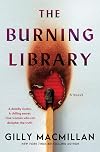
Gilly Macmillan’s previous books had entertained me, so I excitedly placed a library hold on her latest novel, The Burning Library. This dark thriller unfolds at a university in St. Andrews, Scotland, and follows Dr. Anya Brown, a rising academic with an extraordinary memory. As she navigates the mysterious world of ancient manuscripts and scholarly intrigue, she becomes entangled in a web of secrets. Detective Constable Clio Spicer investigates a suspicious death that reveals deeper show more mysteries. The story delves into themes of ruthless ambition, hidden rivalries, and the perilous pursuit of forbidden knowledge across generations, seamlessly blending intellectual suspense with a chilling sense of mystery.
Macmillan has been a reliable author for gripping, intelligent thrillers, so I went into The Burning Library with high expectations. Unfortunately, while the novel was engaging enough to finish, it ultimately fell short of the standard her previous books have set for me.
What kept me listening was the central mystery surrounding the ancient manuscripts. Macmillan weaves an atmospheric academic setting in St. Andrews, Scotland, filled with scholarly intrigue, secret societies, and the tantalizing pull of hidden knowledge. That intellectual puzzle element was genuinely compelling and carried much of the story’s momentum.
I also appreciated the strong feminist undercurrents running through the narrative. Stories that celebrate women’s ambition, intellect, and solidarity can be powerful, and this one has plenty of that energy. However, I found the occasional broad-brush negativity toward men unnecessary and off-putting. A secondary character in particular seemed to exist mainly to deliver snide, generalized remarks about men, which felt forced and detracted from my enjoyment. I’m all for women supporting women, but it doesn’t require tearing down men to do so.
Overall, The Burning Library is a solid dark academia thriller with an intriguing premise, but it didn’t quite live up to the suspense and emotional depth I’ve come to expect from this author. If you’re a fan of manuscript mysteries and campus intrigue, it’s worth a read—just don’t go in expecting it to match the highs of her earlier work.
I borrowed the audiobook of The Burning Library from my local library using Libby. Rose Robinson and Steph de Whalley provided entertaining narrations.
I have photos and additional information that I'm unable to include here. It can all be found on my blog, in the link below.
A Book And A Dog show less
Macmillan has been a reliable author for gripping, intelligent thrillers, so I went into The Burning Library with high expectations. Unfortunately, while the novel was engaging enough to finish, it ultimately fell short of the standard her previous books have set for me.
What kept me listening was the central mystery surrounding the ancient manuscripts. Macmillan weaves an atmospheric academic setting in St. Andrews, Scotland, filled with scholarly intrigue, secret societies, and the tantalizing pull of hidden knowledge. That intellectual puzzle element was genuinely compelling and carried much of the story’s momentum.
I also appreciated the strong feminist undercurrents running through the narrative. Stories that celebrate women’s ambition, intellect, and solidarity can be powerful, and this one has plenty of that energy. However, I found the occasional broad-brush negativity toward men unnecessary and off-putting. A secondary character in particular seemed to exist mainly to deliver snide, generalized remarks about men, which felt forced and detracted from my enjoyment. I’m all for women supporting women, but it doesn’t require tearing down men to do so.
Overall, The Burning Library is a solid dark academia thriller with an intriguing premise, but it didn’t quite live up to the suspense and emotional depth I’ve come to expect from this author. If you’re a fan of manuscript mysteries and campus intrigue, it’s worth a read—just don’t go in expecting it to match the highs of her earlier work.
I borrowed the audiobook of The Burning Library from my local library using Libby. Rose Robinson and Steph de Whalley provided entertaining narrations.
I have photos and additional information that I'm unable to include here. It can all be found on my blog, in the link below.
A Book And A Dog show less
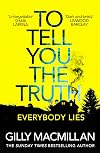
Lucy Harper has achieved what many writers dream of: her detective novels about Eliza Grey have become highly successful and she built up a huge fan base. Her husband Dan supports her and takes care of their finances and everyday life. When he, without asking her first, decides to buy a house, she gets angry, even more so when she learns where exactly the house is located: close to where she grew up, next to the woods where her younger brother once disappeared and which she connects with her show more most dreadful nightmares. How could he do something like this, knowing about her childhood? Quite obviously, he is gaslighting her – that’s what Eliza tells her. Eliza, not only the protagonist of her novels but also the voice that has been in her head as long as she can remember. What has been useful for her writing now becomes complicated when Lucy struggles to distinguish between what is real, what is fiction and what is only in her head and when her husband is found murdered, the writer finds herself the main suspect of a story just like her novels.
I have several of Gilly Macmillan’s novels, always liking how she plays with the reader’s sympathies for the characters and the unexpected twists which keep suspense high. “To Tell You the Truth” is also masterfully crafted in terms of being vague and keeping you in the dark about what is real within fiction and what is only imagined by Lucy. Just like the protagonist, it takes a long time to figure out where the actual threat comes from, many different leads offer options for speculation which makes reading totally enjoyable.
Having a crime writer who finds herself suddenly suspect in a crime in which the police use her own writing against her, is a setting which has been used before. Yet, Gilly Macmillan added a lot of aspects to make the case much more complicated. On the one hand, the voice in Lucy’s head is quite strong and surely a negative character whom you shouldn’t trust. Again and again, Lucy also seems to suffer from blackouts thus opening the possibility of actions she simply cannot recollect and which therefore remain blank spaces also for the reader. The backstory of her vanished brother and the big question looming over all if she herself might be responsible for his likely death – maybe even willingly – also add to the unpleasant feeling that she might not be a victim in this story at all.
Her husband, too, raises many questions. He is, quite obviously, envious of his wife’s success since he also dreams of a career in writing but lacks talent. The bits and pieces of information one gets directly lead to the assumption of him gaslighting her. However, the possibility of Lucy getting it all wrong due to her hallucinations and the Eliza-voice is also in the air.
A creepy thriller which keeps you alert at all times. Even though I found the end a bit too simply for the plot, a fantastic read I totally enjoyed. show less
I have several of Gilly Macmillan’s novels, always liking how she plays with the reader’s sympathies for the characters and the unexpected twists which keep suspense high. “To Tell You the Truth” is also masterfully crafted in terms of being vague and keeping you in the dark about what is real within fiction and what is only imagined by Lucy. Just like the protagonist, it takes a long time to figure out where the actual threat comes from, many different leads offer options for speculation which makes reading totally enjoyable.
Having a crime writer who finds herself suddenly suspect in a crime in which the police use her own writing against her, is a setting which has been used before. Yet, Gilly Macmillan added a lot of aspects to make the case much more complicated. On the one hand, the voice in Lucy’s head is quite strong and surely a negative character whom you shouldn’t trust. Again and again, Lucy also seems to suffer from blackouts thus opening the possibility of actions she simply cannot recollect and which therefore remain blank spaces also for the reader. The backstory of her vanished brother and the big question looming over all if she herself might be responsible for his likely death – maybe even willingly – also add to the unpleasant feeling that she might not be a victim in this story at all.
Her husband, too, raises many questions. He is, quite obviously, envious of his wife’s success since he also dreams of a career in writing but lacks talent. The bits and pieces of information one gets directly lead to the assumption of him gaslighting her. However, the possibility of Lucy getting it all wrong due to her hallucinations and the Eliza-voice is also in the air.
A creepy thriller which keeps you alert at all times. Even though I found the end a bit too simply for the plot, a fantastic read I totally enjoyed. show less

A new author for me, but I think I’ll look for her other books since this one was so good. The use of the podcast was very effective and would make an outstanding audiobook.
I liked how there were bits of information that left you wanting more; Tremain sidelining Fletcher’s career and Smail’s downfall. I wanted to know, but there was so much going on I didn’t fixate on them. Another thing I liked was the subtle characterization - she left it up to the reader to infer and deduce quite show more a bit; like Smail’s verbosity - she doesn’t have other characters think or comment about it. She lets it stand and us to figure it out. Nice since I was reading another book simultaneously in which the writer hit us over the head with certain traits of the people in the book. Like she didn’t trust us to get it. Oy vey.
The wrongly-convicted mentally challenged guy aspect put me in mind of Disordered Minds by Minette Walters, but this writer took a different approach and while the crusader aspect was there, it wasn’t as structured.It should have occurred to me that the whole podcast thing was a stunt. First the guy making it claimed over and over again to be a filmmaker. Second the whole missing my best friends thing was laid on a bit thick. You were 10. People who disappear from your life at that age do it in memory as well as reality. But I didn’t and the collusion with Felix was a nice twist. When the Fletcher-Felix connection came to light wheels started turning and I felt less and less sympathy for Fletcher. There was a Felix-Jessy connection, too, but my sympathy for her stayed put.
Despite a bunch of typos in my ARC, I connected with the writing and there are both some shop-worn cliches (people having a field day for fuck’s sake...can’t we come up with something else??), but also some nice allusions like this one - “...the roots of his childhood were sunk deep into both concrete and disappointment.” p 241 show less
I liked how there were bits of information that left you wanting more; Tremain sidelining Fletcher’s career and Smail’s downfall. I wanted to know, but there was so much going on I didn’t fixate on them. Another thing I liked was the subtle characterization - she left it up to the reader to infer and deduce quite show more a bit; like Smail’s verbosity - she doesn’t have other characters think or comment about it. She lets it stand and us to figure it out. Nice since I was reading another book simultaneously in which the writer hit us over the head with certain traits of the people in the book. Like she didn’t trust us to get it. Oy vey.
The wrongly-convicted mentally challenged guy aspect put me in mind of Disordered Minds by Minette Walters, but this writer took a different approach and while the crusader aspect was there, it wasn’t as structured.
Despite a bunch of typos in my ARC, I connected with the writing and there are both some shop-worn cliches (people having a field day for fuck’s sake...can’t we come up with something else??), but also some nice allusions like this one - “...the roots of his childhood were sunk deep into both concrete and disappointment.” p 241 show less
 This review was written for LibraryThing Early Reviewers.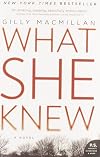
4.5 stars.
With a truly unique approach to storytelling, What She Knew by Gilly Macmillan is a cleverly written psychological thriller. The investigation into the disappearance of eight year old Benedict "Ben" Finch is revealed through the dual perspectives of his mother, Rachel Jenner and the detective leading the search, James "Jim" Clemo, blog posts and comments, e-mails, transcripts from counseling sessions and newspaper articles.
During their typical Sunday walk in the park with the show more family dog, Rachel is a bit distracted when she allows Ben to run ahead of her to play on the park's swing. Arriving just minutes behind him, she is shocked to discover Ben has vanished. Frantically searching the darkening woods around her, Rachel finds no trace of her son and the police are quickly summoned to the scene. In the nerve wracking investigation that follows, Rachel is vilified by the press and on social media as the police try to discover the truth about what happened to Ben.
Rachel is still reeling from her unexpected divorce when Ben disappears. She is hurt and angry over her ex-husband's new marriage but Ben seems to have finally bounced back from the unexpected changes in their life. In the aftermath of Ben's apparent kidnapping, Rachel second guesses many of her decisions and she, of course, blames herself for his disappearance. Sympathy for Rachel soon turns to suspicion after she goes off script during a news conference. When information from the investigation is leaked to an inflammatory blog, she is soon tried and convicted in the court of public opinion. While speculation runs rampant that she knows more than she is telling, the police uncover a shocking secret that causes Rachel to mistrust someone close to her.
Under intense pressure to locate the missing boy, DI Jim Clemo slowly begins to unravel during the course of the investigation. While at first thrilled to be selected for such a high profile case, as the days pass with no new leads or information, he begins to identify a little too closely with the family and his objectivity becomes compromised. A stunning revelation from someone Jim cares deeply has lasting repercussions on his emotional well-being and a year after the case is over, his lingering anxiety leads to mandatory counseling. Although Jim initially resists co-operating during his sessions, many of the events that occurred during the investigation are eventually revealed through the probing questions of the psychologist assigned to his case.
A well-written work of fiction that reads like true crime, What She Knew is an incredibly riveting mystery that is quite different from the usual police procedural. Beginning with a prologue a year following the kidnapping, much of the investigation is revealed with the benefit of the key player's hindsight. This adds depth to the storyline and builds suspense as the novel races to its stunning conclusion. With plenty of twists, turns and brilliant red herrings, it is an authentic and realistic mystery that I highly recommend to fans of the genre. show less
With a truly unique approach to storytelling, What She Knew by Gilly Macmillan is a cleverly written psychological thriller. The investigation into the disappearance of eight year old Benedict "Ben" Finch is revealed through the dual perspectives of his mother, Rachel Jenner and the detective leading the search, James "Jim" Clemo, blog posts and comments, e-mails, transcripts from counseling sessions and newspaper articles.
During their typical Sunday walk in the park with the show more family dog, Rachel is a bit distracted when she allows Ben to run ahead of her to play on the park's swing. Arriving just minutes behind him, she is shocked to discover Ben has vanished. Frantically searching the darkening woods around her, Rachel finds no trace of her son and the police are quickly summoned to the scene. In the nerve wracking investigation that follows, Rachel is vilified by the press and on social media as the police try to discover the truth about what happened to Ben.
Rachel is still reeling from her unexpected divorce when Ben disappears. She is hurt and angry over her ex-husband's new marriage but Ben seems to have finally bounced back from the unexpected changes in their life. In the aftermath of Ben's apparent kidnapping, Rachel second guesses many of her decisions and she, of course, blames herself for his disappearance. Sympathy for Rachel soon turns to suspicion after she goes off script during a news conference. When information from the investigation is leaked to an inflammatory blog, she is soon tried and convicted in the court of public opinion. While speculation runs rampant that she knows more than she is telling, the police uncover a shocking secret that causes Rachel to mistrust someone close to her.
Under intense pressure to locate the missing boy, DI Jim Clemo slowly begins to unravel during the course of the investigation. While at first thrilled to be selected for such a high profile case, as the days pass with no new leads or information, he begins to identify a little too closely with the family and his objectivity becomes compromised. A stunning revelation from someone Jim cares deeply has lasting repercussions on his emotional well-being and a year after the case is over, his lingering anxiety leads to mandatory counseling. Although Jim initially resists co-operating during his sessions, many of the events that occurred during the investigation are eventually revealed through the probing questions of the psychologist assigned to his case.
A well-written work of fiction that reads like true crime, What She Knew is an incredibly riveting mystery that is quite different from the usual police procedural. Beginning with a prologue a year following the kidnapping, much of the investigation is revealed with the benefit of the key player's hindsight. This adds depth to the storyline and builds suspense as the novel races to its stunning conclusion. With plenty of twists, turns and brilliant red herrings, it is an authentic and realistic mystery that I highly recommend to fans of the genre. show less
Lists
Awards


You May Also Like


Associated Authors
Statistics
- Works
- 12
- Also by
- 2
- Members
- 5,869
- Popularity
- #4,206
- Rating
- 3.6
- Reviews
- 344
- ISBNs
- 214
- Languages
- 11
- Favorited
- 2
