
Ellen Oh
Author of Flying Lessons and Other Stories
Series
Works by Ellen Oh
Associated Works
Tagged
Common Knowledge
- Birthdate
- 20th Century
- Gender
- female
- Education
- New York University
Georgetown University Law Center - Occupations
- lawyer
adjunct college instructor - Organizations
- We Need Diverse Books
- Agent
- Barry Goldblatt (BG Literary)
- Nationality
- USA
- Places of residence
- Brooklyn, New York, USA
Bethesda, Maryland, USA - Associated Place (for map)
- USA
Members
Reviews
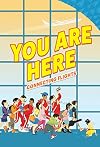
A wonderful set of linked stories, set in a Chicago airport where a storm has caused mass delays and cancellations, bringing out the best and the worst in people. The main character in one story crosses briefly through another, and vice versa. All of the main characters are young Asian Americans (mainly East and Southeast Asian).
Quotes
This is how [my dads] are. Confront hate! Don't let people feel safe saying bigoted things! Silence is violence! Stand up for what's right even when it makes show more everyone uncomfortable at Thanksgiving! ...But this is different. This isn't about them. It's about...me. (Mindy, 49)
He felt bad for everyone who needed help that wasn't coming. Sometimes the world was unfair to people for no reason at all. (AJ, 117)
Maybe [all those noble Filipino heroes] started out by helping people in whatever small ways they could, in whatever small ways were needed. Maybe the built up to doing more, because maybe helping people was a skill that improved over time with practice... (AJ, 120)
A precarious feeling, like trying to tightrope-walk between staying silent and letting things accumulate until they were too big to be ignored or forging onward through the awkwardness and pain of speaking up. (Natalie, 142)
"But I don't come from the Philippines," I said. "I'm from here."
"Texas is part of you," she said. "But the Philippines is, too." (Camilla, 171)
We were always supposed to step aside, never make a fuss, always be as invisible as possible. We were never supposed to say no or argue or complain or ask for help... (Jane, 201)
I actually like airports because they're places of such possibility....[but] We're all stuck here together in this strange world in between home and adventure. (Khoi, 207) show less
Quotes
This is how [my dads] are. Confront hate! Don't let people feel safe saying bigoted things! Silence is violence! Stand up for what's right even when it makes show more everyone uncomfortable at Thanksgiving! ...But this is different. This isn't about them. It's about...me. (Mindy, 49)
He felt bad for everyone who needed help that wasn't coming. Sometimes the world was unfair to people for no reason at all. (AJ, 117)
Maybe [all those noble Filipino heroes] started out by helping people in whatever small ways they could, in whatever small ways were needed. Maybe the built up to doing more, because maybe helping people was a skill that improved over time with practice... (AJ, 120)
A precarious feeling, like trying to tightrope-walk between staying silent and letting things accumulate until they were too big to be ignored or forging onward through the awkwardness and pain of speaking up. (Natalie, 142)
"But I don't come from the Philippines," I said. "I'm from here."
"Texas is part of you," she said. "But the Philippines is, too." (Camilla, 171)
We were always supposed to step aside, never make a fuss, always be as invisible as possible. We were never supposed to say no or argue or complain or ask for help... (Jane, 201)
I actually like airports because they're places of such possibility....[but] We're all stuck here together in this strange world in between home and adventure. (Khoi, 207) show less
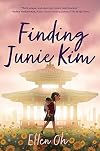
Korean-American Junie Kim and her older brother Justin dealt with anti-Asian racism from classmates on their school bus all last year, but now Justin has moved up to high school, leaving Junie to face middle school alone - and on the first day, there is racist graffiti in the school building. Junie has a strong network of diverse friends, but she doesn't tell them what's going on, and when they want to speak out and take action, she is pessimistic that they will be able to change anything, show more and doesn't want to be involved.
When a teacher assigns a project of interviewing someone from the Silent or Boomer generations, Junie asks her beloved grandfather for stories, and he tells her about growing up in Korea during the Korean War; his story forms one of the middle sections of the book, and Junie's grandmother's story forms another part. Both stories help Junie come to the conclusion that speaking up against racism is important and worthwhile, so she mends her relationship with her friends, and uses part of her grandfather's interview (which she recorded on video) as part of a presentation to the whole school.
The Korean War is not covered in depth (or sometimes at all) in K-12 social studies, so this history may be eye-opening for many readers. Kids who face racism - and those who espouse it or fail to speak up - can all take something away from Junie's story.
See also: Inside Out & Back Again by Thanhha Lai, Merci Suarez Changes Gears by Meg Medina, Soul Lanterns by Shaw Kuzki
Quotes
My mom always says that running away never solves anything. You have to confront your problems head-on. But what if you're really scared that your problem is going to physically hurt you? (17)
"What's nationalism?" I ask.
"It's pride in your country, but with the belief that it is better than other nations," Grandpa explains. (78)
"There are moments in life when a person must decide between what's right and what's safe. It is one of the most difficult decisions in life, and I would never be angry at you for choosing to do what's safe. But I will always be proud of you for doing what's right." (Doha's father, 121)
"[War] requires average citizens to take extraordinary measures. For if we don't do what we can to minimize the suffering of others, we will lose our humanity." (Doha's father, 127)
"How can I not speak up when something so wrong is happening? If we are silent now, then they will still come for us later. It will not stop." (Doha's father, 136)
"...silence is a weapon. When people don't speak up, and let evil continue unchecked, they too have become corrupt." (Grandpa to Junie, 161)
Sometimes Chama is a good thing. It is about inner strength and resilience. To endure. But if I always endure everything on my own, how can anyone know what I'm going through? (167) show less
When a teacher assigns a project of interviewing someone from the Silent or Boomer generations, Junie asks her beloved grandfather for stories, and he tells her about growing up in Korea during the Korean War; his story forms one of the middle sections of the book, and Junie's grandmother's story forms another part. Both stories help Junie come to the conclusion that speaking up against racism is important and worthwhile, so she mends her relationship with her friends, and uses part of her grandfather's interview (which she recorded on video) as part of a presentation to the whole school.
The Korean War is not covered in depth (or sometimes at all) in K-12 social studies, so this history may be eye-opening for many readers. Kids who face racism - and those who espouse it or fail to speak up - can all take something away from Junie's story.
See also: Inside Out & Back Again by Thanhha Lai, Merci Suarez Changes Gears by Meg Medina, Soul Lanterns by Shaw Kuzki
Quotes
My mom always says that running away never solves anything. You have to confront your problems head-on. But what if you're really scared that your problem is going to physically hurt you? (17)
"What's nationalism?" I ask.
"It's pride in your country, but with the belief that it is better than other nations," Grandpa explains. (78)
"There are moments in life when a person must decide between what's right and what's safe. It is one of the most difficult decisions in life, and I would never be angry at you for choosing to do what's safe. But I will always be proud of you for doing what's right." (Doha's father, 121)
"[War] requires average citizens to take extraordinary measures. For if we don't do what we can to minimize the suffering of others, we will lose our humanity." (Doha's father, 127)
"How can I not speak up when something so wrong is happening? If we are silent now, then they will still come for us later. It will not stop." (Doha's father, 136)
"...silence is a weapon. When people don't speak up, and let evil continue unchecked, they too have become corrupt." (Grandpa to Junie, 161)
Sometimes Chama is a good thing. It is about inner strength and resilience. To endure. But if I always endure everything on my own, how can anyone know what I'm going through? (167) show less
Welcome to The Entrada! You’ve come home.
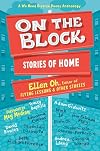
On The Block: Stories of Home is an anthology of twelve connected vignettes, edited by author Ellen Oh, that portray the diverse families in residence at the New York apartment building known as The Entrada. Each chapter, appropriately titled by the apartment number of each new middle-grade-aged narrator, is a lovely gem and tells of the young resident’s life in the days leading up to the building’s first community potluck.
The stories explore show more the cultures and concerns of the new young immigrant, and while their origins are global, their hopes and fears are universal and relatable to all readers. I loved that the connections among the families while beginning with a common address, became personal through the friendships of the building’s child population. I enjoyed the concurrent points of view of events or encounters among the children, two or more people observing the same event but “seeing” or interpreting something from it that was entirely different. And I’m not talking about the paranormal activity threaded through some of the tales, though there is that!
Food is a common thread running through the collected tales. There are numerous scenes of family meals, and some of their favorite dishes may be unfamiliar to many readers. However, they are tempting just the same because of the authors’ tantalizing descriptions. The story culminates in the building’s big community potluck on a wonderful summer Saturday evening.
At the end of the book are the contributing authors’ biographies, including the titles of their previous works. That information alone is gold and could provide additional stories for the targeted age group to enjoy.
I recommend ONE THE BLOCK to readers of middle-grade fiction, especially those interested in getting a peek into a different culture.
I voluntarily reviewed this after receiving an Advanced Review Copy through TBR and Beyond Book Tours. show less
On The Block: Stories of Home is an anthology of twelve connected vignettes, edited by author Ellen Oh, that portray the diverse families in residence at the New York apartment building known as The Entrada. Each chapter, appropriately titled by the apartment number of each new middle-grade-aged narrator, is a lovely gem and tells of the young resident’s life in the days leading up to the building’s first community potluck.
The stories explore show more the cultures and concerns of the new young immigrant, and while their origins are global, their hopes and fears are universal and relatable to all readers. I loved that the connections among the families while beginning with a common address, became personal through the friendships of the building’s child population. I enjoyed the concurrent points of view of events or encounters among the children, two or more people observing the same event but “seeing” or interpreting something from it that was entirely different. And I’m not talking about the paranormal activity threaded through some of the tales, though there is that!
Food is a common thread running through the collected tales. There are numerous scenes of family meals, and some of their favorite dishes may be unfamiliar to many readers. However, they are tempting just the same because of the authors’ tantalizing descriptions. The story culminates in the building’s big community potluck on a wonderful summer Saturday evening.
At the end of the book are the contributing authors’ biographies, including the titles of their previous works. That information alone is gold and could provide additional stories for the targeted age group to enjoy.
I recommend ONE THE BLOCK to readers of middle-grade fiction, especially those interested in getting a peek into a different culture.
I voluntarily reviewed this after receiving an Advanced Review Copy through TBR and Beyond Book Tours. show less

This review and others posted over at my blog.
I was really hankering for some middle-grade and Spirit Hunters really hit the spot! It’s dark, genuinely creepy and touching, plus it’s written by an own voices author – everything I love in my MG!
Harper is Korean American and some old family traditions play a part throughout the story (the details of which I’ll let you discover on your own). Oh also touches on that dreaded question that anyone who doesn’t “look American” has heard show more probably a million times: “Where are you from?” You know, the type that’s followed up by “No, where are you really from?” after you list your birth city/state. -sigh- Racism is not a major player in this book, but it’s touched on in a way that genuinely fits into the story.
Harper is a realistic, likable teen (I think she’s 13?) She loves paper, she gets along with her little brother and just wants to find some good food in her new city. On top of hating her new home and city – people in DC are smiley and friendly and Harper much prefers the NY attitude of minding your own business – Harper is also dealing with migraines and panic attacks after an accident she suffered before the move. Tension is high between Harper and her older sister and she just wants to feel normal again. And really, can you blame her?
The story is told from the third person POV, following Harper, but readers also get snippets from her journal, which her therapist suggested she start after the move. I enjoyed the dual perspectives from the same character. Harper is an interesting character – she’s doing her best to be a good older sister, but is struggling with the new home and the damage caused by the accident she can’t remember. Her relationship with her mother is somewhat strained too, as Harper tries to regain her lost memories.
This is a ghost story grounded with realistic characters and I loved it. Harper and her family aren’t perfect. Harper isn’t a genius, she isn’t the perfect sister or daughter and she doesn’t believe in ghosts. Harper’s mother has a strained relationship with her own mother, which affects the whole family. Harper’s father is doing his best to play the nice guy and keep everyone happy. With the help of her neighbor-turned-friend, Dayo (who loves to watch Antiques Roadshow!), Harper begins to realize ghosts are real and they’re trying to hurt her family.
Spirit Hunters is intriguing, meaningful and dark. There were scenes where I was genuinely creeped out and I loved it! I also loved how Oh blended Korean traditions into the ghost theme. Harper is a great character and even her brother avoided being a clichéd annoying little kid (except when he couldn’t help it.) I can’t wait to read more in this series! I need that paperback to come out ASAP so my editions can match. If you’re looking for a spooky read for fall or a book for younger readers with a protagonist who has memory issues and suffers migraines, definitely pick this up! show less
I was really hankering for some middle-grade and Spirit Hunters really hit the spot! It’s dark, genuinely creepy and touching, plus it’s written by an own voices author – everything I love in my MG!
Harper is Korean American and some old family traditions play a part throughout the story (the details of which I’ll let you discover on your own). Oh also touches on that dreaded question that anyone who doesn’t “look American” has heard show more probably a million times: “Where are you from?” You know, the type that’s followed up by “No, where are you really from?” after you list your birth city/state. -sigh- Racism is not a major player in this book, but it’s touched on in a way that genuinely fits into the story.
Harper is a realistic, likable teen (I think she’s 13?) She loves paper, she gets along with her little brother and just wants to find some good food in her new city. On top of hating her new home and city – people in DC are smiley and friendly and Harper much prefers the NY attitude of minding your own business – Harper is also dealing with migraines and panic attacks after an accident she suffered before the move. Tension is high between Harper and her older sister and she just wants to feel normal again. And really, can you blame her?
The story is told from the third person POV, following Harper, but readers also get snippets from her journal, which her therapist suggested she start after the move. I enjoyed the dual perspectives from the same character. Harper is an interesting character – she’s doing her best to be a good older sister, but is struggling with the new home and the damage caused by the accident she can’t remember. Her relationship with her mother is somewhat strained too, as Harper tries to regain her lost memories.
This is a ghost story grounded with realistic characters and I loved it. Harper and her family aren’t perfect. Harper isn’t a genius, she isn’t the perfect sister or daughter and she doesn’t believe in ghosts. Harper’s mother has a strained relationship with her own mother, which affects the whole family. Harper’s father is doing his best to play the nice guy and keep everyone happy. With the help of her neighbor-turned-friend, Dayo (who loves to watch Antiques Roadshow!), Harper begins to realize ghosts are real and they’re trying to hurt her family.
Spirit Hunters is intriguing, meaningful and dark. There were scenes where I was genuinely creeped out and I loved it! I also loved how Oh blended Korean traditions into the ghost theme. Harper is a great character and even her brother avoided being a clichéd annoying little kid (except when he couldn’t help it.) I can’t wait to read more in this series! I need that paperback to come out ASAP so my editions can match. If you’re looking for a spooky read for fall or a book for younger readers with a protagonist who has memory issues and suffers migraines, definitely pick this up! show less
Lists
Awards


You May Also Like


Associated Authors
Statistics
- Works
- 17
- Also by
- 3
- Members
- 2,923
- Popularity
- #8,762
- Rating
- 3.9
- Reviews
- 102
- ISBNs
- 131
- Languages
- 1
- Favorited
- 1