

Loren A. Olsen
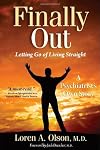
Author of Finally Out: Letting Go of Living Straight, A Psychiatrist's Own Story
About the Author
Loren A. Olson, MD, is a board-certified psychiatrist who came out at the age of forty. A father and grandfather; he is also a Distinguished Life Fellow of the American Psychiatric Association and a recipient of the Exemplary Psychiatrist Award from the National Alliance on Mental Illness. He has show more presented findings from his research on mature gay men at the World Congress of Psychiatry in Prague. In 2009, Dr. Olson legally married Doug Mortimer, his partner of thirty years. show less
Works by Loren A. Olsen
No more neckties 1 copy
Tagged
Common Knowledge
- Canonical name
- Olsen, Loren A.
- Gender
- male
- Education
- University of Nebraska (MD)
- Occupations
- psychiatrist
activist
flight surgeon
grass-fed beef farmer - Organizations
- American Psychiatric Association (Distinguished Life Fellow)
American Board of Psychiatry and Neurology
Iowa Psychiatric Society
United States Navy - Agent
- Linda Konner
- Nationality
- USA
- Places of residence
- Des Moines, Iowa, USA
- Map Location
- USA
Members
Reviews
Why would a man wait until he is forty years of age before coming out of the closet? That was the question that led me to want to read this book. What I thought was merely going to be an autobiography of a gay man turned out to be an excellent, thoughtful, informative, and engaging read. The author, Dr. Loren A. Olsen, is a psychiatrist who is a Distinguished Life Fellow of the American Psychiatric Association and a recipient of the “Exemplary Psychiatrist Award” from the National show more Alliance on Mental Illness. He came out at age forty.
There are many factors which make this book outstanding. One is the easy way in which the author communicates to his readers. He shares his personal story and the stories of other men who have given him permission to do so. He does this in a laid back, conversational way. It’s as if the author were just a friend who is sharing some interesting information with his readers. In addition, he provides citations of referenced works, both fiction and non-fiction to emphasize his points. To support his citations and for further reading, the author provides an extensive bibliography at the back of the book.
Dr. Olson has a way of discussing the subject of coming out so that it seems to be an adaptive behavior rather than an aberration. Some of the statements he makes about “coming-out behavior” have such universal meaning that they are brilliant in their own right. Take, for example, this statement of Dr. Olson’s about values: “We have the capacity to deconstruct our inherited value system, analyze it, and reconstruct a value system of our own making; in fact, it is essential that we do so.” Or this statement: “Those who believe that there are absolutes of right and wrong and good and evil have had their thinking done for them.” Those are quotes worth preserving.
I read this book out of mere curiosity, but I can see that this book has value for a very wide audience. For anyone who is trying to grapple with his own sexuality (be aware, though, that this book is only about men), the book’s content is food for thought, if not for action. For anyone who is a family or friend to someone who is gay or is suspected to be gay, this is just the book to clear up any misconceptions about what male homosexuality is and how it manifests itself. The bottom line about male homosexuality, according to Dr. Olson, is that there is not just a singular trajectory. This book is very suitable for the general public as it opens a door to wider understanding of male homosexuality. Any increased understanding the public can give to individuals who deal with this issue is most certainly needed. Finally, the book addresses the topic of the aging homosexual male. Old age is a particularly vulnerable stage for a formerly closeted homosexual so the emphasis on this topic is particularly important.
Although I anticipated that I might get a bit squeamish from the author revealing his own sexuality, instead I came away more with respect for a caring psychiatrist who is willing to teach others how to live true to themselves and how to understand the issues of male homosexuality. show less
There are many factors which make this book outstanding. One is the easy way in which the author communicates to his readers. He shares his personal story and the stories of other men who have given him permission to do so. He does this in a laid back, conversational way. It’s as if the author were just a friend who is sharing some interesting information with his readers. In addition, he provides citations of referenced works, both fiction and non-fiction to emphasize his points. To support his citations and for further reading, the author provides an extensive bibliography at the back of the book.
Dr. Olson has a way of discussing the subject of coming out so that it seems to be an adaptive behavior rather than an aberration. Some of the statements he makes about “coming-out behavior” have such universal meaning that they are brilliant in their own right. Take, for example, this statement of Dr. Olson’s about values: “We have the capacity to deconstruct our inherited value system, analyze it, and reconstruct a value system of our own making; in fact, it is essential that we do so.” Or this statement: “Those who believe that there are absolutes of right and wrong and good and evil have had their thinking done for them.” Those are quotes worth preserving.
I read this book out of mere curiosity, but I can see that this book has value for a very wide audience. For anyone who is trying to grapple with his own sexuality (be aware, though, that this book is only about men), the book’s content is food for thought, if not for action. For anyone who is a family or friend to someone who is gay or is suspected to be gay, this is just the book to clear up any misconceptions about what male homosexuality is and how it manifests itself. The bottom line about male homosexuality, according to Dr. Olson, is that there is not just a singular trajectory. This book is very suitable for the general public as it opens a door to wider understanding of male homosexuality. Any increased understanding the public can give to individuals who deal with this issue is most certainly needed. Finally, the book addresses the topic of the aging homosexual male. Old age is a particularly vulnerable stage for a formerly closeted homosexual so the emphasis on this topic is particularly important.
Although I anticipated that I might get a bit squeamish from the author revealing his own sexuality, instead I came away more with respect for a caring psychiatrist who is willing to teach others how to live true to themselves and how to understand the issues of male homosexuality. show less
 This review was written for LibraryThing Early Reviewers.
I was highly disappointed by this book. First of all, it is in desperate need of a harsh editor. If this book did have an editor, that person was clearly too nice to the author. Exclamation marks, odd phrasing, and awkward wording pervades the work. Secondly, the author has far too much sympathy for the closeted anti-gay types. Although it is tough to be out as gay, there is a difference between a closet case and a closet case who actively works towards the detriment of other LGBT show more individuals. The author was a closet case himself but did not work to harm other LGBT individuals, whereas those for him he has so much compassion, like Larry Craig, actually worked on legislation to hurt LGBT community members. Craig and his ilk are not sad closet cases to be pitied, they are men who cynically play straight for political power while indulging in same-sex desires in secret. The author ought to consider that before tripping over himself to feel sorry for them. Thirdly, in his wish to provide a book benefiting older closet cases who have finally come out, the author unnecessarily pillories the younger, more active, more vocal LGBT community. If it weren't for that community, he would not have a platform for his viewpoints and a market for his book, so he could have at least acknowledged and given due respect to the more urban, out, vocal LGBT individuals instead of being angry at them for not being rural and straight-acting enough. Fourthly, there are some very odd anecdotes in the book that seem to be there for no reason. The one that comes to my mind is the one in which he tries doing drag. It seems unnecessarily and uncomfortably transphobic for him to talk about how stupid dressing up as the opposite gender is for him; plenty of people, gay or straight, try things that don't work out for them, but all of us don't feel the need to awkwardly recount those experiences as some kind of proof that we are a superior gay. Last, but not least, the author seems to be disdainful of so much, from men who do drag to people who rightly oppose closeted anti-gay politicians, that I felt he was writing to assuage straight people's fears instead of for the LGBT crowd who would be more likely to buy and read his book.
There is definitely a need for books aimed towards ex-straight people. This book might fit into that need somehow, but it is woefully inadequate. show less
There is definitely a need for books aimed towards ex-straight people. This book might fit into that need somehow, but it is woefully inadequate. show less
This review was written for LibraryThing Early Reviewers.With a narrow audience focus I expected to be only mildly interested in this book. I am, after all, not a middle aged man who has sex with men. The author surpassed my expectations. I found myself fascinated by the science and heart contained within this book and would heartily recommend it to both gay men, those who love them, and anyone who has struggled with coming out about their sexuality (whichever closet they may have resided in) at any stage of their life. In fact, if you just find show more psychology and the sciences of the brain fascinating, or you work with sexuality in any caregiver capacity, you'll want to give this one a read too. Dr Olson does a fantastic job of mixing the science of why we do what we do with the sociology of studies and surveys, then tops it off with his own personal stories and those of men he has spoken with, bringing all that science back home to roost. A few times i found that the chapter title or heading didn't seem to quite fit with the contents, but with that as my only quibble I can still very highly recommend this book. Finally Out is more than it appears to be, and deeper than expected. Bravo, Loren. show less
This review was written for LibraryThing Early Reviewers.There is much to like about this book, particularly, in my view, the personal stories in which Dr. Olson appears relaxed and engaging. But while he may have a compelling story to tell, the mediocre production value of this particular release may serve as a deterrent to reading it. That said, this is a valuable resource to those who are in the closet or wanting to understand it better and to those questioning their sexuality. As well, it should be on reading lists for all show more queer/gender/sexuality studies. show less
This review was written for LibraryThing Early Reviewers.Awards


You May Also Like
Associated Authors
Statistics
- Works
- 4
- Members
- 80
- Popularity
- #224,853
- Rating
- 3.4
- Reviews
- 26
- ISBNs
- 4
