

John Plotz
Author of B-Side Books: Essays on Forgotten Favorites
About the Author
John Plotz is Barbara Mandel Professor of Humanities at Brandeis University. His books include Semi-Detached: The Aesthetics of Virtual Experience Since Dickens (2017) and the illustrated children's book Time and the Tapestry: A William Morris Adventure (2014). He is the editor of the B-Sides show more series on Public Books and the cohost of the podcasts Recall This Book and Novel Dialogue. show less
Works by John Plotz
Associated Works
Tagged
Common Knowledge
- Gender
- male
Members
Reviews
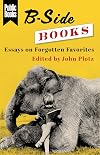
This is a collection of essays, reviews, and recommendations for books you most definitely missed. The writers of the various reviews are often academics—and sometimes that shows in the use of $2 words. But there is something for the true bibliophile in this book, or those looking for that undiscovered novel or story, particularly ones by underrepresented groups in literature. There a few that enticed me enough to add them to my future reads list. I added Brown Girl, Brownstones by Paule show more Marshall which was the debut novel by Paule Marshall about Barbadian immigrants living in Brooklyn. And a review by Ursula K. Le Guin for the book Annals of the Parish by John Galt which compared him to some of my other favorite authors, Elizabeth Gaskell, Jane Austen, and Thomas Hardy, gives this book a place on my TBR pile. And then there is a review of Kay Boyle’s Author of Herself. I had recently learned a bit about Kay Boyle’s incredible life in another book, and here is a biography I need to read. And lastly, who knew Shirley Jackson, whose classic horror novels have been undergoing a revival, also wrote about her domestic life in two memoirs, Life Among the Savages, and Raising Demons.
I have to say, if you are looking for other good books of book recommendations, I would suggest The Writer’s Library by Nancy Pearl and Jeff Schwager, any of Nancy Pearl’s Book Lust series, and Boxall’s 1001 Books to Read Before You Die. show less
I have to say, if you are looking for other good books of book recommendations, I would suggest The Writer’s Library by Nancy Pearl and Jeff Schwager, any of Nancy Pearl’s Book Lust series, and Boxall’s 1001 Books to Read Before You Die. show less
B-Side Books: Essays on Forgotten Favorites, edited by John Plotz, was a fun and interesting trip through some lesser known books by both known and forgotten authors.
Since it amounts to a collection of forty essays, the voice varies from piece to piece, to paint all forty with a single broad brush is both incorrect and speaks more to the one painting. A few do read a bit like a critical essay (which makes sense since they are making a case for why these works are worthy of more attention) show more but most are conversational in nature. Make no mistake, these aren't conversations one has in passing but ones one has with other knowledgeable readers. If someone is lacking in either friends with some depth or, more likely, lacking depth themselves, then this may read like a lecture. I didn't feel any of them were lecturing to me, but I have conversations with people who make arguments for their stances all the time. You can decide for yourself, just don't take the word of anyone that is obviously so nondiscerning they must try to claim that distinction.
There were a few works that surprised me, not because I thought they were still widely read but because I thought they were still taught in enough schools or read widely enough not to be considered forgotten or overlooked. The four that spring to mind are Sir Gawain and the Green Knight, Mythology (Edith Hamilton), The Beggar's Opera, and An American Childhood. A couple of others were probably borderline from my perspective, and most were unknown to me even in cases where I knew the author fairly well (Graham Greene).
While I enjoyed reading about all of the works, I probably only have a desire to add ten to twelve to my future reading list. Though in honesty that is more about genre preferences than whether the book sounded interesting.
I would recommend this to readers who enjoy reading about books they may not have read with an eye toward perhaps adding a few to their TBR pile. If you think that talking about a book consists of simply liking or disliking characters or plots, then this might not be for you and it may seem too "academic" or lecture-like. If you regularly think about how a book speaks to more than just the story or any one specific time period, this book will offer both some new books to consider and maybe even a new way into a book you've already read.
Reviewed from a copy made available by the publisher via NetGalley. show less
Since it amounts to a collection of forty essays, the voice varies from piece to piece, to paint all forty with a single broad brush is both incorrect and speaks more to the one painting. A few do read a bit like a critical essay (which makes sense since they are making a case for why these works are worthy of more attention) show more but most are conversational in nature. Make no mistake, these aren't conversations one has in passing but ones one has with other knowledgeable readers. If someone is lacking in either friends with some depth or, more likely, lacking depth themselves, then this may read like a lecture. I didn't feel any of them were lecturing to me, but I have conversations with people who make arguments for their stances all the time. You can decide for yourself, just don't take the word of anyone that is obviously so nondiscerning they must try to claim that distinction.
There were a few works that surprised me, not because I thought they were still widely read but because I thought they were still taught in enough schools or read widely enough not to be considered forgotten or overlooked. The four that spring to mind are Sir Gawain and the Green Knight, Mythology (Edith Hamilton), The Beggar's Opera, and An American Childhood. A couple of others were probably borderline from my perspective, and most were unknown to me even in cases where I knew the author fairly well (Graham Greene).
While I enjoyed reading about all of the works, I probably only have a desire to add ten to twelve to my future reading list. Though in honesty that is more about genre preferences than whether the book sounded interesting.
I would recommend this to readers who enjoy reading about books they may not have read with an eye toward perhaps adding a few to their TBR pile. If you think that talking about a book consists of simply liking or disliking characters or plots, then this might not be for you and it may seem too "academic" or lecture-like. If you regularly think about how a book speaks to more than just the story or any one specific time period, this book will offer both some new books to consider and maybe even a new way into a book you've already read.
Reviewed from a copy made available by the publisher via NetGalley. show less
I'm trying to decide whether this book was good-ish, but with major flaws, or crappy with some redeeming moments.
Pro: I like the premise a lot, which is of course why I picked it up, and the vocabulary is much more developed than you often find in children's books - something I appreciate, because one of my particular pet peeves is how adults always underestimate children and freak out about the possibility of them reading something that's "too hard" for them.
Con: So the vocabulary is show more good, but the style, both narrative and dialogue, was often very awkward and unsophisticated. I skimmed most of the middle because it just didn't feel necessary, and was annoying to read. There were honestly sentences that sounded straight out of the stories I used to write in middle school, and I will tell you now that those things were utter garbage. So that's a pretty big flaw.
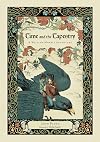
Con: The whole thing was disorientingly medieval-feeling, with the fonts and the tapestries and everything, but the book actually takes place mostly in the second half of the 1800s. I realize that this is because William Morris, the subject of the story, was really into the Middle Ages, but it just made things feel slightly off.
Pro: Toward the end, there were some surprisingly deep discussions on socialism and capitalism, personal growth, and the meaning and accessibility of art. The protagonists are 13 and 9 years old, so the audience for this book is young, and I love that this author chose to introduce such grownup topics to them.
Okay, so while I was reading the book, I intended to come here and say it was terrible. But the more I talk about it, the more I think it might actually be okay, especially for its target audience. Still only going to give it two stars, but I don't think I'd knock it out of someone's hand if I saw them with it. show less
Pro: I like the premise a lot, which is of course why I picked it up, and the vocabulary is much more developed than you often find in children's books - something I appreciate, because one of my particular pet peeves is how adults always underestimate children and freak out about the possibility of them reading something that's "too hard" for them.
Con: So the vocabulary is show more good, but the style, both narrative and dialogue, was often very awkward and unsophisticated. I skimmed most of the middle because it just didn't feel necessary, and was annoying to read. There were honestly sentences that sounded straight out of the stories I used to write in middle school, and I will tell you now that those things were utter garbage. So that's a pretty big flaw.
Con: The whole thing was disorientingly medieval-feeling, with the fonts and the tapestries and everything, but the book actually takes place mostly in the second half of the 1800s. I realize that this is because William Morris, the subject of the story, was really into the Middle Ages, but it just made things feel slightly off.
Pro: Toward the end, there were some surprisingly deep discussions on socialism and capitalism, personal growth, and the meaning and accessibility of art. The protagonists are 13 and 9 years old, so the audience for this book is young, and I love that this author chose to introduce such grownup topics to them.
Okay, so while I was reading the book, I intended to come here and say it was terrible. But the more I talk about it, the more I think it might actually be okay, especially for its target audience. Still only going to give it two stars, but I don't think I'd knock it out of someone's hand if I saw them with it. show less
An interesting story built around a William Morris tapestry. Jan and Ed live with their Granny. Granny is about to lose her house. Over time, she has sold off everything of value except for a tapestry that is unfinished and an allegedly done by William Morse. Through a quirk of fate, Jan and Ed find themselves drawn into the tapestry and arrive in 19th century England in attempt to locate the pieces to finish the tapestry.
The story presents life in 19thC England that is both interesting and show more easy to understand. Their mode of transport is a blackbird called. Mead. I found the story to be interesting and it moved along at a good pace but whether Jan and Ed found the pieces for the tapestry, you will have to read the book for yourself. The illustrations are in black and white and are reminiscence of early manuscript art. I received this as a review copy in exchange for a fair and honest review but I probably would have bought if browsing in a bookstore. show less
The story presents life in 19thC England that is both interesting and show more easy to understand. Their mode of transport is a blackbird called. Mead. I found the story to be interesting and it moved along at a good pace but whether Jan and Ed found the pieces for the tapestry, you will have to read the book for yourself. The illustrations are in black and white and are reminiscence of early manuscript art. I received this as a review copy in exchange for a fair and honest review but I probably would have bought if browsing in a bookstore. show less
You May Also Like
Associated Authors
Statistics
- Works
- 8
- Also by
- 1
- Members
- 73
- Popularity
- #240,525
- Rating
- 4.1
- Reviews
- 5
- ISBNs
- 15