Yesteryear: The Sunday Times Number One Bestseller – ‘Everyone will be talking about it’ Bella Mackie by Caro Claire Burke
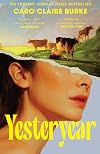
When you finish this book, you will want to talk about it.
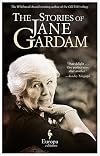
How do you rate a short story collection? Do you give a rating for each short story and then average it? Do you go higher because there is one or two obvious 5-star stories? I'm always so mixed on short story collections, even after reading George Saunders ' A Swim in the Pond in the Rain and reading his short-story masterclass over on Substack. What I've decided here is to go with a five because it is Jane Gardam, and she has written wonderful stories, and she chose her favorites for this collection. I've read a number of her novels, and I find them delightful. My favorite story out of this whole collection is Easter Lilies, which, if there were a Jane Gardam writing contest like there is for Ernest Hemingway, this story would win. It is so British and so very Gardam.
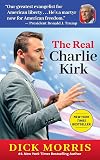
I read this schlock so you don't have to. I picked it up to see if Kirk had any redeeming qualities. Well, if he did, you won't find it in this book. This is basically a rehash of far-right talking points and a bit of information about Turning Point, a laughable organization built on grievances. Maybe I shouldn't have listened to books about FDR and Churchill before I checked this out — it's not fair to compare real historical figures with a kid whose life's work will deserve nothing more than a sentence a century from now. My favorite part of his life story is that, because high school and college seemed too hard for him, he decided to attack them and make money by convincing others that they don't need an education. What a time to be alive.
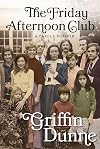
I had a feeling I would love The Friday Afternoon Club: A Family Memoir by Griffin Dunne, and I was not disappointed. He is a wonderful storyteller if you like Hollywood or family memoirs. Dunne, an actor, director, and producer, is the son of Dominick Dunne and the nephew of John Gregory Dunne and Joan Didion. Dominick was also best friends with Carri Fisher. Dunne’s sister, the actress Dominque Dunne, was also brutally murdered by her ex-boyfriend. I could go on, but safe to say his life is rich in story.
I picked up the hardcover, lightly chewed upon by my brother’s Corgi’s last visit, and settled in. Luckily, Huxley only chewed a bit on the spine, so the book was still readable, and it was a delight. Dunne certainly inherited the art of telling a good story (it’s probably the Irish part). I hope that, like his father, he makes a late-career change and writes more. This is a perfect read filled with coming-of-age humor, Hollywood tales, family squabbles, and tragic trials. I hear the audio version is good as well.
I enjoyed Griffin Dunne’s stories about Hollywood and growing up privileged in Beverly Hills, a time in the 60s and 70s when teens roamed free. Not many of us have a story that Sean Connery rescued us from drowning in a swimming pool! I also enjoyed his tales of his life in New York, his acting career, and the films he either starred in or produced. One of the films he starred in was Martin Scorsese's After Hours, which has since become a classic show more look at New York in the 1980s. Hollywood in the 70s and New York in the 80s? Griffin Dunne has seen it all. Who else wouldn’t have wanted to share an apartment with a young, witty Carrie Fisher right before her big Star Wars break?
One story I was particularly interested in was how his father burned down his Hollywood career and ended up in a cabin in Oregon. Dominick made a comeback to become Vanity Fair's Hollywood Trial ace reporter, covering the O.J. trial and others. I miss settling in with a good Vanity Fair trial story in the 90s. Those were the days, and the reason I still subscribe is to have access to the archive.
The trial coverage in the book was heartbreaking, and if you like true-crime or murder shows on streaming, you will not want to miss Dunne’s account from the family’s perspective. You’ll be saddened by the Dunne family's treatment in the court system, and you’ll learn about the family's work (with a spotlight on his mother) to bring about legislation to help victims.
Dunne also mentions a book by a friend of his, and I’m going to mention it here because I think it is an important read for anyone in an abusive situation. The book is called The Gift of Fear by Gavin de Becker, and its gist is to trust your instincts to stay alive. If something tells you not to go down the alley, trust it. If your gut says something is not right about this person, go with it; don’t ignore it. Griffin is honest about how he brushed off warning signs in Dominique’s boyfriend’s personality. I read The Gift of Fear when I was having issues with an ex, and I’ve always felt that reading it then may have saved my life. That is a story for another day.
Dominique was only twenty-three when she was killed, and having co-starred in Spielberg’s Poltergeist, her future had been bright.
When I was working for Waldenbooks, one publisher would send a cardboard display each summer featuring three mass-market paperbacks advertised as this Summer’s Beach Reads. One year, probably 1986, the display contained Dominick Dunne’s The Two Mrs. Grenvilles. I can still see the black Art Deco cover in my head. It was a perfect summer read about rich people and murder, and loosely based on the 1955 murder of William Woodward, Jr., by his wife Ann Woodward.
The Friday Afternoon Club by Griffin Dunne is also a perfect summer beach read, and delightful enough to sit in a Summer Beach read display next to The Two Mrs. Grenvilles. show less
I picked up the hardcover, lightly chewed upon by my brother’s Corgi’s last visit, and settled in. Luckily, Huxley only chewed a bit on the spine, so the book was still readable, and it was a delight. Dunne certainly inherited the art of telling a good story (it’s probably the Irish part). I hope that, like his father, he makes a late-career change and writes more. This is a perfect read filled with coming-of-age humor, Hollywood tales, family squabbles, and tragic trials. I hear the audio version is good as well.
I enjoyed Griffin Dunne’s stories about Hollywood and growing up privileged in Beverly Hills, a time in the 60s and 70s when teens roamed free. Not many of us have a story that Sean Connery rescued us from drowning in a swimming pool! I also enjoyed his tales of his life in New York, his acting career, and the films he either starred in or produced. One of the films he starred in was Martin Scorsese's After Hours, which has since become a classic show more look at New York in the 1980s. Hollywood in the 70s and New York in the 80s? Griffin Dunne has seen it all. Who else wouldn’t have wanted to share an apartment with a young, witty Carrie Fisher right before her big Star Wars break?
One story I was particularly interested in was how his father burned down his Hollywood career and ended up in a cabin in Oregon. Dominick made a comeback to become Vanity Fair's Hollywood Trial ace reporter, covering the O.J. trial and others. I miss settling in with a good Vanity Fair trial story in the 90s. Those were the days, and the reason I still subscribe is to have access to the archive.
The trial coverage in the book was heartbreaking, and if you like true-crime or murder shows on streaming, you will not want to miss Dunne’s account from the family’s perspective. You’ll be saddened by the Dunne family's treatment in the court system, and you’ll learn about the family's work (with a spotlight on his mother) to bring about legislation to help victims.
Dunne also mentions a book by a friend of his, and I’m going to mention it here because I think it is an important read for anyone in an abusive situation. The book is called The Gift of Fear by Gavin de Becker, and its gist is to trust your instincts to stay alive. If something tells you not to go down the alley, trust it. If your gut says something is not right about this person, go with it; don’t ignore it. Griffin is honest about how he brushed off warning signs in Dominique’s boyfriend’s personality. I read The Gift of Fear when I was having issues with an ex, and I’ve always felt that reading it then may have saved my life. That is a story for another day.
Dominique was only twenty-three when she was killed, and having co-starred in Spielberg’s Poltergeist, her future had been bright.
When I was working for Waldenbooks, one publisher would send a cardboard display each summer featuring three mass-market paperbacks advertised as this Summer’s Beach Reads. One year, probably 1986, the display contained Dominick Dunne’s The Two Mrs. Grenvilles. I can still see the black Art Deco cover in my head. It was a perfect summer read about rich people and murder, and loosely based on the 1955 murder of William Woodward, Jr., by his wife Ann Woodward.
The Friday Afternoon Club by Griffin Dunne is also a perfect summer beach read, and delightful enough to sit in a Summer Beach read display next to The Two Mrs. Grenvilles. show less
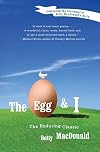
I cannot get past Betty MacDonald's racism and devoting an entire chapter to dissing Native Americans of the Pacific Northwest. My Grandmother was around the same age as Betty, and "those times were different" is no excuse. My Grandmother always said, "Be nice to everybody." Betty wasn't. I cannot believe her family would then excuse it and continue to allow the book to go out as is. I am not for censorship, but geez louise. That chapter is vile and made me want to throw the book into the trash.

This is a nice and short overview of world history.
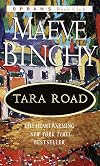
Maeve Binchy's books are good comfort food. This one had a LOT of dialogue. Maybe too much and not enough description. This wasn't my favorite of hers.
Jane Austen's Bookshelf: A Rare Book Collector's Quest to Find the Women Writers Who Shaped a Legend by Rebecca Romney
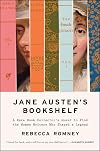
This book about the women who inspired Jane Austen was a delight: a lesson about rare authors and books, and book collecting. Read this if you love Jane Austen or love collecting books. You may be a collector without even realizing it. It is also a book about the classics — or the canon —and who is left out.
The Uncool: the new memoir from award-winning filmmaker and journalist Cameron Crowe, for fans of Just Kids and Almost Famous by Cameron Crowe
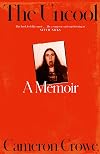
Of course, I had to read Cameron Crowe's memoir, and of course, I was delighted by it. I've been a fan ever since I picked up a copy of Fast Times at Ridgemont High from a bargain table at Waldenbooks around '82. I loved the book, which was better than the film (which was still fun). You can't get that book anymore; it sells used for over $1k.
In '85, I had a roommate who had attended Claremont High, which was the real Ridgemont.
His film Singles remains the closest thing I have to a memoir of my life in the early '90s. I'm not in the film, but it perfectly captured the feelings I had as a single and my dating life. It was also one of the many reasons I ended up moving to the Seattle region.
And since I love music, this was a fantastic memoir not only of Crowe's family life but also of his rock interviews and the basis for his later film, Almost Famous. Pick it up if you are a fan of the 70s.
In '85, I had a roommate who had attended Claremont High, which was the real Ridgemont.
His film Singles remains the closest thing I have to a memoir of my life in the early '90s. I'm not in the film, but it perfectly captured the feelings I had as a single and my dating life. It was also one of the many reasons I ended up moving to the Seattle region.
And since I love music, this was a fantastic memoir not only of Crowe's family life but also of his rock interviews and the basis for his later film, Almost Famous. Pick it up if you are a fan of the 70s.
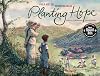
I wish I had a book like this when I was a child poring through my Dad's National Geographic magazines.
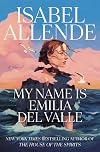
If you are starting your journey with Isabelle Allende, I would not start with this one. Go with The House of Spirits, Daughter of Fortune, Island Beneath the Sea, or The Wind Knows My Name.
This is not her best. It seemed, in some places, half-formed — an almost outline of a novel that needed to be more detailed, especially the latter half of the book, which is set during the Chilean Civil War.
This is not her best. It seemed, in some places, half-formed — an almost outline of a novel that needed to be more detailed, especially the latter half of the book, which is set during the Chilean Civil War.
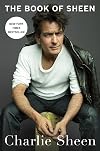
What a Storyteller! I listened to the audio version, and if Charlie Sheen ever wants a new career, it should be in audiobook narration.
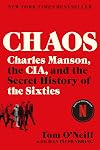
Chaos Charles Manson the CIA and the Secret History of the Sixties
is nonfiction book by Tom O'Neill and published in 2019. It is a rambling book--the author clearly lost control of the many narratives. He initially started the book as an article for [[Premiere Magazine]]. He kept researching and researching, and eventually, the Publisher was fired, and he lost the contract. He next signed a book contract with Penguin, they gave him a co-author who quit and he researched and interviewed and was eventually in a legal battle over his advance. I sympathized with his editors--sometimes an author just can't settle down and write a book. The book is sort of a mess--it starts out being about the Manson family and refuting claims by Vincent Bugliosi's book Helter Skelter, but then we get into 60s hippie culture and CIA mind control experiments. Chaos is an apt title, and even though everything I wrote seems like a negative, I enjoyed this book. It's like opening up a writer's ADHD mind of loose threads unraveling and tying around other threads. As someone who likes to start things but never finishes them, and who is a big believer in the journey I took along the way, I can relate. It would be fun to go through O'Neill's archives, and I hope they end up at a library or national archive. I certainly did learn enough about the Manson family, which led me to rewatch Quentin Tarantino's Once Upon a Time in Hollywood. That film is a masterpiece. And you can really enjoy the ending of show more that film after reading all about how the murders went down. show less
is nonfiction book by Tom O'Neill and published in 2019. It is a rambling book--the author clearly lost control of the many narratives. He initially started the book as an article for [[Premiere Magazine]]. He kept researching and researching, and eventually, the Publisher was fired, and he lost the contract. He next signed a book contract with Penguin, they gave him a co-author who quit and he researched and interviewed and was eventually in a legal battle over his advance. I sympathized with his editors--sometimes an author just can't settle down and write a book. The book is sort of a mess--it starts out being about the Manson family and refuting claims by Vincent Bugliosi's book Helter Skelter, but then we get into 60s hippie culture and CIA mind control experiments. Chaos is an apt title, and even though everything I wrote seems like a negative, I enjoyed this book. It's like opening up a writer's ADHD mind of loose threads unraveling and tying around other threads. As someone who likes to start things but never finishes them, and who is a big believer in the journey I took along the way, I can relate. It would be fun to go through O'Neill's archives, and I hope they end up at a library or national archive. I certainly did learn enough about the Manson family, which led me to rewatch Quentin Tarantino's Once Upon a Time in Hollywood. That film is a masterpiece. And you can really enjoy the ending of show more that film after reading all about how the murders went down. show less
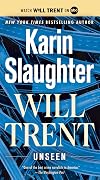
You want it darker?
If you like your mystery thrillers to have long, complicated characters dealing with trauma, and story arcs that will rise and fall over the series, then you are looking for the author Karin Slaughter.
If you like your mystery thrillers to have long, complicated characters dealing with trauma, and story arcs that will rise and fall over the series, then you are looking for the author Karin Slaughter.
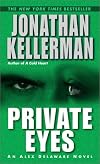
The first 300 pages were so slow. I kept telling the book, "Get on with it!" Let me finish this. It was way too long for the story. It started to speed up, but then took so long to resolve, and the ending came out of left field, but not in a good way.
The mystery to me will be whether his later books, post-Internet, pick up the pace a bit. Only time and my reading list will show...
The mystery to me will be whether his later books, post-Internet, pick up the pace a bit. Only time and my reading list will show...
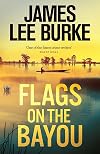
I don't know why I didn't just put it down. I did not care for this book—there were too many characters' perspectives. I was confused half the time. I had to keep reminding myself who was who, and in the end, I was too far in not to finish.
The Splendid and the Vile: A Saga of Churchill, Family, and Defiance During the Blitz by Erik Larson
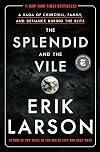
My husband and I listened to the audio of this book over the past year, and it is a good look at the beginning of World War II with a focus on the Blitz and Winston Churchill. This would make an excellent companion to Doris Kearns Goodwin's No Ordinary Time, which tells things from Franklin Roosevelt's perspective.
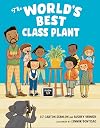
The World’s Best Class Plant is a wonderful picture book about finding interest in the unexpected. Very cute!
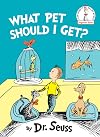
What Pet Should I Get? is a fun, easy reader about a brother and sister choosing a pet.
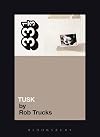
If the point was to make a mess of a book about a mess of an album, then it succeeded.
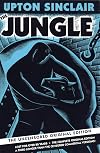
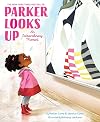
This story made me cry. So beautiful.
Inky the Octopus: The Official Story of One Brave Octopus' Daring Escape (Includes Marine Biology Facts for Fun Early Learning!) by Erin Guendelsberger
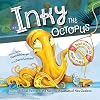
A beautiful, brightly colored book about an octopus escaping from a New Zealand aquarium--and who doesn't love octopuses?
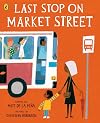
This is a wonderfully illustrated picture book about CJ's trip with his Nanna across town.
How to Take Smart Notes: One Simple Technique to Boost Writing, Learning and Thinking – for Students, Academics and Nonfiction Book Writers by Sönke Ahrens

There is good information here, but you have to dig and there are better books and videos on the topic.
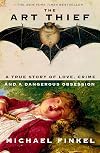
I've been reading so many books lately that wander from topic to topic that it was nice to pause and read this book about one topic—the art thief Stephane Breitwieser, his psychology, and how he stole numerous pieces of Renaissance art, not for money but to simply have them.
I've been intrigued by the need to "own all the things." In earlier times, this would have been the realm of kings, conquerors, and rich men. But on today's internet, it is easy to collect bits and bytes--music, ebooks, photos, recipes, etc. I know from my own life I'm a bit obsessive about tracking the books I've read and own. I've always collected or owned books, but now I track them over several apps. My music is kept in playlists. People pirate things like songs, books, games because they feel the need to possess those bits and bytes, not because they intend to play every game, read every book, or listen to every song. You don't have to be a king anymore if you have a cloud service to store infinite things on.
Stephane Breitwieser wasn't content to just look at pictures in art books or browse museum collections online or in-person. He decided that he needed to possess the art he loved. He discovered that security was lax at most of the regional museums of Europe of the 90s and began slipping away with Renaissance Art. He didn't steal to sell, he stole to collect and possess. I love the description early on about he and his girlfriend living with all his art in his mom's attic like they were living show more inside a treasure box.
If you like reading about how a person mind works--the author does a good job of tracking down what makes Breitheiser tick and the psychology of a narcissistic mind.
I like how the author stays on target and keeps the book focused on Breitheiser, only introducing side notes and characters as needed. The book feels tight and focused, which, as I mentioned, I think I needed. Not that I don't like books that meander--I'd be a hypocrite since I often give meandering books high ratings. Still, in this instance, the focus and object of the story are so intriguing that the paring down feels like the author was a sculpture that started with a block of marble but could see the man/statue within and pulled only what was needed to make the book. See what I did there? show less
I've been intrigued by the need to "own all the things." In earlier times, this would have been the realm of kings, conquerors, and rich men. But on today's internet, it is easy to collect bits and bytes--music, ebooks, photos, recipes, etc. I know from my own life I'm a bit obsessive about tracking the books I've read and own. I've always collected or owned books, but now I track them over several apps. My music is kept in playlists. People pirate things like songs, books, games because they feel the need to possess those bits and bytes, not because they intend to play every game, read every book, or listen to every song. You don't have to be a king anymore if you have a cloud service to store infinite things on.
Stephane Breitwieser wasn't content to just look at pictures in art books or browse museum collections online or in-person. He decided that he needed to possess the art he loved. He discovered that security was lax at most of the regional museums of Europe of the 90s and began slipping away with Renaissance Art. He didn't steal to sell, he stole to collect and possess. I love the description early on about he and his girlfriend living with all his art in his mom's attic like they were living show more inside a treasure box.
If you like reading about how a person mind works--the author does a good job of tracking down what makes Breitheiser tick and the psychology of a narcissistic mind.
I like how the author stays on target and keeps the book focused on Breitheiser, only introducing side notes and characters as needed. The book feels tight and focused, which, as I mentioned, I think I needed. Not that I don't like books that meander--I'd be a hypocrite since I often give meandering books high ratings. Still, in this instance, the focus and object of the story are so intriguing that the paring down feels like the author was a sculpture that started with a block of marble but could see the man/statue within and pulled only what was needed to make the book. See what I did there? show less
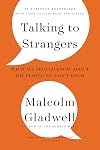
The book is mistitled. The title implies you will learn how to talk to strangers. Nope. You learn that what we think about other people's intentions may be wrong.
This book is an absolute meandering mess. Gladwell starts making his points (I guess) on around page 300. Some topics are brought up and dismissed until they mysteriously pop up again. This is like looking at somebody's notes instead of a well-thought-out book. Police searches, spies, Ponzi schemes, campus rapes, and Sylvia Plath's suicide all make appearances here. I'm tired of this kind of book. Make your point, and then follow through. Don't lead us down some maze; maybe there will be a point at the end.
This book made me angry.
This book is an absolute meandering mess. Gladwell starts making his points (I guess) on around page 300. Some topics are brought up and dismissed until they mysteriously pop up again. This is like looking at somebody's notes instead of a well-thought-out book. Police searches, spies, Ponzi schemes, campus rapes, and Sylvia Plath's suicide all make appearances here. I'm tired of this kind of book. Make your point, and then follow through. Don't lead us down some maze; maybe there will be a point at the end.
This book made me angry.
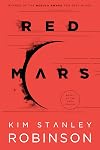
Both a classic of sci-fi and of literary fiction. Come for the engineering and the colonization of Mars, stay for the the treatise on humans and politics.
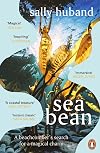
If you like Katherine May's or Sy Montgomery's writing, you will like Sea Bean: A Beachcomber's Search for a Magical Charm by Sally Huband.
I love this kind of book—one part memoir and one part nature writing. Sally Huband lives on Shetland and combs the beaches looking for a sea bean, a hard seed that has floated to the island from a tropical place and is often used as a good luck or magical charm. On her journey, we learn about her struggles with chronic illness, we learn about life on remote islands, and also about the birds and other wild inhabitants of the Atlantic and her shorelines. Huband has a scientific background and writes about local science projects, the local history of sea beans, and the hobby of sending messages in bottles.
The book encouraged me to see my nearby beach, Point No Point, in a new light and look closer at our little stretch. It is lovely living so close to the ocean and I'm looking a bit closer now at what washes up on our shore here.
I love this kind of book—one part memoir and one part nature writing. Sally Huband lives on Shetland and combs the beaches looking for a sea bean, a hard seed that has floated to the island from a tropical place and is often used as a good luck or magical charm. On her journey, we learn about her struggles with chronic illness, we learn about life on remote islands, and also about the birds and other wild inhabitants of the Atlantic and her shorelines. Huband has a scientific background and writes about local science projects, the local history of sea beans, and the hobby of sending messages in bottles.
The book encouraged me to see my nearby beach, Point No Point, in a new light and look closer at our little stretch. It is lovely living so close to the ocean and I'm looking a bit closer now at what washes up on our shore here.