
Maria Reva
Author of Endling
Works by Maria Reva
Associated Works
Tagged
Common Knowledge
Members
Reviews
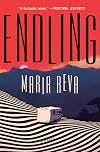
My 1st from this year's Booker Prize longlist. I was nervous at first, but the book does a shift at about page 100, and I finished having really enjoyed it, and having been smitten. I'm still thinking on it.
NPR called this, "A book about a Ukrainian ecologist studying snails that turns into a metafictional novel about a writer working on a book about a Ukrainian ecologist studying snails at the onset of the ongoing war."
The opening hundred pages felt silly-light, about the Ukrainian bridal show more industry - men paying to come to the Ukraine on a tour to meet possible brides, or lower forms along those lines. And about one bride who performs only to fund her research into snails on the verge of extinction. She has funded a lab for herself to help try to save these snail species. At this point I found the book just barely readable and a bit braindead. But then the metafiction, or autofiction breaks in. It was not exactly anything special, but it was direct, to the reader, and puts the book into a new context that is much more meaningful. Suddenly, everything turned. My internal critic was disarmed, and I could enjoy this story within the context of this fictional author writing this book I was reading. It was fun, and it was also real, even as none of the characters felt real. And yet I adored the same characters that I had been tired of. I still adore the snail saver. The experience of war still felt real. Meaningful. Processable. Catastrophically pointless.
One theme I felt was that a book can accomplish a lot of serious stuff if it doesn't take itself too seriously. I think that is something this book managed to accomplish. We get the Ukrainian War without losing the sense of literary play.
I don't know who to recommend this to. But when someone says Booker Prize books are all depressing, and desperately asks for a fun one, I'll offer this (among others).
2025
https://www.librarything.com/topic/372264#8918123 show less
NPR called this, "A book about a Ukrainian ecologist studying snails that turns into a metafictional novel about a writer working on a book about a Ukrainian ecologist studying snails at the onset of the ongoing war."
The opening hundred pages felt silly-light, about the Ukrainian bridal show more industry - men paying to come to the Ukraine on a tour to meet possible brides, or lower forms along those lines. And about one bride who performs only to fund her research into snails on the verge of extinction. She has funded a lab for herself to help try to save these snail species. At this point I found the book just barely readable and a bit braindead. But then the metafiction, or autofiction breaks in. It was not exactly anything special, but it was direct, to the reader, and puts the book into a new context that is much more meaningful. Suddenly, everything turned. My internal critic was disarmed, and I could enjoy this story within the context of this fictional author writing this book I was reading. It was fun, and it was also real, even as none of the characters felt real. And yet I adored the same characters that I had been tired of. I still adore the snail saver. The experience of war still felt real. Meaningful. Processable. Catastrophically pointless.
One theme I felt was that a book can accomplish a lot of serious stuff if it doesn't take itself too seriously. I think that is something this book managed to accomplish. We get the Ukrainian War without losing the sense of literary play.
I don't know who to recommend this to. But when someone says Booker Prize books are all depressing, and desperately asks for a fun one, I'll offer this (among others).
2025
https://www.librarything.com/topic/372264#8918123 show less
Set in Ukraine in 2022, this book follows protagonist Yeva, a malacologist (aka gastropodologist) posing as a potential bride for romance tours to make money to fund her mobile laboratory. She meets the two daughters of an activist. One is working as a potential bride, and the other is her translator. These two are planning an elaborate stunt that will expose the bride tourism industry and attract the attention of their activist mother, with whom they hope to reunite. They convince Yeva to show more take part in their plan.
At this point, the novel becomes metafictional, drawing attention to the fact that the author’s original intent for this book needed to change due to the Russian invasion of Ukraine. After a rather abrupt “ending” to the initial story, it picks back up with the three women in the same setting, but the plot changes to incorporate the War. A Ukrainian-Canadian man has traveled back to Ukraine to get reacquainted with his homeland. He accidentally becomes enmeshed in the stunt. The storyline involves the women journeying across Ukraine to rescue a snail species.
This book is most unusual in its structure and combination of war, environmental issues, social activism, and snail behaviors. It is a beautifully written unique novel, and quite impressive, especially for a debut novel. It will appeal to readers who enjoy creative metafiction. It is the type of book that is sure to garner literary accolades and awards. It may even become a classic. show less
At this point, the novel becomes metafictional, drawing attention to the fact that the author’s original intent for this book needed to change due to the Russian invasion of Ukraine. After a rather abrupt “ending” to the initial story, it picks back up with the three women in the same setting, but the plot changes to incorporate the War. A Ukrainian-Canadian man has traveled back to Ukraine to get reacquainted with his homeland. He accidentally becomes enmeshed in the stunt. The storyline involves the women journeying across Ukraine to rescue a snail species.
This book is most unusual in its structure and combination of war, environmental issues, social activism, and snail behaviors. It is a beautifully written unique novel, and quite impressive, especially for a debut novel. It will appeal to readers who enjoy creative metafiction. It is the type of book that is sure to garner literary accolades and awards. It may even become a classic. show less
I can’t give this book, winner of the Atwood Gibson Writers’ Trust Fiction Prize, anything but five stars. It is hard to believe that this is a debut novel for Maria Reva. The book tells us the story of a Ukrainian biologist who is doing her best to save the country’s snail species single-handedly. Yeva is a loner and just doesn’t have time for human relationships and feelings. She’s cut herself off from family and friends and spends her time in her RV which she has outfitted as a show more mobile lab. She doesn’t ask for help and prefers not to have to speak to other people. All she cares about are her snails. But finally two Ukrainian girls break Yeva’s hard shell and by sheer persistence get her on board with their scheme to blow up the Ukrainian Romance industry. All three girls begin travelling the country with some rather unexpected cargo. Then the Russians attack their country and that event throws all their plans out the window. Then, Ms. Reva shakes up the whole format of the novel by inserting herself into the story. It becomes a madcap adventure with three young women, thirteen bachelors and a novelist who is chronicling their story. The book is filled with black humour, pithy witticisms and a war that touches everyone involved. The strength of human nature reins throughout this book. Don’t expect the ordinary if you read this book, but do expect to be shaken to your core by the bravery of these women. show less
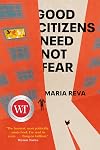
In her sure-handed debut volume of short fiction, Good Citizens Need Not Fear, Maria Reva writes with an insider’s familiarity about the last days of the Soviet Union and what followed in the months and years after the Communist regime’s ignominious collapse. Reva’s stories, filled with absurdist twists and farcical comic moments, describe her characters’ struggle for survival in a world of decaying infrastructure, chronic shortages and surly, inflexible bureaucrats. Somehow, despite show more severe economic hardship and great physical discomfort, Reva’s people find ways to fudge a rigid, rule-bound system and make a go of it. The stories, divided into two sections (“Before the Fall,” “After the Fall”), centre on the residents of the apartment building at 1933 Ivansk Street in the Ukrainian town of Kirovka, a building that, in the opening story, “Novostroika,” has its very existence called into question by a government official even though the story’s protagonist, the hapless Daniil, who is visiting the town council hall to make a complaint about the faulty heating system, lives there with thirteen other family members. “Little Rabbit” introduces the reader to one of several recurring characters. As a newborn with a harelip, Zaya is consigned to a home for unwanted infants—the “baby house”—and raised by staff caregivers, known as sanitarki. Despite the odds against her, little Zaya fiercely embraces life, but is eventually committed to the internat, a facility for hopeless cases housed in a decommissioned monastery. There, she falls ill with pneumonia, but escapes the shallow grave awaiting her by burrowing into the catacombs beneath the building, where she forms a deep attachment to the mummified body of a saint. In “Letter of Apology” the narrator, Mikhail Ivanovich, an official with “the agency,” is sent to Kirovka to discipline the poet Konstantyn Illych, who has been overheard telling a joke about the regime. Konstantyn Illych can avoid punishment by retracting his “wrongful evaluations of the leaders of the Communist Party and Soviet society at large” and issuing an apology in writing. But Konstantyn Illych is unfazed by Mikhail Ivanovich’s threats and steadfastly ignores him. In the meantime, Mikhail Ivanovich, who has never heard the joke because it is forbidden to repeat it, unravels under ever greater pressure from his superiors to extract the apology. In the end, Mikhail Ivanovich reaches a fragile understanding with the poet’s wife, Milena, finally concluding that the joke is really on him. And in “Miss USSR,” Konstantyn Illych, engaged in another subversive activity, organizes a beauty pageant in Kirovka and thereby brings down on himself the wrath of the new Minister of Culture. When the Minister organizes a national pageant modelled on but splashier than the one in Kirovka, Konstantyn Illych decides to show her up by entering a contestant. But with the winner of his Miss Kirovka pageant exiled to Siberia, he ends up recruiting Zaya. Predictably, things do not turn out as he had hoped. Maria Reva’s brand of humour in these stories is broad and laden with irony; her action sequences tend toward the slapstick and highly improbable. For the most part the reader is pleasantly entertained, though Reva does occasionally indulge a fondness for illogic and weirdness, allowing the story to meander. This happens infrequently, but when it does the joke wears thin and the comic scenario becomes over-familiar and tiresome (“Lucky Toss”). Despite the occasional minor misstep however, Good Citizens Need Not Fear remains a notable debut by a uniquely skilled and confident writer with a huge talent that, based on the evidence, will only grow with time. show less
Lists
Awards


You May Also Like
Associated Authors
Statistics
- Works
- 3
- Also by
- 3
- Members
- 557
- Popularity
- #44,821
- Rating
- 3.8
- Reviews
- 21
- ISBNs
- 23
- Favorited
- 1