
Mark Ribowsky
Author of Dreams to Remember: Otis Redding, Stax Records, and the Transformation of Southern Soul
About the Author
Mark Ribowsky is the author of fifteen books, including Ain't Too Proud to Beg: The Troubled Lives and Enduring Soul of the Temptations, the New York Times Notable Book Don't Look Back: Satchel Paige in the Shadows of Baseball, and, most recently, Dreams to Remember: Otis Redding, Stax Records, and show more the Transformation of Southern Soul. He lives in Florida. show less
Works by Mark Ribowsky
Dreams to Remember: Otis Redding, Stax Records, and the Transformation of Southern Soul (2015) 83 copies, 4 reviews
Ain't Too Proud to Beg: The Troubled Lives and Enduring Soul of the Temptations (2010) 26 copies, 1 review
Whiskey Bottles and Brand-New Cars: The Fast Life and Sudden Death of Lynyrd Skynyrd (2015) 17 copies
Crying in the Rain: The Perfect Harmony and Imperfect Lives of the Everly Brothers (2024) 2 copies, 1 review
Tagged
Common Knowledge
- Birthdate
- 1951-02-02
- Gender
- male
- Nationality
- USA
- Birthplace
- New York, New York, USA
- Associated Place (for map)
- New York, USA
Members
Reviews
Dreams to Remember: Otis Redding, Stax Records, and the Transformation of Southern Soul by Mark Ribowsky
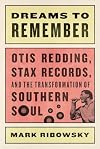
It's hard to believe that Otis Redding was only 26 years old when he died in a plane crash on December 10, 1967. His accomplishments as a singer, song-writer, and producer left behind a colossal legacy for someone so young. Ribowsky's biography examines Redding's life as an artist depicting him not only as a talented singer and musician, but the creator and defining star of soul music (I feel that Ribowsky gets a bit hagiographical in this sense as much as I admire Redding's musical show more greatness).
The biography explores Redding's upbringing in Macon, GA - a city that also gave us Little Richard and James Brown - his rise to fame as a stunning stage performer, recording with Stax records in Memphis, and becoming a soul superstar in the mid-60s. A lot of key moments in Redding's life are covered in depth including writing and recording "Respect" and how that song was transformed into a defining hit song by Aretha Franklin, covering the Rolling Stones' "Satisfaction" even though he wasn't very familiar with the song and ended up improvising new lyrics, his standout performance at the Monterrey Pop Festival, writing and recording "(Sittin' On) The Dock of the Bay," and his tragic death. Ribowsky is also interested in detailing Redding's role in the rise of Stax Records, defining a Southern soul sound grounded in being the music of the black community in contrast to Detroit's Motown Records attempts to produce crossover hits. While Redding did not have hit songs on the pop charts in his lifetime, he managed to have great success and wealth by keeping recordings in the charts for long periods of time, and concurrently with The Beatles, using the long-playing album as a vessel for pop music artistry instead of the single. The Beatles are also Redding's fans and loaned him and his retinue limousines every time they performed in London.
While Redding is known as a big-hearted and friendly person, Ribowsky doesn't shy away from his dark side. The culture of Stax Records involves casually adding one's own name as a writing credit, swindling other artists from royalties, and in-fighting among the stable of artists, something Redding was not above participating in. He was also involved in a shoot-out in Macon that somehow miraculously was kept out of the news coverage of the time. Worst yet, according to at least one women in the band, Redding and his crew were guilty of emotional abuse and sexual misconduct on their tours.
If you're interested in Otis Redding and soul music, this is an excellent study of the man and his times, and outside the bits of hagiography, and excellent biographical work. show less
The biography explores Redding's upbringing in Macon, GA - a city that also gave us Little Richard and James Brown - his rise to fame as a stunning stage performer, recording with Stax records in Memphis, and becoming a soul superstar in the mid-60s. A lot of key moments in Redding's life are covered in depth including writing and recording "Respect" and how that song was transformed into a defining hit song by Aretha Franklin, covering the Rolling Stones' "Satisfaction" even though he wasn't very familiar with the song and ended up improvising new lyrics, his standout performance at the Monterrey Pop Festival, writing and recording "(Sittin' On) The Dock of the Bay," and his tragic death. Ribowsky is also interested in detailing Redding's role in the rise of Stax Records, defining a Southern soul sound grounded in being the music of the black community in contrast to Detroit's Motown Records attempts to produce crossover hits. While Redding did not have hit songs on the pop charts in his lifetime, he managed to have great success and wealth by keeping recordings in the charts for long periods of time, and concurrently with The Beatles, using the long-playing album as a vessel for pop music artistry instead of the single. The Beatles are also Redding's fans and loaned him and his retinue limousines every time they performed in London.
While Redding is known as a big-hearted and friendly person, Ribowsky doesn't shy away from his dark side. The culture of Stax Records involves casually adding one's own name as a writing credit, swindling other artists from royalties, and in-fighting among the stable of artists, something Redding was not above participating in. He was also involved in a shoot-out in Macon that somehow miraculously was kept out of the news coverage of the time. Worst yet, according to at least one women in the band, Redding and his crew were guilty of emotional abuse and sexual misconduct on their tours.
If you're interested in Otis Redding and soul music, this is an excellent study of the man and his times, and outside the bits of hagiography, and excellent biographical work. show less
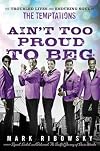
This book is highly flawed, and a big disappointment. A giant "citation needed" warning needs to placed over the entire thing, with much of the information presented seeming to conform to Mark Ribowsky's own biases and very little evidence in most cases of where often wild claims originated.
Sadly, Otis Williams' perspective reigns supreme, with Ruffin and Kendricks yet again getting the shaft. Their perspectives, available through many interviews they gave during their lifetimes, are either show more ignored or outright dismissed in the most condescending way possible, while Otis' word is too frequently taken as gospel. David and Eddie's relationship with each other is denigrated, and their more frequently than not legitimate complaints regarding Motown mocked. (Rather strangely, as in every instance other than when Ruffin or Kendricks have a problem, Motown business management is rightly portrayed in a highly cynical light.) Kendricks is cruelly accused of "shamelessly exploiting" his best friend Paul Williams' depression and alcoholism, portrayed as Ruffin's puppet instead of his own freethinking person with his own legitimate complaints, mocked for his addiction to cigarettes, and little given his due as one of history's greatest soul singers. Meanwhile, Ruffin's feet are held to the fire for every infraction throughout his life EXCEPT for the one that is most unforgivable -- his violence against women.
Another huge letdown is how the author wasted his access to Dennis Edwards, failing to verify stories with him or gain alternate accounts where they certainly would have been relevant. As he was close with both Ruffin and Kendricks, and is usually honest yet sympathetic when discussing them, Edwards' perspective could have provided a real balancing of the book. Sadly, he is very rarely quoted, and his own role within the group is marginalized, as though Otis and Melvin were the real driving forces behind the Tempts success.
But most inexcusable of all was the brief yet astoundingly horrific treatment of Tammi Terrell. Ribowsky generally gives off the impression of not exactly liking women -- all women present in this book are shrews, servants, or sluts -- and goes out of his way to vilify Terrell and blame her for David Ruffin's extraordinary violence against her. With no evidence other than that Tammi was not sufficiently docile and submissive for Ribowsky's taste, Ruffin and Terrell are portrayed as more or less on equal footing, each giving as good as they got. Tammi talked back, David beat the snot of her -- all even, apparently. Terrell's personality is explained as the cause of Ruffin's abuse; indeed, the abuse is called a "consequence" of the fact that she liked sex, drank, and swore. It is misogynistic to the extreme, and likely to be particularly upsetting to women who are survivors of intimate partner violence. The author and the editors should all be ashamed of themselves on this count. This book only offers the "truth" behind David and Tammi's relationship if your version of the "truth" depends on centuries old victim-blaming that says women who are abused by their male partners must have somehow deserved it.
The highlight of the book is its beginning -- the information about each individual Tempt's start is invaluable, and, in the cases of Eddie, Paul, and David, largely previously unavailable. This early section, the only one which is well-sourced, provides charming anecdotes and background; it would have been lovely if the rest of the book had been as endearing and evenhanded. This, along with the fact that Ribowsky successfully convinced Otis Williams to expand on the stories he told in his own book and drop the self-censorship is why my star rating ranks as high as it does.
The Tempts were all highly flawed individuals. Their stories deserve equal telling, their words deserve equal weight, and their lives and actions deserve both equal sympathy and an equally critical stance. The biased handling in which only some members are taken seriously, only some are held accountable, and nowhere can these two groups overlap, is lazy, boring, and often offensive. The Temptations most certainly deserve a better treatment than this, one which we can hope is still forthcoming. show less
Sadly, Otis Williams' perspective reigns supreme, with Ruffin and Kendricks yet again getting the shaft. Their perspectives, available through many interviews they gave during their lifetimes, are either show more ignored or outright dismissed in the most condescending way possible, while Otis' word is too frequently taken as gospel. David and Eddie's relationship with each other is denigrated, and their more frequently than not legitimate complaints regarding Motown mocked. (Rather strangely, as in every instance other than when Ruffin or Kendricks have a problem, Motown business management is rightly portrayed in a highly cynical light.) Kendricks is cruelly accused of "shamelessly exploiting" his best friend Paul Williams' depression and alcoholism, portrayed as Ruffin's puppet instead of his own freethinking person with his own legitimate complaints, mocked for his addiction to cigarettes, and little given his due as one of history's greatest soul singers. Meanwhile, Ruffin's feet are held to the fire for every infraction throughout his life EXCEPT for the one that is most unforgivable -- his violence against women.
Another huge letdown is how the author wasted his access to Dennis Edwards, failing to verify stories with him or gain alternate accounts where they certainly would have been relevant. As he was close with both Ruffin and Kendricks, and is usually honest yet sympathetic when discussing them, Edwards' perspective could have provided a real balancing of the book. Sadly, he is very rarely quoted, and his own role within the group is marginalized, as though Otis and Melvin were the real driving forces behind the Tempts success.
But most inexcusable of all was the brief yet astoundingly horrific treatment of Tammi Terrell. Ribowsky generally gives off the impression of not exactly liking women -- all women present in this book are shrews, servants, or sluts -- and goes out of his way to vilify Terrell and blame her for David Ruffin's extraordinary violence against her. With no evidence other than that Tammi was not sufficiently docile and submissive for Ribowsky's taste, Ruffin and Terrell are portrayed as more or less on equal footing, each giving as good as they got. Tammi talked back, David beat the snot of her -- all even, apparently. Terrell's personality is explained as the cause of Ruffin's abuse; indeed, the abuse is called a "consequence" of the fact that she liked sex, drank, and swore. It is misogynistic to the extreme, and likely to be particularly upsetting to women who are survivors of intimate partner violence. The author and the editors should all be ashamed of themselves on this count. This book only offers the "truth" behind David and Tammi's relationship if your version of the "truth" depends on centuries old victim-blaming that says women who are abused by their male partners must have somehow deserved it.
The highlight of the book is its beginning -- the information about each individual Tempt's start is invaluable, and, in the cases of Eddie, Paul, and David, largely previously unavailable. This early section, the only one which is well-sourced, provides charming anecdotes and background; it would have been lovely if the rest of the book had been as endearing and evenhanded. This, along with the fact that Ribowsky successfully convinced Otis Williams to expand on the stories he told in his own book and drop the self-censorship is why my star rating ranks as high as it does.
The Tempts were all highly flawed individuals. Their stories deserve equal telling, their words deserve equal weight, and their lives and actions deserve both equal sympathy and an equally critical stance. The biased handling in which only some members are taken seriously, only some are held accountable, and nowhere can these two groups overlap, is lazy, boring, and often offensive. The Temptations most certainly deserve a better treatment than this, one which we can hope is still forthcoming. show less
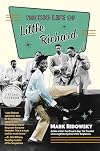
Little Richard didn't—as opposed to what he claimed—invent rock 'n' roll, but he undoubtedly shaped it in a major way and made it dangerous.
People came before him, like Fats Domino, but they were non-threatening. Little Richard hit the US of A like a hurricane.
A self-professed omnisexual, natural rhythm machine, creator of 'Tutti Frutti' and countless other rock 'n' roll anthems, this man carried a vocal style that killed, having learned it from the churches he attended growing up. His show more hair was inches high. He dressed like Liberace decades before he came along.
All of this in the face of abject racism where he faced death and whitewashing:
Ribowsky has written a lovely book that's almost as alive as Little Richard's persona and music was, which is quite a feat:
Remember, he released 'Tutti Frutti' in 1955:
This book is filled with anecdotes and does, like Little Richard's life, go into a twilight phase nearly half-way in, but not in a bad way. Ribowsky has managed to write a lively, fiercely entertaining, non-stop rollicking book that celebrates Little Richard as the innovator that he was, and, truly, the King of Rock 'n' Roll. show less
People came before him, like Fats Domino, but they were non-threatening. Little Richard hit the US of A like a hurricane.
A self-professed omnisexual, natural rhythm machine, creator of 'Tutti Frutti' and countless other rock 'n' roll anthems, this man carried a vocal style that killed, having learned it from the churches he attended growing up. His show more hair was inches high. He dressed like Liberace decades before he came along.
All of this in the face of abject racism where he faced death and whitewashing:
“I used to get beaten up for nothing,” he once said. “Slapped in my face with sticks. The police used to stop me and make me wash my face. I always tried to not let it bother me. We could stay in no hotels and go to no toilets. I went to the bathroom behind a tree. I slept in my car. I knew there was a better way and that the King of Kings would show it to me. I was God’s child. I knew God would open that door.”
Ribowsky has written a lovely book that's almost as alive as Little Richard's persona and music was, which is quite a feat:
[He] was brash, fast and bombastic . . . . He wore a baggy suit with elephant trousers, 26 inches at the bottoms, and he had his hair back-combed in a monstrous plume like a fountain. Then he had a little toothbrush moustache and a round, totally ecstatic face. He’d scream and scream and scream. He had a freak voice, tireless, hysterical, completely indestructible, and he never in his life sang at anything lower than an enraged bull-like roar. On every phrase he’d embroider with squeals, rasps, siren whoops. His stamina, his drive were limitless and his songs were mostly non-songs, nothing but bedrock twelve-bars with playroom lyrics, but he’d still put them across as if every last syllable was liquid gold. —NIK COHN, Awopbopaloobop Alopbamboom: The Golden Age of Rock
Remember, he released 'Tutti Frutti' in 1955:
Both he and Richard felt deflated as they and Lee Allen retreated to an in-crowd club called the Dew Drop Inn to drink away the blues and find a new groove. As it happened, it would come as if riding a lightning bolt. At the Dew Drop, Richard lost whatever inhibition he had. Getting up on the stage, in his element as bar-goers crowded in front of him, he sat at a piano—or rather, stood above it—and launched into a song he had been performing live for months, but never figured would be acceptable for recording. The first sounds of it were those beguiling syllables that came out as Awop bop a loo mop a good goddamn / Tutti Frutti, good booty.
This, the original parlance of “Tutti Frutti,” had entered his head back where he worked in the kitchen at the Macon Greyhound station during a misspent youth, giggling to himself as he wrote the leering lines about “good booty” and “If it don’t fit don’t force it / You can grease it, make it easy.” Up on a stage, he paid no mind to good taste. He just let it rip. And as he did that, Blackwell was astonished. It was as if the song liberated Richard from the circumspect Richard in the studio. He had swagger, bark and bite, his joy and his growl emanating from a place deep in his soul. He was a different breed of cat, claws out, answerable to any standard of R&B, only himself, with not a compromise in sight.
This book is filled with anecdotes and does, like Little Richard's life, go into a twilight phase nearly half-way in, but not in a bad way. Ribowsky has managed to write a lively, fiercely entertaining, non-stop rollicking book that celebrates Little Richard as the innovator that he was, and, truly, the King of Rock 'n' Roll. show less
Dreams to Remember: Otis Redding, Stax Records, and the Transformation of Southern Soul by Mark Ribowsky
I love music biography's but this one felt lacking to me. It wasn't solely about Otis Redding (only about 95% him.....) and talked a lot about Stax Records and a few other soul singers (but only in relation to Otis). It was very clinical and skimmed over a lot of Otis' life in favor of talking about his recording sessions, rumors about his infidelities and death, and his managers and music companies. This book lacked soul. It was flat, one dimensional, and unexciting. Which is a shame, it's show more the Big O for crying out loud! I would much rather check out some other Otis Redding biographies. Something with a little more heart. show less
Lists
Awards


You May Also Like


Associated Authors
Statistics
- Works
- 24
- Members
- 692
- Popularity
- #36,564
- Rating
- 3.7
- Reviews
- 15
- ISBNs
- 83
- Languages
- 1
- Favorited
- 1