
Albert Schweitzer (1875–1965)
Author of The Quest of the Historical Jesus
About the Author
Albert Schweitzer (1875-1965), the son of a Lutheran pastor, was born in Alsace. He earned doctorates in both philosophy and theology, and later earned his medical degree. He was Professor of Theology at the Theological Seminary of St. Thomas in Strasbourg. He spent most of his life as a physician show more in Gabon, Africa, in the village of Lambarene; and in 1953 he was awarded the Nobel Prize for Peace. He authored numerous works, including the renowned The Mystery of the Kingdom of God, The Mysticism of Paul the Apostle, and Out of My Life and Thought show less
Image credit: Albert Schwaitzer, outisde one of the buildings of his hospital at Lambarene, Gabon Republic, Africa, in December 1964
Series
Works by Albert Schweitzer
The Mystery of the Kingdom of God: The Secret of Jesus' Messiahship and Passion (1985) 96 copies, 1 review
The Animal World of Albert Schweitzer: Jungle Insights into Reverence for Life (1950) 57 copies, 1 review
YEAR PRESENTS A PICTURE-HISTORY OF THE BIBLE AND CHRISTIANITY IN 1,000 PICTURES with the Inspiring Stories of All the World's Great Relgiions (1957) — Introduction — 15 copies
The Albert Schweitzer-Helene Bresslau Letters, 1902-1912 (Albert Schweitzer Library (Syracuse, N.Y.).) (1992) 7 copies
Everyone needs a philosophy of life: Albert Schweitzer's philosophy, reverence for life (1978) 4 copies
Glauben Lieben Handeln 4 copies
Baroce Sacred 3 copies
Jesu liv i forskningens ljus 3 copies
Du skal bygge opp 3 copies
Une pure volonté de la vie : La religion devant les résultats de la théologie historico-critique et des sciences de la nature (2004) 3 copies
Brothers in spirit : the correspondence of Albert Schweitzer and William Larimer Mellon, Jr. (1996) 2 copies
Mit Afrika 2 copies
Veien til deg selv 2 copies
The World View of Reverence for Life: Selected significant content of Vol III of Albert Schweitzer's Philosophy of Civilisation (2020) 2 copies
Man And His Mind 2 copies
O misticísmo de Paulo o apóstolo 2 copies
Un bon exemple de DÉVOUEMENT 2 copies
La civilisation et l'̩thique 1 copy
Les sermons de Lambaréné 1 copy
Tarp vandenų ir džiunglių 1 copy
Bach Organ Music Volume VI 1 copy
Картина Жизни 1 copy
Un bon exemple de dévouement 1 copy
J.S.Bach 1 copy
J.S. Bach - Volume I 1 copy
Ord i takknemlighet 1 copy
Croître et mûrir 1 copy
Plays Organ Works 1 copy
A L' Orée De La Forêt Vierge 1 copy
Humanisme et mystique 1 copy
Die weltanschauung der ehrfurcht vor dem Leben. kulturphilosophie III / Erster und zweiter teil (2017) 1 copy
Die weltanschauung der Ehrfurcht vor dem leben : kulturphilosophie III : dritter und vierter teil (2017) 1 copy
Genius in the Jungle 1 copy
Bouwen in het oerwoud : Nieuwste ervaringen en opmerkingen van een arts in Aequatoriaal Afrika 1 copy
මහ ගන වන මැද මිනිසෙක් 1 copy
Uygarlık ve Barış 1 copy
Plays Bach 1 1 copy
Associated Works
Tagged
Common Knowledge
- Legal name
- Schweitzer, Ludwig Philipp Albert
- Other names
- Schweitzer, Albert
- Birthdate
- 1875-01-14
- Date of death
- 1965-09-04
- Gender
- male
- Education
- University of Strasbourg (MD|1913)
Eberhard Karls University of Tübingen (Ph.D|1899) - Occupations
- theologian
doctor
philosopher
organist
medical missionary - Organizations
- Albert Schweitzer Hospital
- Awards and honors
- Nobel Prize (Peace, 1952)
American Academy of Arts and Letters (Foreign Honorary, Literature, 1955)
Honorary Member, Order of Merit (1955)
Chevalier, Military and Hospitaller Order of Saint Lazarus of Jerusalem
Goethe Prize of Frankfurt (1928)
Jaames Cook Medal (1959) - Relationships
- Sartre, Jean-Paul (first-cousin)
- Cause of death
- Naturelle (Vieillesse)
- Nationality
- Germany
France (1918) - Birthplace
- Kaysersberg, Haute Alsace, France
- Places of residence
- Strasbourg, France
Lambaréné, Gabon - Place of death
- Lambaréné, Gabon
- Burial location
- Albert Schweitzer Hospital, Lambaréné, Gabon
- Associated Place (for map)
- Kaysersberg, Haute Alsace, France
Members
Reviews
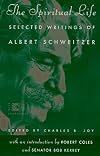
To read these pages is to connect with a writer, a thinker who offered many clues to the biggest challenge before us, how to live an honorable life, and offered them in such a way that the reader's understanding was matched by the writer's humility, a rare experience in the history of moral philosophy.

If you have some classical music training and a serious love for Bach, then this book's for you. I was surprised by this work. Before spotting it on the shelf of a second hand bookstore in Gravenhurst, Ontario, I had no idea that Mr. Quest-for-the-Historical-Jesus himself had written about Bach.
I was even more surprised by the depth. Schweitzer begins with Bach's ancestors and doesn't stop until he's analyzed Bach's entire corpus in detail. I loved how the pages are rife with staves that show more illustrate the various motives Schweitzer explains.
Schweitzer's critical at times, but respectful. Any artist a quarter as prolific as Bach is bound to write the odd stinker. Schweitzer praises Bach's genius and criticizes his lackluster efforts with an honest ear. The author's spirituality also plays an understated-yet-positive role in the book. You can tell that Schweitzer respects the religious milieu of the subject he's writing about.
This work is meaty, with just under 1000 pages of detail. If you're up for the challenge, the payoff's great. show less
I was even more surprised by the depth. Schweitzer begins with Bach's ancestors and doesn't stop until he's analyzed Bach's entire corpus in detail. I loved how the pages are rife with staves that show more illustrate the various motives Schweitzer explains.
Schweitzer's critical at times, but respectful. Any artist a quarter as prolific as Bach is bound to write the odd stinker. Schweitzer praises Bach's genius and criticizes his lackluster efforts with an honest ear. The author's spirituality also plays an understated-yet-positive role in the book. You can tell that Schweitzer respects the religious milieu of the subject he's writing about.
This work is meaty, with just under 1000 pages of detail. If you're up for the challenge, the payoff's great. show less
On the Edge of the Primeval Forest/More from the Primeval Forest: Experiences and Observations of a Doctor in Equatorial Africa by Albert Schweitzer

I read this as a follow-up to Dr Tom Dooley's three books on his experiences as an American doctor in South-East Asia. He claimed a kinship with Dr Schweitzer, and counted it an honour to have met him, but the contrast in their writing is very marked. Dooley had an urgent political agenda which gives his books unity and focus, regardless of what one thinks of that agenda. Schweitzer's in contrast are rambling accounts of different aspects of life in Gabon, especially the first book, which is show more fleshed out with descriptions of the timber harvest, and the periodic arrival of armies of red ants. On the Edge of the Primeval Forest has a certain period charm (who knew arsenic could be used to treat so many ailments?), and a foundation of Christian witness. More from the Primeval Forest is a puzzling book. First, it is hard to know why Schweitzer returned to the clinic in Lambaréné. His wife and daughter could not accompany him, for health reasons, and they never co-habited again. Perhaps that was regarded as a plus. He is clearly exhausted, he complains non-stop about the incapacity of the local natives, Christianity is never mentioned, there are indications, for example the seemingly intractable dysentery epidemic at the hospital which infects and often kills patients who have come with other complaints, that standards at the clinic have not kept pace with medical progress. If you want to be left with a positive and inspiring picture of Dr Schweitzer I recommend you confine yourself to On the Edge of the Primeval Forest and give the sequel a miss. show less

In 1924, after a period of recuperation, Albert Schweitzer returns to his hospital in Lambarene, Gabon, leaving his wife and daughter in Europe.
He will be away for three years; at first rescuing his damaged and overgrown buildings....later constructing a larger, purpose-built hospital. Assisted by various European volunteers- doctors, nurses, carpenters; and to a lesser extent by his more able convalescents and their carers, Schweitzer details the advances in tropical medicine that his team show more achieve, the illnesses they are called upon to treat- sleeping sickness, dysentery, ulcers, madness...- and the injuries that present themselves: maulings by jungle beasts, accidents on timber plantations, people poisoned by their enemies... Nor are the patients all native people, since there is a sizeable British contingent.
The Africans are by and large shown to be a pretty unhelpful lot, recalcitrant and ungrateful (though perhaps that is a natural result of European colonization). Noneheless, Schweitzer is able to conclude:
"How fond of them one becomes, in spite of all the trouble they give one! How many beautiful traits of character we can discover in them, if we refuse to let the many and varied follies of the child of nature prevent us from looking for the man in him! How they disclose to us their real selves, if we have love and patience enough to understand them!"
If the reader can move past this paternalistic attitude towards the locals, quite an interesting account. show less
He will be away for three years; at first rescuing his damaged and overgrown buildings....later constructing a larger, purpose-built hospital. Assisted by various European volunteers- doctors, nurses, carpenters; and to a lesser extent by his more able convalescents and their carers, Schweitzer details the advances in tropical medicine that his team show more achieve, the illnesses they are called upon to treat- sleeping sickness, dysentery, ulcers, madness...- and the injuries that present themselves: maulings by jungle beasts, accidents on timber plantations, people poisoned by their enemies... Nor are the patients all native people, since there is a sizeable British contingent.
The Africans are by and large shown to be a pretty unhelpful lot, recalcitrant and ungrateful (though perhaps that is a natural result of European colonization). Noneheless, Schweitzer is able to conclude:
"How fond of them one becomes, in spite of all the trouble they give one! How many beautiful traits of character we can discover in them, if we refuse to let the many and varied follies of the child of nature prevent us from looking for the man in him! How they disclose to us their real selves, if we have love and patience enough to understand them!"
If the reader can move past this paternalistic attitude towards the locals, quite an interesting account. show less
Lists
Awards


You May Also Like


Associated Authors
Statistics
- Works
- 165
- Also by
- 5
- Members
- 4,954
- Popularity
- #5,062
- Rating
- 3.8
- Reviews
- 42
- ISBNs
- 351
- Languages
- 17
- Favorited
- 4


