
Todd Strasser
Author of The Wave
About the Author
Todd Strasser was born in New York City. While still a child, Strasser and his parents moved to Roslyn Heights, New York on Long Island. Strasser attended the I.U. Willets Elementary school and then the Wheatley School for junior high and high school. Strasser went to college at New York University show more for a few years, before dropping out. He lived on a commune, and then in Europe, where he was a street musician. While he was in Europe, Strasser wrote songs and poems in letters to his friends. He decided to try writing. Upon his return to the United States, Strasser enrolled at Beloit College where he studied literature and writing. After graduating, Strasser worked at the Middletown Times Herald-Record newspaper in Middletown, New York, and later at Compton Advertising in New York City. In 1978, he sold his first novel, Angel Dust Blues. Strasser used the money to start the Dr. Wing Tip Shoo fortune cookie company. For the next 12 years, Todd sold more fortune cookies than books. n 1990, Strasser moved to Westchester County, N.Y., where during the next few years, he wrote various movie novelizations, including Home Alone, Free Willy, Ferris Bueller's Day Off and Jumanji. In 1993 he wrote Help! I'm Trapped in My Teacher's Body and since then has written 16 more Help! I'm Trapped... books, as well as several other series. All together, he has published more than 100 books. Strasser is alos a speaker at schools and conferences when he is not busy writing Strasser has won numerous awards in the course of his career, including the 1995 New York State Library Association Award for Outstanding Children's Literature for the Help! I'm Trapped Series, several State Literature Awards, the 1996 International Reading Association Children's Choice as well as the 1996 Children's Book Council Children's Choice for Give a Boy a Gun and the 1996 American Library Association Best Book for Teens. He won the 1997 American Library Association Notable Book for Abe Lincoln for Class President, the 1988 American Bookseller Pick of the Lists, and was a 1988 Edgar Allan Poe nominee from the Mystery Writers of America. (Bowker Author Biography) show less
Disambiguation Notice:
Todd Strasser also writes under the pen name Morton Rhue
Series
Works by Todd Strasser
Help! I'm Trapped in the First Day of School | Help! I'm Trapped in the First Day of Summer Camp (2005) 28 copies
Help! I'm Trapped in the First Day of School | Help! I'm Trapped in Obedience School (2004) 17 copies
Tardy Boys Set (Is That a Sick Cat in Your Backpack? Is That a Dead Dog in Your Locker?) (2007) 3 copies
Nighttime Trilogy: Too Afraid to Scream, Too Dark to See, and Too Scared to Sleep (2008) 2 copies, 1 review
Libertem Willy 1 copy
No Place, no Home 1 copy
Die Welle (The Wave): Kommentare, Diskussionsaspekte und Anregungen für produktionsorientiertes Lesen in der Sekundarstufe 1 (1996) 1 copy
the home alone 1 copy
Against the Odds 1 copy
Piégé le jour de la rentrée! 1 copy
La bomba 1 copy
Amazing Panda Adventure 1 copy
Associated Works
13: Thirteen Stories That Capture the Agony and Ecstasy of Being Thirteen (2003) — Contributor — 243 copies, 4 reviews
Ultimate Sports: Short Stories by Outstanding Writers for Young Adults (1995) — Contributor — 78 copies
Tagged
Common Knowledge
- Legal name
- Strasser, Todd
- Other names
- Rhue, Morton
Rhue, T. S. - Birthdate
- 1950-05-05
- Gender
- male
- Education
- Beloit College (BA|1974)
New York University - Occupations
- journalist
copywriter
novelist - Nationality
- USA
- Birthplace
- New York, New York, USA
- Places of residence
- Westchester, New York, USA
Montauk, New York, USA - Disambiguation notice
- Todd Strasser also writes under the pen name Morton Rhue
- Associated Place (for map)
- New York, USA
Members
Reviews

The sixties are spoken of so often that we think we know, or remember, what life was like. To many they represent the halcyon days of youth but for Lucas Baker and his friends they were not so idyllic or carefree but filled with uncertainty. With his long hair he is regarded as a hippie to be scorned or threatened by more traditional types, and handles things badly if he happens to be tripping on acid, which is often. Just out of high school, he applied to one college to be near his show more girlfriend but failed to secure a place there, too late to apply to another. That makes him draft material, and Vietnam looms.
Strasser captured the essence of 1969 when a new generation was beginning to evolve and wield their influence. He illustrated the difference between this new crop of kids and their parents, many of whom were WWII veterans, proud of what they accomplished in that war and since. This was a different kind of war, made obvious in the graphic letters from a friend in 'Nam. And when they returned - if they returned - veterans were not revered as the older generation had been in '45. Young men like Lucas were constantly thinking about being drafted and seeking alternatives such as an illegal move to Canada, self-harm, or any weird thing that would make the army turn them down. Lucas often considered cutting off a finger and stopped eating in an attempt to appear too scrawny to fight. His frequent drug use and long hair didn't endear him to anyone - except perhaps the reader. And his straight girlfriend Robin was one of those who were not impressed. When she is away at camp his letters to her are full of undying love and promises to cut his drug use, while hers are what amount to Dear Johns. All the while he is being seriously tempted by Tinsley, a proponent of free love. The culmination of the story was Lucas and Tinsley at Woodstock, related vividly through the author's first hand participation.
Strasser held my interest throughout and I enjoyed this return to 1969, although living in the UK gave me a different experience of life than what Lucas had. Our current teenagers, another generational shift, would probably enjoy this account of an iconic year even more. show less
Strasser captured the essence of 1969 when a new generation was beginning to evolve and wield their influence. He illustrated the difference between this new crop of kids and their parents, many of whom were WWII veterans, proud of what they accomplished in that war and since. This was a different kind of war, made obvious in the graphic letters from a friend in 'Nam. And when they returned - if they returned - veterans were not revered as the older generation had been in '45. Young men like Lucas were constantly thinking about being drafted and seeking alternatives such as an illegal move to Canada, self-harm, or any weird thing that would make the army turn them down. Lucas often considered cutting off a finger and stopped eating in an attempt to appear too scrawny to fight. His frequent drug use and long hair didn't endear him to anyone - except perhaps the reader. And his straight girlfriend Robin was one of those who were not impressed. When she is away at camp his letters to her are full of undying love and promises to cut his drug use, while hers are what amount to Dear Johns. All the while he is being seriously tempted by Tinsley, a proponent of free love. The culmination of the story was Lucas and Tinsley at Woodstock, related vividly through the author's first hand participation.
Strasser held my interest throughout and I enjoyed this return to 1969, although living in the UK gave me a different experience of life than what Lucas had. Our current teenagers, another generational shift, would probably enjoy this account of an iconic year even more. show less
 This review was written for LibraryThing Early Reviewers.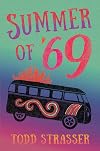
Todd Strasser’s story of a summer during the hippie era turned out to be a surprise for me. Some background to my expectations seems necessary, to provide the context for my review of Summer of ‘69: in 1969 I lived in the hippie capital of Canada (Victoria, BC). My experience of embracing the counterculture society of the day was rather different (followng a sustainable lifestyle, supporting a socially-active justice system, supporting anti-war protests [we hated Nixon, Dow Chemical and show more our University’s unenlightened white-man administration], sheltering draft-dodgers, living in a communal house, attending university). Yes, there was a lot of drug use amongst the 20-somethings (marijuana, hash, LSD, mushrooms [Psilocybe mexicana grows rampantly in the Pacific Northwest], the latter two were still legal to possess). But in the mid- to late-sixties, the younger kids in high school were not turning on and getting wasted. That was more a feature of the mid 1970’s, when grass seemed mainstream and a great deal of it grown locally (BC Gold). So my context for the 1969 milieu Strasser describes was somewhat different. Hence, I was expecting something groooovy, man! A story that embraced more flower-power, more social activism and maybe carrying a Haight-Ashbury vibe.
Instead, Todd wrote a poignant memoir, albeit somewhat fictionalized (I think), of being in high school, having love-relationship problems, using drugs to escape the realities of living in a sadly dysfunctional family and facing the iniquitous draft. New York was obviously a radically different environment to the softer counterculture-back-to-the-landers group where I hung out on Vancouver Island. Strasser's narrative swept back to the era of Nixon, the relentless draft of kids too young to ever be forced overseas and the horrors of ‘Nam. I relived the memories of some sad and some very resilient draft dodgers. I’d forgotten the hilarity of post-weed munchies and how we loved a music scene that was so vibrant. So, yeah, it was a book both of memories as well as gaining some inside knowledge ~ horrors detailed in Chris’ letters from the war zone and what Lucas had to cope with in his young life.
You’ll note I gave this book a four-star rating ~ a couple aspects weren’t 5-star features: if Rudy was in Saskatchewan in 1968-1970, he would definitely have found a supportive music scene, so I wonder if Strasser just picked the locale based on an uninformed stereotype. There were better communities to cultivate that angle. The other development that seemed strange was the flip flop relationship with Robin. Such neediness in a pothead-acid-dropping kid just out of high school didn’t translate into a realistic liaison with the persona created for Robin. Lucas certainly matured as the summer progressed, although in the end he didn’t seem to acknowledge the effect soft drugs were having on his capacity to think clearly. Robin was ‘straight’ in the sense that she saw what she wanted in her education towards an adult career. She had insights into her behaviour being unfavourably modified by hanging out with Lucas. So the book’s conclusion didn’t quite add up there. It was still a great read, despite these criticisms, and certainly prompts me to check out Strasser's other work.
P.S. This is my unbiased, candid review of an award from Early Reviewer's /Candlestick's ARC. show less
Instead, Todd wrote a poignant memoir, albeit somewhat fictionalized (I think), of being in high school, having love-relationship problems, using drugs to escape the realities of living in a sadly dysfunctional family and facing the iniquitous draft. New York was obviously a radically different environment to the softer counterculture-back-to-the-landers group where I hung out on Vancouver Island. Strasser's narrative swept back to the era of Nixon, the relentless draft of kids too young to ever be forced overseas and the horrors of ‘Nam. I relived the memories of some sad and some very resilient draft dodgers. I’d forgotten the hilarity of post-weed munchies and how we loved a music scene that was so vibrant. So, yeah, it was a book both of memories as well as gaining some inside knowledge ~ horrors detailed in Chris’ letters from the war zone and what Lucas had to cope with in his young life.
You’ll note I gave this book a four-star rating ~ a couple aspects weren’t 5-star features: if Rudy was in Saskatchewan in 1968-1970, he would definitely have found a supportive music scene, so I wonder if Strasser just picked the locale based on an uninformed stereotype. There were better communities to cultivate that angle. The other development that seemed strange was the flip flop relationship with Robin. Such neediness in a pothead-acid-dropping kid just out of high school didn’t translate into a realistic liaison with the persona created for Robin. Lucas certainly matured as the summer progressed, although in the end he didn’t seem to acknowledge the effect soft drugs were having on his capacity to think clearly. Robin was ‘straight’ in the sense that she saw what she wanted in her education towards an adult career. She had insights into her behaviour being unfavourably modified by hanging out with Lucas. So the book’s conclusion didn’t quite add up there. It was still a great read, despite these criticisms, and certainly prompts me to check out Strasser's other work.
P.S. This is my unbiased, candid review of an award from Early Reviewer's /Candlestick's ARC. show less
This review was written for LibraryThing Early Reviewers.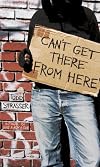
This is a very quick read. It feels very real. I have never lived on the streets, and I sure as shit hope I never do, but I kinda feel like I have now. Maybe is a character that lets you in, but she is simply telling it like it is. She doesn't complain about her life, its just her life. You watch as her friends disappear and die around her and wonder who is next. Its heartbreaking how easy it is for kids to get abused, left on their own and forgotten, with no one to care about them. Its a show more shame that anyone can become parents, because some really, really shouldn't. This was a gritty, sad, thought provoking hour or so that I spent with this book and these characters, and I'm glad I did. show less
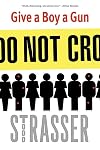
Definitely consider your sensitivities before reading this one as it is challenging subject matter.
Fictional witness accounts of two teenagers who plan an attack on their school intermix with non-fiction gun violence statistics and snippets from shooting cases. It’s a harrowing combination of fact and fiction, sad and frustrating, so yeah, not a particularly enjoyable read, but thoughtfully done.
The format works really well in that it covers several angles of the story and gives voice to show more many points of view. You get a sense of who these two fictional boys were and possible contributing factors to their warped thought processes, they’re humanized to a degree though the narrative does not condone or justify their actions. Some of the victims, the ones who were originally the bullies, don’t come off quite as dimensional as they maybe could have, though I don’t know, perhaps that’s part of the point, if there’s a refusal to acknowledge that something needs to change, things won’t change. show less
Fictional witness accounts of two teenagers who plan an attack on their school intermix with non-fiction gun violence statistics and snippets from shooting cases. It’s a harrowing combination of fact and fiction, sad and frustrating, so yeah, not a particularly enjoyable read, but thoughtfully done.
The format works really well in that it covers several angles of the story and gives voice to show more many points of view. You get a sense of who these two fictional boys were and possible contributing factors to their warped thought processes, they’re humanized to a degree though the narrative does not condone or justify their actions. Some of the victims, the ones who were originally the bullies, don’t come off quite as dimensional as they maybe could have, though I don’t know, perhaps that’s part of the point, if there’s a refusal to acknowledge that something needs to change, things won’t change. show less
Lists
Awards


You May Also Like


Associated Authors
Statistics
- Works
- 169
- Also by
- 6
- Members
- 17,535
- Popularity
- #1,260
- Rating
- 3.7
- Reviews
- 368
- ISBNs
- 716
- Languages
- 15
- Favorited
- 11


