
Michael Tomasky
Author of Bill Clinton
About the Author
Michael Tomasky is a columnist for the Daily Beast, a contributing opinion writer for the New York Times, a regular contributor to the New York Review of Books, and editor of Democracy: A Journal of Ideas. He lives in Maryland.
Works by Michael Tomasky
The Middle Out: The Rise of Progressive Economics and a Return to Shared Prosperity (2022) 31 copies
Left for Dead: The Life, Death, and Possible Resurrection of Progressive Politics in America (1996) 15 copies
Democracy : a journal of ideas 2 copies
A Woman of the People: Elizabeth Warren and the Future of the American Left {Foreign Affairs, September/October 2014} (2014) 1 copy
The New republic 1 copy
Associated Works
These United States: Original Essays by Leading American Writers on Their State within the Union by John Leonard (1995) — Contributor — 101 copies, 1 review
Tagged
Common Knowledge
- Birthdate
- 1960-10-13
- Gender
- male
- Education
- West Virginia University
New York University - Occupations
- journalist
editor - Organizations
- Democracy (journal)
Newsweek - Nationality
- USA
- Birthplace
- Morgantown, West Virginia, USA
- Places of residence
- Morgantown, West Virginia, USA
- Associated Place (for map)
- Morgantown, West Virginia, USA
Members
Reviews
Rating: 4* of five
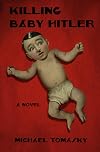
The Publisher Says: In the year 2141, the planet is ruled by billionaires, democracy is a relic, the environment is collapsing, and Illinois is home to thirty-foot alligators.
When a ragtag team of scientists discovers the secret to time travel, they set their sights on history’s most infamous villain: baby Adolf Hitler. The mission doesn’t go quite as planned.
Because rewriting history is never simple. Instead of preventing the rise of fascism, they trigger a bizarre new show more timeline in which Hitler grows up in America, editing one of the country’s most hateful newspapers, and history warps in strange and unsettling ways. What begins as a darkly funny scheme to fix the past spirals into a mind-bending journey across centuries, as the time travelers confront unintended consequences, shifting timelines, and a future that may be even worse than the one they left behind.
Part sci-fi thriller, part biting satire, Killing Baby Hitler is Michael Tomasky’s first work of fiction—a wildly original novel that skewers power, questions the logic of hindsight, and reminds us that the present may be the hardest time of all to change. Bold, provocative, and disturbingly plausible, it’s a time-travel tale like no other.
I RECEIVED A DRC FROM THE PUBLISHER VIA EDELWEISS+. THANK YOU.
My Review: I like my silly sci-fi delivered with humor, so I'm your boy for this story's topic and style. I'm also a fan of time-travel (purest of fantasies) and alternate history (I dunno if we'll ever science our way into certainty that other timelines are real, but I think they can't NOT be), so bring your killing Hitler story unto mine eyes.
O/R is a leftist purveyor of tendentious reads mostly non-fiction; I approve of this, so seeing this novel become available I downloaded it immediately. I'm a fan of the wish-fulfillment inherent in stories of changing history, though the pop-culture "butterfly effect" is pretty inaccurate to the real subset of chaos theory. Doesn't mean I don't love to read about it. I was really hoping to love this read, too.
I enjoyed and liked it. I'd've loved it if it'd kept on with the initial tone. It's honest, abrasive, truthful about human nature; it's holding up our faults as people to us in this low-real life stakes fictional tale. It's always safe to look at existential crisis in the mirror of practical impossibility. To be able say humanity does not come off unscathed is pretty much my minimum standard for this kind of srory. Happy to say scathing is done. Pulling the punch at the end...well...I get it, I really do, and I can't tell you I thought the ending was incongruous, or tacked on to the story it was finishing off. It fit fine.
I wasn't expecting the tonal shift, so it popped me in the mouth for a minute. I don't think others who're less pessimistic, or permaybehaps don't see things through my Darkling eye. Without reservation a recommended read for summer in particular among the "if only" fantasists seeking to refashion the world. A well-paced story that makes its points without sacrificing the exuberant fun of reinvention, no matter how implausible.
Truths are told, honest self-appraisal encouraged, and a vote of confidence I don't entirely agree with is offered to send the entertainment reader away happy. show less
The Publisher Says: In the year 2141, the planet is ruled by billionaires, democracy is a relic, the environment is collapsing, and Illinois is home to thirty-foot alligators.
When a ragtag team of scientists discovers the secret to time travel, they set their sights on history’s most infamous villain: baby Adolf Hitler. The mission doesn’t go quite as planned.
Because rewriting history is never simple. Instead of preventing the rise of fascism, they trigger a bizarre new show more timeline in which Hitler grows up in America, editing one of the country’s most hateful newspapers, and history warps in strange and unsettling ways. What begins as a darkly funny scheme to fix the past spirals into a mind-bending journey across centuries, as the time travelers confront unintended consequences, shifting timelines, and a future that may be even worse than the one they left behind.
Part sci-fi thriller, part biting satire, Killing Baby Hitler is Michael Tomasky’s first work of fiction—a wildly original novel that skewers power, questions the logic of hindsight, and reminds us that the present may be the hardest time of all to change. Bold, provocative, and disturbingly plausible, it’s a time-travel tale like no other.
I RECEIVED A DRC FROM THE PUBLISHER VIA EDELWEISS+. THANK YOU.
My Review: I like my silly sci-fi delivered with humor, so I'm your boy for this story's topic and style. I'm also a fan of time-travel (purest of fantasies) and alternate history (I dunno if we'll ever science our way into certainty that other timelines are real, but I think they can't NOT be), so bring your killing Hitler story unto mine eyes.
O/R is a leftist purveyor of tendentious reads mostly non-fiction; I approve of this, so seeing this novel become available I downloaded it immediately. I'm a fan of the wish-fulfillment inherent in stories of changing history, though the pop-culture "butterfly effect" is pretty inaccurate to the real subset of chaos theory. Doesn't mean I don't love to read about it. I was really hoping to love this read, too.
I enjoyed and liked it. I'd've loved it if it'd kept on with the initial tone. It's honest, abrasive, truthful about human nature; it's holding up our faults as people to us in this low-real life stakes fictional tale. It's always safe to look at existential crisis in the mirror of practical impossibility. To be able say humanity does not come off unscathed is pretty much my minimum standard for this kind of srory. Happy to say scathing is done. Pulling the punch at the end...well...I get it, I really do, and I can't tell you I thought the ending was incongruous, or tacked on to the story it was finishing off. It fit fine.
I wasn't expecting the tonal shift, so it popped me in the mouth for a minute. I don't think others who're less pessimistic, or permaybehaps don't see things through my Darkling eye. Without reservation a recommended read for summer in particular among the "if only" fantasists seeking to refashion the world. A well-paced story that makes its points without sacrificing the exuberant fun of reinvention, no matter how implausible.
Truths are told, honest self-appraisal encouraged, and a vote of confidence I don't entirely agree with is offered to send the entertainment reader away happy. show less
If I told you that America today is deeply polarized, you could remind me that America has always been deeply polarized. You could point out that the current rural/urban divide is not so dissimilar from the Jeffersonian/Hamilton divide at the country’s founding. Or that the racial divide was never greater than during the Civil War, or that class division and conflict between labor and business was never greater than during the first Gilded Age and into the Great Depression. And you’d be show more right.
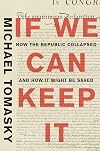
But what you’d be missing is the fact that polarization today is very different in a subtle way. As Michael Tomasky points out in his latest book, If We Can Keep It: How the Republic Collapsed and How it Might Be Saved, while we’ve always been a polarized country, our polarization has always consisted of both conflict between political parties and within parties. The fact that you used to have, for example, several liberal Republicans and several conservative Democrats meant that bipartisan coalitions could form to negotiate, compromise, and actually pass worthwhile legislation.
Today is a different story. Both left and right have drifted from the center. Radicalized versions of each party find it increasingly difficult to talk to each other, and, as a result, very little gets accomplished. This is what’s different about today.
In the first part of the book, Tomasky describes how the country arrived at this point, and it’s not pretty. It has a lot to do with the recent concentrated effort of the conservative movement to build a massive media outlet and pump a lot of money into the political process. But it also has more than a little to do with the left’s morphing into its own version of the right, employing some of the same tactics the right is known for, like suppressing speech and inciting violence.
Regardless of how it happened, we are living during a time where two ideologically opposed parties are drifting farther apart with no countervailing forces within each party to reel them back in. So what, if anything, can be done?
That’s where Tomasky’s 14-point agenda to reduce polarization comes in, which is covered in depth in the book’s final chapter. While even Tomasky is unsure whether his plan would actually work, he’s identified the political and social fixes that give us our best shot.
In terms of political fixes, some of his ideas seem to be feasible and could be implemented immediately, and some are, as Tomasky admits, unlikely to be adopted. But the extreme political environment we’re in requires extreme solutions, and a bit of thinking outside of the box is necessary if we’re going to make a serious effort to dig ourselves out of the partisan hole we’ve dug over the last quarter century.
Tomasky’s first idea seems to be a good one, supported by many: eliminating political gerrymandering. Done right, this would both ensure that political parties are not over- or underrepresented in Congress (based on the political composition of each state) and that elections could become more competitive.
His next best idea is the introduction of ranked-choice voting, which, among many other advantages, would produce more moderate politicians and less negative ad campaigns as politicians would now have to worry about appealing to all voters, so as to avoid being ranked last by a significant part of the voter base. This is the suggestion I would most like to see instituted. Of course, every policy has its tradeoffs, and ranked-choice voting can produce some bizarre outcomes mathematically, but it’s worth looking at, and the benefits seem to outweigh the costs.
Another idea that could be implemented immediately is the elimination of the Senate filibuster, which is not part of the Constitution and is simply a procedural tradition we should probably do away with. Eliminating the filibuster will put an end to the very undemocratic supermajority it requires to pass anything in the Senate.
Finally, getting rid of the Electoral College, or forcing the states to commit their electoral votes to whichever presidential candidate wins the popular vote (in addition to installing ranked-choice voting) would force presidential candidates to cater to those outside of their own base, incentivizing more moderate and civilized behavior.
As for social fixes, the overarching goal is to get people to talk to each other and work together, since it’s easier to hate someone you don’t know, or to hate the idea of someone you have in your head that may or may not reflect reality. To promote this kind of collaboration, Tomasky is recommending high school and college “foreign exchange” programs within the United States, so that northern liberals can work with southern conservatives and vice versa. He also suggests that college be reduced from four years to three years, with the final year dedicated to civil service. I’m not so sure about that one (sacrificing a full year of class-based learning), but the exchange programs seem to be a workable idea.
Tomaksy also recommends expanding civic education in high schools, recognizing the obvious fact that college exchange programs will have no effect on the 60 to 70 percent of Americans who end their formal education at high school.
The idea is that, rather than focusing on preparing students for the workforce, as merely cogs in a larger economic machine, schools should make more of an effort to prepare citizens for responsible civic participation. This includes an expanded history curriculum, as Tomasky suggests, in addition to an expanded curriculum in critical thinking and philosophy, which Tomasky does not suggest.
This is a crucial oversight; the teaching of critical thinking and philosophy—which is almost completely absent in high school education—is just as, and probably more so, important than expanding the history curriculum. If you are susceptible to manipulation, and lack the requisite skeptical thinking skills, then no amount of factual information will protect you from the people who want to manipulate you.
Finally, Tomasky suggests, in terms of political approach, that the left stop turning into the right (and providing ammunition to the right in the form of political correctness, speech codes, and violent acts) and that business leaders start prioritizing something other than short-term profit.
I can find little to criticize about Tomasky’s suggestions (although I would have added a section on expanding critical and skeptical thinking education in high schools), but the real question is if any of these changes will ever be implemented. In that regard, we should keep one fact in mind. As Tomasky notes, political change always follows social change. That means if we really want less divisive politics, we have to demand it, and start organizing around the changes that will lead to greater cooperation, more dialogue, and eventually less polarized political behavior. show less
But what you’d be missing is the fact that polarization today is very different in a subtle way. As Michael Tomasky points out in his latest book, If We Can Keep It: How the Republic Collapsed and How it Might Be Saved, while we’ve always been a polarized country, our polarization has always consisted of both conflict between political parties and within parties. The fact that you used to have, for example, several liberal Republicans and several conservative Democrats meant that bipartisan coalitions could form to negotiate, compromise, and actually pass worthwhile legislation.
Today is a different story. Both left and right have drifted from the center. Radicalized versions of each party find it increasingly difficult to talk to each other, and, as a result, very little gets accomplished. This is what’s different about today.
In the first part of the book, Tomasky describes how the country arrived at this point, and it’s not pretty. It has a lot to do with the recent concentrated effort of the conservative movement to build a massive media outlet and pump a lot of money into the political process. But it also has more than a little to do with the left’s morphing into its own version of the right, employing some of the same tactics the right is known for, like suppressing speech and inciting violence.
Regardless of how it happened, we are living during a time where two ideologically opposed parties are drifting farther apart with no countervailing forces within each party to reel them back in. So what, if anything, can be done?
That’s where Tomasky’s 14-point agenda to reduce polarization comes in, which is covered in depth in the book’s final chapter. While even Tomasky is unsure whether his plan would actually work, he’s identified the political and social fixes that give us our best shot.
In terms of political fixes, some of his ideas seem to be feasible and could be implemented immediately, and some are, as Tomasky admits, unlikely to be adopted. But the extreme political environment we’re in requires extreme solutions, and a bit of thinking outside of the box is necessary if we’re going to make a serious effort to dig ourselves out of the partisan hole we’ve dug over the last quarter century.
Tomasky’s first idea seems to be a good one, supported by many: eliminating political gerrymandering. Done right, this would both ensure that political parties are not over- or underrepresented in Congress (based on the political composition of each state) and that elections could become more competitive.
His next best idea is the introduction of ranked-choice voting, which, among many other advantages, would produce more moderate politicians and less negative ad campaigns as politicians would now have to worry about appealing to all voters, so as to avoid being ranked last by a significant part of the voter base. This is the suggestion I would most like to see instituted. Of course, every policy has its tradeoffs, and ranked-choice voting can produce some bizarre outcomes mathematically, but it’s worth looking at, and the benefits seem to outweigh the costs.
Another idea that could be implemented immediately is the elimination of the Senate filibuster, which is not part of the Constitution and is simply a procedural tradition we should probably do away with. Eliminating the filibuster will put an end to the very undemocratic supermajority it requires to pass anything in the Senate.
Finally, getting rid of the Electoral College, or forcing the states to commit their electoral votes to whichever presidential candidate wins the popular vote (in addition to installing ranked-choice voting) would force presidential candidates to cater to those outside of their own base, incentivizing more moderate and civilized behavior.
As for social fixes, the overarching goal is to get people to talk to each other and work together, since it’s easier to hate someone you don’t know, or to hate the idea of someone you have in your head that may or may not reflect reality. To promote this kind of collaboration, Tomasky is recommending high school and college “foreign exchange” programs within the United States, so that northern liberals can work with southern conservatives and vice versa. He also suggests that college be reduced from four years to three years, with the final year dedicated to civil service. I’m not so sure about that one (sacrificing a full year of class-based learning), but the exchange programs seem to be a workable idea.
Tomaksy also recommends expanding civic education in high schools, recognizing the obvious fact that college exchange programs will have no effect on the 60 to 70 percent of Americans who end their formal education at high school.
The idea is that, rather than focusing on preparing students for the workforce, as merely cogs in a larger economic machine, schools should make more of an effort to prepare citizens for responsible civic participation. This includes an expanded history curriculum, as Tomasky suggests, in addition to an expanded curriculum in critical thinking and philosophy, which Tomasky does not suggest.
This is a crucial oversight; the teaching of critical thinking and philosophy—which is almost completely absent in high school education—is just as, and probably more so, important than expanding the history curriculum. If you are susceptible to manipulation, and lack the requisite skeptical thinking skills, then no amount of factual information will protect you from the people who want to manipulate you.
Finally, Tomasky suggests, in terms of political approach, that the left stop turning into the right (and providing ammunition to the right in the form of political correctness, speech codes, and violent acts) and that business leaders start prioritizing something other than short-term profit.
I can find little to criticize about Tomasky’s suggestions (although I would have added a section on expanding critical and skeptical thinking education in high schools), but the real question is if any of these changes will ever be implemented. In that regard, we should keep one fact in mind. As Tomasky notes, political change always follows social change. That means if we really want less divisive politics, we have to demand it, and start organizing around the changes that will lead to greater cooperation, more dialogue, and eventually less polarized political behavior. show less

As part of the American Presidents Series, this book has been a long time coming. The author who originally was designated to write the Bill Clinton biography (Harold Evans, who is in his mid-80s) never came through. Michael Tomasky is a worthy replacement. He has written a book on the history of progressive politics in the US, and another on Hillary Clinton's 1999 senatorial race. He also is a contributor to The Daily Beast and The New York Review of Books and past editor of The American show more Prospect and Guardian America.
Tomasky's account of the Clinton presidency is fair and impartial, and as balanced a perspective as one might hope for. He documents the presidential successes as well as the failures, and does not whitewash the personal failings that marred Clinton's otherwise successful life and presidential tenure. As for successes, he can point to the incredible tripling of the Dow Jones average, the 22 million jobs created, the balancing of the Federal budget with the creation of a surplus, and the incredible 11% growth in median family income.
Having been written in 2016, Tomasky's account is sufficiently removed in time to acknowledge the "withering reexamination" of Clinton's terms in office by a younger generation of voters, for whom his "compromises on crime, welfare, and other matters were anathema" (p. 2). What's more, given the passage of a quarter of a century, he (and the reader) can look back dispassionately at the pseudo-scandals ginned up by his opponents. These included the White House travel office firings, his Whitewater investments (which, as his critics like to obscure, lost money), the time his staff scheduled a haircut while on Air Force One (causing a slight delay of other airplanes), and the suicide of Hillary's friend Vince Foster (which the irresponsible Wall Street Journal claimed -- against all evidence -- was a murder in which the Clintons were somehow involved). And of course there was the Lewinsky matter. As is well known, Bill had a few consensual intimate encounters with a female assistant who had targeted him for seduction. These voluntary encounters, and Clinton's reluctance to acknowledge them were what his rabid opponents tried to use to end his presidency.
Tomasky's account is no hagiography. For example, regarding the controversial trade agreement NAFTA, Clinton supporters often assert that the agreement was entirely the responsibility of GW Bush, Clinton's predecessor. To the contrary, Tomasky's account recognizes that the Clinton administration lobbied hard for it against labor unions and progressives in his own party. Likewise, he acknowledges the foreign policy failures, notably the myopia that allowed the mass slaughter in Rwanda to proceed unchecked. But against such failings are the reinstatement of Duvalier in Haiti following the military coup, and the UN intervention in Bosnia.
Tomasky's book breaks no new ground -- there are no revelations here, at least to those familiar with Clinton's presidency. That's to be expected of this sort of work. As a brief (150 page) summary of Bill Clinton's presidency and Hillary's public and private role, Tomasky's account is excellent. A dispassionate evaluation will find little with which to quarrel.
Note: The delay in publication of this work (due to age/ health of the originally chosen author) has led commentators at Amazon.com to claim that the book was somehow suppressed by Hillary Clinton. No evidence is offered for this bizarre, conspiratorial assertion. However, it shows that "Clinton derangement syndrome" -- fueled by "hate radio" and its print counterparts, lives on. Future historians will likely be utterly perplexed at the off-the-charts vitriol this engaging, likeable politician engendered from the rabid right wing, and will probably view with disgust the unprincipled attempts to remove him from office on a pretext. show less
Tomasky's account of the Clinton presidency is fair and impartial, and as balanced a perspective as one might hope for. He documents the presidential successes as well as the failures, and does not whitewash the personal failings that marred Clinton's otherwise successful life and presidential tenure. As for successes, he can point to the incredible tripling of the Dow Jones average, the 22 million jobs created, the balancing of the Federal budget with the creation of a surplus, and the incredible 11% growth in median family income.
Having been written in 2016, Tomasky's account is sufficiently removed in time to acknowledge the "withering reexamination" of Clinton's terms in office by a younger generation of voters, for whom his "compromises on crime, welfare, and other matters were anathema" (p. 2). What's more, given the passage of a quarter of a century, he (and the reader) can look back dispassionately at the pseudo-scandals ginned up by his opponents. These included the White House travel office firings, his Whitewater investments (which, as his critics like to obscure, lost money), the time his staff scheduled a haircut while on Air Force One (causing a slight delay of other airplanes), and the suicide of Hillary's friend Vince Foster (which the irresponsible Wall Street Journal claimed -- against all evidence -- was a murder in which the Clintons were somehow involved). And of course there was the Lewinsky matter. As is well known, Bill had a few consensual intimate encounters with a female assistant who had targeted him for seduction. These voluntary encounters, and Clinton's reluctance to acknowledge them were what his rabid opponents tried to use to end his presidency.
Tomasky's account is no hagiography. For example, regarding the controversial trade agreement NAFTA, Clinton supporters often assert that the agreement was entirely the responsibility of GW Bush, Clinton's predecessor. To the contrary, Tomasky's account recognizes that the Clinton administration lobbied hard for it against labor unions and progressives in his own party. Likewise, he acknowledges the foreign policy failures, notably the myopia that allowed the mass slaughter in Rwanda to proceed unchecked. But against such failings are the reinstatement of Duvalier in Haiti following the military coup, and the UN intervention in Bosnia.
Tomasky's book breaks no new ground -- there are no revelations here, at least to those familiar with Clinton's presidency. That's to be expected of this sort of work. As a brief (150 page) summary of Bill Clinton's presidency and Hillary's public and private role, Tomasky's account is excellent. A dispassionate evaluation will find little with which to quarrel.
Note: The delay in publication of this work (due to age/ health of the originally chosen author) has led commentators at Amazon.com to claim that the book was somehow suppressed by Hillary Clinton. No evidence is offered for this bizarre, conspiratorial assertion. However, it shows that "Clinton derangement syndrome" -- fueled by "hate radio" and its print counterparts, lives on. Future historians will likely be utterly perplexed at the off-the-charts vitriol this engaging, likeable politician engendered from the rabid right wing, and will probably view with disgust the unprincipled attempts to remove him from office on a pretext. show less
According to the series introduction, books in the American Presidents series are intended to present the "grand panorama of our chief executives in volumes compact enough for the busy reader." This latest installment in the series, covering President Bill Clinton, fulfills its mission admirably.
For the reader who wants an in depth analysis of the life of the president, this is probably not the book as it offers a general overview of Clinton's pre-presidential life and just a bit more depth show more about his presidency. For someone unfamiliar with Clinton's life, this is a nice starting point.
I've read a number of books in this series and, for what it is, this one's pretty good.
There's a Selected Bibliography for the reader who wants to know more. show less
For the reader who wants an in depth analysis of the life of the president, this is probably not the book as it offers a general overview of Clinton's pre-presidential life and just a bit more depth show more about his presidency. For someone unfamiliar with Clinton's life, this is a nice starting point.
I've read a number of books in this series and, for what it is, this one's pretty good.
There's a Selected Bibliography for the reader who wants to know more. show less
 This review was written for LibraryThing Early Reviewers.
You May Also Like


Associated Authors
Statistics
- Works
- 10
- Also by
- 5
- Members
- 221
- Popularity
- #101,334
- Rating
- 3.7
- Reviews
- 20
- ISBNs
- 18
