
Bart Yates
Author of Leave Myself Behind
About the Author
Works by Bart Yates
Tagged
Common Knowledge
- Legal name
- Yates Bart
- Other names
- Bly, Noah
- Birthdate
- 1962
- Gender
- male
- Education
- Boston University (MFA)
- Occupations
- author
musician - Awards and honors
- Alex Award from the American Library Association (2004)
- Short biography
- BART YATES lives in Iowa City, Iowa, where he works as a freelance musician and teacher. He has a master's degree from Boston University, and he plays clarinet in the chronically unemployed jazz group, Nica's Dream.
- Nationality
- USA
- Places of residence
- Iowa City, Iowa, USA
- Associated Place (for map)
- Iowa, USA
Members
Reviews
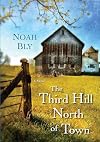
Set in 1962, fifty-something Julianna Dapper escapes from a mental hospital in Maine, “borrows” a car, and begins a journey to the midwestern US, accompanied by two young men. One is a fifteen-year-old black youth she mistakes for a childhood friend and the other is a seventeen-year-old hitchhiker running from troubles at home. They are pursued by the law and their families. It is a picaresque adventure, full of over-the-top action scenes and a string of improbable coincidences.
I liked show more the depiction of the unlikely friendship that formed among three diverse individuals. Other than that, I do not have much positive to say about it. Everything is exaggerated – one of the main characters is too saintly and the villains are too evil. There are many plot holes and anachronisms. It is filled with violence and racial scapegoating. For me, it is a failed attempt to combine tragedy and humor, with the humor generated at the expense of a person with mental illness. show less
I liked show more the depiction of the unlikely friendship that formed among three diverse individuals. Other than that, I do not have much positive to say about it. Everything is exaggerated – one of the main characters is too saintly and the villains are too evil. There are many plot holes and anachronisms. It is filled with violence and racial scapegoating. For me, it is a failed attempt to combine tragedy and humor, with the humor generated at the expense of a person with mental illness. show less
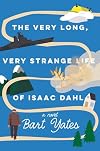
The cover and blurb immediately piqued my interest, and from the very first line, I was completely engrossed in the novel.
"History remembers the big moments. But what about the small ones that shape a life?" –Kensington Books
"Each day is a story, whether or not that story makes any damn sense or is worth telling to anyone else."This line set the tone for a captivating read that I simply couldn't put down.
I was fascinated by the unique format of the storyline, which chronicles Isaac show more Dahl’s life from 1926, at the age of 8, to 2014, when he was 96. The novel takes us on a journey that spans from Bingham, Utah, to Balko, Oklahoma, aboard the USS Houston in the Java Sea during WWII, then to Des Moines, Iowa, the Marshall Islands, Grenada, Mississippi, Saint-Rémy-de-Provence, France, aboard the Sea Major in the Solvent, followed by Romola, Italy, Westport, Massachusetts, and Iowa City, Iowa. Throughout this journey, we come to know Isaac Dahl as a son, brother (with two sisters, one of whom is a twin), friend, student, reader, journalist for the United Press, uncle, and a dual teaching professional at the University of Iowa. The last line is as captivating as the first, making the entire journey a truly unique reading experience.
This novel will linger in my mind for a long time. Isaac Dahl, along with his family, friends, and the people he meets throughout his life, is vividly brought to life. Each chapter is rich in detail, offering readers a unique perspective on a life well-lived and embraced fully. It celebrates the idea that even at the age of 96, a childlike wonder remains about what the future may hold, inspiring readers to embrace life’s mysteries.
The Author's Note captivates just as much as the chapters that preceded it, offering insight into the idea for the book, the plotting and writing process, and the path to publication. Additionally, a Reading Group Guide is available at the end for book clubs eager to explore the novel's themes and insights in greater depth.
I discovered this author through the June selections for the 2025 BTC Reading Challenge, and I’m excited to explore more of his writing. show less
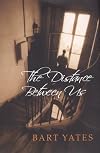
Hester Donovan (nee Parker) is perhaps one of the best examples of a narrator who is deeply flawed and entirely entrenched in her own way of seeing things, and yet engenders sympathy. (Another good example that comes to mind is The Autobiography of Joseph Stalin: A Novel.) Most narrator-protagonists are more or less likable; they make mistakes, but are basically good people. Most readers also, I think, like to think of themselves as basically good people who sometimes make mistakes. show more ("Everyone is their own protagonist.") It takes a talented writer to make a reader see out from the eyes of a character like Hester, not necessarily agreeing with what she thinks or how she acts, but at least understanding her. It helps that she has an absolutely hysterical sense of humor - I laughed out loud many times while reading.
p. 124
"I hated that [my daughter:] was suffering, and, believe me, I would have given her a kidney, or a lung, to make her happy. Without a moment's hesitation, I would have reached into my own body and ripped out all my organs for her to use as spare parts.
But I also remember thinking, with shame, that even if there were a way to pull my talent out of me in the same manner, and hand it over to [her:], I probably would not be willing to do so.
Because my gift meant more to me than she did.
That's a horrible thing for a mother to say, but it's the truth. And it's just as true today as it was then.
I can assure you I am not proud of this. But nothing in my life has ever mattered more to me than my musical ability. Not my parents, not my children, not even [my husband:]." show less
p. 124
"I hated that [my daughter:] was suffering, and, believe me, I would have given her a kidney, or a lung, to make her happy. Without a moment's hesitation, I would have reached into my own body and ripped out all my organs for her to use as spare parts.
But I also remember thinking, with shame, that even if there were a way to pull my talent out of me in the same manner, and hand it over to [her:], I probably would not be willing to do so.
Because my gift meant more to me than she did.
That's a horrible thing for a mother to say, but it's the truth. And it's just as true today as it was then.
I can assure you I am not proud of this. But nothing in my life has ever mattered more to me than my musical ability. Not my parents, not my children, not even [my husband:]." show less
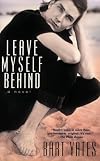
Although I thought the whole mason-jars-and-baby's-skeleton thing that drove that plot was pretty over the top, I loved this book for its extremely good depiction of human relationships: Noah's relationship with his mother and his deceased father, his growing romance with J. D., J.D.'s abusive mom, etc. The dialogue and the characters' actions were very real to me, and Noah and J.D.'s homosexuality was well done. Some books overstress the gay aspect of the story, but in this case the amount show more of emphasis was just right: clearly a factor in play, but not something you got slammed over the head with. I look forward to reading more of this author's work. show less
Lists
Awards

You May Also Like


Statistics
- Works
- 7
- Members
- 930
- Popularity
- #27,609
- Rating
- 4.0
- Reviews
- 40
- ISBNs
- 33
- Languages
- 2
- Favorited
- 6