People/Characters Kenneth Clark
Works (16)

- How to Be an Antiracist by Ibram X. Kendi
- Me and White Supremacy by Layla F. Saad
- Where Do We Go from Here: Chaos or Community? (King Legacy) by Martin Luther King, Jr.
- The Warburgs: The Twentieth-Century Odyssey of a Remarkable Jewish Family by Ron Chernow
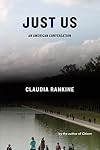
- Just Us: An American Conversation by Claudia Rankine
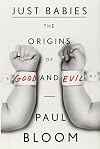
- Just Babies: The Origins of Good and Evil by Paul Bloom
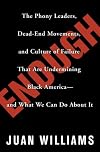
- Enough: The Phony Leaders, Dead-End Movements, and Culture of Failure That Are Undermining Black America and What We Can Do About It by Juan Williams
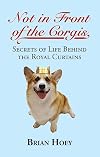
- Not in Front of the Corgis by Brian Hoey
- Making Our Way Home: The Great Migration and the Black American Dream by Blair Imani
- Wannabe: Reckonings with the Pop Culture That Shapes Me by Aisha Harris
- Arthur Alfonso Schomburg: Black Bibliophile and Collector by Elinor Des Verney Sinnette
- Capitalism, Culture and Decline in Britain: 1750-1990 by W. D. Rubinstein
- "Dr. Werthless" by Harold Schechter
- The Doll Test: Choosing Equality by Carole Boston Weatherford
- Children, Race, and Power: Kenneth and Mamie Clark's Northside Center by Gerald E. Markowitz
- Nathan Never n. 398: La nuova era by Bepi Vigna
Related Tags
Description
| Description | Kenneth Bancroft Clark (July 14, 1914 – May 1, 2005) and Mamie Phipps Clark (April 18, 1917 – August 11, 1983) were American psychologists who as a married team conducted research among children and were active in the Civil Rights Movement. They founded the Northside Center for Child Development in Harlem and the organization Harlem Youth Opportunities Unlimited (HARYOU). Kenneth Clark was also an educator and professor at City College of New York, and first Black president of the American Psychological Association. They were known for their 1940s experiments using dolls to study children's attitudes about race. The Clarks testified as expert witnesses in Briggs v. Elliott (1952), one of five cases combined into Brown v. Board of Education (1954). The Clarks' work contributed to the ruling of the U.S. Supreme Court in which it determined that de jure racial segregation in public education was unconstitutional. Wikipedia: https://en.wikipedia.org/wiki/Kenneth_... |