People/Characters Lucretia
Works (38)















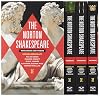





- William Shakespeare: The Complete Works by William Shakespeare
- The Riverside Chaucer by Geoffrey Chaucer
- William Shakespeare: The Complete Sonnets and Poems by William Shakespeare
- The Works of Geoffrey Chaucer by Geoffrey Chaucer
- Cold Blooded by Lisa Jackson
- A Fatal Thing Happened on the Way to the Forum: Murder in Ancient Rome by Emma Southon
- The Honest Courtesan: Veronica Franco, Citizen and Writer in Sixteenth-Century Venice by Margaret F. Rosenthal
- A Rome of One's Own: The Forgotten Women of the Roman Empire by Emma Southon
- The Myth of Persecution: How Early Christians Invented a Story of Martyrdom by Candida Moss
- Oh My Gods: A Modern Retelling of Greek and Roman Myths by Philip Freeman
- Geoffrey Chaucer: Love Visions (Penguin Classics) by Geoffrey Chaucer
- Confessio Amantis by John Gower
- How to Create the Perfect Wife: Britain's Most Ineligible Bachelor and his Enlightened Quest to Train the Ideal Mate by Wendy Moore
- The Rape of Lucrece by William Shakespeare
- The Norton Shakespeare: Romances and Poems by William Shakespeare
- William Shakespeare: The Narrative Poems by William Shakespeare
- Legacies of Betrayal by Laurie Goulding
- The Norton Shakespeare Vol. 1: Early Plays and Poems by Stephen Greenblatt
- The Girl Who Sees by Dima Zales
- Lubiewo by Michal Witkowski
Related Tags

A Reading List
3 members

Best of World Literature
52 members
Description
| Description | 1.) According to Roman tradition, Lucretia (/lʊˈkriːʃə/) or Lucrece (Latin: Lucretia; died c. 510 BC) was a noblewoman in ancient Rome whose rape by Sextus Tarquinius (Tarquin), an Etruscan king's son, was the cause of a rebellion that overthrew the Roman monarchy and led to the transition of Roman government from a kingdom to a republic. Lucretia in Wikipedia 2.) Lucretia (11 May 1758- ) was the name that Thomas Day (22 June 1748 – 28 September 1789) gave to one of the illegally acquired foundlings that he was training to be a perfect wife. Although Day's friends knew his intentions, neither girl was aware of the end purpose of the project until Sabrina was told as an adult. Lucretia was born in Clerkenwell, London, and baptized Ann Grig. Abandoned at the Foundling Hospital aged about 6 months, she was renamed Dorcas Car, and assigned her the number 10,413. She lived at first with a wet nurse/foster mother in Brentwood, just north of London, until January 1766 when she was taken to the Holborn, London Hospital and began her education. On 20 September 1769, Day chose her as his second experimental subject. She was blonde-haired and blue-eyed, and said to be beautiful. Given the dubious circumstances under which Day had gotten and was keeping the girls, Day made an agreement with his friend John Bricknell, who had accompanied him to the Hospital, that he would in a year's time select one of the girls for continued training and arrange an apprenticeship for the other. Day took Lucretia and the other foundling, whom he had named Sabrina Sydney, to France where he hired servants who could not speak English so that they could not influence the girls. After a year, Day decided that Sabrina was the more promising, and apprenticed Lucretia to a milliner in Ludgate Hill and gave her a gift of 400 pounds, worth 60,000 pounds or $96,000 in the early 21st century. Day's friend, Robert Lovell Edgeworth, would later write that she was happily married to a draper, and perhaps a grandmother. |