
(original review date on my website was 10-5-08)
I finished Dracula on audio this week and loved it. Now my sons are listening to it as well. The unabridged edition, of course. It is creepy and scary, and I normally don’t like creepy and scary, but Bram Stoker’s novel is so well done and, obviously, the beginning of it all. I’m thinking of getting this annotated edition at left that comes out on October 13. It even has an introduction by Neil Gaiman. I’ll probably use this edition for a future re-read.
We started to watch the movie starring Gary Oldman, but it wasn’t appropriate for kids (my kids at least) so we quit. I still may watch it at a later date. I would love to see a modern version that was faithful to the book.
Something that surprised and pleased me while reading the book was the strong Christian faith of some of the characters. I didn’t expect that at all, and I do wonder about Stoker’s own beliefs. He was rumored to have been part of a secret, magical order that included the occultist Aleister Crowley.
Also, I read on Publisher’s Weekly that Bram Stoker’s great-grandnephew Dacre Stoker and Dracula documentarian and historian Ian Holt are going to be writing Dracula: the Undead. The publisher will be Dutton, and it is scheduled to be released in October, 2009.
I finished Dracula on audio this week and loved it. Now my sons are listening to it as well. The unabridged edition, of course. It is creepy and scary, and I normally don’t like creepy and scary, but Bram Stoker’s novel is so well done and, obviously, the beginning of it all. I’m thinking of getting this annotated edition at left that comes out on October 13. It even has an introduction by Neil Gaiman. I’ll probably use this edition for a future re-read.
We started to watch the movie starring Gary Oldman, but it wasn’t appropriate for kids (my kids at least) so we quit. I still may watch it at a later date. I would love to see a modern version that was faithful to the book.
Something that surprised and pleased me while reading the book was the strong Christian faith of some of the characters. I didn’t expect that at all, and I do wonder about Stoker’s own beliefs. He was rumored to have been part of a secret, magical order that included the occultist Aleister Crowley.
Also, I read on Publisher’s Weekly that Bram Stoker’s great-grandnephew Dacre Stoker and Dracula documentarian and historian Ian Holt are going to be writing Dracula: the Undead. The publisher will be Dutton, and it is scheduled to be released in October, 2009.
(originally reviewed 11-16-09)
“Those Impressionists,” she said, “they certainly knew about color. And about light and shade. Different kinds of shade: thinner shadows that let the light through, and heavier, denser ones. And it’s as if Monet made this garden to show the world how he saw colors. How he saw their power, their potential, and their purpose. I think he wanted to show that the world is color. That life itself is color. That if we can just see the colors, really see them, life will be beautiful. And meaningful. Because beauty has a value of its own, that’’s how I see it anyway.” – p. 37
“People who read books,’ he went on, “tend to be dispensable. Extremely.” – p. 48
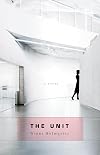
Useful or dispensable? A life of choice or no choice? And what if your own choices led you to have to give of your own body to the ‘needed’ until your ‘final donation’?
I love dystopian fiction, and this book was no exception. It reminded me quite a bit of Never Let Me Go by Kazuo Ishiguro, so if you enjoyed that book, you’ll probably like this one as well. Reading books like this is always a reminder of the ways society could go horribly wrong, and sadly, I wouldn’t be surprised if parts of the book actually do come to pass someday.
Dorrit, age 50, has reached an age where she is now considered dispensable because she has no children or parents to take care of and because she is a writer, which is considered an unessential occupation. The dispensables in The Unit show more are provided for in every way, a nice apartment, exercise facilities, and entertainment venues, etc. Except that they are monitored 24/7, and of course, they may never leave The Unit. Dorrit makes great friends here, and in some ways her life is better than when she was on the outside, but, obviously, her life and her body are not her own. She is essentially a commodity of the State.
The book raises some excellent ethical questions. Is a person’s life itself precious and valuable, or is it only what they can contribute to society that is deemed worthwhile? My view will always be the former.
How obtained: I checked this book out from my local library.
2006 (Swedish), 2009 for the English translation; 268 pp. show less
“Those Impressionists,” she said, “they certainly knew about color. And about light and shade. Different kinds of shade: thinner shadows that let the light through, and heavier, denser ones. And it’s as if Monet made this garden to show the world how he saw colors. How he saw their power, their potential, and their purpose. I think he wanted to show that the world is color. That life itself is color. That if we can just see the colors, really see them, life will be beautiful. And meaningful. Because beauty has a value of its own, that’’s how I see it anyway.” – p. 37
“People who read books,’ he went on, “tend to be dispensable. Extremely.” – p. 48
Useful or dispensable? A life of choice or no choice? And what if your own choices led you to have to give of your own body to the ‘needed’ until your ‘final donation’?
I love dystopian fiction, and this book was no exception. It reminded me quite a bit of Never Let Me Go by Kazuo Ishiguro, so if you enjoyed that book, you’ll probably like this one as well. Reading books like this is always a reminder of the ways society could go horribly wrong, and sadly, I wouldn’t be surprised if parts of the book actually do come to pass someday.
Dorrit, age 50, has reached an age where she is now considered dispensable because she has no children or parents to take care of and because she is a writer, which is considered an unessential occupation. The dispensables in The Unit show more are provided for in every way, a nice apartment, exercise facilities, and entertainment venues, etc. Except that they are monitored 24/7, and of course, they may never leave The Unit. Dorrit makes great friends here, and in some ways her life is better than when she was on the outside, but, obviously, her life and her body are not her own. She is essentially a commodity of the State.
The book raises some excellent ethical questions. Is a person’s life itself precious and valuable, or is it only what they can contribute to society that is deemed worthwhile? My view will always be the former.
How obtained: I checked this book out from my local library.
2006 (Swedish), 2009 for the English translation; 268 pp. show less
(originally reviewed on 2-5-12)
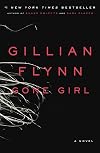
Wow. Just wow. Where do I begin with this? A married couple, New York transplants to middle Missouri, and the wife is missing. Told in alternating husband and wife voices, we are ever so gradually let in on the full story, and it’s a doozy. Until about halfway through, I thought there were 5, 6, or even more possibilities on what could have happened.
This is more than just a regular whodunit for sure. It would be great for a group read because there would definitely be a lot to discuss. A quote:
“It’s a very difficult era in which to be a person, just a real, actual person, instead of a collection of personality traits selected from an endless automat of characters.
And if all of us are play acting, there can be no such thing as a soul mate, because we don’t have genuine souls.
It had gotten to the point where it seemed like nothing matters, because I’m not a real person and neither is anyone else.
I would have done anything to feel real again.”
I really enjoyed the thriller aspect of this book. I haven’t read anything like this in quite awhile, so it was really fun to be entertained in this way. The only negatives I would say about the book is that it seemed like some of the story was taken from a real-life headline, and also there was some very bad language in it as well. Most people aren’t bothered at all about the latter aspect, and if you’re not then this will probably be a 4.5 – 5 star read for you.
What a roller coaster show more ride!
2012, 432 pp.
****
FTC Disclosure: I received this book courtesy of Netgalley and the publisher. show less
Wow. Just wow. Where do I begin with this? A married couple, New York transplants to middle Missouri, and the wife is missing. Told in alternating husband and wife voices, we are ever so gradually let in on the full story, and it’s a doozy. Until about halfway through, I thought there were 5, 6, or even more possibilities on what could have happened.
This is more than just a regular whodunit for sure. It would be great for a group read because there would definitely be a lot to discuss. A quote:
“It’s a very difficult era in which to be a person, just a real, actual person, instead of a collection of personality traits selected from an endless automat of characters.
And if all of us are play acting, there can be no such thing as a soul mate, because we don’t have genuine souls.
It had gotten to the point where it seemed like nothing matters, because I’m not a real person and neither is anyone else.
I would have done anything to feel real again.”
I really enjoyed the thriller aspect of this book. I haven’t read anything like this in quite awhile, so it was really fun to be entertained in this way. The only negatives I would say about the book is that it seemed like some of the story was taken from a real-life headline, and also there was some very bad language in it as well. Most people aren’t bothered at all about the latter aspect, and if you’re not then this will probably be a 4.5 – 5 star read for you.
What a roller coaster show more ride!
2012, 432 pp.
****
FTC Disclosure: I received this book courtesy of Netgalley and the publisher. show less
(originally reviewed on 2-2-11)
I love southern fiction, and I was especially interested in reading this book as the setting is in southeastern Mississippi, which is close to where I live now in Mobile, Alabama. I use to read a lot more mysteries than I read now, particularly in the early 1990s, but I’m not a fan of gritty content, so I’ve drifted more into literary fiction over the years. I was pleasantly relieved, when, for the most part, this book turned out to be more character driven and written in a literary style without the typical gory descriptions of many modern novels. It’s a page turner and I read it pretty much straight through.
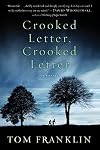
The two main characters are Larry (white), called ‘Scary Larry’ by the locals, and Silas (black), the local policeman. Growing up, the two were friends for a time when they lived in close proximity to each other. Then when Larry was in high school, he was accused by the community of killing a girl after a date, although the body was never found and Larry was never formally charged. Due to all this, Larry lives a lonely life in almost total isolation, with only his books (mostly horror) to keep him company.
Fast forward about 20 years and now another girl is missing. Naturally, the police consider Larry ‘a person of interest’ in the case, and Silas, his old boyhood friend, must get involved in trying to solve the girl’s disappearance.
This book is about a lot more than just the mysteries of the two girls’ disappearances. show more It’s about race, class, friendship, and family. I enjoyed it and would definitely read another book by this author, especially if Silas were one of the characters. show less
I love southern fiction, and I was especially interested in reading this book as the setting is in southeastern Mississippi, which is close to where I live now in Mobile, Alabama. I use to read a lot more mysteries than I read now, particularly in the early 1990s, but I’m not a fan of gritty content, so I’ve drifted more into literary fiction over the years. I was pleasantly relieved, when, for the most part, this book turned out to be more character driven and written in a literary style without the typical gory descriptions of many modern novels. It’s a page turner and I read it pretty much straight through.
The two main characters are Larry (white), called ‘Scary Larry’ by the locals, and Silas (black), the local policeman. Growing up, the two were friends for a time when they lived in close proximity to each other. Then when Larry was in high school, he was accused by the community of killing a girl after a date, although the body was never found and Larry was never formally charged. Due to all this, Larry lives a lonely life in almost total isolation, with only his books (mostly horror) to keep him company.
Fast forward about 20 years and now another girl is missing. Naturally, the police consider Larry ‘a person of interest’ in the case, and Silas, his old boyhood friend, must get involved in trying to solve the girl’s disappearance.
This book is about a lot more than just the mysteries of the two girls’ disappearances. show more It’s about race, class, friendship, and family. I enjoyed it and would definitely read another book by this author, especially if Silas were one of the characters. show less
The strangest thing about my wife’s return from the dead was how other people reacted.”
I listened to this on audio and quite enjoyed it. It’s my fourth Anne Tyler and my favorite so far, followed by Breathing Lessons, which won the Pulitzer. The other two I’ve read are The Amateur Marriage and Saint Maybe. Yes, you could say her fiction is ‘domestic,’ but I wouldn’t call it chick lit. Not by any stretch.
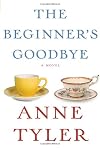
Aaron has recently lost his wife Dorothy in a freak accident, and the story basically revolves around how he deals with his grief. It’s a relatively quiet little story; nothing much happens, but I’m always intrigued by the characters Tyler creates.
I definitely plan on reading more of her work. Do you have a favorite Anne Tyler novel?
2012, 208 pp.
I listened to this on audio and quite enjoyed it. It’s my fourth Anne Tyler and my favorite so far, followed by Breathing Lessons, which won the Pulitzer. The other two I’ve read are The Amateur Marriage and Saint Maybe. Yes, you could say her fiction is ‘domestic,’ but I wouldn’t call it chick lit. Not by any stretch.
Aaron has recently lost his wife Dorothy in a freak accident, and the story basically revolves around how he deals with his grief. It’s a relatively quiet little story; nothing much happens, but I’m always intrigued by the characters Tyler creates.
I definitely plan on reading more of her work. Do you have a favorite Anne Tyler novel?
2012, 208 pp.
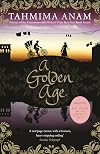
Winner, 2008 Commonwealth Writers’ Prize for Best First Book
I had been wanting to read this book almost since it first came out. When I saw it in the library on audio, I knew I had to listen to it, and I’m so glad I did. It was wonderful, especially for a first time author.
The book is essentially about the 1971 war for independence in Bangladesh, but it’s also about how far a parent will go for his or her offspring. Rehana is a widow with two children, a boy and a girl, in their late teens. As they get more politically involved in the fight for their country, it is always in Rehana’s mind that she must keep them safe from harm at all costs. The novel describes the horrors of war and the fallout from it in a very vivid fashion. It reminded me quite a bit of Adichie’s excellent novel, Half of a Yellow Sun. It’s a different country with a different outcome, but I loved both of these books.
Anam has planned for this to be a trilogy, of which the second is The Good Muslim. I will definitely be reading that book as well, hopefully in the new few months or so, so that I can read the third one right away when it comes out.
Highly recommended.
2007, 304 pp.
I had been wanting to read this book almost since it first came out. When I saw it in the library on audio, I knew I had to listen to it, and I’m so glad I did. It was wonderful, especially for a first time author.
The book is essentially about the 1971 war for independence in Bangladesh, but it’s also about how far a parent will go for his or her offspring. Rehana is a widow with two children, a boy and a girl, in their late teens. As they get more politically involved in the fight for their country, it is always in Rehana’s mind that she must keep them safe from harm at all costs. The novel describes the horrors of war and the fallout from it in a very vivid fashion. It reminded me quite a bit of Adichie’s excellent novel, Half of a Yellow Sun. It’s a different country with a different outcome, but I loved both of these books.
Anam has planned for this to be a trilogy, of which the second is The Good Muslim. I will definitely be reading that book as well, hopefully in the new few months or so, so that I can read the third one right away when it comes out.
Highly recommended.
2007, 304 pp.
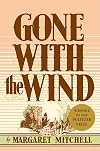
This had been on my tbr list for soooooo long. My real life book club selected it for August so that gave me the push to finally read it. Actually, I listened to it on unabridged audio narrated by Linda Stephens. It was absolutely fantastic. The narration was excellent, and the story was so much more than was depicted in the movie, which I also love.
If you didn’t already know, there is so much more to Scarlett than is in the movie. More marriages, more children, and more selfishness and immaturity. At the same time, we also learn that despite her emotional immaturity, she is a very savvy business woman. In addition, I learned quite a bit about the Civil War that I didn’t know, but at the same time, also learned more about the attitudes that doomed the South to failure. What I really want to know but couldn’t really grasp from the novel or the film was how Margaret Mitchell herself actually viewed the issues facing the South in the Civil War.
All in all, this Pulitzer novel is a must read for every American. I can’t believe it took me so long to read it, but I’m very grateful that I finally did and encourage anyone and everyone to read this American masterpiece.
If you didn’t already know, there is so much more to Scarlett than is in the movie. More marriages, more children, and more selfishness and immaturity. At the same time, we also learn that despite her emotional immaturity, she is a very savvy business woman. In addition, I learned quite a bit about the Civil War that I didn’t know, but at the same time, also learned more about the attitudes that doomed the South to failure. What I really want to know but couldn’t really grasp from the novel or the film was how Margaret Mitchell herself actually viewed the issues facing the South in the Civil War.
All in all, this Pulitzer novel is a must read for every American. I can’t believe it took me so long to read it, but I’m very grateful that I finally did and encourage anyone and everyone to read this American masterpiece.
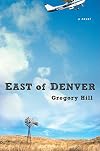
Gregory Hill won the Amazon Breakthrough Novel Award in 2011.
Disclaimer: I grew up near the area where the story takes place.
Due to that fact, I was especially interested in reading this novel. I'd been disappointed in the past by books set in northeastern Colorado -- most notably, Kent Haruf's Plainsong (though I'm still willing to give his other books a chance.)
I was impressed, though, by East of Denver. There were still a few elements I didn't like that I won't go into; but overall, I enjoyed the book tremendously. I very much related to the themes of the book involving the decline of the family farm, which is intense and personal for people who are attached to these communities, and Hill captures that very well.
There are so many things I could go into that I felt were spot on: declining farming communities, the 'plight' of the people who have stayed there, and the struggle of dealing with aging parents or grandparents who were once the stalwarts of the family.
No question about it, I'm looking forward to reading Hill's next book about a rancher (and basketball?) that takes place in the same general setting as this novel.
If you have an interest in small town life or farming, I highly recommend this book.
Disclaimer: I grew up near the area where the story takes place.
Due to that fact, I was especially interested in reading this novel. I'd been disappointed in the past by books set in northeastern Colorado -- most notably, Kent Haruf's Plainsong (though I'm still willing to give his other books a chance.)
I was impressed, though, by East of Denver. There were still a few elements I didn't like that I won't go into; but overall, I enjoyed the book tremendously. I very much related to the themes of the book involving the decline of the family farm, which is intense and personal for people who are attached to these communities, and Hill captures that very well.
There are so many things I could go into that I felt were spot on: declining farming communities, the 'plight' of the people who have stayed there, and the struggle of dealing with aging parents or grandparents who were once the stalwarts of the family.
No question about it, I'm looking forward to reading Hill's next book about a rancher (and basketball?) that takes place in the same general setting as this novel.
If you have an interest in small town life or farming, I highly recommend this book.
 This review was written for LibraryThing Early Reviewers.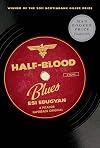
Winner, 2011 Giller Prize
Winner, 2012 Ethel Wilson Fiction Prize
Shortlist, 2011 Man Booker Prize
Shortlist, 2012 Orange Prize
Shortlist, 2011 Governor General’s Award
“It’s like that, I guess, when the past come to collect what you owe.”
Amazing, just look at all those wins and nominations. I’m happy for any author that gets that much recognition!
Edugyan’s story is very unique. Black jazz musicians in pre-War World II Germany and France? You’ve got to expect that that didn’t go very well. A story of prejudice, acceptance, betrayal, and friendship, the dichotomies really stood out. I did enjoy the story, but I was tripped up at times with the slang (though I have no doubt it was very close to authentic). Her descriptions of her characters, especially Delilah and Hiero, were very striking. I could easily imagine how they looked and acted. The scene at the end in Paris was also vivid, reminding me a bit of Nemirovsky’s Suite Francaise.
My only real problem with the book was that whenever I put it down, I wasn’t as eager to get back to it as some others I had been reading recently. Not that all the books I read have to ‘zip along’ (ha! – Booker inside joke), but I would hope that I would be drawn in to continue to the end. I was, just not at the level I was expecting.
This was the only Man Booker shortlist title I didn’t read last year because I got it in the mail too late. Where does it fall with those titles? I’ll put it 5th, above Jamrach’s show more Menagerie. It was also 5th in my Orange shortlist reading, above Song of Achilles.
I would definitely read another by Edugyan at some point.
2011, 352 pp. show less
Winner, 2012 Ethel Wilson Fiction Prize
Shortlist, 2011 Man Booker Prize
Shortlist, 2012 Orange Prize
Shortlist, 2011 Governor General’s Award
“It’s like that, I guess, when the past come to collect what you owe.”
Amazing, just look at all those wins and nominations. I’m happy for any author that gets that much recognition!
Edugyan’s story is very unique. Black jazz musicians in pre-War World II Germany and France? You’ve got to expect that that didn’t go very well. A story of prejudice, acceptance, betrayal, and friendship, the dichotomies really stood out. I did enjoy the story, but I was tripped up at times with the slang (though I have no doubt it was very close to authentic). Her descriptions of her characters, especially Delilah and Hiero, were very striking. I could easily imagine how they looked and acted. The scene at the end in Paris was also vivid, reminding me a bit of Nemirovsky’s Suite Francaise.
My only real problem with the book was that whenever I put it down, I wasn’t as eager to get back to it as some others I had been reading recently. Not that all the books I read have to ‘zip along’ (ha! – Booker inside joke), but I would hope that I would be drawn in to continue to the end. I was, just not at the level I was expecting.
This was the only Man Booker shortlist title I didn’t read last year because I got it in the mail too late. Where does it fall with those titles? I’ll put it 5th, above Jamrach’s show more Menagerie. It was also 5th in my Orange shortlist reading, above Song of Achilles.
I would definitely read another by Edugyan at some point.
2011, 352 pp. show less
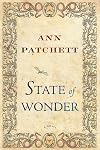
“Never be so focused on what you’re looking for that you overlook the thing you actually find.”
2012 Orange Prize Shortlist
I loved Ann Patchett’s Bel Canto so I was curious to see if I would love this one just as much. I didn’t, but I did enjoy the novel quite a bit.
Right at the beginning of the book we learn that Marina’s colleague Anders has died unexpectedly in Brazil. His body was even buried there and not sent home, much to the dismay of his wife, who asks Marina to go to Brazil for answers. Her boss wants her to go as well to check on the progress of an employee doing research down there, Dr. Swenson.
The novel has a lot of elements to it, and it reminded me a bit of Allegra Goodman’s novel that I loved called Intuition. Both novels are about the lengths scientists will go for their research and the motivations behind those actions. In addition, State of Wonder tackles grief and culture shock, and how the characters did or did not adapt to them.
I listened to the audio version of this, and the narration was excellent. It only took me two days to finish because the story easily swept me away. I loved it right up until the end. My only quibble is that I did not like the ending at all. I had imagined a totally different scenario happening based on my view of how I thought the characters would act. All in all, though, I’m very glad I read the book and am an admirer of Ann Patchett’s work.
2011, 353 pp.
2012 Orange Prize Shortlist
I loved Ann Patchett’s Bel Canto so I was curious to see if I would love this one just as much. I didn’t, but I did enjoy the novel quite a bit.
Right at the beginning of the book we learn that Marina’s colleague Anders has died unexpectedly in Brazil. His body was even buried there and not sent home, much to the dismay of his wife, who asks Marina to go to Brazil for answers. Her boss wants her to go as well to check on the progress of an employee doing research down there, Dr. Swenson.
The novel has a lot of elements to it, and it reminded me a bit of Allegra Goodman’s novel that I loved called Intuition. Both novels are about the lengths scientists will go for their research and the motivations behind those actions. In addition, State of Wonder tackles grief and culture shock, and how the characters did or did not adapt to them.
I listened to the audio version of this, and the narration was excellent. It only took me two days to finish because the story easily swept me away. I loved it right up until the end. My only quibble is that I did not like the ending at all. I had imagined a totally different scenario happening based on my view of how I thought the characters would act. All in all, though, I’m very glad I read the book and am an admirer of Ann Patchett’s work.
2011, 353 pp.
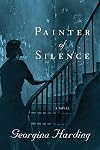
“We’re all so many people, aren’t we, nowadays? So confusing it is, I don’t know how anyone keeps track. There are the people we are inside, then the people we used to be, then there are the people other people think we are.”
2012 Orange Prize Shortlist
Painter of Silence is a book that easily could have won the Orange Prize, and I’m somewhat surprised that it didn’t. I purchased my copy from The Book Depository, as unfortunately, it won’t be published in the States until September.
Set in Romania before and after World War II, it is about two adults who grew up together as children before everything in their world changed. One child from the main house, one child from the servant’s quarters; and one child ‘normal,’ the other deaf-mute. Although Tinu can’t hear or speak, he can communicate by his drawings.
Georgina Harding’s writing is beautiful; I had never even heard of her before this book was shortlisted. That’s one beauty of following the prizes — I always find some gems that I would never have read otherwise. I would definitely read more of her work.
“[She] prayed away her shame and her disappointment. She crossed herself and kissed the cool metal. Her mind went over other thing the Abbot had said. How God might be found in the performance of simple tasks. How he might be find in silence itself.”
2012, 312 pp.
2012 Orange Prize Shortlist
Painter of Silence is a book that easily could have won the Orange Prize, and I’m somewhat surprised that it didn’t. I purchased my copy from The Book Depository, as unfortunately, it won’t be published in the States until September.
Set in Romania before and after World War II, it is about two adults who grew up together as children before everything in their world changed. One child from the main house, one child from the servant’s quarters; and one child ‘normal,’ the other deaf-mute. Although Tinu can’t hear or speak, he can communicate by his drawings.
Georgina Harding’s writing is beautiful; I had never even heard of her before this book was shortlisted. That’s one beauty of following the prizes — I always find some gems that I would never have read otherwise. I would definitely read more of her work.
“[She] prayed away her shame and her disappointment. She crossed herself and kissed the cool metal. Her mind went over other thing the Abbot had said. How God might be found in the performance of simple tasks. How he might be find in silence itself.”
2012, 312 pp.
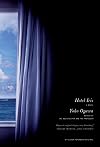
This book has a very different ‘love story’ — one that didn’t appeal to me at all.
Mari is a seventeen year old girl working at the front desk of her mother’s hotel when she meets a middle aged man whose voice and manner intrigue her. As they get to know each other, it leads to a sexual relationship involving SM. It wasn’t extremely graphic, but still just not my cup of tea nonetheless.
I still enjoy Ogawa’s writing style and the translation was great, but I just didn’t like the subject matter so unfortunately I was extremely disappointed. However, I’d still read another Ogawa novel — I just would learn more about the storyline first.
1996, 2010 for the English translation; 164 pp.
Mari is a seventeen year old girl working at the front desk of her mother’s hotel when she meets a middle aged man whose voice and manner intrigue her. As they get to know each other, it leads to a sexual relationship involving SM. It wasn’t extremely graphic, but still just not my cup of tea nonetheless.
I still enjoy Ogawa’s writing style and the translation was great, but I just didn’t like the subject matter so unfortunately I was extremely disappointed. However, I’d still read another Ogawa novel — I just would learn more about the storyline first.
1996, 2010 for the English translation; 164 pp.
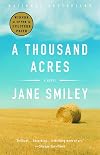
Winner of the Pulitzer Prize, 1992
This was one of the Pulitzers I had been looking forward to reading the most because farming has been in my family for generations. I always appreciate books that depict rural living. Farming is a way of life but it is also a business, and when business and family are combined it can sometimes be a touchy situation. This novel explored that aspect very well. Add to that family secrets, problems with aging, and ‘keeping up appearances’ for the neighbors and you have a very interesting and engaging book.
One of the interesting sidelines of the book for me was the interest in organic farming and the harm of pesticides, etc. to the environment and human health. I am not a fan of the direction that farming is going with GMOs and the use of hormones for livestock. This has trickled down to the local farmer as well, and is not limited anymore to just corporate farms. It’s unfortunate that many family farms have had to resort to these practices to compete; I don’t think they fully realize the risks being done to human health.
I’m not sure I would have chosen this novel for the Pulitzer. To begin with, the plot is somewhat borrowed from Shakespeare’s King Lear. I am of the opinion that the prize should be given to a completely original work. There were also aspects of the relationships among the sisters that were a bit unbelievable for me. Still, I’m glad I read it and deemed it worthy of at least 4 stars.
This was one of the Pulitzers I had been looking forward to reading the most because farming has been in my family for generations. I always appreciate books that depict rural living. Farming is a way of life but it is also a business, and when business and family are combined it can sometimes be a touchy situation. This novel explored that aspect very well. Add to that family secrets, problems with aging, and ‘keeping up appearances’ for the neighbors and you have a very interesting and engaging book.
One of the interesting sidelines of the book for me was the interest in organic farming and the harm of pesticides, etc. to the environment and human health. I am not a fan of the direction that farming is going with GMOs and the use of hormones for livestock. This has trickled down to the local farmer as well, and is not limited anymore to just corporate farms. It’s unfortunate that many family farms have had to resort to these practices to compete; I don’t think they fully realize the risks being done to human health.
I’m not sure I would have chosen this novel for the Pulitzer. To begin with, the plot is somewhat borrowed from Shakespeare’s King Lear. I am of the opinion that the prize should be given to a completely original work. There were also aspects of the relationships among the sisters that were a bit unbelievable for me. Still, I’m glad I read it and deemed it worthy of at least 4 stars.
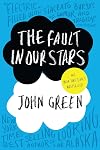
This is my second John Green novel, and while I liked the first one, An Abundance of Katherines, okay, this one really blew me away.
First of all, is this a cancer book, a teenage book, neither, or both? I’m not sure, but I really, really liked it. I read the first two chapters on Amazon for free and couldn’t get enough so I sought it out to finish the story.
I found this book to be a very mature treatment of a very serious topic. I found the characters to be smart, believable, and, in general, wonderful. Philosophical. Romantic. Heartbreaking. All of these adjectives describe this beautiful book. Many book bloggers have reviewed this work more eloquently than I have so I will just give you the links to their reviews.
All I know is that I highly recommend this novel.
2012, 336pp.
First of all, is this a cancer book, a teenage book, neither, or both? I’m not sure, but I really, really liked it. I read the first two chapters on Amazon for free and couldn’t get enough so I sought it out to finish the story.
I found this book to be a very mature treatment of a very serious topic. I found the characters to be smart, believable, and, in general, wonderful. Philosophical. Romantic. Heartbreaking. All of these adjectives describe this beautiful book. Many book bloggers have reviewed this work more eloquently than I have so I will just give you the links to their reviews.
All I know is that I highly recommend this novel.
2012, 336pp.
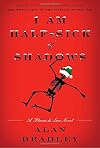
I love the Flavia de Luce series so much, and this book was no exception. I definitely plan on reading the whole series. The audio versions are also fantastic.
This review was written for LibraryThing Early Reviewers.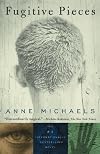
Of course it’s every peasant whose forgiveness must be sought. But the rabbi’s point is even more tyrannical: nothing erases the immoral act. Not forgiveness. Not confession.
And even if an act could be forgiven, no one could bear the responsibility of forgiveness on behalf of the dead. No act of violence is ever resolved. When the one who can forgive can no longer speak, there is only silence.
Fugitive Pieces is a must read for those interested in Jewish fiction or the history of World War II. The book is told in two parts. In the first we have Jakob Beer, rescued as a child from the forces of WWII by a Greek scholar. He struggles mightily with the memories of his parents and sister. They haunt him throughout his life, overshadowing even the good. In the second, we have Ben, the son of two Holocaust survivors. He is much influenced by Jakob’s poetry, which helps him understand his parents’ deep emotional pain, and, in turn, his own. In this regard, I found the second section a bit reminiscent of Maus. In both parts, there is always the question of whether or not the survivors really and truly survived or if they are hopelessly caught in their pasts.
I have a difficult time reading anything about the Holocaust, even if it deals primarily about the aftermath of the survivors. But, I feel it is extremely important for me to do so. I highly recommend this book if you have a similar interest in this topic.
1996, 294 pp.
And even if an act could be forgiven, no one could bear the responsibility of forgiveness on behalf of the dead. No act of violence is ever resolved. When the one who can forgive can no longer speak, there is only silence.
Fugitive Pieces is a must read for those interested in Jewish fiction or the history of World War II. The book is told in two parts. In the first we have Jakob Beer, rescued as a child from the forces of WWII by a Greek scholar. He struggles mightily with the memories of his parents and sister. They haunt him throughout his life, overshadowing even the good. In the second, we have Ben, the son of two Holocaust survivors. He is much influenced by Jakob’s poetry, which helps him understand his parents’ deep emotional pain, and, in turn, his own. In this regard, I found the second section a bit reminiscent of Maus. In both parts, there is always the question of whether or not the survivors really and truly survived or if they are hopelessly caught in their pasts.
I have a difficult time reading anything about the Holocaust, even if it deals primarily about the aftermath of the survivors. But, I feel it is extremely important for me to do so. I highly recommend this book if you have a similar interest in this topic.
1996, 294 pp.
http://www.1morechapter.com/2009/02/10/so-long-a-letter-by-mariama-ba/
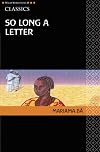
I don’t know where to even start with this book. I highlighted passages on almost every page. So Long a Letter is an insightful look at one woman’s pain and anguish when her husband takes another (much younger) wife. The book actually begins with Ramatoulaye’s widowhood. Her husband has just died and she is writing a letter to a friend about her feelings on her marriage, her husband’s taking of another wife (allowed in Islam), and her husband’s death.
Ramatoulaye, a Senegalese teacher, has 12 children, and her husband has run off (without telling her) and married her oldest daughter’s best friend. Sort of makes for a bad day. This is what her husband’s friends tell her, and her thoughts about it:
‘You can’t resist the imperious laws that demand food and clothing for man. These same laws compel the “male” in other respects. I say “male” to emphasie the bestiality of instincts… You understand….A wife must understand, once and for all, and must forgive; she must not worry herself about “betrayals of the flesh.” The important thing is what there is in the heart; that’s what unites two beings inside.’ (He struck his chest, at the point where the heart lies.)
‘Driven to the limits of my resistance, I satisfy myself with what is within reach. It’s a terrible thing to say. Truth is ugly when one analyses it.’
Thus, to justify himself, he reduced young Nabou to a ‘plate show more of food.’ Thus, for the sake of ‘variety,’ men are unfaithful to their wives.
I was irritated. He was asking me to understand. But to understand what? The supremacy of instinct? The right to betray? The justification of the desire for variety? I couldn’t be an ally to polygamic instincts. What, then was I to understand?
Another strong passage:
I had never known the sordid side of marriage. Don’t get to know! Run from it! When one begins to forgive, there is an avalanche of faults that comes crashing down, and the only thing that remains is to forgive again, to keep on forgiving. Leave, escape from betrayal!
Ramatoulaye doesn’t ‘leave’ her husband; they do not divorce, a fact which surprises her husband and, it is implied, irritates him. He never goes back to her, even though they are still married. As Ramatoulaye adjusts to her new life, she appreciates even more the value of friendship:
Friendship has splendours that love knows not. It grows stronger when crossed, whereas obstacles kill love. Friendship resists time, which wearies and severs couples. It has heights unknown to love.
Ramatoulaye also must raise her children alone (even before her husband’s death), with all the trials and tribulations that entails. But, she is obviously grateful for her children. On motherhood, Ramatoulaye states:
And also, one is a mother in order to understand the inexplicable. One is a mother to lighten the darkness. One is a mother to shield when lightning streaks the night, when thunder shakes the earth, when mud bogs one down. One is a mother in order to love without beginning or end.
I highly recommend this book to all, but especially those interested in women’s issues or in African fiction.
Note: This book is one of the new additions to the 1001 list.
1979 (French), 1981 for the English translation
90 pp. show less
I don’t know where to even start with this book. I highlighted passages on almost every page. So Long a Letter is an insightful look at one woman’s pain and anguish when her husband takes another (much younger) wife. The book actually begins with Ramatoulaye’s widowhood. Her husband has just died and she is writing a letter to a friend about her feelings on her marriage, her husband’s taking of another wife (allowed in Islam), and her husband’s death.
Ramatoulaye, a Senegalese teacher, has 12 children, and her husband has run off (without telling her) and married her oldest daughter’s best friend. Sort of makes for a bad day. This is what her husband’s friends tell her, and her thoughts about it:
‘You can’t resist the imperious laws that demand food and clothing for man. These same laws compel the “male” in other respects. I say “male” to emphasie the bestiality of instincts… You understand….A wife must understand, once and for all, and must forgive; she must not worry herself about “betrayals of the flesh.” The important thing is what there is in the heart; that’s what unites two beings inside.’ (He struck his chest, at the point where the heart lies.)
‘Driven to the limits of my resistance, I satisfy myself with what is within reach. It’s a terrible thing to say. Truth is ugly when one analyses it.’
Thus, to justify himself, he reduced young Nabou to a ‘plate show more of food.’ Thus, for the sake of ‘variety,’ men are unfaithful to their wives.
I was irritated. He was asking me to understand. But to understand what? The supremacy of instinct? The right to betray? The justification of the desire for variety? I couldn’t be an ally to polygamic instincts. What, then was I to understand?
Another strong passage:
I had never known the sordid side of marriage. Don’t get to know! Run from it! When one begins to forgive, there is an avalanche of faults that comes crashing down, and the only thing that remains is to forgive again, to keep on forgiving. Leave, escape from betrayal!
Ramatoulaye doesn’t ‘leave’ her husband; they do not divorce, a fact which surprises her husband and, it is implied, irritates him. He never goes back to her, even though they are still married. As Ramatoulaye adjusts to her new life, she appreciates even more the value of friendship:
Friendship has splendours that love knows not. It grows stronger when crossed, whereas obstacles kill love. Friendship resists time, which wearies and severs couples. It has heights unknown to love.
Ramatoulaye also must raise her children alone (even before her husband’s death), with all the trials and tribulations that entails. But, she is obviously grateful for her children. On motherhood, Ramatoulaye states:
And also, one is a mother in order to understand the inexplicable. One is a mother to lighten the darkness. One is a mother to shield when lightning streaks the night, when thunder shakes the earth, when mud bogs one down. One is a mother in order to love without beginning or end.
I highly recommend this book to all, but especially those interested in women’s issues or in African fiction.
Note: This book is one of the new additions to the 1001 list.
1979 (French), 1981 for the English translation
90 pp. show less

I’m a sci-fi nut, so of course a few years ago I just had to see the movie Solaris with George Clooney. I loved it. Loved it, loved it, loved it. I loved it so much that I not only have watched the film over 20 times, but I also own the soundtrack and the Criterion Collection Russian version. And now, I’ve read the 1961 book written by Polish author Stanislaw Lem.
I did love the book as well, but perhaps only because I love the movies so much. There is a lot more science involved in the novel, which I didn’t mind (and even enjoyed) because I’m sort of a geek that way. It made me appreciate the movies even more and understand more of what the scientists were actually doing in their study of the planet Solaris. I relished the additional background story that the movies didn’t have time to go into.
I’m not going to say much of what the book and/or movie is about, because it would just spoil it too much for those who aren’t familiar with them. Let me just say that it is a pschological romance in a sci-fi setting. The movies do concentrate more on the romance while the book is more sci-fi, but I loved all aspects of both the book and movie versions. I also love the soundtrack by Cliff Martinez in the Clooney movie. I even listened to it while I read the novel!
The movie also introduced me to what is now one of my favorite poems:
And death shall have no dominion.
Dead men naked they shall be one
With the man in the wind and the west moon;
When their bones are picked show more clean and the clean bones gone,
They shall have stars at elbow and foot;
Though they go mad they shall be sane,
Though they sink through the sea they shall rise again;
Though lovers be lost love shall not;
And death shall have no dominion.
And death shall have no dominion.
Under the windings of the sea
They lying long shall not die windily;
Twisting on racks when sinews give way,
Strapped to a wheel, yet they shall not break;
Faith in their hands shall snap in two,
And the unicorn evils run them through;
Split all ends up they shan’t crack;
And death shall have no dominion.
And death shall have no dominion.
No more may gulls cry at their ears
Or waves break loud on the seashores;
Where blew a flower may a flower no more
Lift its head to the blows of the rain;
Though they be mad and dead as nails,
Heads of the characters hammer through daisies;
Break in the sun till the sun breaks down,
And death shall have no dominion.
– Dylan Thomas
1961, 204 pp. show less
I did love the book as well, but perhaps only because I love the movies so much. There is a lot more science involved in the novel, which I didn’t mind (and even enjoyed) because I’m sort of a geek that way. It made me appreciate the movies even more and understand more of what the scientists were actually doing in their study of the planet Solaris. I relished the additional background story that the movies didn’t have time to go into.
I’m not going to say much of what the book and/or movie is about, because it would just spoil it too much for those who aren’t familiar with them. Let me just say that it is a pschological romance in a sci-fi setting. The movies do concentrate more on the romance while the book is more sci-fi, but I loved all aspects of both the book and movie versions. I also love the soundtrack by Cliff Martinez in the Clooney movie. I even listened to it while I read the novel!
The movie also introduced me to what is now one of my favorite poems:
And death shall have no dominion.
Dead men naked they shall be one
With the man in the wind and the west moon;
When their bones are picked show more clean and the clean bones gone,
They shall have stars at elbow and foot;
Though they go mad they shall be sane,
Though they sink through the sea they shall rise again;
Though lovers be lost love shall not;
And death shall have no dominion.
And death shall have no dominion.
Under the windings of the sea
They lying long shall not die windily;
Twisting on racks when sinews give way,
Strapped to a wheel, yet they shall not break;
Faith in their hands shall snap in two,
And the unicorn evils run them through;
Split all ends up they shan’t crack;
And death shall have no dominion.
And death shall have no dominion.
No more may gulls cry at their ears
Or waves break loud on the seashores;
Where blew a flower may a flower no more
Lift its head to the blows of the rain;
Though they be mad and dead as nails,
Heads of the characters hammer through daisies;
Break in the sun till the sun breaks down,
And death shall have no dominion.
– Dylan Thomas
1961, 204 pp. show less
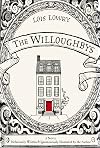
I’m beginning to think that Lois Lowry can do no wrong. This is the sixth book of hers that I’ve read, and I’ve enjoyed every single one, including The Willoughbys. While an excellent children’s book, it is also a fun book for adults to read as it pokes fun at some of the cliches of children’s literature, while still being very entertaining for both kids and adults.
The Willoughby children have parents who want to get rid of them, but the kids really don’t want their parents, either. A nice nanny, a sweets manufacturer, and the four Willoughby children are the main cast.
I highly recommend it. It’s a great story for kids, but it’s also entertaining for those adults who have read and enjoyed the best of children’s literature and who can appreciate a little tongue-in-cheek fun.
2008, 176 pages
The Willoughby children have parents who want to get rid of them, but the kids really don’t want their parents, either. A nice nanny, a sweets manufacturer, and the four Willoughby children are the main cast.
I highly recommend it. It’s a great story for kids, but it’s also entertaining for those adults who have read and enjoyed the best of children’s literature and who can appreciate a little tongue-in-cheek fun.
2008, 176 pages
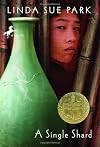
A Single Shard by Linda Sue Park won the Newbery Medal in 2002. It is a tale of duty, loyalty, and perseverance. The book is set in 12th century Korea.
Tree-ear, an orphan, works for a highly esteemed potter, Potter Min. Although Tree-ear would dearly love to be Potter Min’s apprentice, what he really does is just ‘the grunt work.’ Potter Min is unwiling to accept Tree-ear as his apprentice because it is traditionally passed down only to sons, and Min’s son has died. When Tree-ear is sent for a long journey to the Emperor’s palace to demonstrate Min’s work, his character and perseverance is tested.
This book is excellent for demonstrating character qualities to children. Recommended.
2001, 192 pp.
Tree-ear, an orphan, works for a highly esteemed potter, Potter Min. Although Tree-ear would dearly love to be Potter Min’s apprentice, what he really does is just ‘the grunt work.’ Potter Min is unwiling to accept Tree-ear as his apprentice because it is traditionally passed down only to sons, and Min’s son has died. When Tree-ear is sent for a long journey to the Emperor’s palace to demonstrate Min’s work, his character and perseverance is tested.
This book is excellent for demonstrating character qualities to children. Recommended.
2001, 192 pp.
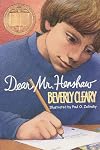
Dear Mr. Henshaw is definitely one of my favorite Newbery titles. I really, really enjoyed it. I listened to it on audio with my 15 year old son, and though he is much older than the target audience, he very much enjoyed it as well.
Leigh is a boy whose teacher gives him the assignment of writing to a favorite author. Leigh does and asks Mr. Henshaw some questions required of the assignment. When he gets a letter in response, Mr. Henshaw asks him a set of questions as well. Leigh continues to write Mr. Henshaw and they develop a correspondence over the years. Leigh wants to become a writer, and he asks Mr. Henshaw for writing advice but also tells him of some deeply personal events occurring at home, such as his parents’ divorce.
This is an excellent book that can definitely be appreciated by both children and adults, especially if they are struggling with a major life event.
Highly recommended.
1983, 144 pp.
Leigh is a boy whose teacher gives him the assignment of writing to a favorite author. Leigh does and asks Mr. Henshaw some questions required of the assignment. When he gets a letter in response, Mr. Henshaw asks him a set of questions as well. Leigh continues to write Mr. Henshaw and they develop a correspondence over the years. Leigh wants to become a writer, and he asks Mr. Henshaw for writing advice but also tells him of some deeply personal events occurring at home, such as his parents’ divorce.
This is an excellent book that can definitely be appreciated by both children and adults, especially if they are struggling with a major life event.
Highly recommended.
1983, 144 pp.
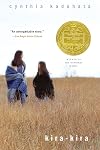
Kira-Kira by Cynthia Kadohata was the 2005 Newbery winner. I did like this book, but not as much as I wanted to. I couldn’t really put my finger on why until I thought that maybe it was because there felt like just a little too much going on in the book.
Katie and her sister Lynn spent their first few years in Iowa where their parents ran an Asian market. The family ends up moving to Georgia where their uncle says he can get their parents jobs working at a chicken hatchery. The two work extremely hard with very little benefit, and the workers start thinking about a union. Meanwhile, Lynn and Katie struggle to fit in at school and then Lynn becomes sick with anemia and perhaps something worse.
While I was interested in the story, all of the book’s themes put together were perhaps a bit too much. It was a good book, but I was hoping for something a little more (or less as the case may be).
2004, 272 pp.
Katie and her sister Lynn spent their first few years in Iowa where their parents ran an Asian market. The family ends up moving to Georgia where their uncle says he can get their parents jobs working at a chicken hatchery. The two work extremely hard with very little benefit, and the workers start thinking about a union. Meanwhile, Lynn and Katie struggle to fit in at school and then Lynn becomes sick with anemia and perhaps something worse.
While I was interested in the story, all of the book’s themes put together were perhaps a bit too much. It was a good book, but I was hoping for something a little more (or less as the case may be).
2004, 272 pp.
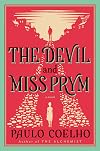
Most people either love Paulo Coelho’s writing or absolutely hate it. I haven’t seen many who have straddled the fence on this author. I’m in the former category, though I know quite a few people who don’t care for him at all. While some believe his writing is too simplistic, I, on the other hand, sometimes crave simplicity! I do quite a bit of heavy reading (though not recently), and it’s nice sometimes to curl up with one of Coelho’s books and know that I will probably read it in one sitting. I also believe his ’simple’ books have a much deeper meaning to them, and this story is also indicative of that.
One day a stranger comes to Viscos, an idyllic mountain town. The stranger has a plan to tempt the villagers with some gold. They only have to do one thing to get the gold, but that act is contrary to the basic character of the town’s residents. There hasn’t been any trouble in the village for years, and when Miss Prym, the local barmaid, is told of the plan, she is confident the villagers will be able to withstand the temptation.
The story raises the question of whether humans are generally good or generally evil, and also why God, if there is one, would allow evil things to happen to good people.
Highly recommended.
2000, 205 pp.
One day a stranger comes to Viscos, an idyllic mountain town. The stranger has a plan to tempt the villagers with some gold. They only have to do one thing to get the gold, but that act is contrary to the basic character of the town’s residents. There hasn’t been any trouble in the village for years, and when Miss Prym, the local barmaid, is told of the plan, she is confident the villagers will be able to withstand the temptation.
The story raises the question of whether humans are generally good or generally evil, and also why God, if there is one, would allow evil things to happen to good people.
Highly recommended.
2000, 205 pp.
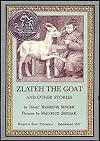
This is a wonderful book for children. Not only was it a Newbery Honor Book, it was also written by Nobel laureate Isaac Bashevis Singer and illustrated by the wonderful Maurice Sendak. With stories of fools, mixed-up feet, devils, and pet goats, this book can be enjoyed by both children and adults.
My favorite was definitely the title story, “Zlateh the Goat.” Zlateh has been good to Aaron’s family, but it is now Hanukkah and the family needs money for basic necessities. Aaron grudgingly leads her to the butcher, only to be caught in a snowstorm. The snow is so bad that no one can even search for the pair. Will Aaron be reunited with his family in time for Hanukkah? Will he even survive the storm?
Recommended for families with children and adults with a Jewish interest.
1966, 90 pp.
My favorite was definitely the title story, “Zlateh the Goat.” Zlateh has been good to Aaron’s family, but it is now Hanukkah and the family needs money for basic necessities. Aaron grudgingly leads her to the butcher, only to be caught in a snowstorm. The snow is so bad that no one can even search for the pair. Will Aaron be reunited with his family in time for Hanukkah? Will he even survive the storm?
Recommended for families with children and adults with a Jewish interest.
1966, 90 pp.

Summer of the Swans by Betsy Byars won the Newbery Medal in 1971. The title of the book refers to a little boy’s fascination with the birds. Charlie (who is mentally handicapped) and his sister Sara live with their Aunt Willie. The story begins with Sara’s dissatisfaction with herself and her life, but when Charlie goes missing, she puts all that behind her to help find her brother.
While I appreciated Sara’s growth in the book and the tenderness between Sara and Charlie, it definitely isn’t one of the stronger Newberys that I’ve read. It is positive in its illustration that family relationships are more important than selfish concerns, but the book just didn’t grab me. To be fair, my conclusion could be based on the mediocre performance of the audio narration, which I didn’t at all care for.
1970, 144 pp.
While I appreciated Sara’s growth in the book and the tenderness between Sara and Charlie, it definitely isn’t one of the stronger Newberys that I’ve read. It is positive in its illustration that family relationships are more important than selfish concerns, but the book just didn’t grab me. To be fair, my conclusion could be based on the mediocre performance of the audio narration, which I didn’t at all care for.
1970, 144 pp.
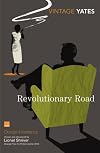
Some have said that Richard Yates’ books is an indictment of marriage, suburbia, or both. Yates himself said in an interview that it is actually more about aborted dreams.
Frank and April are young and successful suburbanites with two children. Well, successful to others, but not to themselves. Frank hates his job and finds it excruciatingly boring. April hates the suburbs and finds her life as a wife and mother excruciatingly boring. When the couple (mostly April) devise a plan to get out of their present circumstances, they seem to relax and enjoy each other again — until a few glitches come their way.
My sisters and I read this together for our bookclub, and I have also seen the movie so it was interesting to compare the two. While the book was mostly from Frank’s and their neighbor Shep’s points of view, the movie had more of April and Mrs. Givings’ perspective. Also the endings were a bit different.
I found the book to be well-written but depressing. It’s definitely thought-provoking.
1961, 355 pp.
Frank and April are young and successful suburbanites with two children. Well, successful to others, but not to themselves. Frank hates his job and finds it excruciatingly boring. April hates the suburbs and finds her life as a wife and mother excruciatingly boring. When the couple (mostly April) devise a plan to get out of their present circumstances, they seem to relax and enjoy each other again — until a few glitches come their way.
My sisters and I read this together for our bookclub, and I have also seen the movie so it was interesting to compare the two. While the book was mostly from Frank’s and their neighbor Shep’s points of view, the movie had more of April and Mrs. Givings’ perspective. Also the endings were a bit different.
I found the book to be well-written but depressing. It’s definitely thought-provoking.
1961, 355 pp.
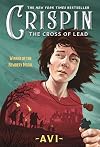
Avi’s Newbery-winning book of an orphan boy known at first only as ‘Asta’s son’ is a familiar one, but it is also entertaining. When his mother dies, ‘Asta’s son’ soon finds himself on the run and is forced to flee the only town and home he has ever known. Leaving with only the clothes on his back and his mother’s lead cross, he does find some people who are willing to help him, but are they truly friendly, or do they only want to find out who he really is and why he’s being tracked?
This book contained adventure, mystery, and history, and I really enjoyed it. Both of my sons read the book a few years ago, and I know they really liked it as well.
This book contained adventure, mystery, and history, and I really enjoyed it. Both of my sons read the book a few years ago, and I know they really liked it as well.
From a fearful height, a wandering light,
but does a star glitter like this, crying?
Transparent star, wandering light
your brother, Petropolis, is dying.
From a fearful height, earthly dreams are alight,
and a green star is crying.
Oh star, if you are the brother of water and light,
your brother, Petropolis, is dying.
A monstrous ship, from a fearful height,
is rushing on, spreading its wings, flying.
Green star, in beautiful poverty,
your brother, Petropolis, is dying.
Transparent spring has broken, above the black Neva’s hiss
the wax of immortality is liquefying.
Oh if you are star – your city, Petropolis,
your brother, Petropolis, is dying.
–Osip Mandelstam
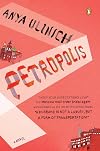
Sasha Goldberg has a hard life in Asbestos 2, a dying town in Siberia. Her father has either disappeared or left his family, her mother is very high-strung and a bit crazy, and her community is almost completely in shambles. After securing a coveted position in a prestigious art school, Sasha, too, leaves it all to become a mail order bride to an American. In America, she learns English, lives in Arizona, Chicago, and New York, and tries to find her father. In doing all this, she is also trying to find herself and come to terms with her past and her homeland.
I could say so much more about the basic plot of the book, but I always hesitate to give away too many spoilers. Sasha was a very unique character, and I enjoyed reading about her and seeing her development from a young girl to a young woman. The imagery in the book was show more also done very well. The descriptions of the poverty in Asbestos 2 were especially convincing, and there is a scene at the end of the book that I found particularly chilling (but fascinating). In fact, the last few pages of the book impressed me enough to raise my rating from a 4 to a 4.5. I highly recommend this book to those who are interested in Russian history and/or the immigrant experience. show less
but does a star glitter like this, crying?
Transparent star, wandering light
your brother, Petropolis, is dying.
From a fearful height, earthly dreams are alight,
and a green star is crying.
Oh star, if you are the brother of water and light,
your brother, Petropolis, is dying.
A monstrous ship, from a fearful height,
is rushing on, spreading its wings, flying.
Green star, in beautiful poverty,
your brother, Petropolis, is dying.
Transparent spring has broken, above the black Neva’s hiss
the wax of immortality is liquefying.
Oh if you are star – your city, Petropolis,
your brother, Petropolis, is dying.
–Osip Mandelstam
Sasha Goldberg has a hard life in Asbestos 2, a dying town in Siberia. Her father has either disappeared or left his family, her mother is very high-strung and a bit crazy, and her community is almost completely in shambles. After securing a coveted position in a prestigious art school, Sasha, too, leaves it all to become a mail order bride to an American. In America, she learns English, lives in Arizona, Chicago, and New York, and tries to find her father. In doing all this, she is also trying to find herself and come to terms with her past and her homeland.
I could say so much more about the basic plot of the book, but I always hesitate to give away too many spoilers. Sasha was a very unique character, and I enjoyed reading about her and seeing her development from a young girl to a young woman. The imagery in the book was show more also done very well. The descriptions of the poverty in Asbestos 2 were especially convincing, and there is a scene at the end of the book that I found particularly chilling (but fascinating). In fact, the last few pages of the book impressed me enough to raise my rating from a 4 to a 4.5. I highly recommend this book to those who are interested in Russian history and/or the immigrant experience. show less
http://www.1morechapter.com/2009/04/22/natasha-and-other-stories/
“Because who wins if a Jew doesn’t go to synagogue?
I’ll tell you who: Hitler.” — p. 133
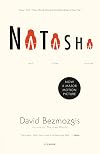
This collection of stories by David Bezmozgis is about a Latvian Jewish family who emigrate to Toronto, Canada. It was a NYT Notable Book in 2004.
Mark is the only child of Roman and Bella Berman. All seven stories in the collection feature Mark in his growing up years. First, I’ll give a brief synopsis of each story and then my thoughts on the collection as a whole.
“Tapka” — It’s 1980 and Mark has been in Canada for 3 weeks. He’s in the first grade and hangs out with his cousin Jana. Some elderly neighbors have a dog that they idolize, and they begin to trust Mark and Jana to take care of it.
“Roman Berman, Massage Therapist” – Mark’s father works at a chocolate factory but is also studying to become qualified as a massage therapist. He hopes an important doctor in the neighborhood will be a source for referrals.
“The Second Strongest Man” — Sergei, a very important person from the Bermans’ past, comes to Canada for a wrestling tournament.
“An Animal to the Memory” — Mark begins to have trouble with his classmates and the principal, particularly on Holocaust Day.
“Natasha” — Mark and Natasha, the daughter of his uncle’s wife, become close friends.
“Choynski” — Mark deals with the deaths of two people who are close to him.
“Minyan” — Mark’s grandfather looks for a show more place to live.
This is one of the best short story collections I’ve read. All seven stories were unique, but they all fit together nicely to explore Mark’s experiences. Although I thought all of the stories were extremely good, I thought “The Second Strongest Man” and “An Animal to the Memory” were the strongest. If an author can make me interested in a story about wrestling, he is very good indeed. I could really feel the menace, the frustration, and the envy of the characters come through the pages. And in “An Animal to the Memory,” the author’s depiction of Mark’s turmoil as he comes to terms with his Jewish heritage was very well done.
Highly recommended, especially for those with an interest in Jewish, Soviet/Russian, or Canadian literature.
2004, 147 pp. show less
“Because who wins if a Jew doesn’t go to synagogue?
I’ll tell you who: Hitler.” — p. 133
This collection of stories by David Bezmozgis is about a Latvian Jewish family who emigrate to Toronto, Canada. It was a NYT Notable Book in 2004.
Mark is the only child of Roman and Bella Berman. All seven stories in the collection feature Mark in his growing up years. First, I’ll give a brief synopsis of each story and then my thoughts on the collection as a whole.
“Tapka” — It’s 1980 and Mark has been in Canada for 3 weeks. He’s in the first grade and hangs out with his cousin Jana. Some elderly neighbors have a dog that they idolize, and they begin to trust Mark and Jana to take care of it.
“Roman Berman, Massage Therapist” – Mark’s father works at a chocolate factory but is also studying to become qualified as a massage therapist. He hopes an important doctor in the neighborhood will be a source for referrals.
“The Second Strongest Man” — Sergei, a very important person from the Bermans’ past, comes to Canada for a wrestling tournament.
“An Animal to the Memory” — Mark begins to have trouble with his classmates and the principal, particularly on Holocaust Day.
“Natasha” — Mark and Natasha, the daughter of his uncle’s wife, become close friends.
“Choynski” — Mark deals with the deaths of two people who are close to him.
“Minyan” — Mark’s grandfather looks for a show more place to live.
This is one of the best short story collections I’ve read. All seven stories were unique, but they all fit together nicely to explore Mark’s experiences. Although I thought all of the stories were extremely good, I thought “The Second Strongest Man” and “An Animal to the Memory” were the strongest. If an author can make me interested in a story about wrestling, he is very good indeed. I could really feel the menace, the frustration, and the envy of the characters come through the pages. And in “An Animal to the Memory,” the author’s depiction of Mark’s turmoil as he comes to terms with his Jewish heritage was very well done.
Highly recommended, especially for those with an interest in Jewish, Soviet/Russian, or Canadian literature.
2004, 147 pp. show less
Now the only friendship I still had, however unexpected, had been upended. I was tired of being adrift. Tired of romance and attraction and all the complications and ruination it entailed. Tired of trying to find some pattern, divine or not, in what had happened, what was happening to me. Most of all, though, I was tired of Jane Austen ruining my life. – p.146
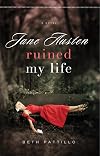
Emma Douglas has just found her husband cheating on her, and she blames Jane Austen’s novels (as well as her parents’ own happy marriage) for leading her to believe that there are always happy endings. Devastated by her personal and professional life, she travels to England in search of Jane Austen’s missing letters, where, coincidentally, she also bumps into her old college friend Adam.
I really enjoyed Beth Pattillo’s ‘what-if’s’ concerning Austen’s personal life and letters, particularly her take on which of Austen’s books most closely mirrored the author’s (imagined) life. I was also fascinated by Emma’s treks around Austen’s old haunts and the real personal history of the author. Mixing fact and fiction, this book is a fun and quick read that most Austen fans will appreciate.
2009, 270 pp.
Emma Douglas has just found her husband cheating on her, and she blames Jane Austen’s novels (as well as her parents’ own happy marriage) for leading her to believe that there are always happy endings. Devastated by her personal and professional life, she travels to England in search of Jane Austen’s missing letters, where, coincidentally, she also bumps into her old college friend Adam.
I really enjoyed Beth Pattillo’s ‘what-if’s’ concerning Austen’s personal life and letters, particularly her take on which of Austen’s books most closely mirrored the author’s (imagined) life. I was also fascinated by Emma’s treks around Austen’s old haunts and the real personal history of the author. Mixing fact and fiction, this book is a fun and quick read that most Austen fans will appreciate.
2009, 270 pp.