Wow. This is a pretty terrible book; maybe I've missed something, because nearly all the other reviewers seem to like it, but I thought it was extremely bad. All the characters seem to live in soap-opera world, where everything is big and overblown (the American couple are extremely LOUD and OBNOXIOUS and don't fit into the plot at all, everyone - EVERYONE - has DEEP DARK secrets that come to light at the overblown climax, and the confession at the end is unbearably written with the most inane, fictional, could-not-be-farther-from-actual-reality "crazy person" dialogue). It was like an episode of scooby doo, with more gore and tortured characters. George managed to shoe in a really remarkable number of tragic backstories, which for a novel with a relatively short character list, is impressive. But by impressive I mean unbearably dull.
Why is Havers so unprofessionally angry and vindictive all the time? Because of her sad personal life? Because she actually comes off as a total psycho, with motives that don't match the petty ferocity of her words. Why is Lynley so perfect, but just tragic enough to be the quintessential broken hero? Does Elizabeth George want to jump him? Why is the dialogue so convoluted? Why do none of the characters operate like real people? Why is there so much melodrama? Why was this book published? Why did I finish reading it???
Why is Havers so unprofessionally angry and vindictive all the time? Because of her sad personal life? Because she actually comes off as a total psycho, with motives that don't match the petty ferocity of her words. Why is Lynley so perfect, but just tragic enough to be the quintessential broken hero? Does Elizabeth George want to jump him? Why is the dialogue so convoluted? Why do none of the characters operate like real people? Why is there so much melodrama? Why was this book published? Why did I finish reading it???
I just love, love, love Tim Gunn. He seems like such a sweet, flawless man, and this book is both endlessly encouraging but with a definite prod to get off your butt and "make it work!".
Kris Carr's enthusiasm and love for her readers is certainly charming, and her vivacious personality really jumps off the page. Although I feel like a lot of the science is suspect - for example, the alkaline/acid health craze that she advocates is pretty much 100% bull - the overall theme of eat more veggies to boost your health is obviously spot on. As a vegan, the commentary on the cruelty of factory farming and slaughter didn't phase me, as I think it's something that should really be pointed out to anyone who eats meat (know where your food comes from!). I also enjoyed her holistic approach to health, peppering her 21-day cleanse with mantras, reminders to meditate and exercise, and other full-body aspects that most diet books don't touch on.

A short, enjoyable read. Most of the information is pretty typical stuff - care for your nails, stand up straight, dress for your body type - but narrated in a very likeable and no-nonsense way.
I loved it! I absolutely could not put it down - the Flavia books have been getting better and better, and I just adore every one of them. Of course, like all the Flavia de Luce books, the mystery isn't completely convincing, but the world-building and characterizations are absolutely superb. I adore Flavia and the ending - the ENDING! - god I cannot wait for the next installment to come out! now now now now now!!!
I read The Gathering in the same way a person might read a book of devotionals - slowly, chapter by chapter, over a period of several months. It's a very meditative book, entirely put together from internal musings and slow burning wellsprings of emotion that manage to flood the shores of the narrative every cycle. The plodding pace at which I read it seemed perfect for the book's style; it opened it up to help it become an immersive experience in grief. I was able to pour over it rather than let it pour over me, and it was deeply evocative because of that distinction.
The Last Continent is - like all of Terry Pratchett's books - rich in humorous observations and wisecracking footnotes. However, it's also remarkably thin on plot. I feel like it was put together as more of a way to work in as many Australian references as possible, and then before the print run someone realized that nothing really happened in the whole book and they slapped an ending on and called it a day. It's still a good read, of course; Pratchett could easily make the phone book into a laugh out loud knee-slapper and I'd enjoy every second of reading it, but it doesn't flow as easily as his more well-structured works.
I don't see how a book geared towards the "Young, Fabulous & Broke" can be so painfully outddated. I mean, it was written in this millenium, but it's hard to tell considering some of the advice. "Cut your landline and use your cell phone to save money!" says Suze. "If you can't seem to keep your checkbook balanced, go open a brand new account at your bank and deposit a check in it - that way you know exactly how much you have and can start over new!"
Suze. A word. I don't know a single person under the age of 30 who *owns* a landline. Literally not one person. And I've never balanced a checkbook in my life but that's because I've been using online banking since I was sixteen. If I want to know exactly how much (or little) money is in my account, I can find out in five seconds (with a good wifi connection).
Some of the advice is solid, especially the way she breaks down investment strategies and explains all the factors that go into a FICO score. But the rest of it is clearly geared towards the painfully stupid ("Help, I cosigned on a friend's credit card and now they're not paying their bill!") and the old. For the Young, Fabulous & Broke - sorry, but this book is not a good fit for you.
Suze. A word. I don't know a single person under the age of 30 who *owns* a landline. Literally not one person. And I've never balanced a checkbook in my life but that's because I've been using online banking since I was sixteen. If I want to know exactly how much (or little) money is in my account, I can find out in five seconds (with a good wifi connection).
Some of the advice is solid, especially the way she breaks down investment strategies and explains all the factors that go into a FICO score. But the rest of it is clearly geared towards the painfully stupid ("Help, I cosigned on a friend's credit card and now they're not paying their bill!") and the old. For the Young, Fabulous & Broke - sorry, but this book is not a good fit for you.
This collection is excerpts from blog posts made during 2012, mostly by women. I found that, as a single, alternative 20-something, I really couldn't relate to the majority of the essays in the book. Of course, there were several that I found very poignant and touching, but probably a solid 1/3-1/2 of the book was made up of American stay at home moms blogging about motherhood. I think I would have enjoyed it more had there been a wider range of experiences and stories.

It's certainly dated, but still a fun read - and some of the things she advocates are still shockingly modern! Her joie de vivre is infectious, and she's such a fun narrator that you can't help but go along for the ride. Having never read it before, the content really surprised me coming from the period it was written in - I see why it was so popular and vilified, and as a liberated woman of 2012 I have to say - hats off to Helen! This book is essential to any modern feminist; I mean, it's always good to go back to your roots so you can track your progress.
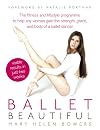
The exercises in this book are challenging. One of the things I like about reading the workouts instead of watching them is that I can go through them at my own pace, making them as challenging as needed. Unfortunately, this means that the quick "15-minute blasts" usually end up taking me a full hour, but that will probably change as I get better at them! You really feel them afterwards, as well, as they target all the small muscles that don't get used as much in everyday life.
You know that annoying person who left the country once and now likes to preface every story with "Well, when I lived in London/Greece/an ashram in Bali..." That's basically what this entire book is. It might as well be titled "Why The French Are Better Than You: By Someone Who Lived There, Once, For A Brief Period of Time Like Ten Years Ago".
If you like yuppie, boring suburban people: wonderful, this is your book. If you think people who dispense advice like "get weekly facials" and like to inject a little French culture into everyday life by putting "Le chic" in front of every noun are full of it, then you should probably steer clear.
On the bright side: it was very easy to read.
If you like yuppie, boring suburban people: wonderful, this is your book. If you think people who dispense advice like "get weekly facials" and like to inject a little French culture into everyday life by putting "Le chic" in front of every noun are full of it, then you should probably steer clear.
On the bright side: it was very easy to read.
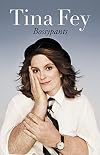
I loved this memoir. Tina Fey is hilarious, of course, but she's also painfully honest at times. And I always appreciate a woman who can stand up to the male industry leaders and tell them to go "shit in [their] hat". Bossypants is such a great read, and hysterically funny while also being super truthful. I thought one of my favorite moments is when young Tina realized that she used her gay friends like accessories, instead of having a reciprocal relationship with them. She's incisive and yet positive, and I really enjoyed her behind-the-scenes commentary on some of the most famous moments in SNL and 30 Rock. I highly, highly recommend this book to everyone in the whole world.
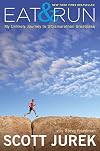
Eat & Run is ultrarunner Scott Jurek's running autobiography. He goes into detail about his childhood, how he got into running and developed skills as a runner, to his current status as one of ultrarunning's great runners. The book is also interspersed with recipes, as food is a huge part of his success to him, as well as his views on meditation and yoga interspersed with buddhist thoughts and values.

Like another reviewer said, the characters are all rather two-dimensional, but it is a fun romp through fantastical YA fiction!
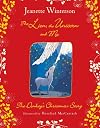
Short and sweet - the birth of Jesus, from the donkey's point of view. A very charming Christmas tale, for young and old alike.
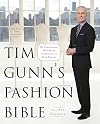
Bought it two days ago and devoured it! Tim Gunn's Fashion Bible isn't so much how to wear clothes (although it does have that), but also why we wear clothes - what the precursors are to our modern style, how styles develop and fall out of fashion, and why we dress the way we do as well as how we should dress. Honestly, I didn't like it as much as Gunn's Golden Rules simply because fashion history doesn't enthrall me the way it obviously does Gunn, but I do love his charm and wit and loved the book.
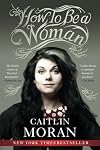
I really, really enjoyed this book! It helped me clarify a lot of my own ideas on sexism today (like the handy rule of thumb, "Are the men doing this? No? Then this is some sexist bullshit.") I consider myself to be a tried and true feminist, calling out sexism on all fronts, and it's quite hard sometimes because I end up coming off a lot of times as the overly-PC, no-fun tattle tale or something. I really appreciate that Caitlin has made modern feminism seem, well, cool.
The only issues I had with the book are that it is very cis-heavy. There's a lot of "Do you have a vagina? Then you're a woman! Congrats!" which comes off pretty isolating to our trans sisters. Ah well, no one's perfect.
The only issues I had with the book are that it is very cis-heavy. There's a lot of "Do you have a vagina? Then you're a woman! Congrats!" which comes off pretty isolating to our trans sisters. Ah well, no one's perfect.
How to Live: Or A Life of Montaigne in One Question and Twenty Attempts at an Answer by Sarah Bakewell
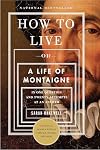
Though I found this book at times tedious, it is a fantastic overview of Montaigne's life and philosophies. The writer is so devotedly engaged to her task of bringing Montaigne to life, and I think she accomplishes it magnificently. She really captures the historical background and biography that is necessary to a deeper understanding of Essays, and she brings such passion and delight for her subject that it is very enjoyable.
This book is a deeply-wrought, personal look into Jeanette Winterson's life, upbringing and present. She details her relationship with her adopted mother, the formidable Mrs. Winterson, her upbringing as a working-class girl in the 70s, being an adopted child and her eventual escape and release through literature and poetry. It is just as elegantly and passionately wrought as any of Winterson's fictions, but with the heartbreaking thread of truth running through it. It is terrible and magnificent, and a highly-recommended read.
Such a charming book! It was exactly what I needed to read. The main character, Juliet, is a woman after my own heart. I'd like to be her when I grow up. The story evolves so naturally, reading the letters you feel like you already know everyone in the book - and there are so many that I want to read more about! This is a book I felt could easily have been 3x the size and I would have been satisfied. Just a darling read. And, despite the adjectives I've used to describe it, it isn't at all saccharine. Everyone in the book has their heads pretty firmly on their shoulders, and there were a more than a few moments I wished I wasn't reading this book on public transit because I got embarrassingly teary-eyed.
The Surgeon Of Crowthorne - A Tale Of Murder, Madness and The Oxford English Dictionary by Simon Winchester
Winchester really has a way with words. That way, however, is dramatic. Every potential moment of drama is heightened to its fullest, to the point where I occasionally felt like the author was standing behind me NARRATING EVERYTHING WITH A BIG, BOOMING VOICE. Maybe with a flashlight to shine on his face for the creepy points. I mean, I get it, it's a book about the creation of the dictionary, it probably gets dry quickly, but there were a couple moments I had to put the book down and giggle at the absurdity of it all. I did get used to the style eventually, and found the information interesting and readable, but I still think the level of pathos present in the book is far above what it requires.

Once I got past the slow start to the book, I found it a very easy read. But there were definitely a few things that bothered me beyond belief:
1. Mikael - Mikael is an absolute gary-stu. The whole time I was reading about how he's just such a nice, honest guy, how everyone thinks he's still a stand-up character even though he's been convicted of slander, how every woman in the book just throws themselves at his lovable feet, I couldn't help but wonder how much Larsson saw himself cast in the role of Blomkvist. For the most part I found him mildly likeable to borderline unbearable.
2. Apparently Lisbeth is based on a real person (also named Lisbeth) Larsson knew in school, who was gang-raped by his friends while he stood by and couldn't help. The fact that he translated that experience into some sort of stand in character who can take revenge and thereby relieve his own guilt is absolutely abhorrent. How dare someone take another person's tragedy from them, and turn it into a plot point to absolve their guilt. It isn't his tragedy to claim, and the fact that he did I find repulsive.
3. The whole book is built around bad things happening to women (hence the title, The Men Who Hate Women). As a woman, I don't really feel the need to have a man tell me how bad things are for me. Thanks buddy, but please take your well-meaning but ultimately offensive mansplaining elsewhere.
4. Honestly, the plot is just boring. Mild finance drama followed by drawn-out family drama that honestly show more wasn't that interesting, and all of it is explained rather than experienced. It's mostly Character A telling Character X about something that happened, then Character B telling Character X about something that happened, and so on and so forth, while couched in some of the most boring financial revenge drama this side of an 80's movie plot. Ugh. show less
1. Mikael - Mikael is an absolute gary-stu. The whole time I was reading about how he's just such a nice, honest guy, how everyone thinks he's still a stand-up character even though he's been convicted of slander, how every woman in the book just throws themselves at his lovable feet, I couldn't help but wonder how much Larsson saw himself cast in the role of Blomkvist. For the most part I found him mildly likeable to borderline unbearable.
2. Apparently Lisbeth is based on a real person (also named Lisbeth) Larsson knew in school, who was gang-raped by his friends while he stood by and couldn't help. The fact that he translated that experience into some sort of stand in character who can take revenge and thereby relieve his own guilt is absolutely abhorrent. How dare someone take another person's tragedy from them, and turn it into a plot point to absolve their guilt. It isn't his tragedy to claim, and the fact that he did I find repulsive.
3. The whole book is built around bad things happening to women (hence the title, The Men Who Hate Women). As a woman, I don't really feel the need to have a man tell me how bad things are for me. Thanks buddy, but please take your well-meaning but ultimately offensive mansplaining elsewhere.
4. Honestly, the plot is just boring. Mild finance drama followed by drawn-out family drama that honestly show more wasn't that interesting, and all of it is explained rather than experienced. It's mostly Character A telling Character X about something that happened, then Character B telling Character X about something that happened, and so on and so forth, while couched in some of the most boring financial revenge drama this side of an 80's movie plot. Ugh. show less
Convict Conditioning 2: Advanced Prison Training Tactics for Muscle Gain, Fat Loss, and Bulletproof Joints by Paul Wade

Convict Conditioning 2 builds on the training in Convict Conditioning; there aren't any additional big, full-body moves, but it covers the technical and detail movements like improving grip strength and working around injuries. If you're starting out, Convict Conditioning is the best book for you; if you've read CC already and you're interested in more, pick up CC2.
Convict Conditioning: How to Bust Free of All Weakness Using the Lost Secrets of Supreme Survival Strength by Paul Wade

Convict Conditioning details how to get started and how to improve in bodyweight training. Anyone from a beginner to an expert will be challenged by the book, which includes everything from wall-pushups to one armed handstand pushups and bridges. It was a little too 'he-man' for my taste, but other than that it has a lot of good training advice.
Joan Didion is one of my absolute favorite writers; her precise clarity is spellbinding, and so many of these essays had such a transportive power I felt like I was living in California, and knew exactly what she was talking about as she described it. My favorite essay, as a southern ex-pat who now finds herself living in New York, was one of the final essays describing her transient existence on the East Coast - that one is actually familiar to me, and it was relieving to see other people felt the same way.
Sex and Punishment details human sexual escapades and society's laws governing them from earliest recorded history to near-present day, challenging thoughts of what 'traditional' virtues are, what social taboos are inviolable across human history (hint: none of them), and how our past's views of sex have influenced our present conceptions of it. The book takes a decidedly western tack, focusing on Europe and the New World for the majority of the book outside of Mediterranean prehistory. Overall, I thought it was an engaging read, and found it hard to put down; and reading about the tragedies and occasional hilarity played out by my forbears made me both grateful to exist in this century and more aware of how history plays a role in my own thinking without my even realizing it.
Just a heartbreaking book. Didion has written so much about loss, with The Year of Magical Thinking (following the death of her husband) and now Blue Nights, about the death of her only daughter. It's a reflection on other forms of loss, however, the poignantly visceral pain she feels towards her daughter's death is also contemplated alongside her own realizations of old age and the truth of her own mortality. I had to put the book down a couple of times to cry; no mother should ever lose a daughter, and it's clear from this text that though the book may have been therapeutic, Didion has been so fully broken by the events she will never fully heal.
It's a good book if you've got a short attention span and need things repeated several times over and over; on the whole, it's a useful book to read if you're prone to perfectionism, but I think the points in it could have been easily covered in a book half the size.

I found myself enjoying this novel far more than I thought I would - from the cover and description, I assumed it might be some soppy story about how pets enrich our lives. Instead, it was a brilliant collection of funny, flawed and lost women who substitute thrilling chase sequences for bland 'what I learned'-style denouements. I fell in love with the main character, Rocky, who responds to her husband's untimely death by pouring his ashes into a deep fryer in a moment of hysterical memoriam. That's a woman who isn't a part of the traditional 'healing through the power of friendship' circle of heroines that I expected this book to take on. It was quite refreshing, and ended up being very powerful, as well as an engrossing read.