
Tim Gunn
Author of Gunn's Golden Rules: Life's Little Lessons for Making It Work
About the Author
Image credit: Photo taken by Lilithcat
Works by Tim Gunn
Tim Gunn's Fashion Bible: The Fascinating History of Everything in Your Closet (2012) 179 copies, 9 reviews
Tim Gunn: The Natty Professor: A Master Class on Mentoring, Motivating, and Making It Work! (2015) 91 copies, 6 reviews
Shaken, Not Stirred: How My Father's Habits Soothed Him and Drove the Rest of Us Crazy (2011) 23 copies, 1 review
A Word to the Wise 1 copy
Associated Works
The Mood Guide to Fabric and Fashion: The Essential Guide from the World's Most Famous Fabric Store (2015) — Foreword, some editions — 57 copies, 1 review
Tagged
Common Knowledge
- Birthdate
- 1953-07-29
- Gender
- male
- Education
- Corcoran College of Art and Design
- Occupations
- professor
dean
executive
television host - Organizations
- The New School (Parsons)
Liz Claiborne
Bravo
Lifetime - Nationality
- USA
- Places of residence
- Washington, D.C., USA
New York, New York, USA - Associated Place (for map)
- USA
Members
Reviews
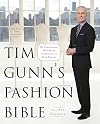
For anyone who is interested in fashion history, but doesn't want to delve into the weighty and academic tomes that chronicle fashion history through the ages, this book is the perfect starter course. Gunn's patent sarcasm-lite and extensive knowledge of American fashion (and fashion trivia from all over) is put to good use in this book which educates and entertains all in one. I especially like the worksheet that is included as an appendix, because it's highly useful to everyone who has a show more messy and unfulfiling wardrobe - and who doesn't know where to start improving it. show less
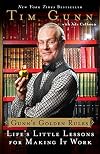
If you know who Tim Gunn is, then telling you that this book is like sitting down to a cup of coffee with Mr Gunn and listening to him talk will give you a very clear idea of what this book is about. In chapters loosely organized around various "rules", Gunn tells us about his life, dishes a bit about the excesses of the rich and famous (especially those who work for Conde Nast) and shares his approach to life, which can be summed up by take the high road, good manners never hurt anyone and, show more of course, make it work.
Gunn comes across as a man comfortable in his own skin, but having had to struggle to reach that. He reveals details about his own life that could fuel a pretty good misery memoir, but he's good-hearted and optimistic and doesn't dwell on any of it, but moves directly on to fun stories about the fashion industry or a bit of gently delivered advice. This was altogether an enjoyable and happy read. show less
Gunn comes across as a man comfortable in his own skin, but having had to struggle to reach that. He reveals details about his own life that could fuel a pretty good misery memoir, but he's good-hearted and optimistic and doesn't dwell on any of it, but moves directly on to fun stories about the fashion industry or a bit of gently delivered advice. This was altogether an enjoyable and happy read. show less
Tim Gunn hereby displays his "golden rules", which are chapters often adhering to old-school etiquette. It's not strict as "respect your elders", but are often somewhat coherent, nice and strict. The book, as a whole, is quite interesting as Gunn has a few very valid points (in my view) and, strangely enough, from a gossipy view contradicts himself as far as not talking pap about people is concerned. Anonymity is mostly not kept, especially when he quotes examples that go against his rules, show more which mostly is from episodes of "Project Runway"; he often mentions "taking the high road", but sometimes veers from it, methinks.
His style of writing is simple, clean, mostly coherent and entertaining, for instance:
I quite liked some of the rules where he simply and strongly states what he believes in:
And:
...and we also have some tips that I think are quite insane, e.g. where supply/demand should be understood:
...or he's just downright funny:
The book turns a little dull about half-way, but regains strength appx. 70% in, where Gunn unveils his personal life in many ways, not least where his family life is involved. About his personal life:
His life-affirming and positive words shine through:
All in all, the book is part modern etiquette - the bits about using gadgets like mobile phones, laptops, et.c. are brilliant - written in a snappy, elegant, funny and modern way. Simply understood. The parts about where to draw lines in life are also to be saluted. It could have been edited better, but at the end of this book, I felt even more respect for Gunn having read this book, and that comes from somebody who's seen every episode of "Project Runway" so far. show less
His style of writing is simple, clean, mostly coherent and entertaining, for instance:
Usually people think of me as a surprisingly nice person as fashion people go, but occasionally someone will corner me on the street and say: “You’re so mean!” Often this is because people mistake me for Clinton Kelly from What Not to Wear—which I’m sure would disturb him to no end, because I could be his grandfather. When I determine that’s the case, I say, “I think you have me mistaken for—” Then they’ll interrupt and say, “I’ve been watching that show for years!” And I will say, “Then you really should know I’m not Clinton Kelly.”
I quite liked some of the rules where he simply and strongly states what he believes in:
With a certain amount of maturity, we can set up our own constraints. That’s a lot of what education is about—letting people set those assignments for us so that when we graduate we can start to set them for ourselves. Even now that I’m in my fifties, I still face certain situations where I have to admit that I need some rules to help me figure out what I should do. Bosses should think of themselves as fulfilling this kind of boundary-giving function that school and parents do. They need to be clear about expectations and rules so everyone knows when an employee is doing well or not doing well. And when expectations are not met, there should be logical consequences, whether that’s the loss of the job, a decrease in salary, or something less drastic. There is no reason, in any case, ever to yell. And yet we’ve all seen it: bosses who lose their tempers constantly.
And:
When the news is happy, e-mail is fine. You can e-mail congratulations about babies, weddings, anything. But when it’s not? If it’s a death or other bad news, you have to be more formal. I wasn’t the only one who was a little horrified by Ashton Kutcher’s reference to his former girlfriend Brittany Murphy’s death. He wrote on Twitter: “2day the world lost a little piece of sunshine. My deepest condolences go out 2 Brittany’s family, her husband, & her amazing mother Sharon.” People use texting and e-mail for everything, but it’s not appropriate for somber situations. If you win an Oscar, tweet away, but if you’re talking about a death or an illness, you need to use more formal channels.
...and we also have some tips that I think are quite insane, e.g. where supply/demand should be understood:
One little technology-taming tip, If you, too, are surprised by typos: I like to print out things I’m working on to read them on paper before I send them off. You miss a lot of things on the screen that are apparent when you’re looking at them on the page. Yes, there is the environment to think of, but—to paraphrase a certain celebrity on the topic of her fur coat being dead when she got it (“I didn’t kill it!” she said)—the tree’s already been taken down.
...or he's just downright funny:
Going to church was not my favorite thing when I was young. From a very early age, I was very suspicious of our priest. My parents thought I was crazy and just trying to get out of going to services, but I said, “No, there really is something weird about that man.” Indeed, one day when I was nine or ten, the priest was up at the pulpit. He went into a silent prayer and … never came out of it. After a few minutes the ushers realized he’d left the plane of reality the rest of us were on, so they had an intervention and took him away. And yes: I smiled very smugly at my parents all the way home.
The book turns a little dull about half-way, but regains strength appx. 70% in, where Gunn unveils his personal life in many ways, not least where his family life is involved. About his personal life:
When people hear that I haven’t had a boyfriend since 1982, they often whisper, “Does he not have sex?” That’s right! You know, much of my one long-term boyfriend’s “I’m over this” was about not having the patience for me with regard to sex. I’ve always been kind of asexual. So now I can’t even consider sex without thinking about him and his disapproval. Talk about something that will make you lose the urge. That breakup was a cold shower to last a lifetime. Could I get psychiatric help and resume some kind of sex life at some point? Probably. But it’s a little late for that. And frankly, I am happy being celibate. That doesn’t mean I haven’t had thoughts. I am a human being. But I love my life and don’t feel any need to change it. Getting used to being alone was hard, but now that I’ve made a life for myself alone, I really like it. It’s been years since I’ve been interested in anyone. And I really think if you don’t need it, you don’t need it. As hard as it is for a lot of my friends to believe, I really am happy alone.
His life-affirming and positive words shine through:
What do they say: Do what you love and the money will follow? It’s always been true for me. I had no expectation of personal success through this show. I never expected there would be a second season, much less a seventh. And I never expected to get famous in a million zillion years. While we were making Season 1, I just thought, If nothing else, this is going to be great cocktail-party-conversation fodder.
All in all, the book is part modern etiquette - the bits about using gadgets like mobile phones, laptops, et.c. are brilliant - written in a snappy, elegant, funny and modern way. Simply understood. The parts about where to draw lines in life are also to be saluted. It could have been edited better, but at the end of this book, I felt even more respect for Gunn having read this book, and that comes from somebody who's seen every episode of "Project Runway" so far. show less
Tim Gunn: the Natty Professor : A Master Class on Mentoring, Motivating and Making It Work! by Tim Gunn
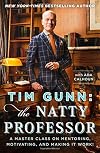
Before he was hired as a mentor of Project Runway, Tim Gunn was an academic at the Parsons School of Design in New York. Using his experiences in both of these places and a host of others, Gunn breaks down what he calls his T.E.A.C.H. method - truth-telling, empathy, asking, coaching, and hoping for the best as you let a student go.
The advice given here is not groundbreaking. We've probably all heard it before in one way or another. But what Tim Gunn brings to it are some great stories - and show more as we know, stories will make something stick in our head really well - and a real love for learning and educating. He makes some good points about the difference between teaching and mentoring. He tells the hilarious story about how his simple act of truth-telling got him blacklisted from the Met gala. And he shares the stories of several other people talking about the impact of a teacher in their lives. I do recommend listening to the audio, as his narration really adds to his humor and emotion throughout the stories he tells. show less
The advice given here is not groundbreaking. We've probably all heard it before in one way or another. But what Tim Gunn brings to it are some great stories - and show more as we know, stories will make something stick in our head really well - and a real love for learning and educating. He makes some good points about the difference between teaching and mentoring. He tells the hilarious story about how his simple act of truth-telling got him blacklisted from the Met gala. And he shares the stories of several other people talking about the impact of a teacher in their lives. I do recommend listening to the audio, as his narration really adds to his humor and emotion throughout the stories he tells. show less
Awards

You May Also Like


Associated Authors
Statistics
- Works
- 7
- Also by
- 7
- Members
- 1,215
- Popularity
- #21,126
- Rating
- 3.7
- Reviews
- 67
- ISBNs
- 19
- Favorited
- 1
