
2026-04-29: Good. No Humans in the book, only humans.
I disliked that the real villain of the story, Jason Bell, gets off scot free. I have headcanon that Pip speaks at Becca's sentencing and points this out, and also points out that Jason Bell and people like him exist because society not only tolerates shitty behavior, we often encourage it. We don't actually mind bullies, so long as they're bullying the people we want them to.
I disliked that the real villain of the story, Jason Bell, gets off scot free. I have headcanon that Pip speaks at Becca's sentencing and points this out, and also points out that Jason Bell and people like him exist because society not only tolerates shitty behavior, we often encourage it. We don't actually mind bullies, so long as they're bullying the people we want them to.
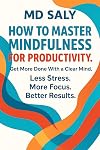
2026-02-18: This manages to say all the right things while giving you no information at all. I strongly suspect this drivel was written by AI.
I agree with everything it says about meditation, but it's all in a highly repetitive and completely uninformative. A book about meditation, that's how you get to mindfulness, that has no instructions on meditation. It has no instructions on anything, it's just a collection of paragraphs, each one in the exact same format, and of remarkably similar length, that tell you nothing except that some unnamed person, often "on Reddit", benefited from meditation.
If you want to learn about meditation there are vast number of free web sites that are or more informative than this book. Or you can get "Mediation for Beginners" by Jack Kornfield. Or find an online list of books about meditation. This book has no information on the topic beyond that some other people like it.
I agree with everything it says about meditation, but it's all in a highly repetitive and completely uninformative. A book about meditation, that's how you get to mindfulness, that has no instructions on meditation. It has no instructions on anything, it's just a collection of paragraphs, each one in the exact same format, and of remarkably similar length, that tell you nothing except that some unnamed person, often "on Reddit", benefited from meditation.
If you want to learn about meditation there are vast number of free web sites that are or more informative than this book. Or you can get "Mediation for Beginners" by Jack Kornfield. Or find an online list of books about meditation. This book has no information on the topic beyond that some other people like it.
 This review was written for LibraryThing Early Reviewers.
Subtitle: : A Novel about IT, DevOps, and Helping Your Business Win
Summary: Starry-eyed manager meets guru and joins management cult. All business problems are magically solved and everyone sings Kumbaya.
2016-06-29: It's probably got useful info in it but the style is shit. I'm not believing the CEO and other management who care about customers and are loyal to the company. Maybe that shit happened in 1950 (though I doubt it) but in 2016 that might be one in a thousand publicly traded companies. The rest are all about the quarterly bonus and making the numbers and don't give a shit if their product is any good as long as they can con customers into paying for it. The book is filled with cartoon characters and written at elementary school level except it's liberally sprinkled with bullshit management lingo. Bullshit management lingo that exists so that management can feel special and validate their excessive paychecks and certainly not because it conveys any useful information, which it doesn't.
2016-07-01: At least it was an easy read and very skimmable (meaning large blocks with nothing important in them). The style was horrible. It shouldn't have been narrative. It should have been about 10 pages long, possibly 20 if you wanted to be verbose. In my experience corporations are filled with Sarahs. Management doesn't give a shit about anything except insofar as how it makes them look. Hmmm. Is my cynicism justified? I worked at one place that was like that but I worked show more there for 10+ years. The next place wasn't bad and the current place is nothing like that. Parts Unlimited has this weird cult feel though. Characters start out cynical and then turn into devout followers at the first hint of success. Erik was annoying as shit with his mix of management nonsense and mystical bullshit. People who talk like that are NOT people who actually know anything. And what's with John? He's nearly suicidal one day and he's a shaved head style-meister and devout follower the next.
There might be some good advice in this book but hiding it in a bad narrative story wasn't the way to get the word out.
2026-01-17: Re-read because work is doing Agile things and this came up. I read it very quickly, with a lot of skipping (there's much skippable noise in this, 🙄) and my conclusion is largely the same as it was 10 years ago. There's a lot of goodness in the IT suggestions, but the story they're buried in is fairy tale nonsense. IT cannot fix itself unless the business recognizes that IT is not a cost center, it's the foundation upon which the business is built. But of course, businesses think that people are a cost center too. In this fairy tale the CEO gets brought around by a fairy godfather/cult leader, in the real world that person doesn't exist, so even when IT leaders see the need for change they generally have to do it with while cutting budgets and keeping up work loads and while sales sells things that don't exist.
I may be a bit cynical about corporate America. I'm with whoever said people should be the ends, never the means. Whatever you do, you do to serve others, and you don't use people to accomplish goals, you partner with them to accomplish shared goals. A lot of management types would quickly agree and then knife everyone in sight and claim sole credit once the goal is accomplished. Yeah, my view is too narrow, but I see a lot more competition in the world than cooperation (even though cooperation is makes things possible), and I don't see many people thinking about morals. Morality is how you treat people. More broadly, it's whether you create suffering or cure it.
Maybe the DevOps Handbook will be more to my likely. Hopefully there's no fairy tale in that one. show less
Summary: Starry-eyed manager meets guru and joins management cult. All business problems are magically solved and everyone sings Kumbaya.
2016-06-29: It's probably got useful info in it but the style is shit. I'm not believing the CEO and other management who care about customers and are loyal to the company. Maybe that shit happened in 1950 (though I doubt it) but in 2016 that might be one in a thousand publicly traded companies. The rest are all about the quarterly bonus and making the numbers and don't give a shit if their product is any good as long as they can con customers into paying for it. The book is filled with cartoon characters and written at elementary school level except it's liberally sprinkled with bullshit management lingo. Bullshit management lingo that exists so that management can feel special and validate their excessive paychecks and certainly not because it conveys any useful information, which it doesn't.
2016-07-01: At least it was an easy read and very skimmable (meaning large blocks with nothing important in them). The style was horrible. It shouldn't have been narrative. It should have been about 10 pages long, possibly 20 if you wanted to be verbose. In my experience corporations are filled with Sarahs. Management doesn't give a shit about anything except insofar as how it makes them look. Hmmm. Is my cynicism justified? I worked at one place that was like that but I worked show more there for 10+ years. The next place wasn't bad and the current place is nothing like that. Parts Unlimited has this weird cult feel though. Characters start out cynical and then turn into devout followers at the first hint of success. Erik was annoying as shit with his mix of management nonsense and mystical bullshit. People who talk like that are NOT people who actually know anything. And what's with John? He's nearly suicidal one day and he's a shaved head style-meister and devout follower the next.
There might be some good advice in this book but hiding it in a bad narrative story wasn't the way to get the word out.
2026-01-17: Re-read because work is doing Agile things and this came up. I read it very quickly, with a lot of skipping (there's much skippable noise in this, 🙄) and my conclusion is largely the same as it was 10 years ago. There's a lot of goodness in the IT suggestions, but the story they're buried in is fairy tale nonsense. IT cannot fix itself unless the business recognizes that IT is not a cost center, it's the foundation upon which the business is built. But of course, businesses think that people are a cost center too. In this fairy tale the CEO gets brought around by a fairy godfather/cult leader, in the real world that person doesn't exist, so even when IT leaders see the need for change they generally have to do it with while cutting budgets and keeping up work loads and while sales sells things that don't exist.
I may be a bit cynical about corporate America. I'm with whoever said people should be the ends, never the means. Whatever you do, you do to serve others, and you don't use people to accomplish goals, you partner with them to accomplish shared goals. A lot of management types would quickly agree and then knife everyone in sight and claim sole credit once the goal is accomplished. Yeah, my view is too narrow, but I see a lot more competition in the world than cooperation (even though cooperation is makes things possible), and I don't see many people thinking about morals. Morality is how you treat people. More broadly, it's whether you create suffering or cure it.
Maybe the DevOps Handbook will be more to my likely. Hopefully there's no fairy tale in that one. show less

Subtitle: A Defiant Inquiry into Society, Thought and the Self
LibraryThing Early Reviewer
Disclaimer: I don't do reviews, I do commentary. I can't tell you about literary quality or whether it was objectively "good", and I don't believe anyone else can either. What I can tell you is what I think of a book or what it makes me think of or feel.
2026-01-17: This is a very long book of philosophical essays broadly grouped in four sections, Human Nature, Human Relationships, Politics, and Thought.
I have read the entirety of the Human Nature section, 13 essays, and the first seven essays of the Human Relationships sections, which puts at 34% finished according to my Kobo. I don't know how much of the rest I'll finish.
There are two primary issues, the first is the writing and the second is his philosophical conclusions, which feel right, but incomplete.
The writing issue is primarily that I don't find it engaging. That's partially a matter of his English (Ugandan) and my English (American) not being the same so some phrases and word choices come off awkward and throw me out of the book. I think that would be okay if was getting something out of the philosophy. I actually found that if I read it in an "African" accent (probably some mashup of accents from TV/movies and people I've worked with) it doesn't thrown me as much. I think it reminds my brain that his English and mine aren't the same so the word choices are taken more in stride. I don't know, brains are weird.
I also don't show more care for the general style, which feels kind of disorganized, like he had an idea and poured some stuff on the page and stopped when there was no more to pour. The essays don't feel very organized or like they come to much of a conclusion. They feel more like a collection of observations, or thoughts, than an essay. This is how I write, but it really is just a collections of thoughts, if I ever attempt to publish anything there will be a lot of new writing required.
The author also likes to quote philosophers, and that's fine, I've learned some new quotes, but also feels a little annoying.
My second issue with the book is philosophical, I feel like the author is on the right track, but he never quite gets to anything that's new to me, so my reading is a mixture of "yes and that's because..." and "no that's wrong because...". Either is fine so long as I'm getting something new, so long as it's making me think, but I don't feel like that's happening. I might be different if he was writing something that would get other people to think, but between the length, and the language, I don't think this is set to become a classic or have a great influence on society.
That's a little sad because I feel like the author swung for the fence. Like he felt like he was making "A defiant inquiry into society, thought and the self", but he missed the mark by a considerable margin. I applaud the effort, and wish I was dedicated enough to write my version of this book. show less
LibraryThing Early Reviewer
Disclaimer: I don't do reviews, I do commentary. I can't tell you about literary quality or whether it was objectively "good", and I don't believe anyone else can either. What I can tell you is what I think of a book or what it makes me think of or feel.
2026-01-17: This is a very long book of philosophical essays broadly grouped in four sections, Human Nature, Human Relationships, Politics, and Thought.
I have read the entirety of the Human Nature section, 13 essays, and the first seven essays of the Human Relationships sections, which puts at 34% finished according to my Kobo. I don't know how much of the rest I'll finish.
There are two primary issues, the first is the writing and the second is his philosophical conclusions, which feel right, but incomplete.
The writing issue is primarily that I don't find it engaging. That's partially a matter of his English (Ugandan) and my English (American) not being the same so some phrases and word choices come off awkward and throw me out of the book. I think that would be okay if was getting something out of the philosophy. I actually found that if I read it in an "African" accent (probably some mashup of accents from TV/movies and people I've worked with) it doesn't thrown me as much. I think it reminds my brain that his English and mine aren't the same so the word choices are taken more in stride. I don't know, brains are weird.
I also don't show more care for the general style, which feels kind of disorganized, like he had an idea and poured some stuff on the page and stopped when there was no more to pour. The essays don't feel very organized or like they come to much of a conclusion. They feel more like a collection of observations, or thoughts, than an essay. This is how I write, but it really is just a collections of thoughts, if I ever attempt to publish anything there will be a lot of new writing required.
The author also likes to quote philosophers, and that's fine, I've learned some new quotes, but also feels a little annoying.
My second issue with the book is philosophical, I feel like the author is on the right track, but he never quite gets to anything that's new to me, so my reading is a mixture of "yes and that's because..." and "no that's wrong because...". Either is fine so long as I'm getting something new, so long as it's making me think, but I don't feel like that's happening. I might be different if he was writing something that would get other people to think, but between the length, and the language, I don't think this is set to become a classic or have a great influence on society.
That's a little sad because I feel like the author swung for the fence. Like he felt like he was making "A defiant inquiry into society, thought and the self", but he missed the mark by a considerable margin. I applaud the effort, and wish I was dedicated enough to write my version of this book. show less
This review was written for LibraryThing Early Reviewers.
tl;dr - I agree with what I think is the author's point but I don't believe the way he delivers it is useful. It's all snark and arrogance with no patience or compassion and consequently it's not going to convince anyone.
I think the author's point is essentially that humans are stupid and need to get over themselves in order to get their shit together and avoid killing themselves. If that is accurate them I am completely, 1000%, in agreement. This is a message that is desperately needed by humanity and it's a shame that this attempt is so unskillful. Snark and hubris are not the way to convince people to be better.
The author's problem, is that all he has to say is "stupid human" and "have faith". He says that our problem is our arrogance and then his stand-ins display nothing but arrogance as they talk to the humans. He never gives any actual suggestions as to how to be better, just BS like "have faith" without saying what we should have faith in. It was extremely frustrating and in places the book gave off a very new-age vibe. 🤮
Faith isn't the answer. Trust might be. Compassion has a place. Responsibility is part of the answer. Humility is a huge part of the answer. Faith doesn't even have a seat in the viewing gallery unless you're very specific about what we're placing our faith in. If we're placing our faith in the cosmos or gods or destiny then that's just dumb because we're already doing that and it's not working well.
I didn't hate the book, but it missed the show more mark so badly that it made me sad. show less
I think the author's point is essentially that humans are stupid and need to get over themselves in order to get their shit together and avoid killing themselves. If that is accurate them I am completely, 1000%, in agreement. This is a message that is desperately needed by humanity and it's a shame that this attempt is so unskillful. Snark and hubris are not the way to convince people to be better.
The author's problem, is that all he has to say is "stupid human" and "have faith". He says that our problem is our arrogance and then his stand-ins display nothing but arrogance as they talk to the humans. He never gives any actual suggestions as to how to be better, just BS like "have faith" without saying what we should have faith in. It was extremely frustrating and in places the book gave off a very new-age vibe. 🤮
Faith isn't the answer. Trust might be. Compassion has a place. Responsibility is part of the answer. Humility is a huge part of the answer. Faith doesn't even have a seat in the viewing gallery unless you're very specific about what we're placing our faith in. If we're placing our faith in the cosmos or gods or destiny then that's just dumb because we're already doing that and it's not working well.
I didn't hate the book, but it missed the show more mark so badly that it made me sad. show less
This review was written for LibraryThing Early Reviewers.
2024-02-15: I got through four chapters not liking this story about a grumpy old man very much. The last paragraph in chapter four turned on a light bulb and then chapter five made me a love a grumpy old man. I have to go back to work now but I suspect that if the author can pull that off it's going to be a really good book.
2024-02-17: I'm around 75% but I've gone ahead and given it five stars. It's that good and I trust the author not to screw it up. So good.
2024-02-17: Done. So much laughing and crying and laugh/crying.
2024-02-17: I'm around 75% but I've gone ahead and given it five stars. It's that good and I trust the author not to screw it up. So good.
2024-02-17: Done. So much laughing and crying and laugh/crying.
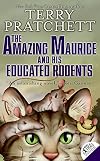
2024-02-11: This may be Pratchett's greatest work. It's an entertaining story that also manages to teach some things that people really, desperately, need to understand if humanity is going to survive.
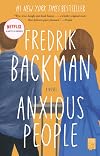
2024-02-22: I haven't finished the first chapter and it's already impressed me with diagnosis of the human condition and the humor used in the diagnosis. My second Backman book and he's pushing everything else off the to-read list.
2024-02-25: I'm at 52% and have I've gone ahead and given it five stars. I hated the bits with Zara because she's a dipshit but this book is hilarious and full of improbable twists and turns and I'm still willing to accept because they're funny and not outrageous. At the same time he's got a great grip on the human condition. And so many great lines.
2024-02-26: The advanced 5-star rating was incorrect but a 6th star is not available. Do I need to downgrade A Man Called Ove in order to indicate the difference?
This was excellent, read it now and learn things. And then that finish! He hit the perfect ending over and over. You'd think it was done and then turn the page to find there was another chapter. And another, and another.
2024-02-25: I'm at 52% and have I've gone ahead and given it five stars. I hated the bits with Zara because she's a dipshit but this book is hilarious and full of improbable twists and turns and I'm still willing to accept because they're funny and not outrageous. At the same time he's got a great grip on the human condition. And so many great lines.
2024-02-26: The advanced 5-star rating was incorrect but a 6th star is not available. Do I need to downgrade A Man Called Ove in order to indicate the difference?
This was excellent, read it now and learn things. And then that finish! He hit the perfect ending over and over. You'd think it was done and then turn the page to find there was another chapter. And another, and another.
2024-02-22: A hard book to find information on. I get the Douglas Adams comparison that some reviewer made but it's comparison of style, not quality. Adams wrote like Adams and still kept me engaged. baker writes like Adams (probably not intentionally) but, at least in this book, he couldn't keep me engaged. I got to 64% and set it aside.
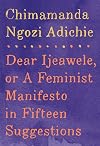
2019-04-11: Yay! A feminist manifesto that's spot on. I think my agreement level was around 90-95%.
Stray Thoughts: You know what women don't realize? That 100% of their problems with men come from the men being unconscious. Hmmm, "unconscious" doesn't really work, maybe unawake? 🤷♂️ Regardless, the women don't realize that because they are also unawake. They're both just a bunch of apes running on autopilot. If they can wake up and become human then they'll get it. Is that true? I think so but don't want to generalize my experience to everyone. I think there were a lot of things that I understood even before I was awake.
I feel sad for humanity. 100% of humanity's problems are caused by humanity. If they'd wake the fuck up and stop acting like apes all the problems would get fixed in short order. Hmmm. The problems would get fixed because the awakened people would cooperate. Competition is what animals do. They do it because they don't have language and social structures to facilitate cooperation.
2024-02-19: Re-reading because I bumped into it and have fond memories of it's shortness so thought I'd re-visit to see if anything's changed. Nope, I'm like 60% (it's really short) and it's good advice all around.
There are a couple of places where I think she's missing things but they're sort of background items. For instance I just read the line "The premise of chivalry is the weakness of women" and I suspect that she's missing the truth of that premise. Women are in show more fact, weak. Of course I mean physically weak relative to men. But that shouldn't matter. Physical strength shouldn't be a factor unless the question is "who do we call to pick up this heavy thing?". Chivalry is from a time when physical strength was important because everyone was playing by power games rules, and under PG rule if you have the power then you can do whatever you want. So under those rules chivalry wasn't such a bad deal for women. At least there was lip-service toward treating them well. So what I think Adichie misses here, possibly intentionally because it's not the topic of this book, is that we shouldn't be playing by power game rules, we should be playing by liberal game rules. LG rules and PG rules come from What's Our Problem by Tim Urban and if you haven't read that then that's one factor in why humanity is probably doomed. You're part of the problem. If you want to be part of the solution then also read Everything is F*cked and get acquainted with the basics of buddhist philosophy. These things all point to what our problem is and buddhist philosophy points to solutions.
2024-02-19: Excellent advice in general with only a few quibbles.
She says to teach the kid to take pride in various things and I no. Take pride in what you do and not in anything else. I suppose second-hand pride in the actions of others is okay too, but take pride in actions, not in accomplishments, not in performances, not in things that you are, but only in the things that you do.
She says "People who are unkind and dishonest are still human, and still deserve dignity." I think their unkindness and dishonesty can forfeit their humanity. We might still treat them with a certain courtesy but only in the same way we should treat any animal with a certain courtesy. I'm avoiding the world dignity because I'm not sure what it means to me. It seems like another meaningless concept made up by humans who think they're special. Humans are just animals. By default they should get no more dignity than a pig on a factory farm. If we treat the pig like an object then it's okay to treat humans like objects, right?
She says of being "non-judgmental" that it "can easily devolve into means 'don't have an opinion about anything' or 'I keep my opinions to myself'" and I wouldn't disagree with that. My thoughts here come from non-judgement being important in buddhist philosophy. It's not so much about not judging though, as it is about recognizing how often our "judgements" are just bullshit pronouncements based on bullshit beliefs and intended to make our ego feel good because we're better than the people we're pronouncing judgement on. Absolutely do not engage in that sort of judgement. I don't think she would disagree. But I'd also say that non-judgement is not making snap judgements, it's seeing the judgements your brain makes and then saying "thanks brain, but I'm going to ignore that in favor of actually thinking this through". show less
Stray Thoughts: You know what women don't realize? That 100% of their problems with men come from the men being unconscious. Hmmm, "unconscious" doesn't really work, maybe unawake? 🤷♂️ Regardless, the women don't realize that because they are also unawake. They're both just a bunch of apes running on autopilot. If they can wake up and become human then they'll get it. Is that true? I think so but don't want to generalize my experience to everyone. I think there were a lot of things that I understood even before I was awake.
I feel sad for humanity. 100% of humanity's problems are caused by humanity. If they'd wake the fuck up and stop acting like apes all the problems would get fixed in short order. Hmmm. The problems would get fixed because the awakened people would cooperate. Competition is what animals do. They do it because they don't have language and social structures to facilitate cooperation.
2024-02-19: Re-reading because I bumped into it and have fond memories of it's shortness so thought I'd re-visit to see if anything's changed. Nope, I'm like 60% (it's really short) and it's good advice all around.
There are a couple of places where I think she's missing things but they're sort of background items. For instance I just read the line "The premise of chivalry is the weakness of women" and I suspect that she's missing the truth of that premise. Women are in show more fact, weak. Of course I mean physically weak relative to men. But that shouldn't matter. Physical strength shouldn't be a factor unless the question is "who do we call to pick up this heavy thing?". Chivalry is from a time when physical strength was important because everyone was playing by power games rules, and under PG rule if you have the power then you can do whatever you want. So under those rules chivalry wasn't such a bad deal for women. At least there was lip-service toward treating them well. So what I think Adichie misses here, possibly intentionally because it's not the topic of this book, is that we shouldn't be playing by power game rules, we should be playing by liberal game rules. LG rules and PG rules come from What's Our Problem by Tim Urban and if you haven't read that then that's one factor in why humanity is probably doomed. You're part of the problem. If you want to be part of the solution then also read Everything is F*cked and get acquainted with the basics of buddhist philosophy. These things all point to what our problem is and buddhist philosophy points to solutions.
2024-02-19: Excellent advice in general with only a few quibbles.
She says to teach the kid to take pride in various things and I no. Take pride in what you do and not in anything else. I suppose second-hand pride in the actions of others is okay too, but take pride in actions, not in accomplishments, not in performances, not in things that you are, but only in the things that you do.
She says "People who are unkind and dishonest are still human, and still deserve dignity." I think their unkindness and dishonesty can forfeit their humanity. We might still treat them with a certain courtesy but only in the same way we should treat any animal with a certain courtesy. I'm avoiding the world dignity because I'm not sure what it means to me. It seems like another meaningless concept made up by humans who think they're special. Humans are just animals. By default they should get no more dignity than a pig on a factory farm. If we treat the pig like an object then it's okay to treat humans like objects, right?
She says of being "non-judgmental" that it "can easily devolve into means 'don't have an opinion about anything' or 'I keep my opinions to myself'" and I wouldn't disagree with that. My thoughts here come from non-judgement being important in buddhist philosophy. It's not so much about not judging though, as it is about recognizing how often our "judgements" are just bullshit pronouncements based on bullshit beliefs and intended to make our ego feel good because we're better than the people we're pronouncing judgement on. Absolutely do not engage in that sort of judgement. I don't think she would disagree. But I'd also say that non-judgement is not making snap judgements, it's seeing the judgements your brain makes and then saying "thanks brain, but I'm going to ignore that in favor of actually thinking this through". show less
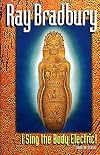
• The Kilimanjaro Device
S'okay. I'm not a Hemingway fan. I liked The Old Man and the Sea but it's all I've read and my impression is that he has an anachronistic and unhealthy view of masculinity and I'm not really interested in learning more.
• The Terrible Conflagration Up at the Place
Hilarious. I don't remember Bradbury being funny.
• Tomorrow's Child
Interesting mostly for the anachronisms. It was 1989 and they drove helicopters and smoked on the way home from having a baby, plus a bunch of other amusements. The world has certainly improved since whenever this was written.
• The Women
2023-12-06: Meh. Dated. Dark. Could be read as misogynist if you're the kind of asshole that's looking for misogyny but I think it was just dated.
• The Inspired Chicken Motel
2023-12-06: Damn but Bradbury can write.
• Downwind from Gettysburg
2023-12-08: This one blew right past me. I get the gist of it but it didn't land.
• Yes, We'll Gather at the River
2023-12-08: Meh
• The Cold Wind and the Warm
2023-12-08: Amusing.
• Night Call, Collect
2023-12-08: Meh.
• The Haunting of the New
2023-12-10: S'okay.
• I Sing the Body Electric!
2023-12-10: Fine writing. That emotional/vivid/poetic/nostalgic thing that he does so amazingly well is on display in this one and The Inspired Chicken Motel earlier. I don't really care about either of the stories but damn, his writing is amazing.
• The Tombling Day
2023-12-13: Whee-hooo! I'm younger than any of them what's dead!
• Any Friend of show more Nicholas Nickleby's Is a Friend of Mine
2023-12-20: This was the best in the book.
• Heavy-Set
2023-12-20: Memory vague but it was odd and unappealing.
• The Man in the Rorschach Shirt
2023-12-20: Pleasant enough. The shrink needed a shrink though.
• Henry the Ninth
2023-12-20: Okay, didn't do anything for me.
• The Lost City of Mars
2023-12-20: Meh. Dated and not interesting.
• Christus Apollo
2023-12-20: Skimmed a bit and then skipped it. show less
S'okay. I'm not a Hemingway fan. I liked The Old Man and the Sea but it's all I've read and my impression is that he has an anachronistic and unhealthy view of masculinity and I'm not really interested in learning more.
• The Terrible Conflagration Up at the Place
Hilarious. I don't remember Bradbury being funny.
• Tomorrow's Child
Interesting mostly for the anachronisms. It was 1989 and they drove helicopters and smoked on the way home from having a baby, plus a bunch of other amusements. The world has certainly improved since whenever this was written.
• The Women
2023-12-06: Meh. Dated. Dark. Could be read as misogynist if you're the kind of asshole that's looking for misogyny but I think it was just dated.
• The Inspired Chicken Motel
2023-12-06: Damn but Bradbury can write.
• Downwind from Gettysburg
2023-12-08: This one blew right past me. I get the gist of it but it didn't land.
• Yes, We'll Gather at the River
2023-12-08: Meh
• The Cold Wind and the Warm
2023-12-08: Amusing.
• Night Call, Collect
2023-12-08: Meh.
• The Haunting of the New
2023-12-10: S'okay.
• I Sing the Body Electric!
2023-12-10: Fine writing. That emotional/vivid/poetic/nostalgic thing that he does so amazingly well is on display in this one and The Inspired Chicken Motel earlier. I don't really care about either of the stories but damn, his writing is amazing.
• The Tombling Day
2023-12-13: Whee-hooo! I'm younger than any of them what's dead!
• Any Friend of show more Nicholas Nickleby's Is a Friend of Mine
2023-12-20: This was the best in the book.
• Heavy-Set
2023-12-20: Memory vague but it was odd and unappealing.
• The Man in the Rorschach Shirt
2023-12-20: Pleasant enough. The shrink needed a shrink though.
• Henry the Ninth
2023-12-20: Okay, didn't do anything for me.
• The Lost City of Mars
2023-12-20: Meh. Dated and not interesting.
• Christus Apollo
2023-12-20: Skimmed a bit and then skipped it. show less
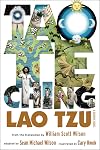
2019-05-11: Meh. It's still the Tao Te Ching but it's a very leftist translation. Instead of just taking the wonder of the Tao Te Ching they shoved it through the filter of their dogma to get a version that supported their world view.
If you have a dogma you're not a liberal, you're a conservative.
PS. Having pictures doesn't make it a graphic novel. Novels have narrative, a story. The Tao Te Ching could be retold as a story but that would likely obscure the message. Regardless this did NOT have a narrative and is not a novel, it's the Tao Te Ching with pictures and leftist dogma.
PPS. I may be overly harsh above regarding dogma but that's how I remember it. I'll try to take another look.
2023-12-02: I didn't remember it and checked it out again, we'll see how that goes.
2023-12-06: I'm basically reading it as I pass through the kitchen. I'm at #4 (5?). #1 was way off. #2 or 3 compared Mao (a murdering ass clown) to the Master. Yeah, I'm not sure they read the same Tao Te Ching I did.
2023-12-29: It went back last weekend. I did a quick flip through and I don't think anyone involved has read the Tao Te Ching with any understanding.
If you have a dogma you're not a liberal, you're a conservative.
PS. Having pictures doesn't make it a graphic novel. Novels have narrative, a story. The Tao Te Ching could be retold as a story but that would likely obscure the message. Regardless this did NOT have a narrative and is not a novel, it's the Tao Te Ching with pictures and leftist dogma.
PPS. I may be overly harsh above regarding dogma but that's how I remember it. I'll try to take another look.
2023-12-02: I didn't remember it and checked it out again, we'll see how that goes.
2023-12-06: I'm basically reading it as I pass through the kitchen. I'm at #4 (5?). #1 was way off. #2 or 3 compared Mao (a murdering ass clown) to the Master. Yeah, I'm not sure they read the same Tao Te Ching I did.
2023-12-29: It went back last weekend. I did a quick flip through and I don't think anyone involved has read the Tao Te Ching with any understanding.

Series: 44 Scotland Street #1
2023-12-20: Not digging it. Lots of boring people doing nothing in particular. I'm okay with nothing in particular, I loved Leonard and Hungry Paul, but those people were learning and growing and these people aren't. Bertie is the only one of interest. A five year old who blows up his playmates train station and says "something about politics" is at least interesting, if more than a bit scary.
2023-12-22: 25% and it's still not interesting. The Peploe? is at least amusing, and the fact that AMS outed the perp right away makes it not-a-mystery so I'm curious to see what he plans to do with that.
2023-12-23: Bertie is amusing, and sad. I just got to Lizzie, she's amusing but her parents are sad.
2023-12-27: I want to read about smart people and this book is populated almost entirely with idiots. It's gotten interesting enough that I'll probably finish it but I can't imagine reading more of the series. I also can't imagine why anyone would read the series. It seems cruel to watch these people.
2023-12-29: Can't do it. 44 Scotland Street is a boring place to live. It's filled with sleepwalkers who don't know there are other options.
2023-12-29: OMG you can write words in the Finished date! So I could put Abandoned or Forgotten or whatever. Interesting.
2023-12-20: Not digging it. Lots of boring people doing nothing in particular. I'm okay with nothing in particular, I loved Leonard and Hungry Paul, but those people were learning and growing and these people aren't. Bertie is the only one of interest. A five year old who blows up his playmates train station and says "something about politics" is at least interesting, if more than a bit scary.
2023-12-22: 25% and it's still not interesting. The Peploe? is at least amusing, and the fact that AMS outed the perp right away makes it not-a-mystery so I'm curious to see what he plans to do with that.
2023-12-23: Bertie is amusing, and sad. I just got to Lizzie, she's amusing but her parents are sad.
2023-12-27: I want to read about smart people and this book is populated almost entirely with idiots. It's gotten interesting enough that I'll probably finish it but I can't imagine reading more of the series. I also can't imagine why anyone would read the series. It seems cruel to watch these people.
2023-12-29: Can't do it. 44 Scotland Street is a boring place to live. It's filled with sleepwalkers who don't know there are other options.
2023-12-29: OMG you can write words in the Finished date! So I could put Abandoned or Forgotten or whatever. Interesting.

2023-12-29: Excellent as is everything from T. Kingfisher. I liked that the heroes weren't especially heroic, but they weren't anti-heroes either. So tired of that trope.

2023-12-30: Right off the bat and I'm hating Davidson. Hopefully one of the natives will eat him shortly. I mean, if you can get his head out of his ass to teach him something that would be okay but it's pretty far up there.
2023-12-30: Chapter 2 changed to the viewpoint of a native and now it's getting better. It's clear that Davidson is the villain and that the Avatar folks probably own Le Guin some cash for telling the same story but with taller aliens.
2024-01-05: Still think the Avatar folks owe Le Guin some cash, maybe they at least gave her a nod for inspiration. A good read. I think the humans going away for 50 years was a bad plan. They should have said, "with your permission we'd like to have a few people hear so that we can trade knowledge".
The bigger thing though is for the humans to weed out ideas like Davison's. I think the thing that almost every book misses is that humanity isn't a genetic trait, it's learned. Humans would be much better off if we embraced, and taught, the idea that we are Pan Narrans, the storytelling ape, but that we can become Homo Sapiens, the wise man, through our actions.
2023-12-30: Chapter 2 changed to the viewpoint of a native and now it's getting better. It's clear that Davidson is the villain and that the Avatar folks probably own Le Guin some cash for telling the same story but with taller aliens.
2024-01-05: Still think the Avatar folks owe Le Guin some cash, maybe they at least gave her a nod for inspiration. A good read. I think the humans going away for 50 years was a bad plan. They should have said, "with your permission we'd like to have a few people hear so that we can trade knowledge".
The bigger thing though is for the humans to weed out ideas like Davison's. I think the thing that almost every book misses is that humanity isn't a genetic trait, it's learned. Humans would be much better off if we embraced, and taught, the idea that we are Pan Narrans, the storytelling ape, but that we can become Homo Sapiens, the wise man, through our actions.

2024-01-05: I don't know what to write about this. I read it in a day so it was obviously not bad. It had some interesting takes on a society where the people are both male and female. I think though that it missed the point in that the important difference between men and women isn't their genitals, it's their size/strength. I think if human women were the same size then most of the inequalities wouldn't have arisen in human society because in the early days if a male got pushy the female would knock him on his ass. I think physical dominance in the cave turned into general dominance in society and it takes a lot of time and effort to undo that societal habit.
Look at all the people that still think power games are a good idea. Most humans aren't any different from storytelling monkeys. If an ape (😉) that could justify its actions then it would behave a lot like a human and make the same excuses a human did for murdering a bunch of people.
I'm interested in a thought a experiment where gender is fluid like on Gethen but there are two easily distinguishable groups based on size (Bigs and Smalls). Would the Small individuals get pushed to the back of the societal bus? I think yes but not in the same way as on Earth. Childbearing combined with physical weakness makes a ready excuse for pushing women aside, but also for protecting them. Actually, I can imagine it being worse since the Smalls wouldn't be needed. Would they test for Smallness and abort the Small babies? show more Would a Big person who had multiple Small children get divorced by their Big partner?
Someone in some book somewhere has to have already run my thought experiment so please point me at that book. I'm assuming that Bigs and Smalls are born in roughly equal rates and that Bigs have the physical structure (height, bone density, musculature) of human males and Smalls have the physical structure of human females but the genital situation is more like the one on Gethen where everyone is both.
I think the thing that almost every book misses is that humanity isn't a genetic trait, it's learned. Humans would be much better off if we embraced, and taught, the idea that we are Pan Narrans, the storytelling ape, but that we can become Homo Sapiens, the wise man, through our actions. show less
Look at all the people that still think power games are a good idea. Most humans aren't any different from storytelling monkeys. If an ape (😉) that could justify its actions then it would behave a lot like a human and make the same excuses a human did for murdering a bunch of people.
I'm interested in a thought a experiment where gender is fluid like on Gethen but there are two easily distinguishable groups based on size (Bigs and Smalls). Would the Small individuals get pushed to the back of the societal bus? I think yes but not in the same way as on Earth. Childbearing combined with physical weakness makes a ready excuse for pushing women aside, but also for protecting them. Actually, I can imagine it being worse since the Smalls wouldn't be needed. Would they test for Smallness and abort the Small babies? show more Would a Big person who had multiple Small children get divorced by their Big partner?
Someone in some book somewhere has to have already run my thought experiment so please point me at that book. I'm assuming that Bigs and Smalls are born in roughly equal rates and that Bigs have the physical structure (height, bone density, musculature) of human males and Smalls have the physical structure of human females but the genital situation is more like the one on Gethen where everyone is both.
I think the thing that almost every book misses is that humanity isn't a genetic trait, it's learned. Humans would be much better off if we embraced, and taught, the idea that we are Pan Narrans, the storytelling ape, but that we can become Homo Sapiens, the wise man, through our actions. show less
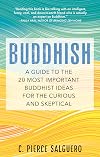
Disclaimer: I don't do reviews, I do commentary. I can't tell you about literary quality or whether it was objectively "good", and I don't really think anyone else can either. What I can tell you is what I think of a book or what it makes me think of or feel.
Subtitle: A Guide to the 20 Most Important Buddhist Ideas for the Curious and Skeptical
2023-04-02: The introduction made me think I wouldn't like it but it turned out I got some good stuff out of it. I made a number of notes so maybe they'll make their way here. I guess I mostly learned that I'm right when I think that most Buddhists wouldn't consider me a Buddhist and I don't consider them a Buddhist either. 😉 In the end I think that the label doesn't matter, it's your actions that make you a Buddhist or not. There are apparently whole nations of fake buddhists in the world just like America has a shit-ton of fake christians. If you don't act in accordance with what Christ taught then you're not a Christian and if you don't act in accordance with what Buddha taught then you're not a Buddhist.
2023-12-24: Continuing the above thought, there are countless real Christians and Buddhists who don't know that they are.
2023-12-24:
Here are the bits I highlighted and the notes I attached to the highlights. I often don't highlight enough to provide context here so if my comments don't give enough context then you'll have to read the book. DN: Comments look like this
- Chapter 2: Suffering
───
Duhkha can describe the show more physical pains that one experiences in old age, illness, and death, but the same word may instead refer to emotions like sadness, depression, or mental anguish. It also may refer to a general feeling of dissatisfaction, a sense that things aren’t quite right or that our purpose in life is something more than what we’re currently doing. Duhkha also can refer to the feeling of regret when we are prevented from experiencing pleasure, or the sense of loss when events that we are enjoying come to an end. This one word thus refers to the entire range of negative and dissatisfactory human experiences, the whole spectrum of emotional and physical experiences that we all wish to avoid.
───
Buddhism’s basic position on duhkha, which is made clear in countless Buddhist texts from different traditions, is that these kinds of negative states are an inescapable part of life for all human beings. Buddhist doctrine asks us to accept the fact that life has a propensity to go awry. No matter what we do, we are subject to unfortunate events beyond our control.
- Chapter 3: Path
According to the Analysis of the Path (Maggavibhanga Sutta), a very influential text that introduces the model, the eight aspects of the Path are as follows:
1. Right view: We begin by accepting the postulates laid out in the Four Noble Truths, in order to gain proper understanding of the mission before us.
2. Right intention: We then strongly commit ourselves to Awakening. Usually, this aspect also involves a commitment to avoid dwelling in anger or committing acts of violence.
3. Right speech: We vow to avoid telling lies, using divisive or abusive speech, and engaging in “idle chatter.”
4. Right action: We vow to avoid killing, stealing, and sexual misconduct. (The latter is defined differently whether you’re a celibate monk or a married householder and is frequently updated to reflect local cultural norms.)
5. Right livelihood: We resolve to make a living in an ethically sound way that is free from dishonesty.
6. Right effort: We make efforts to maintain the “skillful” qualities we have already and to cultivate new ones. We also try to overcome the “unskillful” qualities we have already and to avoid taking on new ones. Skillful and unskillful qualities refer to states of mind and behavioral patterns that either help or hinder one’s progress on the Path.
7. Right mindfulness: We reflect on the body and its sensations and the mind and its qualities. This practice is usually described in English as “meditation” and is a topic I’ll have a lot more to say about in future chapters.
8. Right concentration: Through deeper practice of focused meditation, we learn to produce certain states of intense concentration, which facilitate our realization of Awakening.
DN: Best break down I've read. These actually make sense as opposed to most renderings of The Eightfold Way.
───
What makes Buddhism different from the science of the brain or the psychology of adult development is that it promises not to merely improve your life but to lead you to the very pinnacle of human achievement.
DN: I disagree strongly with "pinnacle of human achievement", but then I have a very down-to-earth view of awakening.
---
I don't think Buddhism promises that, it promises relief from suffering. If you think that's the "pinnacle of human achievement" then you have a low bar for human achievement. Hmmm, it's a low bar, but also a hard one to achieve.
───
Instead, we can start thinking of it as a vast collection of ideas and tools for human development that are useful to examine and consider one by one. We can then use our own discrimination to decide what, if anything, in this toolbox might work for us.
DN: There you go! It's a really excellent set of tools gifted us by an an ancient dead guy!
- Chapter 5: Renunciation
RENUNCIATION
DN: Explore this...
---
I hightlighted the chapter head, not sure why. Maybe I'll have to read the chapter again to find out.
- Chapter 6: Non-Self
see “reality as it is”
DN: I think that seeing "reality as it is" means, without stories. Just see the actual circumstances of the situation and don't add anything extra. Don't guess why the other person did something, or what this means or any other made up bullshit. Don't think "this is the worst thing ever" or "they're a horrible person" or "they're an amazing and wonderful saint". Just see things as they are and don't fill in the blanks with bullshit. If you want to know why someone did something then ask them. But be aware that they might not actually know because most people don't know why they do most of what they do. See later comments about monkey training.
───
We find ourselves wrapped up in it all: striving after certain things we want, wishing certain things were different, being dissatisfied with our current situation, or telling ourselves stories and then reacting to them as if they were true.
DN: Highlisted for the last bit. Making up stories and then believing them is a human specialty and probably our most common mistake.
───
Someone whose karma (i.e., their previous actions, intentions, and experiences) has predisposed them in one particular direction
DN: I wish the kobo had a better keyboard so it was possible to make real notes. Again, I don't know why I highlighted this.
Maybe for the definition of karma as just your general disposition as influenced by prior action.
───
Buddhism says that if you get better and better at concentrating on your constantly changing mental experience, you’ll find at the bottom of it all not a permanent self, but only a constant stream of impermanent, ever-changing phenomena.
DN: I'm not sure about "concentrating". I think you just need to get better and better at being aware of your mental experience. Most of our problem is that we go through life as sleep walkers. We're doing things and telling stories about why we're doing things but we're not really present for any of it.
───
Arriving at this realization, we are liberated from identifying with the chaotic, raging flow of mental and physical phenomena. We see the dissatisfaction and suffering we have been producing by taking all of these impermanent heaps so personally. We can be truly at peace with the constant fluctuations of events, thoughts, and emotions, not attached to trying to control or identify with them. We have finally vanquished all suffering
DN: No, we have not "vanquished all suffering". That might be the fairy tale version of awakening but Buddhism is always and constantly about things being impermanent. So why is awakening the exception?
I don't think it is. I think you have a flash of insight and you wake up. Then the next day you're a sleep walker again, but you're a sleep walker who was awake for awhile, and knows they can be again.
───
Can you sense this freedom from my description above? Maybe give it a try next time you get cut off in traffic or in some other situation in which you feel intensely negative. Don’t try to control your reactions; just observe what’s happening “as it is.” Do the negative feelings flow through more easily? Do you feel lighter than you normally would? Don’t take my word for it, but notice for yourself. Only you can say whether or not this perspective helps you.
DN: This is a thing I appreciate about Buddhism, this attitude of "try it and see". You don't have to accept anything on anyones say-so.
- Chapter 7: Buddha
───
We know that Awakening is equivalent to attaining human perfection, and that it comes at the end of a long path of practice and many lifetimes of good karma. We also know that the core characteristic of Awakening is the liberation from suffering that comes from giving up all identification with the self.
DN: From Kobo: No... Well... Maybe, if you set the bar really low.
───
Awakening is not human perfection. That's setting the bar way too high. That's the fairy tale version that a religion sells, not the realistic version that people can actually use to make their life better. Awakening is when you're not asleep. If you're paying attention to this moment as it happens then you're awake, you're awakened. If you're not then you're a sleep walker and your monkey brain is driving while you go along for the ride and pretend you're in control. (Robin Hanson's Elephant and Rider)
- Chapter 8: Mindfulness
───
When Buddhists talk about mindfulness, they are normally referring to the practice of focusing your attention on a particular object and trying to remember to pay attention to it. In fact, the word “mindfulness” is a translation of the Buddhist term sati or smriti, which literally means “to remember,” “to recollect,” or “to bear something in mind.” While the object of your mindfulness can be one of a number of different things, the most common Buddhist meditation of all is mindfulness of the breath. Always present, available, and free, the breath is in many ways an ideal meditation object. You breathe tens of thousands of time per day, and although you almost never pay any attention to it, you can learn to.
───
This is the meaning of mindfulness—of sati: remembering or recalling. It’s the act of again and again remembering to bring your attention back to the breath after it wandered away.
DN: THIS! Remembering that you are here and it is now!
───
over time and with regular practice, I did notice positive changes. No overnight miracles, mind you, but slow and steady improvements.
───
But why, you ask, would anyone want to get good at mindfulness? Tennis is one thing, but of all the skills to learn, why put any time and effort into this one? Well, in my experience, if you consistently practice mindfulness, you will not only get better at paying attention, but you will also gain valuable knowledge about how your mind works. If you’re like me, when you first start trying to be mindful of your breath or any other object, you’ll see for yourself that your mind is full of mental chatter that is out of control. You’ll find that no matter how hard you try to concentrate, you keep getting swept away by the current of mental phenomena. You may also start to see clearly how so much of what’s running through your mind is sheer nonsense. You may start to recognize unhelpful or unhealthy patterns of thought.
───
You may start to understand how you are identifying with your mental phenomena, taking it all personally and even basing your identity on it. You may start to gain some perspective on certain things you thought were so serious or so hard to deal with. In the Buddhist lingo, you may start to train your “monkey mind” instead of letting it rule you.
DN: I'm digging that metaphor, a trainer for the monkey mind. The Monkey is elephant sized and you'll never be the one in control, but you can train the monkey.
The monkey has been there since you born and it started with some built in predispositions, some instincts, and then it was trained by your parents and siblings and your friends and neighbors and by your society and by your culture, the books you read and the movies and TV you watched and by the games you played. The monkey started with some general desires that 50,000 years ago and then it got trained by everything that it encountered during it's life, but it wasn't trained by you because you didn't know it was there.
You thought the monkey was you, so you were confused about why you couldn't get rid of a bad habit or pick up a good one. Mistaking the monkey for yourself you thought that you were bad or dumb or whatever when it was really the monkey making decisions and you making excuses. Now that you know, you can't really blame it for doing things that monkey's do. It's not a good or bad, it's a monkey. And you can't blame you for getting dragged around by by a huge monkey that you didn't know was there. But now that you know, you can start to train the monkey.
───
Buddhist trainings that emphasize concentration often focus on generating what in the Pali language is called jhana, advanced states of absorption in which you become so concentrated on the object of meditation that the rest of the world melts away. When everything else disappears, you’re left with states of deep bliss, rapture, or stillness. Trainings emphasizing insight, on the other hand, focus on perceiving your chosen object of meditation as a manifestation of suffering, impermanence, and non-self—which in Buddhism are called the “three marks of all existence.” This kind of work is more deconstructive, breaking down your mental and physical experience into increasingly finer phenomena. Many training systems call for you to practice both concentration and insight sequentially or simultaneously. Normally, the goal of all of these kinds of advanced practice is to experience “cessations,” moments during which the whole self and the world drop away. In other words, Nirvana.
DN: I suck at concentration but I've always been suspicious of the idea that you become so focused on one thing that everything else disappears.
Why is this desirable? Pleasant, maybe, but why is it good for you? That seems like you're cutting yourself off from the world which seem like the opposite of what we're trying to achieve.
----
The three marks as found in a graphic novel about history (and so much more):
Everything changes, people are never satisfied, all identities are fictional.
- Chapter 10: The Middle Way
───
Two contradictory things are true simultaneously.
DN: Non-duality. Not this OR that but this AND that and also not-this AND not-that.
Stop thinking in binary, we live in an analog world.
───
DN: The following are multiple highlights glommed together for brevity.
So let’s examine how the middle way would apply to race, shall we?
...
If we strictly apply the ideas we’ve been discussing, we have no choice but to concede that “race” is as empty as all of the other concepts rattling about in our minds.
...
At the same time, though, let’s be honest: race is obviously very real
DN: No, race is not real just because people believe in it. But the impact of their false beliefs have real effects on peoples lives.
This might seem like splitting hairs but it an important distinction. Race, along with most other humans concepts, is essentially bullshit, but because people believe the bullshit they act in certain ways and it's the actions that are the problem.
───
To avoid falling into the trap of an emptiness-only viewpoint, Mahayana calls for a middle way. We need to strike a balance by acknowledging that from the Awakened perspective, all forms are ultimately empty, while also appreciating that from the human perspective, the world of forms is simultaneously very real and has tangible consequences.
DN: Interesting. If this is where Middle Way comes from then... yes.... but how is that useful. They (according to how I read this discussion) then turn around look at things entirely from the world of forms.
My assumption on reading the phrase "middle way" (not here, but lots of places before this one) was that it was analogous to my pre-existing views on moderation and avoidance of extremes.
I'm interested to learn whether this is what Buddhists mean by middle way, but I'm still going to keep mine because it matches theirs and is more broadly useful.
───
“Inferior Vehicle”
DN: judging
----
That was the Kobo comment. I was highlighting because if they say "inferior" then they're judging and it's likely attached to a story and therefore unskillful. I think a big part of Buddhism is learning to set aside our judgements (our stories) and just see things the way they are. I see this as tied strongly to acceptance.
Note that as in so many other cases language lets us down here. Judging can be skillful judging or unskillful (or both and neither, non-dualism).
───
From this viewpoint, creating welcoming spaces for groups that are often marginalized is a compassionate way of behaving and an obvious necessity for a meditation center in contemporary America.
DN: But you're spaces should be welcoming for everyone. It's fine if you go out of your way to make sure that certain groups know that they're welcome, but don't make others feel unwelcome in the course of your effort.
As an extreme example, if you don't create a safe space for the Nazi's then you are behaving unskillfully and you will never be able to reach the Nazi's and teach them a better way. You are writing them off as "bad" when acutally it's just their misguided beliefs that are the problem and in so doing you are acting unskillfully.
That said, there's a practical aspect to it as well. When you invite the Nazi's over you should probably have a good (but non-provacative) security detail on standby and maybe put the breakables away.
- Chapter 13: Compassion
───
Collectively known as the “immeasurable states of mind” (si wuliang xin) in Chinese or the “heavenly dwellings” (brahma vihara) in Pali, they are as follows:
■ Loving kindness (metta in Pali): a feeling of universal friendliness, goodwill, and love toward all beings.
■ Empathetic compassion (karuna): a feeling of wanting to remove the suffering experienced by other beings.
■ Altruistic joy (mudita): a feeling of joy at the happiness and success of other beings, untinged by jealousy or pride.
■ Equanimity (upekkha): a feeling of tolerance, peace, and tranquility in the face of annoyances, including those caused by other beings.These four immeasurables were understood to go together as a set in Indian culture long before the Buddha’s time, and they appear in other Indian religious traditions as well. However, they were absorbed into Buddhism and came to be among its central ideas. The main idea behind the Buddhist discourses on this subject is that we can and should cultivate these positive states of mind. As is true with mindfulness or concentration, the brain can be trained in the immeasurables.
- Chapter 17: Buddhist
───
Orientalism, which refers to non-Asians projecting positive stereotypes onto Asian people or things.
DN: I'm a little baffled that there's a term for this. Isn't this the same thing as the "noble savage" and the "magical negro"? Is there a general term for those tropes?
───
The swastika is a symbol that was used all over ancient Eurasia as a sign of good luck and auspiciousness (the word means “conducive to well-being” in Sanskrit). It continues to be a prevalent symbol in Buddhism, and you can see swastikas adorning temples, decorating sacred objects, and even emblazoned on the chest of Buddhist statues all over Asia. Even after Hitler used the symbol in his Nazi emblem, it was never associated with Nazism or Aryan ideology in Buddhist cultures. As a result, it never lost its positive connotations.
DN: This is something that humans get wrong, especially the political left.
Never, ever, let evil have a symbol.
If assholes start using Pepe the Frog or the OK sign as a symbol then everyone else should start using in friendly and encouraging and compassionate ways. Bury their signal for hatred in the noise of love.
🙄 😉
───
Buddhists committed those violent crimes against humanity?
DN: No, people who call themselves "buddhists" did those things. Just like people who call themselves "christians" do all kinds of things that Jesus would find horrifying?
Buddhism or Christianity is just a suit that some assholes wear to justify whatever they want to do. Oh yes, they _believe_ that they're Buddhists and they have some of the trappings and lingo and even a lengthy heritage, but it's your actions that make you a Buddhist or a Christian, not your words or your beliefs or your clothes or your ancestors.
───
I believe that if someone finds claiming a Buddhist identity to be helpful in becoming a better person, then that’s great. If not, then that’s perfectly fine too. The most important thing to me is that we are cultivating wisdom and compassion, not what we call ourselves while we’re doing it!
DN: I'm with you there!
- Chapter 19: Interconnectedness
───
craving and aversion
DN: I can't remember the terms I usually see around this, I think Joseph Goldstein usually says pleasant and unpleasant but I like craving and aversion and don't remember hearing them before.
They give a sense of leaning toward or away from something and Steve Hagen has me thinking about leaning a lot. If you're leaning you're unbalanced.
And maybe when you're not taking the middle way you're unbalanced?
show less
Subtitle: A Guide to the 20 Most Important Buddhist Ideas for the Curious and Skeptical
2023-04-02: The introduction made me think I wouldn't like it but it turned out I got some good stuff out of it. I made a number of notes so maybe they'll make their way here. I guess I mostly learned that I'm right when I think that most Buddhists wouldn't consider me a Buddhist and I don't consider them a Buddhist either. 😉 In the end I think that the label doesn't matter, it's your actions that make you a Buddhist or not. There are apparently whole nations of fake buddhists in the world just like America has a shit-ton of fake christians. If you don't act in accordance with what Christ taught then you're not a Christian and if you don't act in accordance with what Buddha taught then you're not a Buddhist.
2023-12-24: Continuing the above thought, there are countless real Christians and Buddhists who don't know that they are.
2023-12-24:
Here are the bits I highlighted and the notes I attached to the highlights. I often don't highlight enough to provide context here so if my comments don't give enough context then you'll have to read the book. DN: Comments look like this
- Chapter 2: Suffering
───
Duhkha can describe the show more physical pains that one experiences in old age, illness, and death, but the same word may instead refer to emotions like sadness, depression, or mental anguish. It also may refer to a general feeling of dissatisfaction, a sense that things aren’t quite right or that our purpose in life is something more than what we’re currently doing. Duhkha also can refer to the feeling of regret when we are prevented from experiencing pleasure, or the sense of loss when events that we are enjoying come to an end. This one word thus refers to the entire range of negative and dissatisfactory human experiences, the whole spectrum of emotional and physical experiences that we all wish to avoid.
───
Buddhism’s basic position on duhkha, which is made clear in countless Buddhist texts from different traditions, is that these kinds of negative states are an inescapable part of life for all human beings. Buddhist doctrine asks us to accept the fact that life has a propensity to go awry. No matter what we do, we are subject to unfortunate events beyond our control.
- Chapter 3: Path
According to the Analysis of the Path (Maggavibhanga Sutta), a very influential text that introduces the model, the eight aspects of the Path are as follows:
1. Right view: We begin by accepting the postulates laid out in the Four Noble Truths, in order to gain proper understanding of the mission before us.
2. Right intention: We then strongly commit ourselves to Awakening. Usually, this aspect also involves a commitment to avoid dwelling in anger or committing acts of violence.
3. Right speech: We vow to avoid telling lies, using divisive or abusive speech, and engaging in “idle chatter.”
4. Right action: We vow to avoid killing, stealing, and sexual misconduct. (The latter is defined differently whether you’re a celibate monk or a married householder and is frequently updated to reflect local cultural norms.)
5. Right livelihood: We resolve to make a living in an ethically sound way that is free from dishonesty.
6. Right effort: We make efforts to maintain the “skillful” qualities we have already and to cultivate new ones. We also try to overcome the “unskillful” qualities we have already and to avoid taking on new ones. Skillful and unskillful qualities refer to states of mind and behavioral patterns that either help or hinder one’s progress on the Path.
7. Right mindfulness: We reflect on the body and its sensations and the mind and its qualities. This practice is usually described in English as “meditation” and is a topic I’ll have a lot more to say about in future chapters.
8. Right concentration: Through deeper practice of focused meditation, we learn to produce certain states of intense concentration, which facilitate our realization of Awakening.
DN: Best break down I've read. These actually make sense as opposed to most renderings of The Eightfold Way.
───
What makes Buddhism different from the science of the brain or the psychology of adult development is that it promises not to merely improve your life but to lead you to the very pinnacle of human achievement.
DN: I disagree strongly with "pinnacle of human achievement", but then I have a very down-to-earth view of awakening.
---
I don't think Buddhism promises that, it promises relief from suffering. If you think that's the "pinnacle of human achievement" then you have a low bar for human achievement. Hmmm, it's a low bar, but also a hard one to achieve.
───
Instead, we can start thinking of it as a vast collection of ideas and tools for human development that are useful to examine and consider one by one. We can then use our own discrimination to decide what, if anything, in this toolbox might work for us.
DN: There you go! It's a really excellent set of tools gifted us by an an ancient dead guy!
- Chapter 5: Renunciation
RENUNCIATION
DN: Explore this...
---
I hightlighted the chapter head, not sure why. Maybe I'll have to read the chapter again to find out.
- Chapter 6: Non-Self
see “reality as it is”
DN: I think that seeing "reality as it is" means, without stories. Just see the actual circumstances of the situation and don't add anything extra. Don't guess why the other person did something, or what this means or any other made up bullshit. Don't think "this is the worst thing ever" or "they're a horrible person" or "they're an amazing and wonderful saint". Just see things as they are and don't fill in the blanks with bullshit. If you want to know why someone did something then ask them. But be aware that they might not actually know because most people don't know why they do most of what they do. See later comments about monkey training.
───
We find ourselves wrapped up in it all: striving after certain things we want, wishing certain things were different, being dissatisfied with our current situation, or telling ourselves stories and then reacting to them as if they were true.
DN: Highlisted for the last bit. Making up stories and then believing them is a human specialty and probably our most common mistake.
───
Someone whose karma (i.e., their previous actions, intentions, and experiences) has predisposed them in one particular direction
DN: I wish the kobo had a better keyboard so it was possible to make real notes. Again, I don't know why I highlighted this.
Maybe for the definition of karma as just your general disposition as influenced by prior action.
───
Buddhism says that if you get better and better at concentrating on your constantly changing mental experience, you’ll find at the bottom of it all not a permanent self, but only a constant stream of impermanent, ever-changing phenomena.
DN: I'm not sure about "concentrating". I think you just need to get better and better at being aware of your mental experience. Most of our problem is that we go through life as sleep walkers. We're doing things and telling stories about why we're doing things but we're not really present for any of it.
───
Arriving at this realization, we are liberated from identifying with the chaotic, raging flow of mental and physical phenomena. We see the dissatisfaction and suffering we have been producing by taking all of these impermanent heaps so personally. We can be truly at peace with the constant fluctuations of events, thoughts, and emotions, not attached to trying to control or identify with them. We have finally vanquished all suffering
DN: No, we have not "vanquished all suffering". That might be the fairy tale version of awakening but Buddhism is always and constantly about things being impermanent. So why is awakening the exception?
I don't think it is. I think you have a flash of insight and you wake up. Then the next day you're a sleep walker again, but you're a sleep walker who was awake for awhile, and knows they can be again.
───
Can you sense this freedom from my description above? Maybe give it a try next time you get cut off in traffic or in some other situation in which you feel intensely negative. Don’t try to control your reactions; just observe what’s happening “as it is.” Do the negative feelings flow through more easily? Do you feel lighter than you normally would? Don’t take my word for it, but notice for yourself. Only you can say whether or not this perspective helps you.
DN: This is a thing I appreciate about Buddhism, this attitude of "try it and see". You don't have to accept anything on anyones say-so.
- Chapter 7: Buddha
───
We know that Awakening is equivalent to attaining human perfection, and that it comes at the end of a long path of practice and many lifetimes of good karma. We also know that the core characteristic of Awakening is the liberation from suffering that comes from giving up all identification with the self.
DN: From Kobo: No... Well... Maybe, if you set the bar really low.
───
Awakening is not human perfection. That's setting the bar way too high. That's the fairy tale version that a religion sells, not the realistic version that people can actually use to make their life better. Awakening is when you're not asleep. If you're paying attention to this moment as it happens then you're awake, you're awakened. If you're not then you're a sleep walker and your monkey brain is driving while you go along for the ride and pretend you're in control. (Robin Hanson's Elephant and Rider)
- Chapter 8: Mindfulness
───
When Buddhists talk about mindfulness, they are normally referring to the practice of focusing your attention on a particular object and trying to remember to pay attention to it. In fact, the word “mindfulness” is a translation of the Buddhist term sati or smriti, which literally means “to remember,” “to recollect,” or “to bear something in mind.” While the object of your mindfulness can be one of a number of different things, the most common Buddhist meditation of all is mindfulness of the breath. Always present, available, and free, the breath is in many ways an ideal meditation object. You breathe tens of thousands of time per day, and although you almost never pay any attention to it, you can learn to.
───
This is the meaning of mindfulness—of sati: remembering or recalling. It’s the act of again and again remembering to bring your attention back to the breath after it wandered away.
DN: THIS! Remembering that you are here and it is now!
───
over time and with regular practice, I did notice positive changes. No overnight miracles, mind you, but slow and steady improvements.
───
But why, you ask, would anyone want to get good at mindfulness? Tennis is one thing, but of all the skills to learn, why put any time and effort into this one? Well, in my experience, if you consistently practice mindfulness, you will not only get better at paying attention, but you will also gain valuable knowledge about how your mind works. If you’re like me, when you first start trying to be mindful of your breath or any other object, you’ll see for yourself that your mind is full of mental chatter that is out of control. You’ll find that no matter how hard you try to concentrate, you keep getting swept away by the current of mental phenomena. You may also start to see clearly how so much of what’s running through your mind is sheer nonsense. You may start to recognize unhelpful or unhealthy patterns of thought.
───
You may start to understand how you are identifying with your mental phenomena, taking it all personally and even basing your identity on it. You may start to gain some perspective on certain things you thought were so serious or so hard to deal with. In the Buddhist lingo, you may start to train your “monkey mind” instead of letting it rule you.
DN: I'm digging that metaphor, a trainer for the monkey mind. The Monkey is elephant sized and you'll never be the one in control, but you can train the monkey.
The monkey has been there since you born and it started with some built in predispositions, some instincts, and then it was trained by your parents and siblings and your friends and neighbors and by your society and by your culture, the books you read and the movies and TV you watched and by the games you played. The monkey started with some general desires that 50,000 years ago and then it got trained by everything that it encountered during it's life, but it wasn't trained by you because you didn't know it was there.
You thought the monkey was you, so you were confused about why you couldn't get rid of a bad habit or pick up a good one. Mistaking the monkey for yourself you thought that you were bad or dumb or whatever when it was really the monkey making decisions and you making excuses. Now that you know, you can't really blame it for doing things that monkey's do. It's not a good or bad, it's a monkey. And you can't blame you for getting dragged around by by a huge monkey that you didn't know was there. But now that you know, you can start to train the monkey.
───
Buddhist trainings that emphasize concentration often focus on generating what in the Pali language is called jhana, advanced states of absorption in which you become so concentrated on the object of meditation that the rest of the world melts away. When everything else disappears, you’re left with states of deep bliss, rapture, or stillness. Trainings emphasizing insight, on the other hand, focus on perceiving your chosen object of meditation as a manifestation of suffering, impermanence, and non-self—which in Buddhism are called the “three marks of all existence.” This kind of work is more deconstructive, breaking down your mental and physical experience into increasingly finer phenomena. Many training systems call for you to practice both concentration and insight sequentially or simultaneously. Normally, the goal of all of these kinds of advanced practice is to experience “cessations,” moments during which the whole self and the world drop away. In other words, Nirvana.
DN: I suck at concentration but I've always been suspicious of the idea that you become so focused on one thing that everything else disappears.
Why is this desirable? Pleasant, maybe, but why is it good for you? That seems like you're cutting yourself off from the world which seem like the opposite of what we're trying to achieve.
----
The three marks as found in a graphic novel about history (and so much more):
Everything changes, people are never satisfied, all identities are fictional.
- Chapter 10: The Middle Way
───
Two contradictory things are true simultaneously.
DN: Non-duality. Not this OR that but this AND that and also not-this AND not-that.
Stop thinking in binary, we live in an analog world.
───
DN: The following are multiple highlights glommed together for brevity.
So let’s examine how the middle way would apply to race, shall we?
...
If we strictly apply the ideas we’ve been discussing, we have no choice but to concede that “race” is as empty as all of the other concepts rattling about in our minds.
...
At the same time, though, let’s be honest: race is obviously very real
DN: No, race is not real just because people believe in it. But the impact of their false beliefs have real effects on peoples lives.
This might seem like splitting hairs but it an important distinction. Race, along with most other humans concepts, is essentially bullshit, but because people believe the bullshit they act in certain ways and it's the actions that are the problem.
───
To avoid falling into the trap of an emptiness-only viewpoint, Mahayana calls for a middle way. We need to strike a balance by acknowledging that from the Awakened perspective, all forms are ultimately empty, while also appreciating that from the human perspective, the world of forms is simultaneously very real and has tangible consequences.
DN: Interesting. If this is where Middle Way comes from then... yes.... but how is that useful. They (according to how I read this discussion) then turn around look at things entirely from the world of forms.
My assumption on reading the phrase "middle way" (not here, but lots of places before this one) was that it was analogous to my pre-existing views on moderation and avoidance of extremes.
I'm interested to learn whether this is what Buddhists mean by middle way, but I'm still going to keep mine because it matches theirs and is more broadly useful.
───
“Inferior Vehicle”
DN: judging
----
That was the Kobo comment. I was highlighting because if they say "inferior" then they're judging and it's likely attached to a story and therefore unskillful. I think a big part of Buddhism is learning to set aside our judgements (our stories) and just see things the way they are. I see this as tied strongly to acceptance.
Note that as in so many other cases language lets us down here. Judging can be skillful judging or unskillful (or both and neither, non-dualism).
───
From this viewpoint, creating welcoming spaces for groups that are often marginalized is a compassionate way of behaving and an obvious necessity for a meditation center in contemporary America.
DN: But you're spaces should be welcoming for everyone. It's fine if you go out of your way to make sure that certain groups know that they're welcome, but don't make others feel unwelcome in the course of your effort.
As an extreme example, if you don't create a safe space for the Nazi's then you are behaving unskillfully and you will never be able to reach the Nazi's and teach them a better way. You are writing them off as "bad" when acutally it's just their misguided beliefs that are the problem and in so doing you are acting unskillfully.
That said, there's a practical aspect to it as well. When you invite the Nazi's over you should probably have a good (but non-provacative) security detail on standby and maybe put the breakables away.
- Chapter 13: Compassion
───
Collectively known as the “immeasurable states of mind” (si wuliang xin) in Chinese or the “heavenly dwellings” (brahma vihara) in Pali, they are as follows:
■ Loving kindness (metta in Pali): a feeling of universal friendliness, goodwill, and love toward all beings.
■ Empathetic compassion (karuna): a feeling of wanting to remove the suffering experienced by other beings.
■ Altruistic joy (mudita): a feeling of joy at the happiness and success of other beings, untinged by jealousy or pride.
■ Equanimity (upekkha): a feeling of tolerance, peace, and tranquility in the face of annoyances, including those caused by other beings.These four immeasurables were understood to go together as a set in Indian culture long before the Buddha’s time, and they appear in other Indian religious traditions as well. However, they were absorbed into Buddhism and came to be among its central ideas. The main idea behind the Buddhist discourses on this subject is that we can and should cultivate these positive states of mind. As is true with mindfulness or concentration, the brain can be trained in the immeasurables.
- Chapter 17: Buddhist
───
Orientalism, which refers to non-Asians projecting positive stereotypes onto Asian people or things.
DN: I'm a little baffled that there's a term for this. Isn't this the same thing as the "noble savage" and the "magical negro"? Is there a general term for those tropes?
───
The swastika is a symbol that was used all over ancient Eurasia as a sign of good luck and auspiciousness (the word means “conducive to well-being” in Sanskrit). It continues to be a prevalent symbol in Buddhism, and you can see swastikas adorning temples, decorating sacred objects, and even emblazoned on the chest of Buddhist statues all over Asia. Even after Hitler used the symbol in his Nazi emblem, it was never associated with Nazism or Aryan ideology in Buddhist cultures. As a result, it never lost its positive connotations.
DN: This is something that humans get wrong, especially the political left.
Never, ever, let evil have a symbol.
If assholes start using Pepe the Frog or the OK sign as a symbol then everyone else should start using in friendly and encouraging and compassionate ways. Bury their signal for hatred in the noise of love.
🙄 😉
───
Buddhists committed those violent crimes against humanity?
DN: No, people who call themselves "buddhists" did those things. Just like people who call themselves "christians" do all kinds of things that Jesus would find horrifying?
Buddhism or Christianity is just a suit that some assholes wear to justify whatever they want to do. Oh yes, they _believe_ that they're Buddhists and they have some of the trappings and lingo and even a lengthy heritage, but it's your actions that make you a Buddhist or a Christian, not your words or your beliefs or your clothes or your ancestors.
───
I believe that if someone finds claiming a Buddhist identity to be helpful in becoming a better person, then that’s great. If not, then that’s perfectly fine too. The most important thing to me is that we are cultivating wisdom and compassion, not what we call ourselves while we’re doing it!
DN: I'm with you there!
- Chapter 19: Interconnectedness
───
craving and aversion
DN: I can't remember the terms I usually see around this, I think Joseph Goldstein usually says pleasant and unpleasant but I like craving and aversion and don't remember hearing them before.
They give a sense of leaning toward or away from something and Steve Hagen has me thinking about leaning a lot. If you're leaning you're unbalanced.
And maybe when you're not taking the middle way you're unbalanced?
show less
2023-07-31: It not that he's not a Buddhist, he just can't find a Buddhist tribe that he likes and he's limited his thinking to believing that he can't be a buddhist without belonging to any of the Buddhist tribes. I got that from the intro, I don't know that I'll go any further as it feels like he going argue pedantically for the rest of the book about why the various buddhist tribes are wrong. I don't disagree and yet I identify as a buddhist in that there's a bunch of very useful philosophy attributed to a, possibly apocryphal, person named Buddha and I try to get as much as I can from that very useful philosophy.
Subtitle: What Nietzsche Can Teach Us About Joyful Living in a Tech-Saturated World
2023-08-15: I have many complaints, some about Nietzsche, some about the author. The book isn't horrible or anything, just there's a lot of bullshit in there where Nietzsche and the author make incorrect assumptions. Humans are animals and the function of animals is to exist. All that blathering on about heroism and what not is just them trying to make sense of something that doesn't make sense. Now, if we want to make the world nicer I certainly think that's a good idea and I think doing away with violence would be nice touch. If we want to pretend we're better than the other animals then being the animal that gave up violence would be step in the right direction. I think though that Nietzsche is laboring under the delusion that we're special... we'll see.
2023-08-17: I'm at 38% and it unlikely that I'll finish. Too much of Nietzsche's philosophy* is bullshit about the "will to power" and how desirable struggle and warfare are. It's a load of proto-fascist shit I understand that he wrote other things that basically say "I didn't mean it like that" or that indicate he didn't actually support "might makes right" as a general principle but IMO that means he's either two-faced or a shitty writer. If you write things that can be interpreted as contrary to your beliefs, without making an effort to bend the work, then you either don't know how to say what you mean or you didn't bother to give to show more much thought to the words you were writing. The book gives me the impression that Nietzsche was the latter. That he was over passionate about getting his brilliant thoughts on paper and didn't give much thought to whether they really reflected his beliefs.
Based on 38% of this book (😉) I think his fundamental problem was that he underestimated humanity. If you give people a life of comfort and leisure then yes, many people are essentially going to waste their life consuming entertainment. But, many people will be unsatisfied with that and go looking for things to do. Some of those things will also be a waste of time, but some will not. Changing tack, Nietzsche's just too focused on the individual. Individual's don't matter. How many amazing people have lived and no one knows their name? Since we invented writing that's probably improved but most of the people we learn about still aren't that important. How many scientific discoveries turn out to have been made by multiple people working individually? If someone wasn't available to fill a role then it's pretty likely that someone else would have stepped up, and if they hadn't then history would be different but no one be complaining about that missing person. None of which is say that society should suppress the individual in favor of the group, we have to find the right balance.
But Nietzsche didn't see that. He was hung up on his ubermensch bullshit and his "will to power" and consequently he comes across as a proto-fascist. And if you come across that way then you are, even if you're not. Shitty writer?
I will also note that I'm a 57 year old dude who's lived a comfy life and despite that and Nietzsche's view that "how can anyone become a thinker if he does not spend at least a third of the day without passions, people, and books?" here I am spending way to much time thinking about his thoughts and how full of shit he was. Which is not a disaster, IMO everyone is an simultaneously an idiot and a genius, the difference is the question they're answering. So while I think his over focus on the individual and struggle are shit there's still some good stuff in his writing, the problem seems to be the amount shit you have to wade through to find it.
...
* Note: Read as "Nietzsche's philosophy as presented in this book". I'm not a scholar or interested in being one. I've read other things about Nietzsche and his work but I'm mostly reacting to what's presented here. show less
2023-08-15: I have many complaints, some about Nietzsche, some about the author. The book isn't horrible or anything, just there's a lot of bullshit in there where Nietzsche and the author make incorrect assumptions. Humans are animals and the function of animals is to exist. All that blathering on about heroism and what not is just them trying to make sense of something that doesn't make sense. Now, if we want to make the world nicer I certainly think that's a good idea and I think doing away with violence would be nice touch. If we want to pretend we're better than the other animals then being the animal that gave up violence would be step in the right direction. I think though that Nietzsche is laboring under the delusion that we're special... we'll see.
2023-08-17: I'm at 38% and it unlikely that I'll finish. Too much of Nietzsche's philosophy* is bullshit about the "will to power" and how desirable struggle and warfare are. It's a load of proto-fascist shit I understand that he wrote other things that basically say "I didn't mean it like that" or that indicate he didn't actually support "might makes right" as a general principle but IMO that means he's either two-faced or a shitty writer. If you write things that can be interpreted as contrary to your beliefs, without making an effort to bend the work, then you either don't know how to say what you mean or you didn't bother to give to show more much thought to the words you were writing. The book gives me the impression that Nietzsche was the latter. That he was over passionate about getting his brilliant thoughts on paper and didn't give much thought to whether they really reflected his beliefs.
Based on 38% of this book (😉) I think his fundamental problem was that he underestimated humanity. If you give people a life of comfort and leisure then yes, many people are essentially going to waste their life consuming entertainment. But, many people will be unsatisfied with that and go looking for things to do. Some of those things will also be a waste of time, but some will not. Changing tack, Nietzsche's just too focused on the individual. Individual's don't matter. How many amazing people have lived and no one knows their name? Since we invented writing that's probably improved but most of the people we learn about still aren't that important. How many scientific discoveries turn out to have been made by multiple people working individually? If someone wasn't available to fill a role then it's pretty likely that someone else would have stepped up, and if they hadn't then history would be different but no one be complaining about that missing person. None of which is say that society should suppress the individual in favor of the group, we have to find the right balance.
But Nietzsche didn't see that. He was hung up on his ubermensch bullshit and his "will to power" and consequently he comes across as a proto-fascist. And if you come across that way then you are, even if you're not. Shitty writer?
I will also note that I'm a 57 year old dude who's lived a comfy life and despite that and Nietzsche's view that "how can anyone become a thinker if he does not spend at least a third of the day without passions, people, and books?" here I am spending way to much time thinking about his thoughts and how full of shit he was. Which is not a disaster, IMO everyone is an simultaneously an idiot and a genius, the difference is the question they're answering. So while I think his over focus on the individual and struggle are shit there's still some good stuff in his writing, the problem seems to be the amount shit you have to wade through to find it.
...
* Note: Read as "Nietzsche's philosophy as presented in this book". I'm not a scholar or interested in being one. I've read other things about Nietzsche and his work but I'm mostly reacting to what's presented here. show less

2023-12-05: Not much to be said. Funny cartoons that often cast an interesting light on human actions.

2023-12-05: Not much to be said. Funny cartoons that often cast an interesting light on human actions. I didn't like this one nearly as much as the first. I think one was more just humor and randomness and the first was a bit more introspective.
Series: No. 1 Ladies' Detective Agency: #4
2023-11-23: 😜 I blew through this book and really enjoyed it but a few days later I don't really remember it. Okay, it's coming back. It was another in the series of general goodness that is #1LDA. Nothing stands out about it, but I don't think it needs to. I do wonder what Mma Ramotswe told the wife. That seems like an important oversight. I also think she should come clean with Grace.
2023-11-23: 😜 I blew through this book and really enjoyed it but a few days later I don't really remember it. Okay, it's coming back. It was another in the series of general goodness that is #1LDA. Nothing stands out about it, but I don't think it needs to. I do wonder what Mma Ramotswe told the wife. That seems like an important oversight. I also think she should come clean with Grace.

Series: Professor Dr von Igelfeld: #1
2023-11-28: Not certain when I started this but it was an attempt at another McCall Smith because The Sunday Philosophy Club wasn't very interesting. This one is also not very interesting. I can see the appeal and it's humorous in parts but not enough parts to sustain my effort. We'll see.
2023-12-01: The difference between this book and The Sunday Philosophy Club is that when I hit the wall in TSPC the bottom of my Kobo said ~25% read and when I hit the wall in this book it said ~50% read. This one was shorter and that it made it possible to continue. I did make it to 54% in TSPC so maybe I'll finish it.
This one never passed mildly amusing. It wasn't bad, but it wasn't good either. AMS is a good writer, I just didn't find the topic/characters engaging. Also, this should be better approached as a series of shorts about a character rather than as a novel. I didn't get that till the end.
2023-11-28: Not certain when I started this but it was an attempt at another McCall Smith because The Sunday Philosophy Club wasn't very interesting. This one is also not very interesting. I can see the appeal and it's humorous in parts but not enough parts to sustain my effort. We'll see.
2023-12-01: The difference between this book and The Sunday Philosophy Club is that when I hit the wall in TSPC the bottom of my Kobo said ~25% read and when I hit the wall in this book it said ~50% read. This one was shorter and that it made it possible to continue. I did make it to 54% in TSPC so maybe I'll finish it.
This one never passed mildly amusing. It wasn't bad, but it wasn't good either. AMS is a good writer, I just didn't find the topic/characters engaging. Also, this should be better approached as a series of shorts about a character rather than as a novel. I didn't get that till the end.
Series:Detective Varg #0.5
2023-12-04: Meh. Varg's a weird dude and that's only partly because he's Swedish. He's not really weird, he's just a sleep walker and Swedish and that feels weird to me.
His brother's an evil twit who doesn't realize he's evil but someone really needs to tell him. There are lots of people like that, including 99% of Republicans and a large chunk of Democrats. 😔
2023-12-04: Meh. Varg's a weird dude and that's only partly because he's Swedish. He's not really weird, he's just a sleep walker and Swedish and that feels weird to me.
His brother's an evil twit who doesn't realize he's evil but someone really needs to tell him. There are lots of people like that, including 99% of Republicans and a large chunk of Democrats. 😔

Series: The Murderbot Diaries #7
2023-12-02: That felt short. Kobo estimated 2.8 hours and I think I was a little longer. A fun ride although I could have used a recap of the prior book as my memory of MB 2.0 and Three was hazy.
2023-12-02: That felt short. Kobo estimated 2.8 hours and I think I was a little longer. A fun ride although I could have used a recap of the prior book as my memory of MB 2.0 and Three was hazy.

Series: The Murderbot Diaries #4.5
2023-12-02: I've read it before but I didn't rate it or log it here.
SecUnit is looking down at her. “You can hug me if you need to.”
“No. No, that’s all right. I know you don’t care for it.” She wipes her face. There are tears in her eyes, because she’s an idiot.
“It’s not terrible.” She can hear the irony under its even tone.
2023-12-02: I've read it before but I didn't rate it or log it here.
SecUnit is looking down at her. “You can hug me if you need to.”
“No. No, that’s all right. I know you don’t care for it.” She wipes her face. There are tears in her eyes, because she’s an idiot.
“It’s not terrible.” She can hear the irony under its even tone.
2023-12-06: Reading off/on, mostly at lunch. It's good, but sad. No surprise given the topic. My daughter might need to read it. Her issues could be cured with a good understanding of Buddhist philosophy. Medication might help too but I think a lot of people's issues is just not understanding life. We get hooked up in all the idiot stories of society and we never get through to reality. We are here and it is now, after that everything tends towards guesswork. (That was a Terry Pratchett paraphrase if you haven't been blessed enough to read Small Gods.)
2023-12-07: The back half was where she got help and started to make progress. There some good stuff and some bullshit.
"Acceptance is often the first step to getting better." Buddhism. Accept reality, then work to change how things will be. We often waste a lot of time feeling sorry for ourself and wishing things were different. Accept that they're not, now you can make changes.
"Everyone's struggles are real and valid." This is a really squishy thinking that could go either way. They are real and valid in that they are happening. They might be unreal and invalid in that our struggles are often based BS stories instead of reality. We should see both but approach the second with compassion. People don't know that their stories are BS and they often don't know there are other options.
"Accept the notion that you cannot change the past." Truth. The past doesn't exist. It happened and now it's gone and it doesn't exist except in show more memory and memory is not a recording, it's a re-imagining of events that's often wrong, often because it's based on BS stories.
"Love yourself a little more today." WTF does that even mean? I find this sentiment to be vague nonsense. See yourself as you are. Take pride in what you do right and have compassion for yourself when you mess up. But having compassion doesn't mean you don't try to atone for bad behavior.
"Be prepared for good times and bad times. Know that they will happen, but they will also pass." Core Buddhism. "In the meantime, we can be here now." In reality, we don't have any choice. Here and now is the only place we can be, but we can ignore the here and now and waste our time imagining the past or future.
"There's a common misconception that our mood are either one or the other at any given time. That we're either depressed or not depressed. We are either anxious or not anxious." This is binary thinking and I'm certain that it's really mentioned in Buddhism but non-dualism is frequently mentioned and to me they're the same topic. Non-dualism is generally about the separation of the self from the world and the fact that you don't exist separate from the world. It also works well as a counter to binary thinking in that dualism is about dividing things into this and that, into separate things. But in reality it's often true that things can't exist without one another. She says depression/anxiety are more like a spectrum and that's the way everything is. Life isn't just true or false, it's also true AND false and also not-true AND not-false and any other combination you can make of those things and it's all of them at the same time. Life is messy and our tendency toward binary thinking over simplification are a major obstacle to human survival. show less
2023-12-07: The back half was where she got help and started to make progress. There some good stuff and some bullshit.
"Acceptance is often the first step to getting better." Buddhism. Accept reality, then work to change how things will be. We often waste a lot of time feeling sorry for ourself and wishing things were different. Accept that they're not, now you can make changes.
"Everyone's struggles are real and valid." This is a really squishy thinking that could go either way. They are real and valid in that they are happening. They might be unreal and invalid in that our struggles are often based BS stories instead of reality. We should see both but approach the second with compassion. People don't know that their stories are BS and they often don't know there are other options.
"Accept the notion that you cannot change the past." Truth. The past doesn't exist. It happened and now it's gone and it doesn't exist except in show more memory and memory is not a recording, it's a re-imagining of events that's often wrong, often because it's based on BS stories.
"Love yourself a little more today." WTF does that even mean? I find this sentiment to be vague nonsense. See yourself as you are. Take pride in what you do right and have compassion for yourself when you mess up. But having compassion doesn't mean you don't try to atone for bad behavior.
"Be prepared for good times and bad times. Know that they will happen, but they will also pass." Core Buddhism. "In the meantime, we can be here now." In reality, we don't have any choice. Here and now is the only place we can be, but we can ignore the here and now and waste our time imagining the past or future.
"There's a common misconception that our mood are either one or the other at any given time. That we're either depressed or not depressed. We are either anxious or not anxious." This is binary thinking and I'm certain that it's really mentioned in Buddhism but non-dualism is frequently mentioned and to me they're the same topic. Non-dualism is generally about the separation of the self from the world and the fact that you don't exist separate from the world. It also works well as a counter to binary thinking in that dualism is about dividing things into this and that, into separate things. But in reality it's often true that things can't exist without one another. She says depression/anxiety are more like a spectrum and that's the way everything is. Life isn't just true or false, it's also true AND false and also not-true AND not-false and any other combination you can make of those things and it's all of them at the same time. Life is messy and our tendency toward binary thinking over simplification are a major obstacle to human survival. show less

2023-10-15: I didn't get far and I'll come back to it but it wasn't the escape I needed from Awake.
2023-11-10: I think it's a recurring thing with Vonnegut that I dislike his books at the beginning and then love them further in. This book is genius. Elliot is the Buddha and Jesus and Lao Tzu all rolled up in a wrapper of compassion. He sees that the bullshit is bullshit where everyone else thinks it's gold. He cares about people just because they're people and because of that everyone thinks he's insane.
2023-11-19: I'm kind ambivalent about this one. The whole story was about how insane Elliot was because he treats people with kindness and respect. Even Elliot thinks he's insane. He certainly doesn't seem to see that he's right and it's the rest of the world that's broken. Elliot may be the only person that Elliot doesn't treat with compassion.
2023-11-10: I think it's a recurring thing with Vonnegut that I dislike his books at the beginning and then love them further in. This book is genius. Elliot is the Buddha and Jesus and Lao Tzu all rolled up in a wrapper of compassion. He sees that the bullshit is bullshit where everyone else thinks it's gold. He cares about people just because they're people and because of that everyone thinks he's insane.
2023-11-19: I'm kind ambivalent about this one. The whole story was about how insane Elliot was because he treats people with kindness and respect. Even Elliot thinks he's insane. He certainly doesn't seem to see that he's right and it's the rest of the world that's broken. Elliot may be the only person that Elliot doesn't treat with compassion.

2023-11-19: This read like a Scalzi blog post that started with "What if your estranged uncle was an evil villain, except not really evil".
It was entertaining and fun, but I seem to looking for something more.
It was entertaining and fun, but I seem to looking for something more.
2023-11-19: This was lovely. I don't even know what to say about it beyond it being about decent people being decent. Humanity needs a LOT more examples of that but it turns out that modelling violence and antisocial behavior makes more money so that's mostly what we get. Thanks, capitalism.
This was lovely.
This was lovely.