
The Dublin Murder Squad Through the Back Door
Tana French is rather unique in her approach to a series of murder investigation novels, a genre I generally avoid. In her initial novels the reader’s point of view is that of the investigator. However, unlike your usual whodunit series, each novel introduced us to new detective, or at least one who had been quite a marginal character in a previous story. But this author delivered something different in the Dublin Murder Squad’s books. In the fifth book, “The Secret Place” the point of view alternates between one of the Murder D’s and a student. In this book, the entire Dublin Murder Squad is relegated to a supporting role, and the reader views the investigation from the point of view of one of its targets.
SPOILERS below
The protagonist in this story is Toby, a privileged and spoiled twenty-something living an uninspired life. While recovering from a brutal beating he received at the hands of burglars, he decides to move in with his terminally ill uncle. The Ivy House, where his uncle lives is where he spent the holidays of his youth with his two cousins of the same age. The body of one of their schoolmates, missing for ten years, is discovered in the witch elm in the garden. Suspicion falls on the three cousins. As the investigation proceeds, the intrigue of this novel intensifies, taking the reader on a psychological whodunit journey with plenty of plot twists.
Tana French is rather unique in her approach to a series of murder investigation novels, a genre I generally avoid. In her initial novels the reader’s point of view is that of the investigator. However, unlike your usual whodunit series, each novel introduced us to new detective, or at least one who had been quite a marginal character in a previous story. But this author delivered something different in the Dublin Murder Squad’s books. In the fifth book, “The Secret Place” the point of view alternates between one of the Murder D’s and a student. In this book, the entire Dublin Murder Squad is relegated to a supporting role, and the reader views the investigation from the point of view of one of its targets.
SPOILERS below
The protagonist in this story is Toby, a privileged and spoiled twenty-something living an uninspired life. While recovering from a brutal beating he received at the hands of burglars, he decides to move in with his terminally ill uncle. The Ivy House, where his uncle lives is where he spent the holidays of his youth with his two cousins of the same age. The body of one of their schoolmates, missing for ten years, is discovered in the witch elm in the garden. Suspicion falls on the three cousins. As the investigation proceeds, the intrigue of this novel intensifies, taking the reader on a psychological whodunit journey with plenty of plot twists.
4.5 Stars
Larry Brown always gave us gritty reality – a southern-baked, distilled variety of reality. And, “Joe” is another big dose. If you’re not up for riding around with Joe in his pickup while he guzzles vast amounts of whiskey and beer, you may want to put off reading “Joe” until you are. If you are not ready for heavy measures of the southern vernacular and watching degenerate alcoholics abuse all who love them and many others who do not, you may want to make a sunnier reading selection. On the other had if you are up for a taste of reality a la Larry Brown, get ready for another great bumpy ride through rural Mississippi. Oh, and you may want find your local Al-Anon meeting.
Larry Brown always gave us gritty reality – a southern-baked, distilled variety of reality. And, “Joe” is another big dose. If you’re not up for riding around with Joe in his pickup while he guzzles vast amounts of whiskey and beer, you may want to put off reading “Joe” until you are. If you are not ready for heavy measures of the southern vernacular and watching degenerate alcoholics abuse all who love them and many others who do not, you may want to make a sunnier reading selection. On the other had if you are up for a taste of reality a la Larry Brown, get ready for another great bumpy ride through rural Mississippi. Oh, and you may want find your local Al-Anon meeting.

A Novel Seared into My Very Being
Review of Audible edition
This is a story I’m not likely ever to forget. The story is poignant and made even more impactful by the narrator’s accent and voice. The writing is masterful and the prose beautiful.
There are a couple of plot inconsistencies or passages that strain one’s credulity. There is a minor inconsistency in the first-person narrator’s character development. But these flaws are not enough to keep this novel from a five-star rating
Review of Audible edition
This is a story I’m not likely ever to forget. The story is poignant and made even more impactful by the narrator’s accent and voice. The writing is masterful and the prose beautiful.
There are a couple of plot inconsistencies or passages that strain one’s credulity. There is a minor inconsistency in the first-person narrator’s character development. But these flaws are not enough to keep this novel from a five-star rating
I was expecting something more authentic. For pioneer Florida there is no one better than Marjorie Kinnan Rawlings.
American nations : a history of the eleven rival regional cultures of North America by Colin Woodard
A Fresh Perspective on American History
4.5 Stars
After reading “American Nations” on the recommendation of a friend, I was surprised to see the conformity of excellent ratings and reviews on Amazon, as many an Oxen are gored in this history. I was advised before reading it that Mr. Woodard had biased view and made little or no effort to walk a middle path. This is quite true. I’m sure the author has never tuned in to a single broadcast of Fox News. However, However, the seasoned reader can appreciate an honest work from someone on the opposite side of the street, if that writer is objective as he can be. It sometimes up to us readers to interpret in the light of a writer’s mind-set.
Woodard’s bias notwithstanding, this is a very instructional and illuminating history of North America. Early in the book, I was more than a bit skeptical when he put for his main thesis, that the first settlers to a region established its mores and culture and later immigrants assimilated themselves to those values. After Reading the book I am not completely convinced, but I’m considering it. In fact, Mr. Woodard gives us much to think about in “American Nations.” It is the kind of book that one thinks about often long after setting it down.
The book goes off the rails a bit in the epilogue and consequently loses a half star.
4.5 Stars
After reading “American Nations” on the recommendation of a friend, I was surprised to see the conformity of excellent ratings and reviews on Amazon, as many an Oxen are gored in this history. I was advised before reading it that Mr. Woodard had biased view and made little or no effort to walk a middle path. This is quite true. I’m sure the author has never tuned in to a single broadcast of Fox News. However, However, the seasoned reader can appreciate an honest work from someone on the opposite side of the street, if that writer is objective as he can be. It sometimes up to us readers to interpret in the light of a writer’s mind-set.
Woodard’s bias notwithstanding, this is a very instructional and illuminating history of North America. Early in the book, I was more than a bit skeptical when he put for his main thesis, that the first settlers to a region established its mores and culture and later immigrants assimilated themselves to those values. After Reading the book I am not completely convinced, but I’m considering it. In fact, Mr. Woodard gives us much to think about in “American Nations.” It is the kind of book that one thinks about often long after setting it down.
The book goes off the rails a bit in the epilogue and consequently loses a half star.
The Ultimate Disruptive Technology
Various voices are beginning to sound the alarm concerning the advent of the most disruptive technology yet to come. The technologies that comprise AI-enhanced automation pose a severe risk to the ages-old paradigm of distributing purchasing power on a basis of the value of labor provided. Martin Ford’s “Rise of the Robots,” is certainly one of the more cogent and compelling of these alarms. He explains many of the ways automation is poised to intrude into or possibly obviate traditional areas of labor and even professions. It is time to heed these voices and begin a national or even global discussion on how we will manage the economic, sociological, and societal impacts arriving with the deployment of these technologies.
General artificial intelligence may or may not be realized in the near term. However, narrow-field AI has made impressive advances in recent years. The event horizon that will bring these profound changes may be decidedly more immanent then previously forecast, making the need for discussion and planning necessary public policy changes more immediate. Mr. Ford gives compelling examples of AI computers or AI-assisted robots that are already demonstrating the ability to takes on task, occupations, and professional domains once thought safe by virtue of their complexity or lengthy training requirements.
The author further expands on some of the expected disruptions inherent in the projected idling of the labor force. show more Foremost among these are the consequences of wide-spread unemployment on our consumer-driven economy. Ford describes some of possible adaptive adjustments that have been discussed. Not all of his suggestions are practicable or even desirable. Clearly the warning bell is now sounded. show less
Various voices are beginning to sound the alarm concerning the advent of the most disruptive technology yet to come. The technologies that comprise AI-enhanced automation pose a severe risk to the ages-old paradigm of distributing purchasing power on a basis of the value of labor provided. Martin Ford’s “Rise of the Robots,” is certainly one of the more cogent and compelling of these alarms. He explains many of the ways automation is poised to intrude into or possibly obviate traditional areas of labor and even professions. It is time to heed these voices and begin a national or even global discussion on how we will manage the economic, sociological, and societal impacts arriving with the deployment of these technologies.
General artificial intelligence may or may not be realized in the near term. However, narrow-field AI has made impressive advances in recent years. The event horizon that will bring these profound changes may be decidedly more immanent then previously forecast, making the need for discussion and planning necessary public policy changes more immediate. Mr. Ford gives compelling examples of AI computers or AI-assisted robots that are already demonstrating the ability to takes on task, occupations, and professional domains once thought safe by virtue of their complexity or lengthy training requirements.
The author further expands on some of the expected disruptions inherent in the projected idling of the labor force. show more Foremost among these are the consequences of wide-spread unemployment on our consumer-driven economy. Ford describes some of possible adaptive adjustments that have been discussed. Not all of his suggestions are practicable or even desirable. Clearly the warning bell is now sounded. show less
I could not finish this book. It may be an unfortunate happenstance that this was the first William Vollman book that I’ve attempted to read. It is so poorly written and uniquely uninteresting that I will never attempt another of his works.
Highly-Readable Biography of a Revered Leader
This is the only Eisenhower biography that I’ve ever read, and it may be the only one I need to read. Jean Edward Smith provides the general reader with a rather succinct yet comprehensive view Eisenhower’s life. Dr. Smith is frank and unflinching in his telling of the story of Ike’s life, giving credit where it is due and pointing out deficiencies where appropriate. He rightly criticizes DDE’s military errors both in the North African campaign and as Supreme Allied Commander in Europe. Dr. Smith’s description of Eisenhower’s performance as president is laudatory while maintaining the forthrightness, he used to describe his generalship.
Smith portrays Eisenhower as a man who succeeded by applying his intellectual acumen, industriousness, and personal charisma and abundance of good fortune. Unlike McArthur, Ike was not a standout at West Point. By the time World War II began in 1941, he had twenty years in-grade as a major. His rise to four-star general in the next two years was an unheard-of accomplishment. His successful leadership of the allied forces in Europe, though somewhat flawed, would be enough reserve his place of honor in American history. However, his thoughtful and measured leadership as President of the United States elevates his place as one of the top five presidents. Ike brought a negotiated end to the Korean War and shepherded the country through the Berlin Crisis, the Suez Crisis and eight years show more without a single US combat death.
This account of Dwight David Eisenhower is an amazing read. Dr Smith’s account will have you grieving again for his loss. show less
This is the only Eisenhower biography that I’ve ever read, and it may be the only one I need to read. Jean Edward Smith provides the general reader with a rather succinct yet comprehensive view Eisenhower’s life. Dr. Smith is frank and unflinching in his telling of the story of Ike’s life, giving credit where it is due and pointing out deficiencies where appropriate. He rightly criticizes DDE’s military errors both in the North African campaign and as Supreme Allied Commander in Europe. Dr. Smith’s description of Eisenhower’s performance as president is laudatory while maintaining the forthrightness, he used to describe his generalship.
Smith portrays Eisenhower as a man who succeeded by applying his intellectual acumen, industriousness, and personal charisma and abundance of good fortune. Unlike McArthur, Ike was not a standout at West Point. By the time World War II began in 1941, he had twenty years in-grade as a major. His rise to four-star general in the next two years was an unheard-of accomplishment. His successful leadership of the allied forces in Europe, though somewhat flawed, would be enough reserve his place of honor in American history. However, his thoughtful and measured leadership as President of the United States elevates his place as one of the top five presidents. Ike brought a negotiated end to the Korean War and shepherded the country through the Berlin Crisis, the Suez Crisis and eight years show more without a single US combat death.
This account of Dwight David Eisenhower is an amazing read. Dr Smith’s account will have you grieving again for his loss. show less

The Reemergence of Fascism
Much of Bob Woodward’s latest book draws compelling comparisons between the rise of fascism in the 1930’s and its frightening reemergence now. For those of us reared in the shadow of World War II, fascism was thought to be well-killed and permanently relegated to the scrapheap of history. Now with fascism’s apparent resurgence in the governments of Russia, Poland, Hungary, and the US, we see that it is potentially more dangerous than it was in the last century.
Mr. Woodward reputation is such that he need not resort to unwarranted alarmist pronouncements, and he does not. He plainly states the facts as they have revealed themselves in his extensive research. His plain and easy-to-understand reporting draws no conclusions. He leaves those and the discussions of what is to be done to his readers.
Much of Bob Woodward’s latest book draws compelling comparisons between the rise of fascism in the 1930’s and its frightening reemergence now. For those of us reared in the shadow of World War II, fascism was thought to be well-killed and permanently relegated to the scrapheap of history. Now with fascism’s apparent resurgence in the governments of Russia, Poland, Hungary, and the US, we see that it is potentially more dangerous than it was in the last century.
Mr. Woodward reputation is such that he need not resort to unwarranted alarmist pronouncements, and he does not. He plainly states the facts as they have revealed themselves in his extensive research. His plain and easy-to-understand reporting draws no conclusions. He leaves those and the discussions of what is to be done to his readers.

Gripping and Intense
In this memoir Tim O'Brien recounts the testing of his moral principles and the continuing broadening of his understanding of the concepts of courage and bravery. The author successfully presents the reader with compelling insights into the moral dilemmas encountered by a young man dealing with the entirety of serving as an American soldier in Vietnam, including, the draft, the expectations of family and a small mid-western town versus his views on being a part to an immoral war. Throughout the book he struggles with what it means to be courageous and brave. Mr. O'Brien imposes the time line of his experience over these struggles with his internal demons, and sets those struggles against real combat and real casualties. He captures the daily tedium, punctuated by brief episodes of terror with the matter-of-fact style of Solzhenitsyn's "One Day In the Life of Ivan Denisovich." He is skillful in capturing the reader in the milieu of complex ethical uncertainties and the brutality that was the Vietnam War. This is apparent by Chapter 10, where he rocks the reader back on his heals with a very direct and simply-written two-page chapter.
Though it was written by a 21-year-old, this book may be the seminal Vietnam Era corollary of Stephen Crane's "The Red Badge of Courage," written when Crane was 24.
Chip Auger - 7th Marines, RSVN 1967-68
In this memoir Tim O'Brien recounts the testing of his moral principles and the continuing broadening of his understanding of the concepts of courage and bravery. The author successfully presents the reader with compelling insights into the moral dilemmas encountered by a young man dealing with the entirety of serving as an American soldier in Vietnam, including, the draft, the expectations of family and a small mid-western town versus his views on being a part to an immoral war. Throughout the book he struggles with what it means to be courageous and brave. Mr. O'Brien imposes the time line of his experience over these struggles with his internal demons, and sets those struggles against real combat and real casualties. He captures the daily tedium, punctuated by brief episodes of terror with the matter-of-fact style of Solzhenitsyn's "One Day In the Life of Ivan Denisovich." He is skillful in capturing the reader in the milieu of complex ethical uncertainties and the brutality that was the Vietnam War. This is apparent by Chapter 10, where he rocks the reader back on his heals with a very direct and simply-written two-page chapter.
Though it was written by a 21-year-old, this book may be the seminal Vietnam Era corollary of Stephen Crane's "The Red Badge of Courage," written when Crane was 24.
Chip Auger - 7th Marines, RSVN 1967-68
COMPELLING TALE OF HEROISM AND PRIVATION
The great majority of us would never agree to join an expedition such as the one described in Caroline Alexander’s account of the Shakelton-led party to cross Antarctica by land. Yet we are mesmerized by the feats of human endurance and courage we encounter in books such as this one. Not since reading John Krakauer’s “Into Thin Air” have I been brought to witness deeds and events such as these. If it wasn’t for Ms. Alexander’s obviously exhaustive research and Frank Hurley’s amazing photographs, a reader would be inclined to think that this was fiction.
Ms. Alexander, presents the story in such a way as to involve us in the lives of the men of this expedition by including details from original documents that serve to make each of them truly human and interesting. She blends these personalities into the fabric of the account, as they encounter one horrendous obstacle to survival after another. This is a story that you will think about for a long time after you’ve finished reading the book.
Recommended: Yes
The great majority of us would never agree to join an expedition such as the one described in Caroline Alexander’s account of the Shakelton-led party to cross Antarctica by land. Yet we are mesmerized by the feats of human endurance and courage we encounter in books such as this one. Not since reading John Krakauer’s “Into Thin Air” have I been brought to witness deeds and events such as these. If it wasn’t for Ms. Alexander’s obviously exhaustive research and Frank Hurley’s amazing photographs, a reader would be inclined to think that this was fiction.
Ms. Alexander, presents the story in such a way as to involve us in the lives of the men of this expedition by including details from original documents that serve to make each of them truly human and interesting. She blends these personalities into the fabric of the account, as they encounter one horrendous obstacle to survival after another. This is a story that you will think about for a long time after you’ve finished reading the book.
Recommended: Yes
Recently finished "1491," and I found it to be a compelling read. I have not accepted all of the author Charles Mann's assertions as being necessarily true. However it has certainly changed my views of the pre-columbian Americas. I liked it so much I immediately started on Mann,s followup, "1493: Uncovering the New World Columbus Created."

Learning Tool and Reference
This book works as both as a method of learning the 8051 and as reference. As a learning tool, it is demanding of the reader. However I found it to be always accurate and clearly written. The first chapter, "Microprocessors and Microcontrollers," though interesting, can probably be skipped by seasoned embedded developers. The second chapter, "Numbering Systems And Binary Arithmetic," actually proved to be a useful review. The remaining chapters provide a very good description of the chip architecture and its assembly language. There are 6 appendices that will probably be useful to any 8051 developer.
This book works as both as a method of learning the 8051 and as reference. As a learning tool, it is demanding of the reader. However I found it to be always accurate and clearly written. The first chapter, "Microprocessors and Microcontrollers," though interesting, can probably be skipped by seasoned embedded developers. The second chapter, "Numbering Systems And Binary Arithmetic," actually proved to be a useful review. The remaining chapters provide a very good description of the chip architecture and its assembly language. There are 6 appendices that will probably be useful to any 8051 developer.
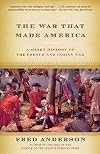
Good Book for the Casual Reader of History
Professor Anderson's book gives us about as complete a recounting of the French And Indian War as can be accomplished in under 300 pages. In "The War That Made America" he has deftly related the events of this period with sound explanations of the struggles and motivations that brought participants from so many different social and political groups to this conflict. He thoroughly explains what was stake for the parties involved and the consequences for nations and leaders, with particular emphasis on the contributions of George Washington and how the expulsion of the French from North America and the imperial actions of the British crown created the events and climate that brought on the American Revolution.
The most significant contribution of this book is how Mr. Anderson has made an understanding of the French And Indian War accessible in a volume aimed at the general reader of history. I highly recommend this book to other general history readers.
Professor Anderson's book gives us about as complete a recounting of the French And Indian War as can be accomplished in under 300 pages. In "The War That Made America" he has deftly related the events of this period with sound explanations of the struggles and motivations that brought participants from so many different social and political groups to this conflict. He thoroughly explains what was stake for the parties involved and the consequences for nations and leaders, with particular emphasis on the contributions of George Washington and how the expulsion of the French from North America and the imperial actions of the British crown created the events and climate that brought on the American Revolution.
The most significant contribution of this book is how Mr. Anderson has made an understanding of the French And Indian War accessible in a volume aimed at the general reader of history. I highly recommend this book to other general history readers.
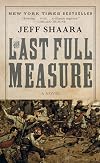
Enlightening
This novel, well-written and engaging, brings a level of understanding of the participants of the Virginia campaigns in 1864-5 that cannot be gotten from reading the historical accounts of the engagements. The effort to comprehend the sheer numbers of the casualties while reading historical accounts of Civil War battles has often left me with questions. Why did they do it? Where did these men find such motivation? How could they continue for so long? Good historical fiction can fill these gaps. Jeff Shara has provided much understanding with "The Last Full Measure." It is engaging, suspenseful and compassionate. I highly recommend it.
This novel, well-written and engaging, brings a level of understanding of the participants of the Virginia campaigns in 1864-5 that cannot be gotten from reading the historical accounts of the engagements. The effort to comprehend the sheer numbers of the casualties while reading historical accounts of Civil War battles has often left me with questions. Why did they do it? Where did these men find such motivation? How could they continue for so long? Good historical fiction can fill these gaps. Jeff Shara has provided much understanding with "The Last Full Measure." It is engaging, suspenseful and compassionate. I highly recommend it.
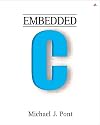
Maybe the best technical book I've ever read.
This may be the best technical book that I've ever read, and I've read a bunch. I can't say enough about Dr. Pont's accomplishment with this book.
He clearly and concisely takes the reader/student through the basics of programming embedded devices. He uses the 8051 with the Keil compiler as an example platform and provides adequate code listing examples. If you're an embedded guru with decades of experience in microcontroller programming this book may not be for you. However, if you're one of us, from a computer science background, whose embedded experience comes from programming at the application level, then I highly recommend "Embedded C" without reservation.
This may be the best technical book that I've ever read, and I've read a bunch. I can't say enough about Dr. Pont's accomplishment with this book.
He clearly and concisely takes the reader/student through the basics of programming embedded devices. He uses the 8051 with the Keil compiler as an example platform and provides adequate code listing examples. If you're an embedded guru with decades of experience in microcontroller programming this book may not be for you. However, if you're one of us, from a computer science background, whose embedded experience comes from programming at the application level, then I highly recommend "Embedded C" without reservation.
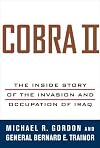
We Weep; those of us who supported the decision to invade Iraq and those of us who did not.
The authors present the pageant of blunders that is the Iraq War. This is a disheartening account of the decisions and events that has led us to where we are today. Whether you supported the initial decision to invade or not, the questions before all of us today, are what do we do now, and what must be done to resolve the Iraq dilemma. To address these decisions we must have some understanding of what happened. Mr. Gordon and General Trainor have compiled a detailed and rigorous account of the miscalculations, misconceptions, misjudgments, misunderstandings and misstatements by both civilian and military leaders. Though the authors have gone to extraordinary lengths to be dispassionate and unbiased, they have named names and shown no favoritism in recounting disastrous decisions and their resultant consequences. Their account will fill you with sadness and rage. Perhaps that is where we need to begin to extricate ourselves from this nightmare. I highly recommend this book.
The authors present the pageant of blunders that is the Iraq War. This is a disheartening account of the decisions and events that has led us to where we are today. Whether you supported the initial decision to invade or not, the questions before all of us today, are what do we do now, and what must be done to resolve the Iraq dilemma. To address these decisions we must have some understanding of what happened. Mr. Gordon and General Trainor have compiled a detailed and rigorous account of the miscalculations, misconceptions, misjudgments, misunderstandings and misstatements by both civilian and military leaders. Though the authors have gone to extraordinary lengths to be dispassionate and unbiased, they have named names and shown no favoritism in recounting disastrous decisions and their resultant consequences. Their account will fill you with sadness and rage. Perhaps that is where we need to begin to extricate ourselves from this nightmare. I highly recommend this book.
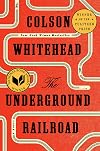
Wait! What?
Mr. Colson does a excellent job of portraying the abhorrent cruelty of slavery as it was practiced in the United States. However, it’s difficult to find a reason why he veered so far away from credible history. In Colson’s underground railroad, steam locomotives actually travel through early nineteenth century stone tunnels under the South. There is also a high-rise in South Carolina. In this version of American history, the antebellum South Carolina government is rescuing slaves from the plantation by purchasing them and teaching them to read. While, at the same time forcing tubal ligations on the emancipated women, a procedure not performed until after the Civil War. Is this supposed to be allegorical, and I missed it? And all of this in the first five chapters. I quit reading at this point.
Mr. Colson does a excellent job of portraying the abhorrent cruelty of slavery as it was practiced in the United States. However, it’s difficult to find a reason why he veered so far away from credible history. In Colson’s underground railroad, steam locomotives actually travel through early nineteenth century stone tunnels under the South. There is also a high-rise in South Carolina. In this version of American history, the antebellum South Carolina government is rescuing slaves from the plantation by purchasing them and teaching them to read. While, at the same time forcing tubal ligations on the emancipated women, a procedure not performed until after the Civil War. Is this supposed to be allegorical, and I missed it? And all of this in the first five chapters. I quit reading at this point.
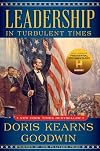
Yearning for a Rebirth of this Leadership
Dr Goodwin’s has written a truly stirring portrait of what real leadership is and how it manifests.
If you only have time for one chapter, don’t miss Chapter 9. However, the rest of the book is not to be missed. “Leadership” is organized into a three main section, each containing a chapter on each of Goodwin’s four presidential leaders, Lincoln, T. Roosevelt, FDR, and LBJ, for a total of 12 chapters. The first section recounts their early live, the second their rise to public life, and the third a demonstration of their leadership in troubled times. There is also a forward and epilogue.
The author has published extensively on all four of these presidents. So, there is little new in terms of biographical facts of which Dr. Goodwin’s readers are not already aware. Similarly, the coverage of their presidential leadership is not meant to be comprehensive. For instance, little is made of President Johnson’s profound lack of leadership in his handling of the Vietnam War.
Those of us who pick up this book and read it are left with a deep understanding of leadership on a world-stage scale looks like, and a fervent desire to sea such leadership addressing our current troubles.
Dr Goodwin’s has written a truly stirring portrait of what real leadership is and how it manifests.
If you only have time for one chapter, don’t miss Chapter 9. However, the rest of the book is not to be missed. “Leadership” is organized into a three main section, each containing a chapter on each of Goodwin’s four presidential leaders, Lincoln, T. Roosevelt, FDR, and LBJ, for a total of 12 chapters. The first section recounts their early live, the second their rise to public life, and the third a demonstration of their leadership in troubled times. There is also a forward and epilogue.
The author has published extensively on all four of these presidents. So, there is little new in terms of biographical facts of which Dr. Goodwin’s readers are not already aware. Similarly, the coverage of their presidential leadership is not meant to be comprehensive. For instance, little is made of President Johnson’s profound lack of leadership in his handling of the Vietnam War.
Those of us who pick up this book and read it are left with a deep understanding of leadership on a world-stage scale looks like, and a fervent desire to sea such leadership addressing our current troubles.
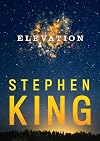
King Confronts His Mortality
If you are expecting some of Stephen King’s macabre thrills from this Halloween release, you’re going to be disappointed. The two short stories in this book, “Elevation” and “Laurie” are not at all what we’ve come to expect from this author. Stephen King has always had trouble with endings. Without a doubt he is one of the elite story-tellers our time. He can often enthrall us on the first page and keep us riveted through very long and twisted plots. However, he has most often resorted to fantastical sequences that surpass most readers abilities to suspend disbelief in ending his tales. Now it appears, he may be engaging is similar fantasies as he approaches his own life’s denouement.
Reading “Elevation” is a lot like watching your favorite professional athlete’s attempt to prolong his competitive career long after its zenith, and past even the point where the cleats should have been hung up. As you watch, you remember the performances of the past but are keenly aware that they are gone forever. In this book SK has put together the prose style we have come to love, an over abundance of sentimentalism, a smattering of paternalism, and another fantastical magic ending.
The second and shorter story contained in this book, “Laurie,” will probably be a great hit with the dog lovers among us. But, as one who grew up in Florida all I have to say is, it’s never a good idea to walk your dog along the banks of waterways that show more may be home to alligators. show less
If you are expecting some of Stephen King’s macabre thrills from this Halloween release, you’re going to be disappointed. The two short stories in this book, “Elevation” and “Laurie” are not at all what we’ve come to expect from this author. Stephen King has always had trouble with endings. Without a doubt he is one of the elite story-tellers our time. He can often enthrall us on the first page and keep us riveted through very long and twisted plots. However, he has most often resorted to fantastical sequences that surpass most readers abilities to suspend disbelief in ending his tales. Now it appears, he may be engaging is similar fantasies as he approaches his own life’s denouement.
Reading “Elevation” is a lot like watching your favorite professional athlete’s attempt to prolong his competitive career long after its zenith, and past even the point where the cleats should have been hung up. As you watch, you remember the performances of the past but are keenly aware that they are gone forever. In this book SK has put together the prose style we have come to love, an over abundance of sentimentalism, a smattering of paternalism, and another fantastical magic ending.
The second and shorter story contained in this book, “Laurie,” will probably be a great hit with the dog lovers among us. But, as one who grew up in Florida all I have to say is, it’s never a good idea to walk your dog along the banks of waterways that show more may be home to alligators. show less
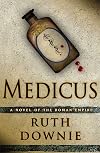
Medicus
Great Book with Better Research
3.5 Stars
In this novel Ms. Downie provides plenty of rich detail to give some insight into life of this imaginary army doctor of with Hadrian’s Roman Legions stationed in Britain. Coupled this tapestry of period detail with a moderately interesting story and you have a pretty good novel. However, there is a lack authenticity to all this circumstantiality that gnaws at the reader’s consciousness enough to detract from the work overall.
Recommended: Yes, with reservations.
Great Book with Better Research
3.5 Stars
In this novel Ms. Downie provides plenty of rich detail to give some insight into life of this imaginary army doctor of with Hadrian’s Roman Legions stationed in Britain. Coupled this tapestry of period detail with a moderately interesting story and you have a pretty good novel. However, there is a lack authenticity to all this circumstantiality that gnaws at the reader’s consciousness enough to detract from the work overall.
Recommended: Yes, with reservations.
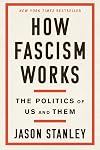
A Warning Too Clear to Ignore
Setting aside Dr. Stanley’s far-left-of-me political history and the fact that he studied at MIT in the same department where Noam Chomsky teaches, this short work is a clear, concise, and a relatively non-polemic look at what fascism is and its current rise in the world: Poland, Brazil Norway, North Korea, Italy the US, etc. Many of us who came of age in the shadow WWII long believed that our parents and grandparents had defeated fascism once and for all in the 1940’s. Apparently, we were quite mistaken.
In just ten chapters Dr. Stanley explains how fascism takes hold. We stood in wonder and confusion when we looked at what the fascist did in the twentieth century. We asked how the good people of these countries could have committed these atrocities. He lays out the template used by the fascists to gain and then solidify power: focus on community decline, focus on loss of status – both personal and national, the rise of victimhood culture, relief sought from violent extremist organizations stressing some form of a more pure citizenship, nationalistic militancy, co-opting tradition power structures, creation of emergent scenarios requiring the suspension liberal democratic liberties and constitutional guarantees, and cleansing of scapegoat classes and non-aligned political groups, and of course gas-lighting with continual Big Lie.
The Polish journalist, Anne Applebaum, just published an interesting long-form piece in the October 2018 show more edition of “The Atlantic” corroborating many of Dr.’s Stanley’s claims concerning the current re-emergence of fascism in Europe. Reading Stanley’s book and Applebaum’s piece should give any lover of liberal democratic liberty pause. show less
Setting aside Dr. Stanley’s far-left-of-me political history and the fact that he studied at MIT in the same department where Noam Chomsky teaches, this short work is a clear, concise, and a relatively non-polemic look at what fascism is and its current rise in the world: Poland, Brazil Norway, North Korea, Italy the US, etc. Many of us who came of age in the shadow WWII long believed that our parents and grandparents had defeated fascism once and for all in the 1940’s. Apparently, we were quite mistaken.
In just ten chapters Dr. Stanley explains how fascism takes hold. We stood in wonder and confusion when we looked at what the fascist did in the twentieth century. We asked how the good people of these countries could have committed these atrocities. He lays out the template used by the fascists to gain and then solidify power: focus on community decline, focus on loss of status – both personal and national, the rise of victimhood culture, relief sought from violent extremist organizations stressing some form of a more pure citizenship, nationalistic militancy, co-opting tradition power structures, creation of emergent scenarios requiring the suspension liberal democratic liberties and constitutional guarantees, and cleansing of scapegoat classes and non-aligned political groups, and of course gas-lighting with continual Big Lie.
The Polish journalist, Anne Applebaum, just published an interesting long-form piece in the October 2018 show more edition of “The Atlantic” corroborating many of Dr.’s Stanley’s claims concerning the current re-emergence of fascism in Europe. Reading Stanley’s book and Applebaum’s piece should give any lover of liberal democratic liberty pause. show less
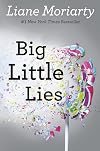
Oh, Calamity!
Solid 4-Star
I expect the exclamation, “Oh, Calamity!” to enter the English-speaking popular lexicon as this novel gains in popularity. Despite the introduction of so many important characters at the beginning, this novel begins as an easy-to-read account several young Australian moms’ day-to-day involvement in their children’s school. Don’t be fooled. Ms. Moriarity is about to grab you by the shoulders and fill you with a desire to turn the page (or in my case, continue listening).
The narrator, Caroline Lee, delivers this novel in the one voice it deserves with all the nuance the author intended. Bravo!
Recommended: Yes
Solid 4-Star
I expect the exclamation, “Oh, Calamity!” to enter the English-speaking popular lexicon as this novel gains in popularity. Despite the introduction of so many important characters at the beginning, this novel begins as an easy-to-read account several young Australian moms’ day-to-day involvement in their children’s school. Don’t be fooled. Ms. Moriarity is about to grab you by the shoulders and fill you with a desire to turn the page (or in my case, continue listening).
The narrator, Caroline Lee, delivers this novel in the one voice it deserves with all the nuance the author intended. Bravo!
Recommended: Yes
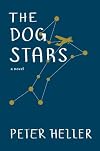
If A Poet Were to Write A Post-Apocalyptic Novel
4.0 Stars
“The Dog Stars” will definitely take a special place in the pantheon of post-apocalyptic literature. This novel will mark a definite fork in the genre. A fork where future novels of this type will focus more on the human emotional impact of the survivors not just the details of their struggle to survive. Personally, I believe it will be as important to the genre as “The Book of Job” is to the development of monotheistic theology.
Mr. Heller’s writing style is unique. His clipped short sentences are great for moving the story along. However, he does not always stay with them. He sometimes gets very descriptive and ventures off into hunting – fishing – flying tangents that are both informative and entertaining. In a few instances these digressions are overly long and distracting. Taken as a whole his writing style in the book beautiful and a pleasure to read.
One last note: Toward the end of the novel, the author includes some sex scenes that are very detailed and descriptive without being erotic. Still not sure how he did that.
Recommended: Yes
4.0 Stars
“The Dog Stars” will definitely take a special place in the pantheon of post-apocalyptic literature. This novel will mark a definite fork in the genre. A fork where future novels of this type will focus more on the human emotional impact of the survivors not just the details of their struggle to survive. Personally, I believe it will be as important to the genre as “The Book of Job” is to the development of monotheistic theology.
Mr. Heller’s writing style is unique. His clipped short sentences are great for moving the story along. However, he does not always stay with them. He sometimes gets very descriptive and ventures off into hunting – fishing – flying tangents that are both informative and entertaining. In a few instances these digressions are overly long and distracting. Taken as a whole his writing style in the book beautiful and a pleasure to read.
One last note: Toward the end of the novel, the author includes some sex scenes that are very detailed and descriptive without being erotic. Still not sure how he did that.
Recommended: Yes
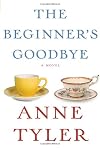
Not an Anne Tyler Fan, BUT…
If you’ve ever heard a dear person from the other side suddenly say your name as if right behind you then, you’re going find part of your life’s experience in this novel. The protagonist, Aaron, with his overprotective and meddlesome sister, Nandina, operate a small book publishing company. Ms Tyler artfully gives us a picture of a very private man with physical limitations resulting from a childhood illness. He has habitually resisted help (in his eyes unwarranted coddling) from his sister and others to the point where he has somewhat isolated himself. Then, he meets Dorothy in the course of his job as an editor and falls profoundly in love with this stolid woman. They wed to form a marriage that appears to work for both of them, before tragedy suddenly and irrevocably takes Dorothy away from him.
In response to his dreadful loss, Aaron turns even more inward, more defensive. He become intentionally remote to those who want to reach out to him. As he spirals deeper into his grief, Dorothy… Well, I think you may want to read this yourself.
If you’ve ever heard a dear person from the other side suddenly say your name as if right behind you then, you’re going find part of your life’s experience in this novel. The protagonist, Aaron, with his overprotective and meddlesome sister, Nandina, operate a small book publishing company. Ms Tyler artfully gives us a picture of a very private man with physical limitations resulting from a childhood illness. He has habitually resisted help (in his eyes unwarranted coddling) from his sister and others to the point where he has somewhat isolated himself. Then, he meets Dorothy in the course of his job as an editor and falls profoundly in love with this stolid woman. They wed to form a marriage that appears to work for both of them, before tragedy suddenly and irrevocably takes Dorothy away from him.
In response to his dreadful loss, Aaron turns even more inward, more defensive. He become intentionally remote to those who want to reach out to him. As he spirals deeper into his grief, Dorothy… Well, I think you may want to read this yourself.
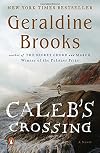
It is the authenticity of the voice of the protagonist, Bethia Mayfield, which makes this an intriguing read and such an outstanding literary achievement. I have read only a very limited amount about the Puritan Pilgrims of this era – enough to have recognized some of the major events and names of persons of the time, such as Squanto, Josiah Winslow, and King Philip’s War. And from this perspective, it is not reasonable to attack Ms. Brooks over her manipulation of historical facts or her composite historical characters in this work. This is a novel. It is the historical novelist’s obligation and goal to give the reader a deeper understanding of past times and events through a blend of storytelling and diligent research. In this regard the author has succeeded in full measure. Bethia’s voice rings true, and her use of 17th century vocabulary and phrasing is both charming and captivating. This is done as she relates her story as a bystander to the historical occurrence of Caleb’s crossing from his Wampanaug upbringing to the English culture and becoming the first Native American graduate of Harvard.
As remarkable an achievement and pleasure it is to read that “Caleb’s Crossing “ is, it is not without its flaws. The reader cannot help but hear the scorn in Ms. Brooks’ voice as Bethia struggles with the unfair and unequal treatment of women in her time and society. And not only Bethia’s society, but the Native American culture’s misogyny does not escape. show more This tone becomes tiresome and preachy by the end of the story. Additionally, she does not quite create that tension in the story that compels the reader to continue. Granted the character study of the young Calvinist girl is intriguing. But Ms Brooks misses her previous level of accomplishment in this work. That being said, “Caleb’s Crossing” is very good and well worth the reader’s time. show less
As remarkable an achievement and pleasure it is to read that “Caleb’s Crossing “ is, it is not without its flaws. The reader cannot help but hear the scorn in Ms. Brooks’ voice as Bethia struggles with the unfair and unequal treatment of women in her time and society. And not only Bethia’s society, but the Native American culture’s misogyny does not escape. show more This tone becomes tiresome and preachy by the end of the story. Additionally, she does not quite create that tension in the story that compels the reader to continue. Granted the character study of the young Calvinist girl is intriguing. But Ms Brooks misses her previous level of accomplishment in this work. That being said, “Caleb’s Crossing” is very good and well worth the reader’s time. show less
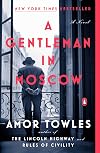
This is a very well written account of an aristocrat who somehow is able to maintain a life-style of privilege that crosses the Russian Revolution and into the mid-twentieth century. It is set in the 5-star Hotel Metropol in Moscow, in which the protagonist, Alexander Rostov, is serving a life sentence for writing subversive poetry. From this vantage point on Red Square Rostov witnesses much of the upheaval of the decades following the Bolshevik Revolution.
What saves this novel is Towles’ beautiful descriptive writing and cultural references.
Recommended: For those readers seeking an account of the sumptuous life of a Russian aristocrat
What saves this novel is Towles’ beautiful descriptive writing and cultural references.
Recommended: For those readers seeking an account of the sumptuous life of a Russian aristocrat
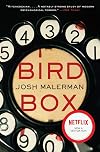
From the “Bird Box” page on Amazon (my editorial comment in brackets []): “Written with the narrative tension of The Road [NOPE] and the exquisite terror of classic Stephen King[NOPE], Bird Box is a propulsive, edge-of-your-seat horror thriller, set in an apocalyptic near-future world[NOPE]—a masterpiece of suspense from the brilliantly imaginative Josh Malerman[NOPE].“
Recommendation: Nope
Recommendation: Nope