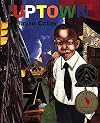
In the story of Uptown, Bryan Collier walks the reader through his favorite places from his childhood. Locations such as the Lenox Theater, Apollo Theater, and the Hudson River are mentioned in this book. The illustrations are what makes this story come alive. The brownstone houses are describe as looking like chocolate, so Collier had the brownstone buildings be made of of chocolate bars in the illustration. The unique combination of watercolor and collage combines actual pictures of the city with paintings by Collier. I would recommend this story for emergent readers because of the detailed illustrations. This book should be read aloud so that the reader can explain the different aspects of the story to a child that doesn't know a lot about New York City.
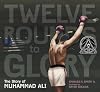
This story captures the life of Muhammad Ali as a child, then a champion, and then an elderly man. The story is told round by round and explains the hardships and glories of Muhammad Ali. Bryan Collier brings the story alive by creating realistic illustrations of Muhammad Ali. The illustrations show much feeling throughout the entire book. For example, everytime contact is made in the story, a burst of orange, red, and gold is shown the on the page. Collier also inserts symbolism by ending the book with a single balloon floating into the sky. This balloon represents Ali's power and fragility. I would recommend this book to fluent readers because of the amount of text and the vocabulary that is used in the story.
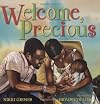
This story is about welcoming a new baby into the world. However, without the beautiful and creative illustrations by Bryan Collier the reader would not be able to understand what the story is about. The only text in the story that hints that the story is about a newborn baby is on the first page, "Welcome precious." Collier's illustrations are what allows the reader to see that the story is about bringing a new baby home. Collier creates synergy between the text and the illustrations by using bright colors, up close pictures, and little white space which fill the reader with warm and loving emotions.
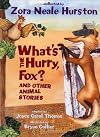
This book is a collection of pourquoi tales that were passed down through generations as oral traditions. It is compased of short stories that tell how animals have come to be how they are today. In this book, the illustrator creates synergy between the text and illustrations by portraying the animals in a human-like way. The animals are standing on two legs and wearing clothes while still looking like realistic animals. By making the animals have human-like characteristics, Collier is helping the readers relate to the text and animals. Collier also adds interesting and additional information by showing a buzzard wearing a tool belt by having him hang Chirstmas lights on his house.
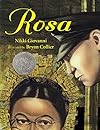
This book is about Rosa Parks and how her one word, “No,” jumpstarted the Civil Rights movement. I was a bit disappointed to learn that the book was not as much about Rosa Parks as I thought it would be. The text is powerful for showing Parks’ role in igniting the Civil Rights movement, but it is not as much about her as is expected by the title. Collier’s illustrations, yet again, powerfully convey the mood of the time period. He also uses a lot of symbolism in the book. For instance, Parks’ face was much lighter than the rest of the people in the book because Collier wanted her to appear saint-like. This book would be appropriate for developing and fluent readers. For developing readers, it offers a brief introduction into the concept of civil rights and Rosa Parks’ role in this movement. If it is read to developing readers, it will require teacher-assisted discussion. Fluent readers would enjoy this book as well because they would have a greater understanding of Parks and the Civil Rights movement. This story has won the Caldecott Award and the Coretta Scot King Award for illustrations.
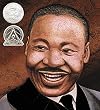
This book is a brief biography of Dr. Martin Luther King, Jr. It is written and illustrated in a unique way that makes more than just another biography of this famous man. The book is written using powerful quotes from Dr. King that are strengthened through Collier’s illustrations. Collier uses a lot of symbolism in this book, which he notes in the front of the book. For instance, the book contains several stained glass windows, which Collier used to represent the light coming through the dark. He also has four candles at the end of the book that are meant to represent the four girls who were killed in the Sixteenth Street Baptist church during the Civil Rights movement. Collier has a strength in conveying mood or tone through illustrations, which he makes use of in this book. Collier’s illustrations help the reader to feel the emotion of the Civil Rights movement. This book would be appropriate for both developing and fluent readers. For developing readers, it offers a brief introduction into the concept of civil rights and Dr. Martin Luther King, Jr. as long as there is teacher-assisted discussion. Fluent readers would enjoy this book as well because they would have a greater understanding of Dr. King and the issues of his time. This book won the Caldecott Award and the Coretta Scott King Award for illustrations.
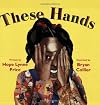
These Hands is a simple picture storybook about what a child can do with her hands. This book is appropriate for emergent readers. There is one character and the text is rhythmic and predictable. The colorful illustrations supply additional details of the story and the bright colors used show the excitement and happiness of the main character. The illustrations are fairly detailed for emergent readers, but do show situations that would be familiar to young children. This would be a good choice for a one on one read aloud with a young child.
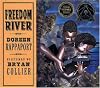
Freedom River is a picture storybook based on a true story about a man who helps a slave family cross the Ohio River into freedom. This book is appropriate for developing readers, as it has a more complex plot and detailed illustrations. The dark, muted tones of the illustrations create synergy in Freedom River by conveying the mood and tone of the story. The colors evoke the feelings of desperation and determination of the characters. Bryan Collier uses symbolism in his illustrations to represent crossing the river into freedom. He also believes in guardians who protect us and incorporated guardians of the escaping slave family into his illustrations. This is a wonderful book to read when teaching children about the Underground Railroad and slavery. This book has won the Coretta Scott King Award.