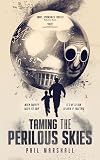
This book quickly immersed me in the characters, the plot and the science. What happens when the technology used by over a billion people every day stops working, leaving them floating in mid-air or space with a countdown to failure and crash landings? This book, “Taming the Perilous Skies”, starts with the premise that anti-gravity technology is commercially available and widely used in everything from single-seat personal aerials to floating hotels and spacecraft. It has replaced every other form of mass transportation. One day, in the year 2076, it stops working, with over a billion people in the air. This story of the subsequent political, technical, social, religious and personal impacts is thrilling, saddening and challenging. Quantum computing, materials science for anti-gravity and the physics of fundamental particles all come into play. The job of solving the cause of the Fall, as the event is called, involves science geniuses, the White House, international figures, the church and even the pope. There are curmudgeonly, elderly inventors, young science nerds and leaders of agencies tasked with chasing down the initiating events and responsible people. And there are ordinary people, suspended in the air or in space, awaiting a fix before time runs out. The technology and science are believable. The risk of global reliance on a single technology is made real. This review is based on an Advance Reader copy.
A human suffers a traumatic brain injury and has microchips implanted in his brain to help him recover. What ensues is a tale of two different realities. In one reality he is on the road to recovery with a loving father shepherding him through rehabilitation. In another reality he is held captive in a lab and subjected to repeated, torturous procedures. He cannot determine which reality is true and which is a figment of his imagination. He cannot control how he moves between the two realities. The twist to this book is that the author says he wrote it in collaboration with an artificial intelligence and challenges the reader to determine who/what wrote each section. The story was not compelling to me. The protagonist is in a confused muddle for much of the time. When he is able to get out of the lab he doesn't make sensible choices. When he is in rehab with his father, he is left to wander a city alone, even though he is still recovering from his situation.. And yet, even brain-injured, visibly confused and not able to understand the world he is in, he is able to meet a beautiful woman, who finds him, inexplicably, irresistible, and then have sex with her within a couple of days. I just find this sexist bias a bit much in 2023. I received an advance copy but the numerous typos, poor grammar and weird phrases were a distraction. Maybe the AI wrote those sections?
 This review was written for LibraryThing Early Reviewers.
This book of short stories by Jacob Appel is wonderful. Each story starts with a jolt. Imagine a being from a distant planet in disguise on Earth as a Latvian running a Latvian restaurant in Alabama. Imagine a girl facing her own imminent death by practicing for the afterlife. Imagine people who died being resurrected and in some cases bringing tales of what really happened in their life or who killed them. Each of these stories unfold amidst the ordinary woes of everyday life - abortion protests, careers, climate change(cooling rather than warming) and love. Appel has a breadth of knowledge and experience that is rare. He is able to add in casual details about medicine, law, the environment, physical sciences, history and nature that further enrich the pleasure of these stories.
This review was written for LibraryThing Member Giveaways.
Einstein's Beach House is a wonderful collection of short stories, each begins with a deceptively simple set up. One story begins in a beach cottage that has been in the family for generations. The parents are financially stressed and the father starts to give tours based on a mistaken travel guide statement that Einstein once lived there. After this modest con job has been going on for a short while, we are suddenly pushed through the looking glass and everything changes. What is truth? What is imaginary? What happens when the imaginary upends reality? Appel is an interesting writer. I look forward to reading his other books.
This review was written for LibraryThing Member Giveaways.
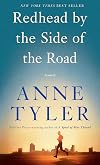
I have been an Anne Tyler fan forever and have read and enjoyed every book, until now. Redhead by the Side of the Road is such a disappointment with the paucity of character development and shallow story line. It feels like the first third of a larger work. It ends abruptly. The only character that is developed is Micah. He is similar to characters in her earlier works. Micah is a self-absorbed loner with an affinity for strict routines and lack of understanding about how relationships work or how others think. His interactions with others are off-key because he misses social clues. The other characters that show up are two-dimensional at best. We don't get to know or appreciate them because we only see them through Micah's myopic viewpoint and he is not able to comprehend how others might have a feeling or thought process that is different from his own internal logic. I would have enjoyed seeing the inner workings of Cass, Micah's woman friend. I would like to know how Brink, privileged son of Micah's college girlfriend, grew into a prickly college student who would rather run away from home to a stranger's apartment than have a slightly difficult chat with his loving parents. How did Micah become the regimented, under-achiever that he is now? The text provides some anecdotes but not enough to really explain why he made the choices that led him to live in the basement as an apartment super and work part time as a tech support person. Why did he not have the resilience to show more do something more with the his gifts and talents? Why did he give up? Sadly, these are questions that are not adequately resolved in this book. Perhaps if it had been presented as a novelette rather than a novel then I would have enjoyed it more by having lower expectations. show less
The gentle art of Swedish death cleaning : how to free yourself and your family from a lifetime of clutter by Margareta Magnusson
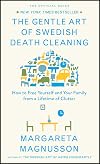
This gentle book tells gentle stories from the author's life and how death cleaning became important to her. She writes about how she came to understand the need for reducing possessions, particularly when she had to go through households after the deaths of several loved ones and when she had to downsize and move to a smaller home. However she does not provide specific ideas, methodology or tips that are not generally known. The stories are interesting but the book was not useful to me. Some of her suggestions are counter productive. One suggestion that I particularly dislike is to give your unwanted items and knick knacks to others as hostess gifts or to relatives when they come to visit. It seems if you don't want to keep an item then you should not gift it to others unless they have specifically expressed strong interest in it. Otherwise you are just transferring your stuff to someone else's death cleaning pile. The truth that she tells is that if you don't do your own death cleaning and thereby show your heirs what is important to you then, once you die, it is likely everything will just be hauled away in a big truck because no-one will have the time or knowledge to winnow out the important items. The other truth she tells is that we should share our cherished stories now with our children and grand children rather than hope they will appreciate our items after we are gone.
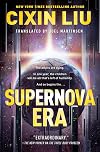
The premise of Supernova Era is interesting but the execution is horrible. The book feels like a bunch of half-formed ideas that were jumbled together without much effort to make them sensible or believable.
The premise is that radiation from a supernova results in the eventual death of everyone over the age of 13 on Earth. The adults know that they have less than one year to prepare the children to survive and thrive.
First of all, the idea that any event would have 100% mortality for everyone over 13 and have a >99% survival rate for 13-year olds and 100% survival rate for children 12 and under is not believable. Radiological health effects and outcomes fall on a curve, not a step function.
Set in China, the story reflects the Chinese cultural and political environment. However, the expectation that children, even the most intelligent ones, can maintain the technology, supply chain, education system and healthcare of a nation is ludicrous. The author expects the reader to believe that children can be taught to fly planes, operate power plants, mine coal, perform surgery, run water treatment systems and do everything else needed to support modern society, and learn it all in about ten months. There is not much discussion of the inevitable high accident and fatality rates that would ensue in such a scenario. And, predictably, the children lose interest in performing adult work fairly quickly.
The Chinese child leaders are still mulling over how to get the 300 million show more children in China to return to work so the nation can have food and clean water and power, when they are summoned to America for a summit of all the nations of the world. In that meeting, inexplicably, all are persuaded by the American child leaders to participate in what is styled as Olympic-style games but is in reality just a disastrous war in Antartica, with real weapons, aircraft carriers, fighter jets, tanks and nuclear weapons. The death toll is in the hundreds of thousands. I still don't get why this was considered necessary or fun. And meanwhile, how are the children back in China surviving? We don't get to know.
In spite of this outcome the Chinese child leaders then proceed to embrace the next, even more outrageous so-called game proposed by the American child leaders with no real explanation provided by the author as to why this is a good idea.
The story transitions abruptly to a wonderful scene in the epilogue with no explanation of how this came about.
Save your time and energy for a better book. Don't bother with this one. show less
The premise is that radiation from a supernova results in the eventual death of everyone over the age of 13 on Earth. The adults know that they have less than one year to prepare the children to survive and thrive.
First of all, the idea that any event would have 100% mortality for everyone over 13 and have a >99% survival rate for 13-year olds and 100% survival rate for children 12 and under is not believable. Radiological health effects and outcomes fall on a curve, not a step function.
Set in China, the story reflects the Chinese cultural and political environment. However, the expectation that children, even the most intelligent ones, can maintain the technology, supply chain, education system and healthcare of a nation is ludicrous. The author expects the reader to believe that children can be taught to fly planes, operate power plants, mine coal, perform surgery, run water treatment systems and do everything else needed to support modern society, and learn it all in about ten months. There is not much discussion of the inevitable high accident and fatality rates that would ensue in such a scenario. And, predictably, the children lose interest in performing adult work fairly quickly.
The Chinese child leaders are still mulling over how to get the 300 million show more children in China to return to work so the nation can have food and clean water and power, when they are summoned to America for a summit of all the nations of the world. In that meeting, inexplicably, all are persuaded by the American child leaders to participate in what is styled as Olympic-style games but is in reality just a disastrous war in Antartica, with real weapons, aircraft carriers, fighter jets, tanks and nuclear weapons. The death toll is in the hundreds of thousands. I still don't get why this was considered necessary or fun. And meanwhile, how are the children back in China surviving? We don't get to know.
In spite of this outcome the Chinese child leaders then proceed to embrace the next, even more outrageous so-called game proposed by the American child leaders with no real explanation provided by the author as to why this is a good idea.
The story transitions abruptly to a wonderful scene in the epilogue with no explanation of how this came about.
Save your time and energy for a better book. Don't bother with this one. show less

"I have taught myself not to worry so much. In the end, all works out well and worrying is useless and self-destructive."
"A way to create order out of chaos. A way to create a Life of beauty and meaning. And that is no small achievement."
"How a life is formed.
How meaning is found.
How mistakes are made.
And how we have the courage to go on."
"A way to create order out of chaos. A way to create a Life of beauty and meaning. And that is no small achievement."
"How a life is formed.
How meaning is found.
How mistakes are made.
And how we have the courage to go on."
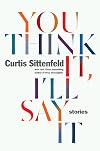
I was disappointed by the very first story in this latest book by Curtis Sittenfield and that disappointment set the bias for the remaining pages. In this story, "Gender Studies", the lead character is a professor of women's studies but does not appear to be able to use her professional learnings in managing her personal life. She gets talked into a sexual encounter with a taxi driver who she believes has found her missing driver's license. In other stories, women make more poor decisions that seem a bit naive for the current time period. I was actually saddened and a little depressed by the time I finished the book.
This review was written for LibraryThing Early Reviewers.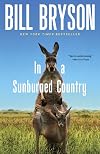
This travelogue is interesting and entertaining if you stay in the bubble that is Bryson's worldview. Unfortunately he is biased. It is a view of Australia limited to the perspective of the invaders and colonizers with only perfunctory acknowledgement of the original inhabitants. There are plenty of encounters and conversations with white Australians but none whatsoever with Aboriginal people or even the many people of Asian heritage and other nationalities who made up the population at the time of Bryson's travels.
He writes comprehensively about the history of white Australia but makes only cursory mention (about 4 pages) of the challenges imposed on the Aboriginal people by invasion, colonization, legal genocide, seizing of land, introduction of invasive animals and plants which have terraformed the continent and the impact of disenfranchisement from citizenship for most of the years since the invasion. He only devotes a few pages to the pre-invasion history, even though the Aboriginal people have been in Australia for at least 40,000 years and maybe as long as 60,000 years.
He writes only a few paragraphs about the government program that separated generations of Aboriginal children from their parents in an effort at social engineering. Imagine, a van would drive up to your home, government workers would get out, seize all of your children and transport them thousands of miles away. You have no recourse because legally you have neither citizenship nor custody rights, show more only the government has custody of your children. You will never hear from or about them again. Your children are told their parents are either dead or do not want them anymore. The results were horrendous and predictable.
There also is no mention of any of the positive contributions of the indigenous people. He characterizes them as being invisible, he does not see them participating in any "productive capacity in the normal workaday world." It is startling and sad to read this statement. In reality, Aboriginal people in Australia are actively participating in many aspects of society. Maybe Bryson just had blinders on his eyes.
I purchased this book to prepare for a trip to Australia but had to put it down because of its limited perspective. I finished reading it after my trip. My experiences there just reinforced my initial negative impressions of the Bryson's writing. I also was disappointed by the flippant attitude, snide comments and off-color jokes. He spends a lot of time being bored or disappointed by various aspects of the country. But as he is on the road and stops off in very small towns it is to be expected that he will not find fine food, scintillating conversation or great cultural attractions every day. The same could be said of any small town in middle America. No reason to be so high-handed in criticism of them. There is a beauty in ordinary people carrying on with ordinary lives that he seems to miss. show less
He writes comprehensively about the history of white Australia but makes only cursory mention (about 4 pages) of the challenges imposed on the Aboriginal people by invasion, colonization, legal genocide, seizing of land, introduction of invasive animals and plants which have terraformed the continent and the impact of disenfranchisement from citizenship for most of the years since the invasion. He only devotes a few pages to the pre-invasion history, even though the Aboriginal people have been in Australia for at least 40,000 years and maybe as long as 60,000 years.
He writes only a few paragraphs about the government program that separated generations of Aboriginal children from their parents in an effort at social engineering. Imagine, a van would drive up to your home, government workers would get out, seize all of your children and transport them thousands of miles away. You have no recourse because legally you have neither citizenship nor custody rights, show more only the government has custody of your children. You will never hear from or about them again. Your children are told their parents are either dead or do not want them anymore. The results were horrendous and predictable.
There also is no mention of any of the positive contributions of the indigenous people. He characterizes them as being invisible, he does not see them participating in any "productive capacity in the normal workaday world." It is startling and sad to read this statement. In reality, Aboriginal people in Australia are actively participating in many aspects of society. Maybe Bryson just had blinders on his eyes.
I purchased this book to prepare for a trip to Australia but had to put it down because of its limited perspective. I finished reading it after my trip. My experiences there just reinforced my initial negative impressions of the Bryson's writing. I also was disappointed by the flippant attitude, snide comments and off-color jokes. He spends a lot of time being bored or disappointed by various aspects of the country. But as he is on the road and stops off in very small towns it is to be expected that he will not find fine food, scintillating conversation or great cultural attractions every day. The same could be said of any small town in middle America. No reason to be so high-handed in criticism of them. There is a beauty in ordinary people carrying on with ordinary lives that he seems to miss. show less
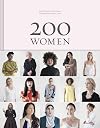
"200 Women" features interviews with 200 women, some are famous, others are obscure. But each one has accomplished significant works. They have diverse backgrounds and achievements - actors, scientists, researchers, social justice activists, survivors, writers, at least one US Supreme Court Justice (Go RBG!!!) and much more. Each one has a distinct voice and point of view. If you want to know what smart women are thinking and doing, read this book.
The features each women's response to five questions:
-What really matters to you?
-What brings you happiness?
-What do you regards as the lowest depth of misery?
-What would you change if you could?
-Which single word do you most identify with?
The format draws this reader in through the elegant layout. It devotes 1 or 2 pages of text to each subject and feature a full page photograph of each. The photos are not standard head shots, the photographer has managed to bring out something unique in each woman's face, body and stance. The endpapers show 200 slips of paper with each person's single word, signature and date. That feels so personal and intimate.
I received an advance copy of "200 Women" and find myself reading a few pages every day for insight and inspiration.
The features each women's response to five questions:
-What really matters to you?
-What brings you happiness?
-What do you regards as the lowest depth of misery?
-What would you change if you could?
-Which single word do you most identify with?
The format draws this reader in through the elegant layout. It devotes 1 or 2 pages of text to each subject and feature a full page photograph of each. The photos are not standard head shots, the photographer has managed to bring out something unique in each woman's face, body and stance. The endpapers show 200 slips of paper with each person's single word, signature and date. That feels so personal and intimate.
I received an advance copy of "200 Women" and find myself reading a few pages every day for insight and inspiration.
This review was written for LibraryThing Early Reviewers.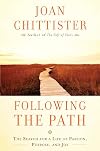
This is wonderful book for anyone who is searching for purpose in their life. We each have a gift and a calling. "Following the Path" helps one understand how to find and settle into the call and use the gift for the betterment of the lives of other people. The gift is that deep inborn talent, capability or interest that comes so easily to you that it seems to be almost effortless and yet others marvel at what you do and how you do it. Often one who is unusually gifted takes it for granted, seeing it as commonplace. Not that you don't work at it, you do. but it flows out of you rather than having to be forced. It is some singular ability that one takes to an high level of accomplishment almost without thinking. And it is something that you love to do. A call is when your life is lived to use your singular gift in the service of others. A call might be experienced at a young age or it may take decades to fully recognize and realize. "Raw ability, deep interests and personal commitment are the stuff it takes to find and shape and live into our call to both become something worth becoming and to give something worth giving to the rest of the world"
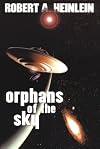
This early Heinlein tale of a generation ship is quite interesting given that it was published in 1941. The ship has suffered a disaster as a result of a mutiny many generations ago. The mutiny resulted in death of 90% of the ship's population. The subsequent struggle for survival has produced a bifurcated population. The first group is an illiterate peasant society with barely literate technocrats maintaining the crucial power systems and sages keeping a very distorted history alive. Parts of the history that are not understandable have morphed into a sort of religion. The population seems to have become mentally degenerate with some of the peasants barely able to speak. The second population group consists of mutated humans who dwell in the upper levels of the ship and are feared and hunted by the first group.
This story is very harsh with lots of weapons, violence and betrayals. There is cannabalism and infanticide. But it also features the awe on the part of the protagonist at seeing the stars for the first time and beginning to understand that there is something outside of the Ship and the the Trip is an actually journey to a destination and not a metaphor for the end of life.
The rating would have been much higher had it not been for how Heinlein treats the women in this story. Only three women are mentioned, only two of those three are given names and none of them have any dialogue or agency. The women are treated as chattel and brutalized by the men. That show more treatment makes this book one that I will not read again. show less
This story is very harsh with lots of weapons, violence and betrayals. There is cannabalism and infanticide. But it also features the awe on the part of the protagonist at seeing the stars for the first time and beginning to understand that there is something outside of the Ship and the the Trip is an actually journey to a destination and not a metaphor for the end of life.
The rating would have been much higher had it not been for how Heinlein treats the women in this story. Only three women are mentioned, only two of those three are given names and none of them have any dialogue or agency. The women are treated as chattel and brutalized by the men. That show more treatment makes this book one that I will not read again. show less
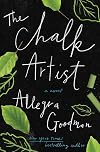
In The Chalk Artist a young teacher struggles to find her footing in a classroom of students who engage in typical teen behavior when she is not able to effectively establish control. She falls in love with an artist who is not gainfully employed but tremendously talented. It turns out that the teacher is the daughter of the leader of a very successful video gaming company and thus wealthy. She persuades her father to hire the artist and persuades the artist to take the job. Corporate rivalries ensue.
Another thread of the story focuses on a set of teenaged twins, one of whom is caught up in the immersive universe of the beta version of a highly anticipated new video game being developed by the company of the teacher's father. The other twin struggles with her self image and ultimately finds a way to craft an identity that feels right to her.
The immersive video game is a key feature of the story. The effect of the game is intriguing and mesmeric, however the science of how that 3-D immersion is achieved was not well thought out or believable.
This is a well written story and would have received four stars if not for the distracting bias toward whiteness. The beauty of various women is always attributed explicitly to the whiteness of their skin. The literature that the teacher focuses on celebrates white skin. No other skin colors are mentioned except one student whose skin is described as darker than all others in the class and he is tasked with reading aloud an show more unpleasant piece of literature.
I also found it puzzling that the teacher, who is pretty abject most of the time, finds only one student, one of the twins, to shower with lots of extra attention (daily tutoring). She does this in order to save him from a downward academic spiral but that student is smart, privileged and white. His chief problem is his self imposed willingness to devote his energies to the immersive video game and acts of vandalism rather than do his school work.
She puts no energy into learning more about the other students. She is not at all curious about the pregnant teen who is in what seems to be a predatory and abusive relationship. She puts no energy into learning more about the other students who exhibit various behavior patterns that should be red flags. She doesn't seem to value the other students except for how they respond to her own performance or lack thereof. show less
Another thread of the story focuses on a set of teenaged twins, one of whom is caught up in the immersive universe of the beta version of a highly anticipated new video game being developed by the company of the teacher's father. The other twin struggles with her self image and ultimately finds a way to craft an identity that feels right to her.
The immersive video game is a key feature of the story. The effect of the game is intriguing and mesmeric, however the science of how that 3-D immersion is achieved was not well thought out or believable.
This is a well written story and would have received four stars if not for the distracting bias toward whiteness. The beauty of various women is always attributed explicitly to the whiteness of their skin. The literature that the teacher focuses on celebrates white skin. No other skin colors are mentioned except one student whose skin is described as darker than all others in the class and he is tasked with reading aloud an show more unpleasant piece of literature.
I also found it puzzling that the teacher, who is pretty abject most of the time, finds only one student, one of the twins, to shower with lots of extra attention (daily tutoring). She does this in order to save him from a downward academic spiral but that student is smart, privileged and white. His chief problem is his self imposed willingness to devote his energies to the immersive video game and acts of vandalism rather than do his school work.
She puts no energy into learning more about the other students. She is not at all curious about the pregnant teen who is in what seems to be a predatory and abusive relationship. She puts no energy into learning more about the other students who exhibit various behavior patterns that should be red flags. She doesn't seem to value the other students except for how they respond to her own performance or lack thereof. show less
Cyan by Syd Logsdon
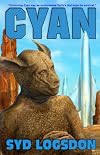
In Cyan the Earth is severely overcrowded and rapidly running out of resources. When potentially habitable planets are identified orbiting distant stars, expeditions are launched on long journeys at sub-light speeds to explore and identify which ones can be colonized. We follow a team lead by Keir Delacroix on Starship Darwin to a planet named Cyan. When they arrive they discover a world that has habitable zones but predatory wild life. They also discover a species, the Cyl, that could be sentient and intelligent but is currently very primitive. Colonization would inevitably result in the death of the Cyl, as has happened throughout human history when civilizations meet and there is a technology gap.
The story unfolds in three phases - the initial expedition, the return to earth and the subsequent colonization. The key characters struggle with their own conflicts around if and how the need to protect the Cyl outweighs the needs of humankind for a new world. One of the crew makes an extraordinary decision at great personal cost.
This book is a realistic treatment of the challenges of time dilation with near-lightspeed travel and group dynamics during long trips. I enjoyed the realistic depiction of exploration of an unfamiliar landscape and attempts to establish a foothold in a habitable but hostile environment. I was less excited about the political machinations upon the crew's return to Earth and the resulting impact on the colonization efforts including substantial show more carnage inflicted on both humans and Cyl.
This story wrestles with the question of who is included in the circle of intelligent life and how extreme acts can enlarge or shrink that circle. show less
The story unfolds in three phases - the initial expedition, the return to earth and the subsequent colonization. The key characters struggle with their own conflicts around if and how the need to protect the Cyl outweighs the needs of humankind for a new world. One of the crew makes an extraordinary decision at great personal cost.
This book is a realistic treatment of the challenges of time dilation with near-lightspeed travel and group dynamics during long trips. I enjoyed the realistic depiction of exploration of an unfamiliar landscape and attempts to establish a foothold in a habitable but hostile environment. I was less excited about the political machinations upon the crew's return to Earth and the resulting impact on the colonization efforts including substantial show more carnage inflicted on both humans and Cyl.
This story wrestles with the question of who is included in the circle of intelligent life and how extreme acts can enlarge or shrink that circle. show less
This review was written for LibraryThing Early Reviewers.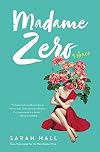
In the short story collection "Madame Zero", writer Sarah Hall has produced nine stories which explore the nature of being human and individual. In both the first and last stories a woman changes beyond recognition and the husband choses how to respond. In the first story when the wife is transformed into a fox the husband clings desperately to his love for her and the hope for a reversal. In the last story, the wife suffers a complete change in personality and the husband eagerly indulges in the new, alarming and aggressively sexualized persona without giving much thought to any underlying cause. Another story relates the case history of a child who has been raised in a chaotic commune setting and has awareness of neither his own individuality nor boundaries between self and others. In "Later, His Ghost" a man battles alone through continuous gale-force winds after a climatic disaster, scavenging for food and remnants that can remind him of what means to be human. It feels as if each story is challenging the reader to consider how they might respond in similar situations - would they prove to be human or something less?
This review was written for LibraryThing Early Reviewers.
The short stories in 'Bobcat' take women and men along paths they do not want to travel, in the name of love, life, ambition and dreams. The language pulls you deep into tangled relationships and luminous landscapes. In the mundane settings of dinner parties and academic life people struggle with disappointments and betrayals. In 'Slatland', a soil consultant hordes correspondence between her immigrant lover and a person from his homeland. Unable to read the foreign language, she tries to decipher whether the writer is a sister or a left-behind wife, she is reluctant to face the truth. In the title story, infidelity and betrayal form the backdrop to a dinner party where the lively conversation veers from topic to topic, including the story of one guest who lost an arm to an attack by a bobcat. A character in 'Min' is tasked with arranging a marriage for a friend for whom she clearly feels something more than platonic love.
This review was written for LibraryThing Early Reviewers.
The book offers brief tips for making life changes.
Habit Stacking: How to Beat Procrastination in30 Easy Steps (The Power of a Go Getter) by Scott Green

This book offers a series of brief tips to move forward with projects, tasks and goals.
This review was written for LibraryThing Member Giveaways.
Habit Stacking: Goal Setting: How to Set SMART Goals & Achieve All of Them Now: The Blokehead Success Series by The Blokehead
This book offers useful tips for getting it together.
A brief book, not what I expected but may be interesting reading for some.
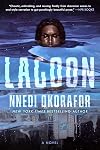
Nnedi Okorafor is one of my favorite authors and so I really, really wanted to love Lagoon, her recent novel. It features a strong female protagonist, Nigeria as the setting and a realistic rendering of that country's culture. But I found this book to be confusing and disjointed. Some of the many themes include urban angst, religion, LGBTQ issues, male-female relationships, mythology, political corruption, environmental issues, internet fraud and other stuff which are jumbled together without clear integration. There are many characters but many of their stories are scant and unresolved. There are alien invaders but no explanation of the aliens' background or purpose for coming to Earth. Most of the conversations between the Nigerians and the aliens are either mysterious or not described because the key characters can't remember what actually happened. There is also a dismaying amount of graphic violence which seems to be gratuitous. While the ending is inspirational there is little foundation established for the magical expectation that everything will work out just fine. This book feels like an edited version of a longer and more detailed work but critical chunks of the text were cut without much effort make sense of the remaining text.
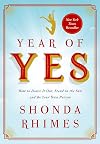
The author, Shonda Rhimes, is clearly in the genius category. Anyone who can have long-running, concurrent Thursday-night prime time shows is not your typical writer. This book is inspirational in the approach to Saying Yes as a way to engage more successfully with life. Her life seemed pretty full even before she embarked on the Year of Saying Yes. Her three writing jobs and her three children, plus extended family life seem to be quite enough to fill all the available hours. Yet, by saying Yes, she extends the joy and learns much more about herself. I appreciate that the author was also able to discern when it was appropriate to say No. I found the conversational writing style irritating and repetitive.
This book is long on science and engineering details but short on plot and character.
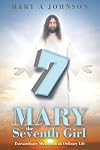
"Mary, the Seventh Girl" is a celebration of a sacred connection between a devout woman and a Higher Power. The author has experience events throughout her life that can only be described as miraculous, beginning in her childhood and continuing to the present day. The book describes the power of God activated through faith and prayer. This has impacted both her own life and the lives of her family and friends. Her dreams and visions reveal things that are meant specifically for her.
This author is not sequestered away in an abbey, she is not an anchorite, living apart from the world. On the contrary, she has had a rich, full life with husband, children and a professional career and all of the joys, heartaches and challenge the come with everyday living. And in the midst of it all, she encounters signs, wonders and blessings.
This author is not sequestered away in an abbey, she is not an anchorite, living apart from the world. On the contrary, she has had a rich, full life with husband, children and a professional career and all of the joys, heartaches and challenge the come with everyday living. And in the midst of it all, she encounters signs, wonders and blessings.
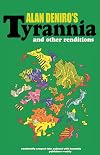
Tyrannia is difficult to characterize, each story is weird but weird in its own individual way. One story features young people who break into houses to play music and dance. Another has angel-like beings who guard a portal to between this world and another. In a third story, a group of three kidnap a professor and prepare to torture him according to guidance that he helped author for rendition of enemy combatants. Many end without resolution so the reader is left hanging, to imagine what the final scenes would be.
This review was written for LibraryThing Early Reviewers.
A succinct list of 79 habits culled from a wide range of people such as Benjamin Franklin, Warren Buffet and Oprah Winfrey. Each habit is followed by a brief description or explanation. While it provides reminders of how to better manage your life, there is very little that is new or surprising.
This review was written for LibraryThing Member Giveaways.
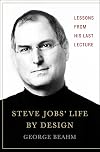
This book expands on the commencement address given by Steve Jobs to Stanford University graduates on June 12, 2005. It draws on stories from his professional and personal life to show the breadth and depth of a man who, more than almost any other, changed the world through technology and art. Jobs, with neither college degree nor skills at coding, created products that redefined personal computers, digital music, cell phones and tablets. His appreciation for art and Eastern philosophy influenced the look and feel of the products that are so iconic today. Jobs was truly a genius who left this world too soon. What stays in my mind after reading the final page are Jobs last words before dying - "oh wow, oh wow, oh wow" - chilling.
This review was written for LibraryThing Early Reviewers.Minimalist: How To Prepare & Control Your Minimalist Budget In 30 Days Or Less & Get More Money Out Of Life Now (The Blokehead Success Series) by The Blokehead
This brief book on budgeting begins with a focus on developing a minimalist lifestyle. It starts with the premise that one must eliminate the unnecessary stuff, activities and even people in life in order to make way for the necessary. Then it provides basic guidance on how to develop a minimalist budget, focusing on goals and objectives. This approach may be helpful to those who struggle with trying to stick to a budget when there are so many opportunities to spend money on things that ultimately will not bring joy into your life.
One disappointment is that the book is poorly edited and filled with mistakes in grammar.
One disappointment is that the book is poorly edited and filled with mistakes in grammar.