
This is a sort of photo biography of one of the greatest cyclists, Fausto Coppi. Simultaneously immensely strong but strangely fragile, his racing career was shortened by the Second World War, and he fell out of favour somewhat following his personal circumstances. An ill-advised late career trip to race and hunt in Africa led to malaria and his death.

I think this may be a private publication - I acquired it while clearing my late father's house. As a recently retired academic I found it particularly interesting as it revealed how freewheeling academia was following WW2, and before various Government afforst to constrain Universities. There's also a very interesting account of Mitchison's work during the war years as a 'boffin'.

This is a pretty lightweight read, and consists of alternating sections by Jim and William Reid. As a long term aficionado of The Jesus And Mary Chain, this was pretty interesting, and is actually quite quite reflective and at times self-critical.
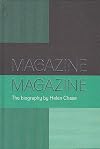
Of all the books I have about music, this is quite possibly the best in the genre. It covers the beginnings of Magazine to their reformation in 2009, but concludes before the release of "No Thyself'. It's literate, well-illustrated and clearly sourced from interviews. Excellent stuff.
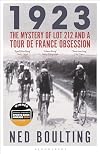
The book describes the author's acquisition of a short cine film from the 1922 Tour de France, and his almost obsessive interest in discerning what he could about the events and people in it. Early in reading this book, it's quite engaging - almost a therapeutic response to the Covid lockdowns of 2020 - and his digressions into European politics and current events of the 1920s are interesting. Ultimately, reading the book became a bit of a chore!
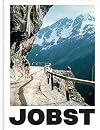
Jobst Brandt was a significant figure in California cycling. He had a major impact through online discussion group postings, in technical development - for example the Avocet computers, bicycle tyre development, and through his book 'The Bicycle Wheel'. This book is a combination of autobiography and reminiscences by friends and acquaintances, and is well illustrated throughout.

This book has overhauled my regular mealtimes. Every recipe I have tried has been successful (seems to be a theme with Sodha's recipes).
The Art of Frank Patterson: A Selection of over 150 Frank Patterson Drawings Compiled by Jim and Janet Willis, Cyclist's Touring Club by Frank Patterson

If you like Frank Patterson's illustrations of cycling, this is the book for you. It contains 150 illustrations from the pen of the famous cycling artist (though after about 1909 he was unable to cycle, and relied on photographs and postcards sent in by others). The drawings in this book pretty much all evoke a sense of nostalgia for olden days of England (with a smattering of the rest of the UK and Ireland thrown in). Sadly, the illustrations are undated, but I guess they must date mostly from the inter-war years with a few prior to WW1 and a few post WW2 (Patterson died in 1952).
From this book, one gets the idea that even in the 1920s and 30s, Patterson had a nostalgic view of the country. I wonder what he would have though of 21st century cycling?
From this book, one gets the idea that even in the 1920s and 30s, Patterson had a nostalgic view of the country. I wonder what he would have though of 21st century cycling?
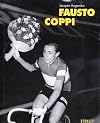
I have a few books on Coppi, and I found this a little disappointing. It's essentially a photo book with some biography, but the photos aren't the most evocative (see Coppi: Inside the Legend of the Campionissimo for a better selection), not is the biography that thorough. So it falls between two camps really.
I've been dipping in and out of this book. Clearly the author had great access to and rapport with the former members of VU and others in this orbit, but really this book is just reprints of sections of interviews, (and they are more like chats between friends than probing interviews) and not a coherent narrative or (it seems to me) a detailed description of the VU and their cultural importance.
Interesting for fans of Swell Maps, amusingly written, but a bit lightweight. The included 6 track 45rpm 7" record is fun.

A beautifully produced set from the Folio Society, comprising two volumes of The Heart Of The Antarctic and the single volume of South, with an envelope of maps and panoramas, housed in a high quality slipcase.

I have all five of Tufte's books on graphic display and, while it is interesting, I find this one the least enjoyable. This is partly down to the scrappy layout and structure, presumably trying to emulate a notebook style of information presentation. At times it seems repetitive, and makes strange claims for disruptive typesetting.
This rather heavy coffee table book is really a composite work.
The first part deals with the story of Rega, the people involved and how various product lines were produced, along with the ups and downs experienced by a modest sized company making relatively niche products and dependent on outside suppliers of materials. That's actually a surprisingly engaging read, and really sets out the company's ethos.
For me, the most interesting part is the second, in which the Rega approach to design of turntables is set out: essentially Rega turntables have a pretty simple design, though there is complexity in how the various materials are selected and deployed.
The third part is a series of interviews with a number of those who are major players in the story - interesting but not essential.
As a Rega-owner (modded Planar 3) it's nice to see why the Rega turntables are designed the way they are, but it has left me wanting to know more about turntable design from other perspectives.
The first part deals with the story of Rega, the people involved and how various product lines were produced, along with the ups and downs experienced by a modest sized company making relatively niche products and dependent on outside suppliers of materials. That's actually a surprisingly engaging read, and really sets out the company's ethos.
For me, the most interesting part is the second, in which the Rega approach to design of turntables is set out: essentially Rega turntables have a pretty simple design, though there is complexity in how the various materials are selected and deployed.
The third part is a series of interviews with a number of those who are major players in the story - interesting but not essential.
As a Rega-owner (modded Planar 3) it's nice to see why the Rega turntables are designed the way they are, but it has left me wanting to know more about turntable design from other perspectives.
Physically, the book is conveniently sized for stuffing in a pocket or handlebar bag. But its small size doesn’t detract from its contents. In its nearly 300 pages, all of the Hebridean islands from Arran to Lewis are well-covered, along with a number of linking routes, many on the west coast of mainland Scotland, which enable the individual routes to concatenate into lengthy tours. I have on many occasions ridden on Mull, Skye and the Outer Hebrides, and many of the west coast roads, and I think Barrett’s descriptions of these routes are accurate and well-described. I imagine that the routes I’ve not ridden so far will be likewise accurate.
The routes include maps and (usefully) altitude profiles. The descriptions include useful factoids such as places to eat and where bike shops are (they can be few and far between), along with interesting facts about locations that pique one’s interest.
While the main part of the book consists of six geographically grouped chapters of cycling routes, they are book-ended by an introduction that give well-considered advice on planning a trip (including equipment, weather, maps, and suggestions for tours), and a series of useful appendices with summaries of the routes, ferries and so forth. I am particularly taken by the table of possible day trips to the minor islands (e.g. a day trip to Coll is possible from Oban on Thursdays in the summer, with a possible stay on Coll of 8 hours).
Having read the book, I am now planning excursions show more to the southern and minor islands!
Highly recommended, even to those (like me) who may have cycled extensively in some of the Hebrides before. show less
The routes include maps and (usefully) altitude profiles. The descriptions include useful factoids such as places to eat and where bike shops are (they can be few and far between), along with interesting facts about locations that pique one’s interest.
While the main part of the book consists of six geographically grouped chapters of cycling routes, they are book-ended by an introduction that give well-considered advice on planning a trip (including equipment, weather, maps, and suggestions for tours), and a series of useful appendices with summaries of the routes, ferries and so forth. I am particularly taken by the table of possible day trips to the minor islands (e.g. a day trip to Coll is possible from Oban on Thursdays in the summer, with a possible stay on Coll of 8 hours).
Having read the book, I am now planning excursions show more to the southern and minor islands!
Highly recommended, even to those (like me) who may have cycled extensively in some of the Hebrides before. show less
This is a Rouleur publication (under the Bloomsbury imprint), and in common with that magazine, it's chock full of photographs, printed on high quality paper. In his introduction, Sykes admits he'd always promised that he wouldn't write a biography of Coppi (there are quite a few of those around). What this book represents is a collection of photographs from Coppi's career, punctuated with interviews with some of Coppi's contemporaries. Sykes' intention is to preserve the memories of these veterans.
In this, the books succeeds admirably. It's not a book that provides a detailed biography of Coppi - you have to look elsewhere for that - but for all that it' delightful to read and to savour the often superb photography.
In this, the books succeeds admirably. It's not a book that provides a detailed biography of Coppi - you have to look elsewhere for that - but for all that it' delightful to read and to savour the often superb photography.
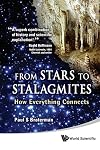
I am a pretty avid reader of popular science books, but generally speaking I’ve mostly read books with a general emphasis on biology, particularly evolutionary biology. From Stars to Stalagmites is therefore a bit different from my usual reading fare, taking a chemist’s view on the world. In essence, the book spends 16 chapters explaining how we know stuff. Stuff ranging from the age of the Earth to how CFCs were incriminated as the cause of the ozone holes. Many of these accounts are told with specific reference to the people who shaped the theories and the science. I don’t mean just the scientists – policy-makers and polticians also feature highly – a good example being the chapters on figuring out the cause of the ozone hole and on global warming.
I could summarise this book as “a collection of stories about stuff”, but that would ignore the central theme that comes across as one read through the book: how we know how natural processes work, and how we can use this understanding to probe the deep history of our planet, figure out how to rescue our planet from anthropogenic destruction and so forth.
On reflection some, if not all, of the chapters come across as excellent material for presentations. Whether such has been the origins of the work or not, I do believe that the book itself would have benefited from a bit more in the way of illustration…
For me, stand out chapters include the opening chapter on the age of the Earth (Chapter 1), that on Fritz show more Haber, the First World War and explosives (Chapter 6), and the 14th Chapter on why water is weird. But I guess those preferences reflect my interests; the book is consistently interesting and clearly written.
In dealing with the evolution of ideas about the Earth’s antiquity, Braterman effectively sets the stage for all the controversies manufactured by the biblical literalists who insist in (mis)interpreting the bible to deduce that the Earth is a mere 6000 years (give or take a little). The chapter takes the reader on a journey in the changing scientific understanding of earth science, which neatly encapsulates the nature of scientific discovery. I think this example illustrates the value of this book. It’s not necessarily in its factual content, but in the way rational and thoughtful investigation of the world and its material phenomena can lead to clearer understanding of the world around us. And more than this, several chapters describe how current understanding can and does change as science advances, both in terms of techniques and in the application of knowledge from disparate areas of investigation. show less
I could summarise this book as “a collection of stories about stuff”, but that would ignore the central theme that comes across as one read through the book: how we know how natural processes work, and how we can use this understanding to probe the deep history of our planet, figure out how to rescue our planet from anthropogenic destruction and so forth.
On reflection some, if not all, of the chapters come across as excellent material for presentations. Whether such has been the origins of the work or not, I do believe that the book itself would have benefited from a bit more in the way of illustration…
For me, stand out chapters include the opening chapter on the age of the Earth (Chapter 1), that on Fritz show more Haber, the First World War and explosives (Chapter 6), and the 14th Chapter on why water is weird. But I guess those preferences reflect my interests; the book is consistently interesting and clearly written.
In dealing with the evolution of ideas about the Earth’s antiquity, Braterman effectively sets the stage for all the controversies manufactured by the biblical literalists who insist in (mis)interpreting the bible to deduce that the Earth is a mere 6000 years (give or take a little). The chapter takes the reader on a journey in the changing scientific understanding of earth science, which neatly encapsulates the nature of scientific discovery. I think this example illustrates the value of this book. It’s not necessarily in its factual content, but in the way rational and thoughtful investigation of the world and its material phenomena can lead to clearer understanding of the world around us. And more than this, several chapters describe how current understanding can and does change as science advances, both in terms of techniques and in the application of knowledge from disparate areas of investigation. show less


I read this in the Kindle edition, and was fired up by reading numerous enthusiastic reviews around the blogosphere. I was rather disappointed. While the description of Lacks' illness and the derivation and use of cells derived from her biopsy were good, the majority of the book revolves around the author's developing relationship with Lacks' daughter and other members of the family. Though the book is much described as revealing high-handed and devious actions by researchers and the doctors that treated Lacks, I did not get the sense that anything out of the ordinary was perpetrated. Indeed, the lack of recognition of Henrietta Lacks as the person from who's tumour the HeLa cell line was derived is pretty much due to Johns Hopkins trying to maintain patient confidentiality, rather than trying to airbrush her from history.
The author does touch upon interesting issues to do with ownership of biological samples taken from patients (and the emergence of proportionate guidance and regulations concerning the ethics of human participation and experimentation), but doesn't seem to me to probe deeply into the various distinctive cases which collectively illustrate that this isn't a simple issue. But I very much enjoyed the appendix that covers this aspect of the story.
Overall, I enjoyed the parts of the book that dealt with the story of Henrietta Lacks and the HeLa cells, but felt the author was trying too hard to make a distinction from earlier accounts by focussing on the show more wider Lacks family (and indeed her determined attempts to forge a relationship with Henrietta's daughter). These sections are really an indictment of American racial politics of the 1950s and beyond. show less
The author does touch upon interesting issues to do with ownership of biological samples taken from patients (and the emergence of proportionate guidance and regulations concerning the ethics of human participation and experimentation), but doesn't seem to me to probe deeply into the various distinctive cases which collectively illustrate that this isn't a simple issue. But I very much enjoyed the appendix that covers this aspect of the story.
Overall, I enjoyed the parts of the book that dealt with the story of Henrietta Lacks and the HeLa cells, but felt the author was trying too hard to make a distinction from earlier accounts by focussing on the show more wider Lacks family (and indeed her determined attempts to forge a relationship with Henrietta's daughter). These sections are really an indictment of American racial politics of the 1950s and beyond. show less

Possibly my least favourite in the series, probably because it's rooted in a real historical campaign, but still four stars.

Pel Torro is a pseudonym of Rev. Lionel Fanthorpe (there is a neat summary of Fanthorpe's career on Wikipedia) - Fanthorpe churned out (and may still do) SF novels at the rate of one a month, under a large number of noms de plume. For more on Fanthorpe's work, see http://www.peltorro.com/
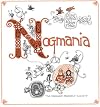
This is a boxed set of 12 short hardback books of Noggin the Nog stories by the late Oliver Postgate. With Peter Firmin, Postgate was responsible for some of the best children's broadcasting in the UK Noggin the Nog is a sort f viking figure, though rather more peaceable (he drinks tea and digs potatoes in his garden, despite being King of the Nogs). The stories are charming, and delightfully illustrated in the style of the animation (the characters seem to be based on the Lewis chessmen).
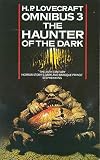
This is the third omnibus volume in a series of three, and contains all Lovecraft's best short stories. As typical with this genre, my rating of five stars really depends on one's task for pulp.
The volume contains 14 short stories, the stand outs being The Call of Cthulhu itself (the foundation for leagions of imitators, and very popular role-playing game; The Colour of of Space; The Thing on the Doorstep (possibly my favourite); and The Whisperer i Darkness
The volume contains 14 short stories, the stand outs being The Call of Cthulhu itself (the foundation for leagions of imitators, and very popular role-playing game; The Colour of of Space; The Thing on the Doorstep (possibly my favourite); and The Whisperer i Darkness
Omnibus: At the Mountains of Madness and Other Novels of Terror No. 1 (H.P. Lovecraft Omnibus) by H. P. Lovecraft
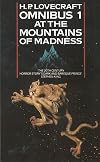
This volume contains Lovecraft's two novellas, "At the Mountains of Madness" and "The Case of Charles Dexter Ward". For those who love the pulp fiction genre, this represents Lovecraft at the top of his game, with sustained storytelling. For those who dislike the genre, probably pretty tiresome.
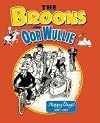
Another volume of reprinted stories from the Sunday Post's Dundee set comic strips "The Broons" and "Oor Wullie". these are charming in their artwork and their story-line simplicity (one might accuse The Broons in particular of only having about five basic storylines!). I did notice some of these stories have been reprinted in earlier anthologies, so maybe the well is running a bit dry.
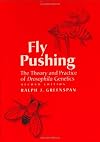
This is perhaps *the* book to learn practical Drosophila (fruit fly) genetics. It is clearly written and leads the reader through chapters on the basics of crosses; how to isolate new mutants, genetic mapping, genotype synthesis, and mutational analysis, each chapter includes several problems for the reader to solve. (Yes, answers are provided). I have three of these in my lab: two first edition, and one second edition. A must for fly labs!

I first read this book when it was first published back in the mid-80s, and re-read it in late 2008. It's a rip-roaring biography of L. Ron Hubbard, pulp fiction writer and founder of one of the wackier cults to afflict the world. What really shines through is Hubbard's continual reinvention and self-aggrandisement, which as he slipped deeper into paranoia generated an entire fantasy past.
As i understand it, the book is out of print, but is available on-line (with the author's permission, I hasten to add). I would rate the 5* for the information content!
As i understand it, the book is out of print, but is available on-line (with the author's permission, I hasten to add). I would rate the 5* for the information content!
In Search of Robert Millar: Unravelling the Mystery Surrounding Britain's Most Successful Tour de France Cyclist: Unravelling the Mystery Surrounding Britain's Most Successful Tour De France Cyclist by Richard Moore
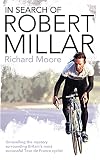
When I became interested in cycling again in the late 1980s, Robert Millar was for me the big name in the professional peleton. Only being peripherally involved in cycling at that time, I was really unaware of the Millar's full career at that time. Richard Moore has written an excellent account of Robert Millar's rise from Glasgow club cyclist to arguably Britain's finest professional road cyclist.
Richard Moore is himself a former racing cyclist, having ridden for Scotland on at least one occasion - this background understanding helps illuminate the book, but (fortunately) does not make this purely a cycling book.
Robert Millar was (and remains) a rather inscrutable individual. Through his career, he was unwilling to court the limelight, preferring his actions on the bike to speak for him. In keeping, he appears to have offered virtually no assistance in the preparation of this book. Indeed, the only direct quotes from him related to the biography are in the email exchange presented as a postscript, in which the author manages to penetrate the shroud of mystery Millar has built up around him in his retirement.
Despite this, the biography succeeds in painting a detailed picture of the man, warts and all, by talking with many who have raced and working with him over the years. Generally, it's notable that the majority of those interviewed for the book have favourable opinions, even those offering critical comments. I found the description of Millar's ascent from club cyclist show more to overseas amateur and through several professional squads to be inspiring, occasionally sad (e.g. the story of how he came to second behind Delgado at the Vuelta), exciting (e.g. several stages won at the Tour, and riding shotgun for Roche at the Giro), frustrating (e.g. his work in management within BCF/BC following his retirement), and plain baffling (his absolute disappearance in recent years following intrusive investigation into his private life by the tabloid press).
Robert Millar's career makes a hell of a good story, the book's a good read, and I rate it highly! show less
Richard Moore is himself a former racing cyclist, having ridden for Scotland on at least one occasion - this background understanding helps illuminate the book, but (fortunately) does not make this purely a cycling book.
Robert Millar was (and remains) a rather inscrutable individual. Through his career, he was unwilling to court the limelight, preferring his actions on the bike to speak for him. In keeping, he appears to have offered virtually no assistance in the preparation of this book. Indeed, the only direct quotes from him related to the biography are in the email exchange presented as a postscript, in which the author manages to penetrate the shroud of mystery Millar has built up around him in his retirement.
Despite this, the biography succeeds in painting a detailed picture of the man, warts and all, by talking with many who have raced and working with him over the years. Generally, it's notable that the majority of those interviewed for the book have favourable opinions, even those offering critical comments. I found the description of Millar's ascent from club cyclist show more to overseas amateur and through several professional squads to be inspiring, occasionally sad (e.g. the story of how he came to second behind Delgado at the Vuelta), exciting (e.g. several stages won at the Tour, and riding shotgun for Roche at the Giro), frustrating (e.g. his work in management within BCF/BC following his retirement), and plain baffling (his absolute disappearance in recent years following intrusive investigation into his private life by the tabloid press).
Robert Millar's career makes a hell of a good story, the book's a good read, and I rate it highly! show less

Beautiful Design is Edward Tufte's fourth book in a series discussing and analysing the visual presentation of data. According to the introduction, there is a fifth volume planned.
Beautiful Design is a really lovely and luxurious volume, copiously illustrated throughout. I read this book immediately after The Visual Display of Quantitative Information, and unfortunately I have to say I was a little disappointed by the comparison. Minard's Grande Armee chart makes a reappearance, not once, not twice, but five times in this volume! This is within a nice chapter describing a set of principles of analytical design (there are six in all). As usual, Tufte can get a little didactic, but I found that, while I perhaps disagree with his stonger statements, he's always an entertaining read, exemplified by his deconstruction and explanation of Minard's graphics
The major contribution here is the sparkline, small graphics intended to be embedded in text and tables. In fact they are just the sort of thing we see in many genome mapping papers where considerable quantities of data need to be clearly communicated in summary fashion. Tufte's website hosts a forum with an interesting discussion of sparkline implementation.
Tufte devotes an entire chapter to the evils of PowerPoint. He absolutely HATES it! Entitled The Cognitive Style of PowerPoint: Pitching Out Corrupts Within, it is available as a separately published pamphlet. Now, while I agree one does sit through some desperately bad show more PowerPoint presentations, I am not so convinced of the evils of this package as Tufte is. Nevertheless, his design strictures against Autocontent Wizards, design templates, seemingly infinitely hierarchical bullet points make good sense. More about this in a later post.
So, in summary, I'm finding this an interesting read, but rather less informative in an instructional way than Visual Display. Not essential. show less
Beautiful Design is a really lovely and luxurious volume, copiously illustrated throughout. I read this book immediately after The Visual Display of Quantitative Information, and unfortunately I have to say I was a little disappointed by the comparison. Minard's Grande Armee chart makes a reappearance, not once, not twice, but five times in this volume! This is within a nice chapter describing a set of principles of analytical design (there are six in all). As usual, Tufte can get a little didactic, but I found that, while I perhaps disagree with his stonger statements, he's always an entertaining read, exemplified by his deconstruction and explanation of Minard's graphics
The major contribution here is the sparkline, small graphics intended to be embedded in text and tables. In fact they are just the sort of thing we see in many genome mapping papers where considerable quantities of data need to be clearly communicated in summary fashion. Tufte's website hosts a forum with an interesting discussion of sparkline implementation.
Tufte devotes an entire chapter to the evils of PowerPoint. He absolutely HATES it! Entitled The Cognitive Style of PowerPoint: Pitching Out Corrupts Within, it is available as a separately published pamphlet. Now, while I agree one does sit through some desperately bad show more PowerPoint presentations, I am not so convinced of the evils of this package as Tufte is. Nevertheless, his design strictures against Autocontent Wizards, design templates, seemingly infinitely hierarchical bullet points make good sense. More about this in a later post.
So, in summary, I'm finding this an interesting read, but rather less informative in an instructional way than Visual Display. Not essential. show less
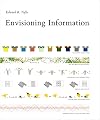
This follows the pattern of the other three - beautiful production values, and an authoritative view (some might say didactic!) of design as applied to the graphical display of information. The book was originally published in 1990; the copy I have is the 10th printing from 2005.
The book has six chapters: Escaping Flatland, Micro/Macro Readings, Layering and Separation, Small Multiples, Color and Information, Narratives of Space and Time, and finally a brief Epilogue.
The first chapter (Escaping Flatland) explores the representation of our three dimensional world in the two dimensions of the printed page. From minor examples (such as the moulted toad skin as a two dimensional representation of the three dimensional toad!), he proceeds to the major examples of Galileo's description of sunspot activity - this leads through to 20th century compilations of sunspot data in more abstract form. Other examples of displaying spatial information on the printed page include the diagrammatic notation of dance movements. Perhaps I am a bit dense, but where I found the sunspot diagrams easy to understand, dance notation was too complex. Via some lovely city maps drawn as three dimensional illustrations of cityscapes, this material seques neatly into the second chapter, which concerns to assembly of smaller details to a larger whole (Micro/macro readings). Standout examples include a discussion of the design of the Vietnam Veterans Memorial in Washington,DC.
The book has six chapters: Escaping Flatland, Micro/Macro Readings, Layering and Separation, Small Multiples, Color and Information, Narratives of Space and Time, and finally a brief Epilogue.
The first chapter (Escaping Flatland) explores the representation of our three dimensional world in the two dimensions of the printed page. From minor examples (such as the moulted toad skin as a two dimensional representation of the three dimensional toad!), he proceeds to the major examples of Galileo's description of sunspot activity - this leads through to 20th century compilations of sunspot data in more abstract form. Other examples of displaying spatial information on the printed page include the diagrammatic notation of dance movements. Perhaps I am a bit dense, but where I found the sunspot diagrams easy to understand, dance notation was too complex. Via some lovely city maps drawn as three dimensional illustrations of cityscapes, this material seques neatly into the second chapter, which concerns to assembly of smaller details to a larger whole (Micro/macro readings). Standout examples include a discussion of the design of the Vietnam Veterans Memorial in Washington,DC.