
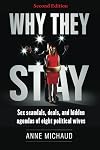
Some books you finish and immediately want to press into someone else’s hands, not because they are easy, but because they open up a conversation you did not realise you were ready to have. Why They Stay is very much that kind of book. Anne Michaud takes eight political marriages that have been flattened by headlines and asks us to look again, this time at the women, their calculations, their constraints, and their ambitions.
What stayed with me most was how discussion rich this felt without losing its human core. The White Queen framework gave me a lot to sit with, especially in the way it pulls loyalty, legacy, security, family, and political identity into the same frame. Have you ever looked at a public woman and assumed that staying must mean weakness? This book pushes back on that instinct in a way that feels sharp, unsettling, and often surprisingly compassionate. Eleanor Roosevelt’s chapter especially lingered for me, because the book places her private pain alongside the making of a social champion, and that tension unpacked so much. I ended up talking about it with a friend afterward, and we kept coming back to how often endurance gets mistaken for passivity when power is involved.
One thing tho is that there were moments when the framework felt a little neater than the lives being examined, and I occasionally wanted more emotional texture beside the analysis. Even so, this is the kind of nonfiction that makes you think and then makes you want to call show more somebody. Would be an amazing book club choice. show less
What stayed with me most was how discussion rich this felt without losing its human core. The White Queen framework gave me a lot to sit with, especially in the way it pulls loyalty, legacy, security, family, and political identity into the same frame. Have you ever looked at a public woman and assumed that staying must mean weakness? This book pushes back on that instinct in a way that feels sharp, unsettling, and often surprisingly compassionate. Eleanor Roosevelt’s chapter especially lingered for me, because the book places her private pain alongside the making of a social champion, and that tension unpacked so much. I ended up talking about it with a friend afterward, and we kept coming back to how often endurance gets mistaken for passivity when power is involved.
One thing tho is that there were moments when the framework felt a little neater than the lives being examined, and I occasionally wanted more emotional texture beside the analysis. Even so, this is the kind of nonfiction that makes you think and then makes you want to call show more somebody. Would be an amazing book club choice. show less
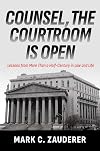
Counsel, the Courtroom Is Open: Lessons from More Than a Half-Century in Law and Life by Mark C. Zauderer
“Unfortunately, we live in a world filled with conflict.”
What does it really mean to “win” in a courtroom, and is winning always the point?
In Counsel, the Courtroom Is Open, Mark C. Zauderer doesn’t just walk us through legal battles; he opens the door to the mindset behind them. This isn’t a dry legal manual or a highlight reel of victories. Instead, it feels like sitting across from a seasoned litigator who’s willing to admit that the law is as much about people, judgment, and restraint as it is about strategy.
Zauderer’s strength lies in how he frames conflict. Early on, he acknowledges that we live in a world shaped by it, and from there, the book becomes less about fighting and more about navigating, how lawyers think, when they push, and when they don’t. The case-driven structure gives the narrative weight, and you can feel the real stakes behind the decisions being made. These aren’t abstract lessons; they’re lived moments where outcomes matter deeply to everyone involved.
If you’re expecting flashy courtroom theatrics, this might surprise you. It’s more reflective than sensational. But if you’re interested in how great lawyers actually think, how they balance ethics, pressure, and persuasion, this is where the book really delivers.
By the end, I found myself less focused on who wins or loses, and more on the discipline it takes to operate in that space. And maybe that’s the real takeaway Zauderer leaves us with: in a world full of show more conflict, the real skill isn’t just arguing, it’s knowing how to do it well. show less
What does it really mean to “win” in a courtroom, and is winning always the point?
In Counsel, the Courtroom Is Open, Mark C. Zauderer doesn’t just walk us through legal battles; he opens the door to the mindset behind them. This isn’t a dry legal manual or a highlight reel of victories. Instead, it feels like sitting across from a seasoned litigator who’s willing to admit that the law is as much about people, judgment, and restraint as it is about strategy.
Zauderer’s strength lies in how he frames conflict. Early on, he acknowledges that we live in a world shaped by it, and from there, the book becomes less about fighting and more about navigating, how lawyers think, when they push, and when they don’t. The case-driven structure gives the narrative weight, and you can feel the real stakes behind the decisions being made. These aren’t abstract lessons; they’re lived moments where outcomes matter deeply to everyone involved.
If you’re expecting flashy courtroom theatrics, this might surprise you. It’s more reflective than sensational. But if you’re interested in how great lawyers actually think, how they balance ethics, pressure, and persuasion, this is where the book really delivers.
By the end, I found myself less focused on who wins or loses, and more on the discipline it takes to operate in that space. And maybe that’s the real takeaway Zauderer leaves us with: in a world full of show more conflict, the real skill isn’t just arguing, it’s knowing how to do it well. show less
I loved this book… but I didn’t expect to.
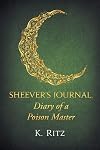
Sheever’s Journal is exactly what it says on the tin: the secret diary of Me’acca Mysuth Sheever, a Poison Master living in exile, hiding in plain sight as a cook in High Lord Trivak’s base kitchens in Tiarn. He’s been there for five years, loathing everyone, counting his wages down to the last copper, and trying not to go insane while he waits for his exile to end. Which, honestly, is a mood.
What worked for me first was Sheever’s voice. He’s sharp, bitter, funny in that dry, cutting way, and completely allergic to sentimentality. He’ll complain about filthy kitchens and stupid customs, then turn around and quietly do something decent (even while insisting he’s not decent). I’m a sucker for narrators like that — the ones who hate caring but keep doing it anyway. His internal conflict is the real engine of the book: he wants salvation and freedom (the Rite of Grace haunts him), but he’s terrified of being seen, caught, used… or forced back into a life he already tried to burn down.
The world-building is also excellent, in this slightly infuriating way where you realize the author has built a whole political and cultural machine and then refuses to spoon-feed you. We get the Games, the natals, the Church, the Kinship of the Serpent, the memsa and their riddled prophecies… and it all feels lived-in, not “look at my lore binder.” I was very into the little observational details — what people wear, show more what they fear, how power moves in a city, even how roads and walls are designed (and how much Sheever despises them). It’s immersive without being showy.
Characters-wise, Sheever surprised me. He’s not warm. He’s not nice. And yet his relationships — with his roommate Tobb, the cooks and kitchen hierarchy, and especially Damut and her boys — started to carve out these unexpectedly human spaces in the story. Watching him get pulled (kicking and snarling) into other people’s lives was oddly moving.
What didn’t totally work? The pacing can feel meandering because… well, it’s a journal. Some entries are pure mood and routine, and if you need a tight plot beat every chapter, you might get twitchy. Also, the terminology is dense, and there were moments I felt slightly adrift (I didn’t mind, but I noticed it).
Still, by the time the tension sharpens and Sheever starts realizing just how precarious his survival is, I was completely hooked. This is a slow-burn character study wrapped in political dread and personal reckoning, and it ended up hitting me harder than I expected. show less
Sheever’s Journal is exactly what it says on the tin: the secret diary of Me’acca Mysuth Sheever, a Poison Master living in exile, hiding in plain sight as a cook in High Lord Trivak’s base kitchens in Tiarn. He’s been there for five years, loathing everyone, counting his wages down to the last copper, and trying not to go insane while he waits for his exile to end. Which, honestly, is a mood.
What worked for me first was Sheever’s voice. He’s sharp, bitter, funny in that dry, cutting way, and completely allergic to sentimentality. He’ll complain about filthy kitchens and stupid customs, then turn around and quietly do something decent (even while insisting he’s not decent). I’m a sucker for narrators like that — the ones who hate caring but keep doing it anyway. His internal conflict is the real engine of the book: he wants salvation and freedom (the Rite of Grace haunts him), but he’s terrified of being seen, caught, used… or forced back into a life he already tried to burn down.
The world-building is also excellent, in this slightly infuriating way where you realize the author has built a whole political and cultural machine and then refuses to spoon-feed you. We get the Games, the natals, the Church, the Kinship of the Serpent, the memsa and their riddled prophecies… and it all feels lived-in, not “look at my lore binder.” I was very into the little observational details — what people wear, show more what they fear, how power moves in a city, even how roads and walls are designed (and how much Sheever despises them). It’s immersive without being showy.
Characters-wise, Sheever surprised me. He’s not warm. He’s not nice. And yet his relationships — with his roommate Tobb, the cooks and kitchen hierarchy, and especially Damut and her boys — started to carve out these unexpectedly human spaces in the story. Watching him get pulled (kicking and snarling) into other people’s lives was oddly moving.
What didn’t totally work? The pacing can feel meandering because… well, it’s a journal. Some entries are pure mood and routine, and if you need a tight plot beat every chapter, you might get twitchy. Also, the terminology is dense, and there were moments I felt slightly adrift (I didn’t mind, but I noticed it).
Still, by the time the tension sharpens and Sheever starts realizing just how precarious his survival is, I was completely hooked. This is a slow-burn character study wrapped in political dread and personal reckoning, and it ended up hitting me harder than I expected. show less

A warm, compulsively readable romance that understands how love gets built in the plain minutes, not just the big gestures.
Samantha Diaz meets Dr. Xavier Rush because she brings a tiny stray kitten to his clinic and finds out the poor thing has a serious congenital problem. Xavier says the wrong thing in the coldest possible way. Samantha does what she always does. She fights back, she fixes what she can, and she refuses to let anyone tell her to accept a loss she is not ready to accept.
That first stretch is Abby Jimenez at full power. The meet cute is genuinely funny in a way that does not feel manufactured, and the chemistry has snap and texture. Xavier is not a grumpy cardboard cutout. He is brusque, compassionate, sometimes socially disastrous, and he owns it when he gets it wrong. Samantha is not sunshine. She is competent, stubborn, and so emotionally overloaded that the reader can feel the constant mental tabs open in her head.
The book’s real engine, though, is the life Samantha is walking back into. Her mother’s dementia and the family system around it are written with a bluntness that lands. This is love as caregiving, love as triage, love as the thing you do after you have already given everything else away. Jimenez also nails the cultural texture of a close, multigenerational family where everyone is in everyone’s space, where humor becomes survival, and where the burden does not distribute itself evenly. It just settles on the people who will carry show more it.
The romance thrives because it has to coexist with all of that. It is not a fantasy bubble. It is two adults trying to make something tender inside an ugly, unyielding reality. The best scenes are the quiet ones, the conversations where they earn trust, the moments where Xavier’s steadiness shows up without performance. show less
Samantha Diaz meets Dr. Xavier Rush because she brings a tiny stray kitten to his clinic and finds out the poor thing has a serious congenital problem. Xavier says the wrong thing in the coldest possible way. Samantha does what she always does. She fights back, she fixes what she can, and she refuses to let anyone tell her to accept a loss she is not ready to accept.
That first stretch is Abby Jimenez at full power. The meet cute is genuinely funny in a way that does not feel manufactured, and the chemistry has snap and texture. Xavier is not a grumpy cardboard cutout. He is brusque, compassionate, sometimes socially disastrous, and he owns it when he gets it wrong. Samantha is not sunshine. She is competent, stubborn, and so emotionally overloaded that the reader can feel the constant mental tabs open in her head.
The book’s real engine, though, is the life Samantha is walking back into. Her mother’s dementia and the family system around it are written with a bluntness that lands. This is love as caregiving, love as triage, love as the thing you do after you have already given everything else away. Jimenez also nails the cultural texture of a close, multigenerational family where everyone is in everyone’s space, where humor becomes survival, and where the burden does not distribute itself evenly. It just settles on the people who will carry show more it.
The romance thrives because it has to coexist with all of that. It is not a fantasy bubble. It is two adults trying to make something tender inside an ugly, unyielding reality. The best scenes are the quiet ones, the conversations where they earn trust, the moments where Xavier’s steadiness shows up without performance. show less
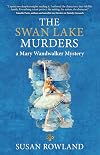
This one got under my skin in that slow, unsettled way where you keep thinking about it after you close the book. On the eve of a hurricane, private detective Mary Wandwalker is pulled into a political mess by the thoroughly detestable minister Robin Prince (“Robbin’ Robin”), who wants “dirt” on a sorcerer-choreographer named Billy Dee and, of course, it’s never just about his ego. The real danger circles his fifteen-year-old daughter Irina, a Swan Lake dancer drifting far too close to something predatory and strange.
The setup is deliciously tense: London fog, a boat ride down the Thames that turns into a full on tempest, and then the eerie glamour of Greenwich and the Observatory time, power, spectacle, all of it humming. From there, the story moves to Holywell, a witch-therapist retreat center (and sanctuary for traumatized young women), where the storm traps everyone together. Prison and sanctuary is right. And that’s the thing: Rowland knows how to make confinement feel like pressure on the ribs.
What worked for me most was the atmosphere and the moral friction. Mary is rational, sharp, and stubborn, but she’s surrounded by people who live with magic, trauma, belief, and fear in more complicated ways Caroline especially, whose vulnerability is handled with real tenderness. Billy Dee is the kind of charismatic-creepy you want nowhere near teenagers.
The writing has a brisk, slightly theatrical energy (political satire, gothic weather, fairy-tale echoes), show more and the Swan Lake motif isn’t just decoration it keeps reframing what it means for girls to be “turned” into something for someone else’s story.
What didn’t fully land: it can feel a little crowded at times, with big ideas (climate emergency, power, spirits, politics) all jostling in the same room, and the pacing occasionally pauses to explain when I wanted it to simply tighten the noose.
Still, if you like mysteries that blend occult tension with psychological insight, stormy locked-location vibes, and a heroine who refuses to look away even when it hurts this is absolutely worth your time. Final verdict: eerie, thoughtful, and prickly in the best way. show less
The setup is deliciously tense: London fog, a boat ride down the Thames that turns into a full on tempest, and then the eerie glamour of Greenwich and the Observatory time, power, spectacle, all of it humming. From there, the story moves to Holywell, a witch-therapist retreat center (and sanctuary for traumatized young women), where the storm traps everyone together. Prison and sanctuary is right. And that’s the thing: Rowland knows how to make confinement feel like pressure on the ribs.
What worked for me most was the atmosphere and the moral friction. Mary is rational, sharp, and stubborn, but she’s surrounded by people who live with magic, trauma, belief, and fear in more complicated ways Caroline especially, whose vulnerability is handled with real tenderness. Billy Dee is the kind of charismatic-creepy you want nowhere near teenagers.
The writing has a brisk, slightly theatrical energy (political satire, gothic weather, fairy-tale echoes), show more and the Swan Lake motif isn’t just decoration it keeps reframing what it means for girls to be “turned” into something for someone else’s story.
What didn’t fully land: it can feel a little crowded at times, with big ideas (climate emergency, power, spirits, politics) all jostling in the same room, and the pacing occasionally pauses to explain when I wanted it to simply tighten the noose.
Still, if you like mysteries that blend occult tension with psychological insight, stormy locked-location vibes, and a heroine who refuses to look away even when it hurts this is absolutely worth your time. Final verdict: eerie, thoughtful, and prickly in the best way. show less
The Ghost of Seagull Cottage: Inspired by The Ghost and Mrs Muir (The Guernsey Novels Book 9) by Anne Allen
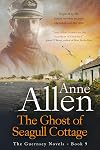
This is a cozy, sharp edged paranormal romance that takes its time and mostly earns it. Widowed artist Annabel returns to Guernsey to start over with her young daughter, only to find Seagull Cottage comes with a resident: Daniel, a sea captain who died in 1946 and still thinks the house is his. The early friction is fun, and the slow-burn chemistry builds through conversation, shared history, and the island setting.
What worked for me: the grounded grief arc, the steady tension between two stubborn leads, and a calm, readable voice that suits the story’s warmth. What didn’t: the opening is deliberately unhurried, and the mystery elements feel lighter than the pitch suggests. If you want atmospheric, low-angst romance with a ghostly twist, this fits. I’d read Allen again.
What worked for me: the grounded grief arc, the steady tension between two stubborn leads, and a calm, readable voice that suits the story’s warmth. What didn’t: the opening is deliberately unhurried, and the mystery elements feel lighter than the pitch suggests. If you want atmospheric, low-angst romance with a ghostly twist, this fits. I’d read Allen again.
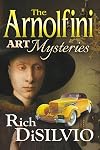
Such a smart, entertaining surprise, I flew through this. It’s a collection of six art crime mysteries following Armand Arnolfini, a former FBI agent turned private detective (and serious art connoisseur), as he tackles stolen works, forgeries, and darker threats while chasing leads from New York to Europe. The writing is smooth and easy to trust, with genuinely fun dialogue, a light sense of humor, and descriptions of art and museums that made me feel like I was right there. The pacing is brisk and very readable, though the episodic structure means a couple cases move so fast I wanted just a little more room for side characters to breathe. Still, the chronological build gives the final stretch a satisfying sense of completion. If you like clever mysteries with art-world flavor, you’ll have a great time.

This is the kind of picture book that feels like a warm hand on a nervous shoulder. Bonnie, the library dog who adores stories, meets Debbie on a field trip Debbie who hides under bus seats, declares words “annoying,” and wants only the toy room. What follows is a small, tender act of persistence. Bonnie reads aloud, and Debbie can’t help leaning closer, especially once Meek the mouse’s adventure starts to race forward. The writing is simple but quietly clever, and the soft watercolor art makes the library feel safe and bright. I only wished the ending lingered a beat longer. A lovely read aloud for hesitant hearts.

I found The Polymorph to be a tense, super readable sci-fi ride with a fun “who can you trust?” vibe. Jim Brown is heading back to Earth after a mission on Pirrus when he discovers he’s part alien and that aliens may already be quietly assimilated into human society. From a kidnapping attempt to factions pushing for war (plus artificial humans and super androids), the stakes keep climbing in a way that’s genuinely entertaining. I liked the dynamic with Marika, his assigned minder, and Leela, the industrialist’s daughter who complicates things. Was it perfect? No. The worldbuilding throws a lot of names and acronyms at you early, and I wanted a little more time with a few side characters. But the pacing is strong, the writing flows smoothly, and the ending felt satisfying. If you like space-opera intrigue with action and conspiracy, you’ll probably enjoy this. I know I did.
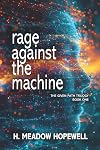
Roare is an award-winning journalist who is contacted by a secretive group of journalists to create a documentary about transhumanism- using technology and AI to change what it means to be human. As she works on the project, she begins to realize that not only she, but those close to her, may be in danger. What is really going on behind this project, and who exactly is this mysterious group pulling the strings?
The book is captivating, engaging, and refreshingly unique. With so many books about AI being published lately, the topic can almost feel overwhelming, even frightening, but this story stands out as especially thought-provoking. Roare learns that while some people can be manipulated, not everyone is so easily controlled, particularly those who are capable of thinking for themselves.
The story is suspenseful and fast-paced, keeping you on the edge of your seat and eager to find out what happens next. The writing is immersive, making you feel as though you are right there alongside Roare as events unfold. I enjoyed the character development, particularly Roare’s growth as she navigates her journey, not only in uncovering the truth through her documentary, but also in meeting her biological father for the first time. Overall, I really enjoyed this book, and it left me thinking deeply about the power and potential dangers of AI.
The book is captivating, engaging, and refreshingly unique. With so many books about AI being published lately, the topic can almost feel overwhelming, even frightening, but this story stands out as especially thought-provoking. Roare learns that while some people can be manipulated, not everyone is so easily controlled, particularly those who are capable of thinking for themselves.
The story is suspenseful and fast-paced, keeping you on the edge of your seat and eager to find out what happens next. The writing is immersive, making you feel as though you are right there alongside Roare as events unfold. I enjoyed the character development, particularly Roare’s growth as she navigates her journey, not only in uncovering the truth through her documentary, but also in meeting her biological father for the first time. Overall, I really enjoyed this book, and it left me thinking deeply about the power and potential dangers of AI.
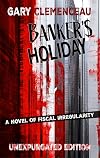
Banker's Holiday is a strange, darkly funny mid-life crisis for both one man and late-stage capitalism, wrapped up in a corporate ghost story.
We follow Cincinnatus Stillman Fuller, a billionaire banker who has a very public unraveling in the middle of a Monday staff meeting and suddenly sees his senior executives as “brooding, luxurious zombies.” Instead of doubling down on the grind, he bolts—posing as a janitor, climbing into a beat-up pickup and driving toward a kind of makeshift utopia in the northeast. Along the way he’s stalked by hallucinations, corporate nightmares and, yes, a truly unforgettable thousand-foot Nixon.
What I loved most is that you don’t actually need to care about finance to fall into this. The book is really about burnout, self-loathing, and the terrifying moment you realise the life you built is eating you alive. Clemenceau’s prose is vivid and weird in the best way—equal parts satire and fever dream—and there are sections that feel genuinely arresting, you know? I laughed more than I expected, but there’s also this underlying sadness that makes Cincinnatus oddly sympathetic, even when he’s being ridiculous. Yep, I did not expect to feel this much for a billionaire.
That said, this isn’t the kind of satire you half-read in a noisy waiting room. The narrative leans hard into surreal set pieces and interior monologue, and there were moments where I felt a little unmoored from the plot. Sigh. A few stretches of corporate or show more hallucinatory riffing went on just a bit too long for me, and I can imagine some readers bouncing off the strangeness entirely. Haha, maybe that’s on me for expecting something more straightforward from a book that literally weaponises a giant Nixon. Lol.
Overall, though, I’m grateful I stuck with it. Banker's Holiday is clever, oddly moving, and much more human than its premise suggests. If you’re in the mood for something ambitious, strange, and unexpectedly heartfelt, this is absolutely worth the trip. show less
We follow Cincinnatus Stillman Fuller, a billionaire banker who has a very public unraveling in the middle of a Monday staff meeting and suddenly sees his senior executives as “brooding, luxurious zombies.” Instead of doubling down on the grind, he bolts—posing as a janitor, climbing into a beat-up pickup and driving toward a kind of makeshift utopia in the northeast. Along the way he’s stalked by hallucinations, corporate nightmares and, yes, a truly unforgettable thousand-foot Nixon.
What I loved most is that you don’t actually need to care about finance to fall into this. The book is really about burnout, self-loathing, and the terrifying moment you realise the life you built is eating you alive. Clemenceau’s prose is vivid and weird in the best way—equal parts satire and fever dream—and there are sections that feel genuinely arresting, you know? I laughed more than I expected, but there’s also this underlying sadness that makes Cincinnatus oddly sympathetic, even when he’s being ridiculous. Yep, I did not expect to feel this much for a billionaire.
That said, this isn’t the kind of satire you half-read in a noisy waiting room. The narrative leans hard into surreal set pieces and interior monologue, and there were moments where I felt a little unmoored from the plot. Sigh. A few stretches of corporate or show more hallucinatory riffing went on just a bit too long for me, and I can imagine some readers bouncing off the strangeness entirely. Haha, maybe that’s on me for expecting something more straightforward from a book that literally weaponises a giant Nixon. Lol.
Overall, though, I’m grateful I stuck with it. Banker's Holiday is clever, oddly moving, and much more human than its premise suggests. If you’re in the mood for something ambitious, strange, and unexpectedly heartfelt, this is absolutely worth the trip. show less
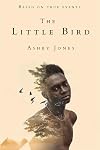
I am fond of emotionally rich novels and Little Bird by Ashby Jones had made me fall for it.
It is a powerful and emotional story about injustice, grief, and the hope for healing. It begins with the murder of a Black teenager in 20th century by a white police officer who is never punished. Years later, the pain from this crime still affects everyone connected to it.
Shane, the boy's best friend, returns from war filled with anger and a desire to take justice into his own hands. Then comes, Suzanne, the lawyer's daughter who failed to win the case. She has returned with guilt, loss, and her own dark intentions. The duo meet by chance and gradually form a deep connection without knowing each other's actual plans. As their connection grows, they are forced to face buried grief, family responsibility, and the question of whether love can stop them from destroying themselves.
The story focuses on emotions over action—the slow pull of grief, the weight of unfinished pain, and the fragile possibility of forgiveness. The writing is intense yet thoughtful, keeping readers invested while leaving essential questions unanswered. I loved how the characters grows with each establishment, it was gradual and hooking.
It is a powerful and emotional story about injustice, grief, and the hope for healing. It begins with the murder of a Black teenager in 20th century by a white police officer who is never punished. Years later, the pain from this crime still affects everyone connected to it.
Shane, the boy's best friend, returns from war filled with anger and a desire to take justice into his own hands. Then comes, Suzanne, the lawyer's daughter who failed to win the case. She has returned with guilt, loss, and her own dark intentions. The duo meet by chance and gradually form a deep connection without knowing each other's actual plans. As their connection grows, they are forced to face buried grief, family responsibility, and the question of whether love can stop them from destroying themselves.
The story focuses on emotions over action—the slow pull of grief, the weight of unfinished pain, and the fragile possibility of forgiveness. The writing is intense yet thoughtful, keeping readers invested while leaving essential questions unanswered. I loved how the characters grows with each establishment, it was gradual and hooking.
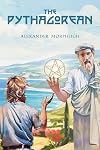
Author Alexander Morpheigh is a computer engineer involved in industrial automation and robotics, leading a global group of companies in that industry. His fascination with Ancient Greek philosophy, coupled with extensive research, is the source of his debut literary novel, THE PYTHAGOREAN, a thought-provoking novel that merges ancient wisdom with modern science to create an imaginative story of self-discovery. In the author’s words, reflecting on Greek philosophy, ‘If science and religion stop being antagonists and competitors, and reach out to each other, it would be a powerful synergy and an impetus for human progress.’
Morpheigh’s sparkling prose opens with fine atmosphere: ‘Watching the early morning sun rising in Athens is something that can be described as mesmerizing. This is especially true at the end of April, when the weather is warm and the sky is not yet visible, but its rays are already reflected off the sea from over the horizon.’ With that window into Greece the fascinating theme of this book can be suggested as follows: What if the key to returning to your future rested solely in the past? Could you live in an ancient civilization to return to the only life you’ve ever known?
As a very abbreviated summary, ‘THE PYTHAGOREAN is a blend of fantasy and science fiction genres. The protagonist Theo, a successful software engineer from modern Greece who wakes from a car accident to find himself in a new body, slingshotted back in time to Ancient show more Greece. Guided by the Oracle Pythia and mentored by the legendary philosopher Pythagoras, Theo faces down a formidable challenge for any modern person: transforming cynicism into self-awareness, clarity, and purpose. The book presents an alternative scientific perspective on the origin and structure of the world, as well as on religious teachings, as depicted by certain representatives of the Western scientific communities.’ Very highly recommended as both entertainment and insight into Greek philosophy! show less
Morpheigh’s sparkling prose opens with fine atmosphere: ‘Watching the early morning sun rising in Athens is something that can be described as mesmerizing. This is especially true at the end of April, when the weather is warm and the sky is not yet visible, but its rays are already reflected off the sea from over the horizon.’ With that window into Greece the fascinating theme of this book can be suggested as follows: What if the key to returning to your future rested solely in the past? Could you live in an ancient civilization to return to the only life you’ve ever known?
As a very abbreviated summary, ‘THE PYTHAGOREAN is a blend of fantasy and science fiction genres. The protagonist Theo, a successful software engineer from modern Greece who wakes from a car accident to find himself in a new body, slingshotted back in time to Ancient show more Greece. Guided by the Oracle Pythia and mentored by the legendary philosopher Pythagoras, Theo faces down a formidable challenge for any modern person: transforming cynicism into self-awareness, clarity, and purpose. The book presents an alternative scientific perspective on the origin and structure of the world, as well as on religious teachings, as depicted by certain representatives of the Western scientific communities.’ Very highly recommended as both entertainment and insight into Greek philosophy! show less