
This is an essential read in this year's Golden Dome award list. The first third or so feels like a generic bullying novel, but as the story proceeds, an astounding range of characters get developed. Basically everyone but the bully and his dad is three-dimensional, complex and humane. The book is also a great representation of members of all the Abrahamic faiths living their ideals in support of one another. Plus, it won't hurt students to see that Texas today isn't just cowboys and tumbleweed, but vibrantly multicultural.
A light and humorous take on anxiety. Erik's family prefers to embrace their Viking ancestry in cartoonish and two-dimensional, albeit loving, ways. The plot picks up speed midway through when Erik discovers an affinity for mountain biking.
A quick read about Soviet oppression and antisemitism impacting a family that loves the arts (especially the poetry of Osip Mandelstam and ballet as danced by Mikhail Baryshnikov) that makes an interesting diptych with the '21-'22 Golden Dome nominee Chance: Escape from the Holocaust. Very brief chapters are accompanied by lots of humorous illustrations. Parts of it about his father could have made a brilliant Russian short story.
Standard boiler-plate kids' WWII thriller. Protagonist starts pro-Nazi and has a change of heart as he sees how Nazis treat community members who express dissatisfaction with the war. Does not get into any of the serious moral issues of WWII, but exemplifies the courage necessary for a boy or man to listen to conscientious friends and step away from involvement in violent groups.
Cute but not particularly compelling story of two friends who help a mole who is missing her glasses. Frog and Toad's "The Lost Button" is a better-constructed and shorter tale on the same theme.
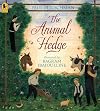
A farmer loses his farm and raises his sons in poverty, while trimming a hedge into topiary. Eventually his sons grow up, find fulfilling careers, and help him out. Between this book and Grandpa Green, I'm wondering if Bagram Ibatoulline is known as the go-to person for books about topiary!
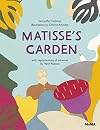
The palette is more muted than Matisse as experienced in a museum, but other than that this book is a very true introduction to his cut paper work. Many pages that fold out into a double spread.
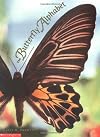
Closeup photos of letter-like patterns on the wings of butterflies, accompanying short verses about them.
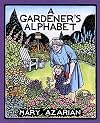
Beautiful, bold woodcut-style artwork illustrating a garden concept for each letter of the alphabet. Some of them will raise a laugh -- wait until you see the gardener's face as she lugs the zucchini!
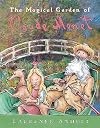
Brings the book into the world of Monet's water gardens and painting studio through the eyes of a young girl visitor.
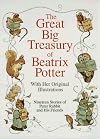
Convenient collection of many Beatrix Potter tales, including some less well known selections. It is not comprehensive, and lays out the text and illustration of multiple pages on one page, making for less of a surprise in the action sometimes.
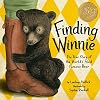
Gentle story of the bear who inspired Winnie the Pooh, from her adoption as a cub in Canada, through serving as a mascot for a Canadian regiment preparing to serve in World War I, to retirement to the London zoo and meeting A. A. Milne's son.
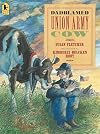
More engaging story than the cover would suggest, and based on a true story. My only challenge with using this as a readaloud is its use of rural dialect. I don't want to sound like I am making fun of dialect users, so not being a skilled voice actor it is hard to use books that are written in dialects.
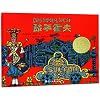
Cheerful colors and stylized 60s drawings make a somewhat jarring counterpoint to the anti-war subtext. I have fond memories of this book from the library when I was a very small child, but I definitely didn't understand how grim it was at the time.
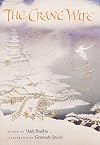
Classic folktale set in Japan. Would make an interesting counterpart for the story of Alcestis. Art is styled after classical Japanese painting by a Russian-American.
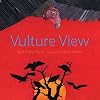
An oddly grim collage-style picture book--or maybe given the subject matter I should say predictably grim. Narrative "nonfiction" like Honeybee or Hummingbird.
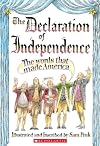
Really interesting concept: the Declaration of Independence is broken down into phrases and illustrated in an engaging manner, somewhat representative of classic 18th-19th century political cartooning. Readers should be aware that the Declaration contains controversial ideas and an unfounded slur against Native Americans. That page's illustration is handled thoughtfully (King George bribing a man whose indigenous identity is revealed in his hairstyle, though he wears European style frontier clothing rather than stereotyped native dress). The book is worthwhile because it will make it much easier for students to understand what the (rather dense) Declaration actually said beyond "life, liberty, and the pursuit of happiness." Rather a lot of slamming King George as it turns out!
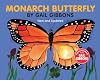
Gibbons' usual straightforward approach to nonfiction picture books is here applied to the monarch butterfly. The book is pretty comprehensive for younger audiences, but is missing something that I think is essential to understanding insect ecology, namely, the monarch's role in the ecosystem. Does it pollinate? Is it the chief food of a beneficial species of bird? Does eating milkweed help or harm grasslands in the US and Mexico? Readers of this book will not know.
Uninspiring tale based on a TV episode. Angelina does not include her brother when caring for a butterfly she captures. Her brother allows the butterfly to escape, and in a series of improbable events, Angelina is trapped in a pit and rescued by the Lassie-like actions of the butterfly.
Story of a boy who gardens for Buddhist monks. He understands the value of his occupation even though noone else in his community does.
Slightly odd account of three friends whose complacent relationships are thrown into mild turmoil by a visiting fox salesman, and then resolved. Involves gardening and cooking.
Cute story of escalating conflict between a gardener and three hungry bunnies.
Gorgeous, ornately patterned and gold-highlighted illustrations and narrative vignettes accompanied by information about the annual patterns of hummingbird life. Would pair well with Honeybee (2021 RC nominee) for a diptych of pollinator-centered adventure narratives -- as long as the audience has a decent attention span.
Comic style art tells the sparsely narrated story of a boy who brings an injured pigeon home to his apartment to recover.
Classic Caldecott winner narrating a little girl's visit to her grandparents' house. Cheerful voice and characterization.
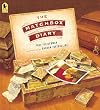
This book does not look like much from the outside, but contains a story that is well suited for history-hungry 2nd through 4th graders. The images alternate between color paintings of a man talking to his great-granddaughter, and black and white images from his early life escaping poverty in Italy to life as a child laborer and eventually student in America.
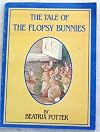
I grew up on Beatrix Potter, beloved of my librarian grandmother. These days, if you are going to read every word of the text to children, you should be aware that the following things occur in this book:
-Use of four-syllable words ("somniferous," promptly defined through context)
-Tobacco references
-Antagonist humans planning to eat the protagonists and/or skin and decapitate them
-Cousin marriage among rabbits
Personally, I still find the story worth sharing even if I edit out a bullet point or two of the above depending on the age of the listeners. (Pre-K can't benefit from the big word, but can handle the rabbits marrying one another better than 3rd grade...)
-Use of four-syllable words ("somniferous," promptly defined through context)
-Tobacco references
-Antagonist humans planning to eat the protagonists and/or skin and decapitate them
-Cousin marriage among rabbits
Personally, I still find the story worth sharing even if I edit out a bullet point or two of the above depending on the age of the listeners. (Pre-K can't benefit from the big word, but can handle the rabbits marrying one another better than 3rd grade...)
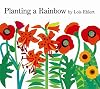
Great colorful book for a garden themed readaloud. You can get into the details of the plants or not.
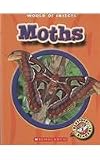
Easy to read introduction to the lifecycle and varieties of moths, illustrated by bright photographs. Good for e.g. 2nd grade, or to read aloud to younger students.
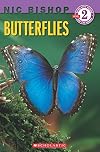
Introduction to lifecycle and varieties of butterflies, illustrated with Nic Bishop's bold photography. Easy to read for 2nd-3rd grade students.