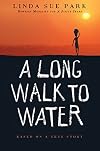
This book made me cry! A quick read that exposes young readers to the story of the lost boys (Sudanese refugees) and an inspirational tale about the hope found in the form of a well.
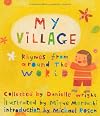
This is a collection of rhymes from around the world. Each two page spread contains the poem translated into English, as well as the poem in its original language. It is neat to compare the words and rhythms, as well as see what children around the world memorize to recite! The colorful collage illustrations really enhance the book.
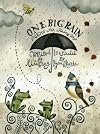
This delightful book is smaller than your average picture book which makes it feel extra special. It contains beautiful illustrations and poems for all seasons. There are many haikus, but other types of poems as well, collected from poets such as Hilda Conkling, Kyoshi, Carl Sandburg, and more. Some of the poems have been translated from other languages. What a treasure!
You Read to Me, I'll Read to You: Very Short Mother Goose Tales to Read Together by Mary Ann Hoberman
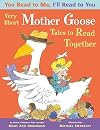
This book is meant for side by side reading, with two reader parts on each page. The poems are fun and rhythmic. Great way to reinforce a unit on mother goose rhymes! I love these books!
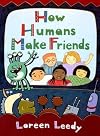
This creatively told story on how to make and treat friends is told from the perspective of an alien returning home and explaining about the "strange" customs of humans. However, all of the information can be very useful for real humans needing to know more about friendship! Includes things friends do together, why friends don't get along/conflicts, and how to apologize and forgive. Could be very useful for a counseling/friendship group.
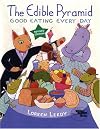
A fun introduction to eating right! Each page has lot of examples of foods that fall into the main food groups, plus helpful tips for estimating servings. It also stresses the importance of exercising. This is a great health book, but the food pyramid has been updated since this book was published, so it shouldn't be used as a primary guide.
Kakapo Rescue: Saving the World's Strangest Parrot (Scientists in the Field Series) by Sy Montgomery
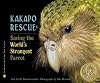
This remarkable nonfiction story chronicles 10 days on Codfish Island in New Zealand where the only remaining Kakapo parrots live. The Kakapo used to be numerous, but human and animal invasion drove them nearly to extinction. Now, a group of dedicated scientists and volunteers are working to help stabilize the population, but it's challenging. The birds do not have great survival instincts, have difficulty breeding, and the survival rate for new chicks is low. Beautifully illustrated and full of details, this book will have you cheering the successes and mourning the losses right along with the people in the story.
Photos by Nic Bishop!!
Photos by Nic Bishop!!
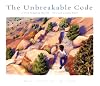
Based on the true story of the Navajo code talkers, this fictional account is about a young Navajo boy named John who does not want to leave to go live with his mom and new stepfather in Minnesota. He is comforted by his grandfather, who tells him about what it was like to be a code talker during the war, and how the Navajo language was so important. John learns that no matter where he goes, he can always carry the ways and the language of the Navajo with him.
Great introduction to the code talkers!
Great introduction to the code talkers!

Tony’s friend Scott comments on Tony’s reflection and says, “I’m all Indian. I think you’re half or less than half.” This statement troubles Tony, who spends the rest of the story trying to find out his identity and gets some good advice from his grandfather, who relates their heritage to colorful corn – beautiful because of all its colors. A good book for children who may come from varied multicultural backgrounds.
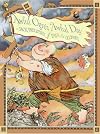
Awful Ogre is so awful, his name is Awful Ogre! This collection of funny and disgusting poems takes us through a typical day in the life of Awful Ogre. He wakes up (scattering rats and getting bit by his pet piranha), eats a disgusting breakfast (with gargoyle bile), and generally creates havoc, but also has time to pen a love letter to an ogress (“I cherish the touch of your sandpaper hands”). Kids will love being grossed out by the ogre, and the rhythm of the poetry is perfect for reading aloud. Grades 1-3.
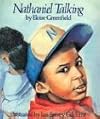
The black and white pencil illustrations in this book are amazing! Nathaniel is 9 and he has a lot to say. He raps and rhymes through the rhythms of his day. His poems are thoughtful, reflective and full of emotion and questions and hope. The poems deal with a wide range of topics, from being able to roam the neighborhood freely, the death of his mother, his admiration for his father, the shame he feels when he gets in trouble.
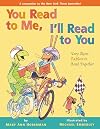
In this installment of the You read to me, I’ll read to you series, Mary Ann Hoberman has her signature two person reading style applied to Aesop’s Fables. The rhythms are fun and flow very well. The illustrations tell another story as well, as actors get ready to perform a play of the fables! Would be a great supplement or introduction to a unit on fables.
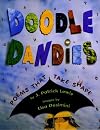
A collection of concrete poems where the subject of the poem is reflected in the shapes and images on each page. Covers nature, sports, animals, and more.
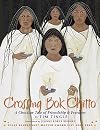
Set in the old south during the times of slavery, this is a retelling of a Choctaw Tale where if slaves could cross the Bok Chitto river in Mississippi, they would be free. Young Martha Tom befriends Little Mo, a slave boy, because Martha Tom knows the secret way to cross the river. This comes in handy when Little Mo’s family is facing being split up because their mother has been sold to a different plantation.
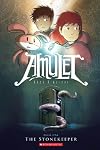
Emily, Navin, and their mother are starting over. Two years after a tragic car accident killed their father, the family is out of money and looking for a fresh start, which comes in the form of a rundown family home in the middle of nowhere. It turns out this cobweb-filled house with no electricity is the least of their problems! Before their first night in their new home is through, Emily and Navin’s mother is kidnapped by a mysterious squid-like creature. Now, it’s up to Emily and Navin to find her and rescue her. Aided by a powerful Amulet left behind by their great grandfather, the two siblings navigate a strange new world where they have to figure out whether the Amulet’s intentions – and their long-lost grandfather’s – are honorable. School Library Journal writes, “Filled with excitement, monsters, robots, and mysteries, this fantasy adventure will appeal to many readers, but it does have some nightmarish elements.” The Stonekeeper is the first graphic novel in this riveting, gorgeously illustrated series.

It’s the summer of 1962, and the city of Norvelt is dying, right along with its original residents. Jack Gantos, the fictional protagonist, has a knack for getting into trouble. First, he accidentally shoots a bullet from his dad’s Japanese sniper rifle, which lands him in big trouble with Dad. Then, Dad asks Jack to mow down his mother’s corn crop in the back yard to clear space for an airplane runway (he’s putting together his very own J-3), which lands him in big trouble with Mom. Combined, this means being grounded for the entire summer…unless it’s to go help his elderly, arthritic neighbor, Miss Volker, type up the Norvelt obituaries, which are coming fast and furious. Quirky, humorous, and sometimes gritty, author Jack Gantos infuses real bits of history about everything from Spanish conquistadors, the city of Norvelt, and its very real founder, Eleanor Roosevelt, into the bizarre lives and deaths of Norvelters. Gantos was born and raised in Norvelt, Pennsylvania, and gives readers a historical glimpse into small town America.
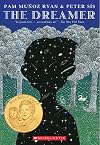
Before Pablo Neruda was a famous poet, he was Neftalí Reyes, a slight of frame dreamer of a boy who could never live up to his authoritarian father’s exacting rules and expectations. Muñoz and illustrator Peter Sis weave together a dreamlike story, chronicling the pivotal experiences of Neftalí’s childhood using a combination of carefully chosen phrases, poetic questions, and delicate illustrations. Booklist says, “This book has all the feel of a classic, elegant and measured, but deeply rewarding and eminently readable.” Once you read this story, you will know without a doubt that Neftalí Reyes was born to be a poet.
This brightly-colored, engaging book brings the wonders of the natural world into the imaginations and minds of young readers. Told in simplistic terms, the book teaches about 11 different animals and the amount of food they can consume with one bite. The life-size illustrations range from the small (a worm eating a tiny speck of dirt) to the massive (a sperm whale taking a bite out of a squid). Though creatively illustrated in real-life scale, the macro illustrations of larger animals could hinder visualization of the creature in its entirety. The last two pages of the book make up for the expansive illustrations and sparse details by explaining with more depth and scientific terms about the process by which each animal eats.
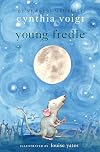
When Fredle eats too much chocolate (very bad for a mouse), he finds himself pushed out of the safety of the kitchen wall by his family, because one of the rules they live by is that when you’re sick, you must leave to “went,” never to be heard from again. Fredle finds himself outside, and very alone – at first. As he encounters different animals on the farm, he begins to determine for himself what is true and what should be questioned. He discovers the world is much larger than he ever could have imagined, falls in love with the moon and flowers, and realizes many of the rules his family of kitchen mice live by don’t make a lot of sense. When Fredle finally finds the way back inside and to his family, he must decide what’s truly important to him.
Reminds me of Mrs. Frisby and the Rats of NIMH
Listened to audiobook - slow moving
Reminds me of Mrs. Frisby and the Rats of NIMH
Listened to audiobook - slow moving
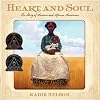
Breathtaking oil-on-canvas paintings form the backdrop for this captivating book chronicling the history of America through the eyes of an unnamed African American narrator. Beginning with slavery, Kadir Nelson leads readers through the toils and triumphs of African Americans up to the modern day, shedding light on why things are the way they are, and leaving readers to ponder the way things should be. Emotion oozes through the pages of the book, both through the gentle, no-nonsense narrative, and the compelling paintings that beg you to linger. In the words of the narrator, “You have to know where you come from so you can move forward.” The engaging story and illustrations, combined with Author’s Note, Extensive Timeline, Bibliography, and Index will entice readers to return to this thought-provoking story of America time and time again.
Bad News for Outlaws: The Remarkable Life of Bass Reeves, Deputy U. S. Marshal (Exceptional Social Studies Titles for Intermediate Grades) (Nelson, Vaunda Micheaux) by Vaunda Micheaux Nelson
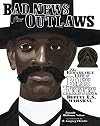
Nelson exposes readers to a lesser-known part of U.S. history in this lively biography of Bass Reeves, an African American slave who runs away, is harbored by accepting Native Americans, and later sustains a successful 32-year career as a U.S. marshal in Indian Territory. Booklist states, “An exciting subject captured with narrative panache and visual swagger, Bass Reeves stands to finally gain his share of adulation from kids drawn to the rough-and-tumble Old West.” In a lawless land, Bass Reeves stands out as a man of honor and integrity; a real-life hero for all to admire. Contains a glossary, timeline, further reading and websites to entice young readers to delve deeper into this fascinating part of the Wild West.
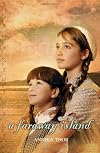
When Stephie and Nellie Steiner are sent from their home in Vienna to Sweden, they imagine they will stay in a seaside resort town with palm trees, colorful beach umbrellas, and ice cream vendors. Instead, they find themselves on a windy, rocky “faraway island” that feels like the end of the world. The year is 1939, and the Jewish sisters have been sent to Sweden to await their parents, who are trying to secure safe passage to the United States, away from Nazi threat. Nellie quickly adjusts to their new home, while Stephie struggles to find her place amidst bullying, a harsh caregiver, and concern for her parents back in Vienna. Translated from Swedish and told in present tense, Annika Thor combined accounts of the 500 refugee children Sweden took in during WWII to paint an accurate picture of what the transition for young Jewish children to Sweden was really like.
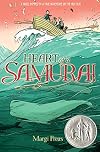
This fast-paced adventure story is based on the true account of Manjiro, a shipwrecked Japanese fisherman rescued by “barbarian” whale hunters from America in the year 1841. Laugh-out-loud funny, heart-wrenching, and rich with details and illustrations of whale-hunting, Manjiro soaks up knowledge of other lands, encounters both acceptance and hostility, and helps to usher his homeland out of isolation while realizing his dream of becoming a Samurai.
Same story as Shipwrecked!
Same story as Shipwrecked!
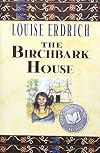
It is the year 1847, and 8-year old Omakayas wishes things were different. She wishes she were beautiful like her older sister, Angeline; wishes she didn’t have such an annoying younger brother (Pinch); wishes she could spend more time caring for sweet baby Neewo like he was her own; and wishes she didn’t have to spend quite so much of her time tanning hides. One winter evening, a sick French voyageur stumbles into the Ojibwa dance lodge, and soon Omakayas is wishing for some different things – wishing the stranger hadn’t brought smallpox to her village; wishing it didn’t weaken her family and kill her friends and baby Neewo; and wishing she knew what she could do to help the survivors. Guided by her wise grandmother, village elders like gruff Old Tallow, and her bear brothers with whom she shares a special connection, Omakayas embarks upon a journey of self discovery. In the process, she learns more about where she came from – but more importantly – where she is going. In her first novel for children, Ojibwa author Louise Erdich gives an accurate portrayal of Ojibwa life in the 1800’s. Through descriptive writing, she weaves everyday life with traditional folktales that honor the Ojibwa people and keep their stories alive.
Bud has run away from a foster home where he was cruelly treated, and gets it in his mind to track down the man he thinks must be his father (his mother died 4 years previous, and left him some “clues” about his family). Set against the backdrop of the Great Depression (1936) and based loosely on author Christopher Paul Curtis’s own grandfathers, it shows the hardships of the era and how it was especially rough for African Americans. I almost think this book could be considered historical fiction due to the inclusion of so many real people and events from the depression era.
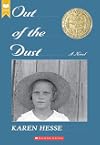
Told in free verse poem form, this is the story of 14-year old Billie Jo Kelby who lives in Oklahoma during the dust bowl. Billie Jo’s main love is playing the piano, but a fire accident badly burns and scars her hands, making playing the piano nearly impossible. What’s worse, the same accident burned her mother and not-yet-born brother so badly that neither of them survived. Now, Billie Jo has to live with a distant father who has struggled with farming due to the dust. A very poignant book showing just how dusty it really was, and how even in the midst of so much struggle, there can still be hope, and a place that is home.
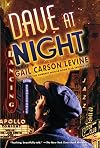
Dave Karos’ life is turned upside down in one fell swoop; his father died in a carpentry accident, and at the funeral, his stepmother announces she can’t afford to keep Dave and his brother, Gideon, and asks who will take them. Dave’s uncle Jack agrees to take Gideon, but nobody wants Dave, so he is sent to live at the Hebrew Home for Boys, an all-boy orphan asylum. Dave wastes no time in sneaking out. He makes some good and trustworthy friends while visiting salon parties and listening to Jazz music. The orphan director is cruel and abusive (as Dave quickly finds out after he is caught for sneaking out) and to make matters worse, he has stolen Dave’s prized possession, a carving of Noah’s Ark that his father made. Dave decides that he will do whatever it takes to get his carving back, and then he will run away. Over time, however, despite some bad things about the orphanage (like bullies eating their food and it’s always freezing cold), Dave also realizes there are good things, like all of his new “buddies” – the other 11 year olds – who will look out for him through thick and thin, and the art lessons he enjoys so much.
Based on Gail Carson Levine’s own father’s experience in a similar orphanage.
*Listened to audiobook - good!
Based on Gail Carson Levine’s own father’s experience in a similar orphanage.
*Listened to audiobook - good!
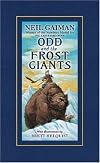
Odd is sick and tired of the long winter in the Viking long house with other members of his village including his mother and uncaring stepfather and step-siblings, and sets off for the solace of his late father’s hut. It is an arduous journey, as Odd was crippled from an accident with an axe. Not long after he reaches the hut, he is led by a fox to a bear who is trapped between two trees. Against his better judgment, Odd decides to free the bear. Oddly enough, the bear doesn’t try to eat him; in fact, the bear carries Odd back to the hut! Odd soon learns the true identities of a Fox, Bear, and Hawk. They are Norse gods who were cursed by the Frost Giants. Fearless Odd decides they should travel to Asgard to get the Frost Giants to release their wintry grip; for if the Frost Giants continue to reign, winter will never turn to spring, and humans will die out!
*Listened to audiobook
*Listened to audiobook
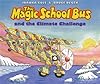
Ms. Frizzle’s class goes on a trip to the Arctic to learn more about Global Warming. They learn about changes in the environment caused by global warming, and what we can do to help. It’s actually very comprehensive. Addresses emissions, fossil fuels, natural disasters, recycling, and more. A great overview of global warming.
Wheels of Change: How Women Rode the Bicycle to Freedom (With a Few Flat Tires Along the Way) by Sue Macy
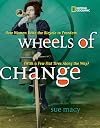
A comprehensive look at the bicycle through the ages, and how it helped (and continues to help) empower women. Full of primary documents such as photographs and advertisements, everything is pieced together to show the impact a simple two-wheeled machine has made worldwide. Even if you are not a bicyclist, you can appreciate this book, and if you are, you will appreciate your sport even more.