This book provides an interesting picture of addiction. From the status of women to the day-to-day life of those in the drug culture.

At any rate, I really liked this delightfully interesting novel. The Dolphin People is narrated by Erich Linden who is a sixteen year old who travels with his mother and younger brother Zeppi to Venezuela. Erich's father has died fighting on the side of the Nazis in World War II. Erich's mother will now marry Klaus, her late husband's brother who has fled to Venezuela to avoid prosecution as a Nazi. And this is only the beginning!
After changing their last name, the new family takes a flight to the interior of Venezuela where they will live. Unfortunately the plane crashes and the four must figure out a way to live with the Amazonian tribe they encounter. The family learns the culture of the tribe via another white man, Gerhard, who has lived with the tribe for many years. To save their lives, the family members pretend to be dolphin people, almost gods who had been expected by the tribe. As time passes, the family must do more and more bizarre things to continue the ruse. I will not spoil the fun by telling you the results!
After changing their last name, the new family takes a flight to the interior of Venezuela where they will live. Unfortunately the plane crashes and the four must figure out a way to live with the Amazonian tribe they encounter. The family learns the culture of the tribe via another white man, Gerhard, who has lived with the tribe for many years. To save their lives, the family members pretend to be dolphin people, almost gods who had been expected by the tribe. As time passes, the family must do more and more bizarre things to continue the ruse. I will not spoil the fun by telling you the results!
When the war was over and Nazi concentration camps were liberated, survivors were taken to camps for displaced persons where their medical needs were addressed. But Europe, especially Eastern Europe, was in shambles. Survivors searched for family members and, more often than not, found that they alone had survived. The emotional devestation led to years of buried emotions and a feeling of not belonging. Displaced Persons, written by Ghita Schwarz, explores this emotional solitude over decades of survival. Ultimately, the emotions under the surface bubble up and expose feelings unknowingly guiding many decisions. To see the struggle over forty years and two continents really illuminates how difficult survival was after the war.
My full review can be read here.
My full review can be read here.
 This review was written for LibraryThing Early Reviewers.
The Outer Banks House by Diann Ducharme came to me via Crown Publishers, a division of Random House. As the name suggests, the setting is the Outer Banks of North Carolina. And the book is filled with the richness of North Carolina history and scenery. Taking place just after the Civil War, the tensions of the post-war South also play a significant role in the development of the book.
Abigail Sinclair, her parents, and her siblings come to the North Carolina shore with Abigail looking toward her marriage in the near future while her father is hoping to escape a plantation that is faltering with the loss of slave labor. The family quickly, if reluctantly, joins in the rythms of the island. Abby is introduced to the island by Ben who is a young man with deep ties to North Carolina life and history. Abby teaches Ben to read and their temperments clash until Abby realized that Ben has much to teach her as well. While she becomes more involved in the lives of ex-slaves living nearby, Abby's father becomes involved in local attempts to put the ex-slaves back in their place.
Of course, Abby and Ben fall in love, struggle, come apart, and come back together. It is actually this part of the book with which I have the most trouble. Perhaps the book follows the tried and true method of plot build up, conflict, and resolution ~ but I just did not find it to be real. Maybe as someone who lives in the South, I did not like the racial undertones of the conflict for Abby and her family. show more So I enjoyed the book for the descriptive narrative, but not the human interactions. show less
Abigail Sinclair, her parents, and her siblings come to the North Carolina shore with Abigail looking toward her marriage in the near future while her father is hoping to escape a plantation that is faltering with the loss of slave labor. The family quickly, if reluctantly, joins in the rythms of the island. Abby is introduced to the island by Ben who is a young man with deep ties to North Carolina life and history. Abby teaches Ben to read and their temperments clash until Abby realized that Ben has much to teach her as well. While she becomes more involved in the lives of ex-slaves living nearby, Abby's father becomes involved in local attempts to put the ex-slaves back in their place.
Of course, Abby and Ben fall in love, struggle, come apart, and come back together. It is actually this part of the book with which I have the most trouble. Perhaps the book follows the tried and true method of plot build up, conflict, and resolution ~ but I just did not find it to be real. Maybe as someone who lives in the South, I did not like the racial undertones of the conflict for Abby and her family. show more So I enjoyed the book for the descriptive narrative, but not the human interactions. show less
This was a very interesting book, but often difficult to read for long periods of time. For one thing the book is extremely heavy ~ almost encyclopedic! In addition, I would have enjoyed more historical context to the familial stories. However, it was interesting to see the many ways this one family tree was affected in the years preceeding World War II and during the Holocaust. If you are interested in Europe during these time periods as I am, you will likely enjoy this book.
This review was written for LibraryThing Early Reviewers.
I was so excited to receive this book. My husband and I always visited the two small monkeys at our local pet shop. I also love the idea of service animals of any sort. In this true account, Kasey becomes the service monkey for a young man who was paralyzed in an auto accident. His mother tells the reader about the accident, her son's recovery in the face of low odds, and how Kasey came into their life as a miracle! As a parent, I certainly could identify with Ms. Rogers and her love for her son and her other children shines brightly in this easy to read book.
This review was written for LibraryThing Early Reviewers.
First, I would like to thank William Morrow/HarperCollins Publishers for sending me this uncorrected proof. In return, I am providing an unpaid review of the book containing my personal opinions of Naslund's newest novel Adam and Eve. In her two previous novels, Ahab's Wife and Abundance, the author brought a fictional character to life - Ahab's wife (from Moby Dick) and took a real life character - Marie Antionette, into a fictional world. In her latest novel, Naslund wraps her characters around ancient religious symbols and texts - moving from Amsterdam, to Eden (somewhere in the Middle East), to France.
Lucy Bergmann was in Amsterdam when her husband was killed. Shortly before his death Thom, an astrophysicist, had given Lucy his flash drive with the quip that it was the keys to the kingdom. And the kingdom included extraterrestrial life! He could prove it. At this point, I was thinking, oh brother ~ another one of these stories ~ but I persevered! And I loved this book.
The book bounces back and forth in time, but is easy to follow. We meet people who are to help Lucy, like Adam who finds himself adrift from a war he never believed in - adrift in Eden. Alone until Lucy ~ his Eve ~ crashes a plane nearby. Together they look for a case Lucy was carrying ~ holding ancient biblical texts. Lucy and Adam are not the only people searching for them and the two find themselves in the center of a battle between the three main ancient religions.
I was glued to this book from show more beginning to end. I had to hear what the ancient texts said, I had to follow Adam and Lucy in Eden, I had to know who the bad guys were, and was there a happily ever after? I hope that you will grab this book and spend some time with it. I plan to read it again as soon as I can and check out the author's previous two books as well.
I found this to be a beautiful book that provoked joy and deep thinking about our place in the universe. A perfect blend of mystery, faith, and beauty. show less
Lucy Bergmann was in Amsterdam when her husband was killed. Shortly before his death Thom, an astrophysicist, had given Lucy his flash drive with the quip that it was the keys to the kingdom. And the kingdom included extraterrestrial life! He could prove it. At this point, I was thinking, oh brother ~ another one of these stories ~ but I persevered! And I loved this book.
The book bounces back and forth in time, but is easy to follow. We meet people who are to help Lucy, like Adam who finds himself adrift from a war he never believed in - adrift in Eden. Alone until Lucy ~ his Eve ~ crashes a plane nearby. Together they look for a case Lucy was carrying ~ holding ancient biblical texts. Lucy and Adam are not the only people searching for them and the two find themselves in the center of a battle between the three main ancient religions.
I was glued to this book from show more beginning to end. I had to hear what the ancient texts said, I had to follow Adam and Lucy in Eden, I had to know who the bad guys were, and was there a happily ever after? I hope that you will grab this book and spend some time with it. I plan to read it again as soon as I can and check out the author's previous two books as well.
I found this to be a beautiful book that provoked joy and deep thinking about our place in the universe. A perfect blend of mystery, faith, and beauty. show less

Thanks to Little Brown and Company, I had the privilege to read this fascinating book. Five year old Jack is the narrator and author Emma Donoghue has done a magnificent job in giving Jack just the right voice for his age and experiences. One would think this book, limited in range to one small room and two people, would be flat and boring. Instead Ma and Jack's story is a testament to love and ingenuity. With very little to assist her in her efforts, Ma provides Jack with as many "normal" childhood experiences as she can, using what she has, and providing loving care for her son. Still she knows things have to change. And they do! Ma thinks of a way that she and Jack can fool Old Nick and escape Room. Will they succeed and will they find greater happiness? You will have to read the book to find out!
Let me begin this review with thanks to LibraryThing and Avon Publishers for providing me with the opportunity to read this book. Knit in Comfort: A Novel by Isabel Sharpe is one of many books published recently which are centered on a group of women who share knitting as a common hobby. I wanted to love this book, and while I found it engaging enough, I only liked it.
The story revolves around two women. Megan Morgan lives a settled life in Comfort, North Carolina with her husband, children, and mother-in-law. She belongs to the knitting club, Purls before Wine which meets weekly. Even though this is the life Megan wanted, she never really seems content. Needing to supplement the family income, Megan rents out the small garage apartment behind the house to Elizabeth Detlaff. Elizabeth lived in New York City with her boyfriend. In a dream, Elizabeth heard her grandmother tell her to go find “comfort” and she believes that is what she has done! She views Megan’s life as blissfully happy until she sees beneath the surface and realized things may not be the way they seem. And isn’t that true of everyone’s life?
The part that made this story a little more interesting was the introduction of Megan’s stories about her ancestors from the Shetland Islands in Scotland. Fiona, Megan’s great-grandmother, knitted beautiful lace that seemed to tell her story. In the beginning, I was more focused on this story until I could figure out who was who. The two stories, Megan’s show more and Fiona’s, seem to flow together over the course of the book just as Megan and Elizabeth’s stories do. show less
The story revolves around two women. Megan Morgan lives a settled life in Comfort, North Carolina with her husband, children, and mother-in-law. She belongs to the knitting club, Purls before Wine which meets weekly. Even though this is the life Megan wanted, she never really seems content. Needing to supplement the family income, Megan rents out the small garage apartment behind the house to Elizabeth Detlaff. Elizabeth lived in New York City with her boyfriend. In a dream, Elizabeth heard her grandmother tell her to go find “comfort” and she believes that is what she has done! She views Megan’s life as blissfully happy until she sees beneath the surface and realized things may not be the way they seem. And isn’t that true of everyone’s life?
The part that made this story a little more interesting was the introduction of Megan’s stories about her ancestors from the Shetland Islands in Scotland. Fiona, Megan’s great-grandmother, knitted beautiful lace that seemed to tell her story. In the beginning, I was more focused on this story until I could figure out who was who. The two stories, Megan’s show more and Fiona’s, seem to flow together over the course of the book just as Megan and Elizabeth’s stories do. show less
This review was written for LibraryThing Early Reviewers.
This is a harrowing fictional account of the journey of a young girl from innocence to knowledge, from home to Auschwitz, from life to death. The entire book takes place in the cattle car packed with Jews from all classes, all ages - all the subject of hatred by the Nazis. This was very difficult to read and even more difficult to contemplate when I was finished with the book. Still, I am glad that I read the book. It will give me pause for some time.
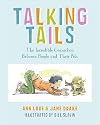
I loved this book. What a wonderful book for children to learn about animals and how to care for them. Although all the basics are covered, the author provides another level of learning with her timeline which cotninues on each page, telling us the known origins of the species being discussed. The illustrations are delightful and I plan on sharing this book with my grandchildren. I also plan to recommend the book to my Curriculum Materials Library.
This review was written for LibraryThing Early Reviewers.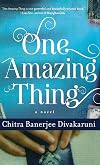
In some ways, One Amazing Thing reads like a number of short stories. A diverse group of people are stranded in the Passport office after an earthquake. With no apparent means to escape, they begin to tell an amazing story from their own history. Each story has the potential to enlighten or hurt another person in the group. Leaders come and then fade. While I found the book moderately engaging, there was not enough depth to the individual characters to call it wonderful.
This review was written for LibraryThing Early Reviewers.
An absolutely beautifully written and emoted book! My review is available here.
Here is my full review.
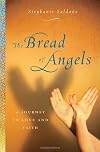
Let me begin this review with thanks to LibraryThing and Doubleday for providing me with the opportunity to read and review this book. The Bread of Angels is a memoir by Stephanie Saldana in which she remembers her year in Damascus, Syria studying Islam, culture, as well as other religions of the world. Trying to run away from herself and her family, her Fulbright Scholarship gave her this perfect opportunity. After a year of running, Saldana finds that she has stopped running away and is running to her future with an open heart and mind.
I enjoyed this book from start to finish. Culture and religion and love fill the pages of this memoir and after a bit of time has passed, I might just read this book again.
Let me begin this review with thanks to LibraryThing and Doubleday for providing me with the opportunity to read and review this book. The Bread of Angels is a memoir by Stephanie Saldana in which she remembers her year in Damascus, Syria studying Islam, culture, as well as other religions of the world. Trying to run away from herself and her family, her Fulbright Scholarship gave her this perfect opportunity. After a year of running, Saldana finds that she has stopped running away and is running to her future with an open heart and mind.
I enjoyed this book from start to finish. Culture and religion and love fill the pages of this memoir and after a bit of time has passed, I might just read this book again.
This review was written for LibraryThing Early Reviewers.
Thank you to Library Thing and Hachette Book Group for the opportunity to read and review this fantastically informative book. I feel much better about my potential for survival. My husband and I both took the associated online Survivors quiz - I am a Thinker, he is a Believer. Surely between the two of us, we can survive!
Sherwood has put together a phenomenally interesting and fact-filled book about who survives. And the why certain people survive. Through interviews with survivors world wide in every imaginable situation, this book presents a wide ranging profile of how we too can survive. As I completed the section on flight, I wanted to give the book immediately to my son who will be flying to Chicago next Thursday. Instead I told him about the Plus 3, Minus 8 rule which refers to the first three minutes of a flight and the last eight minutes before landing - these are the most likely times planes crash - and that in the event of a crash, you have about 90 seconds to get out of the plane, so sit within five rows of an exit and make note of where it is.
The book is not meant to frighten people or make for OCD watchfulness in every situation. Rather it is meant to make us all more aware of our surroundings and to know how to begin to act, not react, if danger should arise. I am better for having read this book.
Sherwood has put together a phenomenally interesting and fact-filled book about who survives. And the why certain people survive. Through interviews with survivors world wide in every imaginable situation, this book presents a wide ranging profile of how we too can survive. As I completed the section on flight, I wanted to give the book immediately to my son who will be flying to Chicago next Thursday. Instead I told him about the Plus 3, Minus 8 rule which refers to the first three minutes of a flight and the last eight minutes before landing - these are the most likely times planes crash - and that in the event of a crash, you have about 90 seconds to get out of the plane, so sit within five rows of an exit and make note of where it is.
The book is not meant to frighten people or make for OCD watchfulness in every situation. Rather it is meant to make us all more aware of our surroundings and to know how to begin to act, not react, if danger should arise. I am better for having read this book.
This review was written for LibraryThing Early Reviewers.
It was interesting that I received Forest Gate shortly after I The Girl Who Fell From the Sky by Durrow. It, too, deals with racial issues, but from a very different perspective. I could not have planned my reading any better and I would like to thank Simon & Schuster Free Press for the opportunity to read and review this first novel by Peter Akinti.
For me, this book was an incredible work of genius. I read the book very quickly and realized only on the very last page that this was a novel. This is a testament to the authenticity of voice, place and character crafted by Akinti. I typically try not to learn too much about a book I am about to read and I honestly thought this was a personal memoir written by two people, together. I was truly amazed when I found that it was not....so what was it?
It begins as the story of two young Black boys, both living in the Forest Gate area of London, England. This is an impoverished area and both boys felt that they had no opportunities in the future - they decided to commit suicide together by jumping off twin towers. One boy lived, the other died. The boy who lived spent time recovering living with the sister of the dead boy. The story is told in alternating chapters with the boy and the girl narrating. The feelings of hopelessness are palpable. Sadly, the suicide attempts are not the worst aspects of the lives of these three young people. And the racist attitudes of the people in their part of London and the surrounding areas are in show more stark contrast to the European model portrayed by Durrow in the previous book. I suspect this is because human attitudes, good and bad, can be seen in every situation, in every place and time. Hopefully, as we all begin to explore the negative impact of these attitudes through fictional accounts such as these we will slowly begin to move beyond stereotypes and racism. show less
For me, this book was an incredible work of genius. I read the book very quickly and realized only on the very last page that this was a novel. This is a testament to the authenticity of voice, place and character crafted by Akinti. I typically try not to learn too much about a book I am about to read and I honestly thought this was a personal memoir written by two people, together. I was truly amazed when I found that it was not....so what was it?
It begins as the story of two young Black boys, both living in the Forest Gate area of London, England. This is an impoverished area and both boys felt that they had no opportunities in the future - they decided to commit suicide together by jumping off twin towers. One boy lived, the other died. The boy who lived spent time recovering living with the sister of the dead boy. The story is told in alternating chapters with the boy and the girl narrating. The feelings of hopelessness are palpable. Sadly, the suicide attempts are not the worst aspects of the lives of these three young people. And the racist attitudes of the people in their part of London and the surrounding areas are in show more stark contrast to the European model portrayed by Durrow in the previous book. I suspect this is because human attitudes, good and bad, can be seen in every situation, in every place and time. Hopefully, as we all begin to explore the negative impact of these attitudes through fictional accounts such as these we will slowly begin to move beyond stereotypes and racism. show less
The Girl Who Fell From the Sky by Heidi Durrow is an amazing book and the winner of the 2008 Bellwether Prize for Fiction. Thank you to Algonquin Books for the opportunity to read and review the Advance Reading Copy.
With multiple narrators, as well as a variety of plots and subplots, we discover what it feels like to be a young biracial girl in Portland during the early 1980s. Rachel begins her story in Germany where she lives with her Danish mother, her black American father and her younger sister. Returning to the United States, Rachel is the sole survivor of a tragedy in Chicago where her mother and sister die. Rachel must learn to live with her Black paternal grandmother in Oregon. To further confuse the sad yet developing young girl, she faces racist attitudes that nearly crush her spirit. Over time, we learn her history and how she will face her future.
Another strong voice in the novel is Jamie - a young black boy who lived in the public housing unit near Rachel in Chicago and actually saw what happened to her family. Jamie faces racial discrimination as well and runs from his mother who is more interested in drugs than her own child.
Both young people develop friendships and relationships that both hurt and help them. I thought it was interesting that the author chose to describe Europe as more accepting of biracial relationships and people in general. And to place Rachel in northern and northwestern cities where typically racism is portrayed less negatively.
In show more many ways, this is partly Durrow's own story. On her Web site, she relates that she is biracial and faced many of the same questions as the title character when she was growing up in Oregon.
A wonderful book which examines racial attitudes and how far we have to go in mutual understanding in this country. show less
With multiple narrators, as well as a variety of plots and subplots, we discover what it feels like to be a young biracial girl in Portland during the early 1980s. Rachel begins her story in Germany where she lives with her Danish mother, her black American father and her younger sister. Returning to the United States, Rachel is the sole survivor of a tragedy in Chicago where her mother and sister die. Rachel must learn to live with her Black paternal grandmother in Oregon. To further confuse the sad yet developing young girl, she faces racist attitudes that nearly crush her spirit. Over time, we learn her history and how she will face her future.
Another strong voice in the novel is Jamie - a young black boy who lived in the public housing unit near Rachel in Chicago and actually saw what happened to her family. Jamie faces racial discrimination as well and runs from his mother who is more interested in drugs than her own child.
Both young people develop friendships and relationships that both hurt and help them. I thought it was interesting that the author chose to describe Europe as more accepting of biracial relationships and people in general. And to place Rachel in northern and northwestern cities where typically racism is portrayed less negatively.
In show more many ways, this is partly Durrow's own story. On her Web site, she relates that she is biracial and faced many of the same questions as the title character when she was growing up in Oregon.
A wonderful book which examines racial attitudes and how far we have to go in mutual understanding in this country. show less
Thanks to Kensington and Library Thing Early Reviewers for the opportunity to read this book. Carl Weber tells the story of two sisters and two friends. One friend has everything and almost loses it all. The other friend has everything that she could want except for a child of her own. One sister is a train wreck who tries to steal what belongs to her sister. Each of these characters is developed fully and the reader begins to feel like she knows these women personally - in the end, there are some surprising twists and turns as the author leaves the reader waiting for the next book in the series. Although this is not the type of book I would select from the shelves, I enjoyed reading the book.
This review was written for LibraryThing Early Reviewers.
Thank you to Random House Publishing for the opportunity to read and review the Advance Reader's Edition of Letter to My Daughter by George Bishop. I read this book in just one reading and found myself transported to my own teen years. The scenarios painted by Mr. Bishop were amazingly on target and interestingly intuitive as this was a female story from start to finish.
The book is one very long letter from a distraught mother to her fifteen year old daughter. The two had a fight which ended with the mother slapping the daughter and the daughter leaving the house without telling her parents where she was going or when she was coming back. Haven't we all been there on one level or another? The mother then waits for her daughter to come home and writes her a letter telling her about her own adolescence.
The letter takes the reader back to the late 1960s and the VietNam war. And the angst of being in love for the first time. Beyond the basic story, the author leads the reader to think about the war and the effects on young men who were there. In addition, I thought about the legacy we leave our children, in spite of our best efforts not to repeat mistakes of our parents.
This was a very short book, but I tore through it - needing to hear the entire history of the mother as well as the fate of the daughter. This is a fascinating debut novel and I look forward to more from Mr. Bishop.
The book is one very long letter from a distraught mother to her fifteen year old daughter. The two had a fight which ended with the mother slapping the daughter and the daughter leaving the house without telling her parents where she was going or when she was coming back. Haven't we all been there on one level or another? The mother then waits for her daughter to come home and writes her a letter telling her about her own adolescence.
The letter takes the reader back to the late 1960s and the VietNam war. And the angst of being in love for the first time. Beyond the basic story, the author leads the reader to think about the war and the effects on young men who were there. In addition, I thought about the legacy we leave our children, in spite of our best efforts not to repeat mistakes of our parents.
This was a very short book, but I tore through it - needing to hear the entire history of the mother as well as the fate of the daughter. This is a fascinating debut novel and I look forward to more from Mr. Bishop.
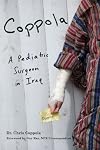
When I began reading Dr. Coppola's narrative of his tours of Iraq, I hoped that I would be able to read about the medical aspects of his experiences without regard to my personal beliefs regarding the war in Iraq. I was immediately impressed with the author's candid discussion of his own beliefs and how they were set aside for the sake of the children and mothers who are still "collateral" damage in a war that will be difficult to win. I am proud to have read this very interesting and informative book.
This review was written for LibraryThing Early Reviewers.
The most important gem provided to the reader by Mr. Bobker can be found in the Foreword - it is that the secrets to a happy marriage are quite obvious to all of us and, unfortunately, just as obviously forgotten soon after wedding vows are spoken. All in all, a funny and thought provoking read.
This review was written for LibraryThing Early Reviewers.Family Sentence: The Search for My Cuban-Revolutionary, Prison-Yard, Mythic-Hero, Deadbeat Dad by Jeanine Cornillot
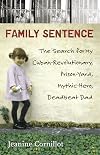
Thank you to Beacon Press and LibraryThing for the opportunity to read and review the uncorrected proof of Family Sentence: The Search for My Cuban-Revolutionary, Prison-Yard, Mythic-Hero, Deadbeat Dad by Jeanine Cornillot. This is exactly the type of book I usually enjoy - as I tend more toward non-fiction and biographies in my personal reading tastes. In addition, I know a little something about the loss of a father with my own father disappearing during the Korean conflict when I was only two. So I was a bit surprised that I did not particularly like this book.
Jeanine Cornillot was only two years old when her Cuban father was arrested for anti-Castro revolutionary activities and imprisoned in Miami. Jeanine went to Philadelphia with her Irish-American mother and brothers where they lived in poverty and confusion regarding their blended cultural heritage. To further complicate matters, Jeanine spent her summers in Little Havana with her Hispanic relatives. Still this sounds like something I would enjoy. The problem was the whining! As the author sought to sort out her family problems, she whined and complained and whined. Or that is how the writing sounded to me as I read. I just never felt her pain; never mustered up what should have been natural empathy. I did learn some things about the culture of Little Havana, but ultimately I had to force myself to finish the book.
Jeanine Cornillot was only two years old when her Cuban father was arrested for anti-Castro revolutionary activities and imprisoned in Miami. Jeanine went to Philadelphia with her Irish-American mother and brothers where they lived in poverty and confusion regarding their blended cultural heritage. To further complicate matters, Jeanine spent her summers in Little Havana with her Hispanic relatives. Still this sounds like something I would enjoy. The problem was the whining! As the author sought to sort out her family problems, she whined and complained and whined. Or that is how the writing sounded to me as I read. I just never felt her pain; never mustered up what should have been natural empathy. I did learn some things about the culture of Little Havana, but ultimately I had to force myself to finish the book.
This review was written for LibraryThing Early Reviewers.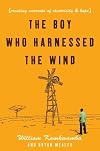
William Kamkwamba was just a young boy in a small village in Malawi. His family, like most of the villagers, were poor farmers and could not pay for William to continue his education beyond the elementary level. While William was discouraged by this, he ventured to the very small library in the elemntary school which had only three floor to ceiling shelves of books. He read science and physics books learning about windmills and decided to try to make one in hopes of creating enough electricity to power one light bulb so he could study after dark. He later hoped he could help his family through one of the many droughts and famine which affected his own family and the other villagers. Often having only mouthfuls of food each day, William went throughout the junk yards and nearby small town looking for parts to use in creating his windmill. His family and friends thought this was certainly strange behavior and while they loved him, they had little faith in his success. But using the most rudimentary equipment, William was successful and built first one windmill at his home and then a second windmill at the elementary school. Visiting the school, Malawian officials sought to meet the young man who was so dedicated to his own learning. Ultimately William was placed in an upper level school and also invited to attend a TED Global Conference. Finally meeting with other inventors and scientists at this conference, William was introduced to a multitude of knowledge - Google for show more one, but more importantly William stood with other Africans who were also inventors and he was pround of his heritage and continent.
Unbelievable, belongs in every school library - from elementary to college; and should be read by all who think hope and dreams don't have great power! show less
Unbelievable, belongs in every school library - from elementary to college; and should be read by all who think hope and dreams don't have great power! show less
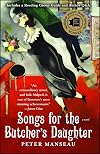
Songs for the Butcher's Daughter by Peter Manseau was mesmerizingly wonderful. I am so thankful to other bloggers who reviewed it which encouraged me to pick it up. The story is told in two voices and two time periods. It is a story of love and loss, beauty and truth, and faith. It is an old man's memoirs and a young man's thoughts and dreams. The voices and stories are alternated between an old Jewish man, Itsik Malpesh, who has written his life story via the Yiddish alphabet and a young Catholic man who, through translator's notes written as he translates Malpesh's story from Yiddish to English, interjects his own story and problems. Malpesh's story begins in 1903 in Bessarabia, follows him through the two world wars, and to Baltimore where the collaboration begins between the two men. The younger man is a college graduate with a degree in religions and languages. He has recently learned to read Yiddish and comes to meet with Malpesh. This is the great coincidence of the book and holds the wonder of both men's stories.
Saving What Remains: A Holocaust Survivor's Journey Home to Reclaim Her Ancestry by Livia Bitton-Jackson
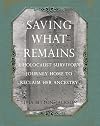
Saving What Remains: A Holocaust Survivor's Journey Home to Reclaim her Ancestry by Livia Britton-Jackson is a remarkable voyage through the bureaucratic entanglements and emotional upheavals experienced by the author as she returned to post-war Communist Czechoslovakia to locate and retrieve the bodies of her Jewish grandparents who had died more than fifty years earlier. Her husband Len, who did not speak the languages of the country, stood by her side and helped as she navigated through all of the necessary bribes and steps to successfully taking their bodies to Israel. Her determination is remarkable and through her efforts a monument to the past shared lives has been created for all of her family. While this book only touches on the author's Holocaust experiences, the emotions of Britton-Jackson certainly remind us of the past and remind us to mind our futures.
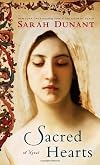
Thank you to Random House Publishing for the opportunity to read and review Sacred Hearts by Sarah Dunant. I found myself completely caught up in the life of the 16th century Italian convent. In the beginning of the novel, the reader feels much like young Serafina, a noblewoman who was to become a novice against her will – confined with wildly individualistic women who were all the same, nuns with vows of obedience defining their every movement – at least on the outside. As the reader comes to know these women, each has her own personality and difficulties. Serafina longs for her lover and fights against the ebb and flow of the convent. Suora Zuana, the convent’s medicine creator and dispenser, is charged with calming and nurturing the young girl who is none too happy. The nun in charge of the nuns-in-training feels a sense of jealousy over Zuana and Serafina’s relationship, not to mention the closeness of Zuana to the Headmistress, who must ultimately answer to God and men for all of the convent’s triumphs and failures. I enjoyed this book immensely - the twists and turns of convent life were amazingly drawn by Dunant. She gave voice to women who did not always have a voice in their own time.
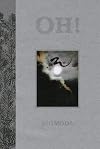
Oh!: A mystery of 'mono no aware' by Todd Shimoda, and beautifully illustrated by Todd’s wife, is a phenomenal experience. The copy I received from the LibraryThing Early Reviewer program was the final production copy. When I held the package in my hands, I wondered why in the world the package was so heavy. Even its arrival created a mystery! I opened the package and held one of the most beautiful books I have ever had the pleasure of seeing – and I work in a library. The cover design is a delight and the pages inside are silky like a fine art book. The chapter dividers are textured to match the beautiful artwork which adds to the story. I could not wait to see how the internal story would hold up to the external package.
I was not at all disappointed. To read the rest of my review, please click here.
I was not at all disappointed. To read the rest of my review, please click here.
This review was written for LibraryThing Early Reviewers.
think perhaps that I have owned this book for quite some time and if I have read it before, I don’t remember it – I find this highly unlikely. At any rate, I am honored to have read it now. A Woman in Amber by Agate Nesaule is a startling memoir of the author’s childhood experiences during the Russian and German occupation of her homeland of Latvia. While the horrors of the war were bad enough in her own country, her Lutheran father and mother, along with other family members, were forced to flee from the competing armies. Their journey was remarkable in complexity and perhaps luck.
In depth review at NeverForgetResources
In depth review at NeverForgetResources
Thank you to G. P. Putman’s Sons for the opportunity to read and review The School of Essential Ingredients by Erica Bauermeister. This is the author’s debut novel and I think it is very successful. I particularly enjoyed the format of the book with each chapter focusing on one of the characters while continuing to move forward the story line.
Lillian is the central character of the novel and runs a successful restaurant and cooking school. This comes as no surprise as she has had an intimate relationship with food from a very young age and she seems to intuitively know what food experience each person needs. We are introduced to the eight students who have found themselves enrolled in Lillian’s monthly cooking class. Each of the students has a secret need and story that seems to be evoked by the lesson of the month. In many cases, the stories become intertwined much like the mingling of foods in a well-thought out dish. To add further reader interest, the author provides very interesting information about the ingredients of the month as well. I did not want this book to end, even as I enjoyed the ending.
Lillian is the central character of the novel and runs a successful restaurant and cooking school. This comes as no surprise as she has had an intimate relationship with food from a very young age and she seems to intuitively know what food experience each person needs. We are introduced to the eight students who have found themselves enrolled in Lillian’s monthly cooking class. Each of the students has a secret need and story that seems to be evoked by the lesson of the month. In many cases, the stories become intertwined much like the mingling of foods in a well-thought out dish. To add further reader interest, the author provides very interesting information about the ingredients of the month as well. I did not want this book to end, even as I enjoyed the ending.
The only way to describe Harry Potter and the Goblet of Fire is exciting. From the Quidditch World Cup to the Triwizard Tournament, the book is fast paced and funny and frightening and wonderful. Harry and Ron suddenly see the girls as more than fellow students, but as many young teens, the two are not quite sure how to approach girls even with Hermione's help. We are introduced to many different characters in this book as students come to Hogwarts for the Tournament. Harry is challenged in the tournament with his ultimate challenge being Lord Voldemort. Thankfully Harry is prepared and meets the challenge.