
Dragon Hoops follows the Bishop Dowd High School boys' basketball team on their quest to finally win the state tournament after several years of heartbreaking losses. The team faces losses, racist comments, and other hurdles on their way to the championship game. Woven into the story of the Dragon basketball team are bits of history. Do you know how basketball became a sport? Did you know that it wasn't until 1971 that women played on a full-court? The author includes many historical facts about basketball and about the backgrounds of several of the characters. The story is based on a real basketball team's season. This graphic novel is a great read; especially if you love basketball.
A great companion for this book is Hoop Genius by John Coy. Coy's book gives even more details about the invention of the game basket ball. John Coy's website has background information about his book and links to other resources about the game.
https://www.johncoy.com/pages/picbooks/hoop-genius/background.html
A great companion for this book is Hoop Genius by John Coy. Coy's book gives even more details about the invention of the game basket ball. John Coy's website has background information about his book and links to other resources about the game.
https://www.johncoy.com/pages/picbooks/hoop-genius/background.html
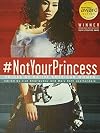
#NotYourPrincess is a collection of essays, artwork, poetry, quotes, photographs, interviews, and graphic texts. All of the contributors are Indigenous women representing many different tribes. Lisa Charleyboy introduces the book by saying, “This book...gave me the space to not only write a love letter to all young Indigenous women trying to find their way but also to help dispel those stereotypes so we can collectively move forward to a brighter future for all” (pg. 9). The contributors address trauma, stereotypes, and invisibility, while at the same time also focusing on the strength of family, tradition, and activism.
This collection is not only for Indigenous women. Reading it will provide a window into the lives of Indigenous women and help to bring about a better understanding of the lives they live.
The OKCTE website lists movies, poems, songs, and other books that are related to the voices in #NotYourPrincess.
http://www.okcte.org/notyourprincess.html
This collection is not only for Indigenous women. Reading it will provide a window into the lives of Indigenous women and help to bring about a better understanding of the lives they live.
The OKCTE website lists movies, poems, songs, and other books that are related to the voices in #NotYourPrincess.
http://www.okcte.org/notyourprincess.html
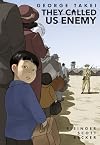
They Called Us Enemy by George Takei is a memoir. Takei is best known for his role as Lieutenant Sulu in the original Star Trek series. What many people don’t know is that Takei’s family spent time in a Japanese internment camp in the US during WWII. In They Called Us Enemy, Takei recounts the events leading up to their internment, the time they spent in the camp, and how that experience shaped his relationship with his parents and the course of his own life.
Takei’s story is filled with emotion. The camps they are in are stark. The illustrations show that emotion and starkness in a way that could not be accurately seen by the reader if the description was only written.
Learn more about what life was like for kids in the Internment camps.
https://www.youtube.com/watch?v=sJPbGsqgBnA&t=119s
Takei’s story is filled with emotion. The camps they are in are stark. The illustrations show that emotion and starkness in a way that could not be accurately seen by the reader if the description was only written.
Learn more about what life was like for kids in the Internment camps.
https://www.youtube.com/watch?v=sJPbGsqgBnA&t=119s
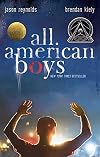
The story is told in two voices. Rashad is a 16-year-old Black boy who is a member of his ROTC at school. His dad is always on his case about not looking like “one of them” but overall he’s a good kid. Quinn is a white boy who plays basketball at the same school. Although the two boys don’t know each other, they know many of the same people. Rashad’s chapters are written by Reynolds while Quinn’s chapters are written by Kiely.
On a Friday night, Rashad is accused of trying to shoplift a bag of chips. A police officer in the store drags him outside and severely beats him. Quinn witnesses the beating, but when he realizes the officer is a man who has been a stand-in dad for him, Quinn runs. As Rashad heals in the hospital, Quinn is forced to acknowledge things he has ignored in the past. Teachers at school are avoiding what happened, but the students are starting to speak up.
Although written in 2017, it reads like it could have been written today. The book has been accused of being "anti-police," but the authors say it is "anti-police brutality." The Simon Schuster website has interviews with the authors. http://simonandschusterpublishing.com/allamericanboys/
On a Friday night, Rashad is accused of trying to shoplift a bag of chips. A police officer in the store drags him outside and severely beats him. Quinn witnesses the beating, but when he realizes the officer is a man who has been a stand-in dad for him, Quinn runs. As Rashad heals in the hospital, Quinn is forced to acknowledge things he has ignored in the past. Teachers at school are avoiding what happened, but the students are starting to speak up.
Although written in 2017, it reads like it could have been written today. The book has been accused of being "anti-police," but the authors say it is "anti-police brutality." The Simon Schuster website has interviews with the authors. http://simonandschusterpublishing.com/allamericanboys/
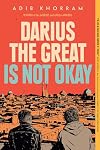
Darius calls himself a Fractional Persian. His mom is Iranian, and his dad is not. Darius has not learned Farsi like his little sister, but he does look Persian and he has inherited the Persian love for tea. Darius suffers from depression, like his dad, but that seems to be the only thing he has in common with his dad. They do share a love for Star Trek, but that is really the only time he feels a real connection with his dad.
Darius has never met his grandparents who live in Iran other than to talk to them on the computer. But when his grandfather gets sick, Darius’s parents make the decision to take the family to Iran to spend time with his grandparents. Darius is at first nervous about being in Iran but as he gets to know Sohrab, a boy his age, he starts to feel like he fits in for the first time. Sohrab is a good listener and he really tries to understand Darius, his relationship with his dad, and his depression. As the two boys become close friends, Darius begins to find himself.
This is a good story for anyone who is trying to find themselves and where they belong.
For more resources on teen mental health, check out these websites!
https://www.kidshealth.org/en/teens/your-mind/
https://au.reachout.com/explore-articles
Darius has never met his grandparents who live in Iran other than to talk to them on the computer. But when his grandfather gets sick, Darius’s parents make the decision to take the family to Iran to spend time with his grandparents. Darius is at first nervous about being in Iran but as he gets to know Sohrab, a boy his age, he starts to feel like he fits in for the first time. Sohrab is a good listener and he really tries to understand Darius, his relationship with his dad, and his depression. As the two boys become close friends, Darius begins to find himself.
This is a good story for anyone who is trying to find themselves and where they belong.
For more resources on teen mental health, check out these websites!
https://www.kidshealth.org/en/teens/your-mind/
https://au.reachout.com/explore-articles
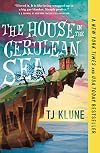
Humor, romance, magic, a little horror, a little mystery, and a lot of feel-good moments. The House in the Cerulean Sea isn’t dark and gloomy. It is a book that will appeal to Young Adult readers who like a little fantasy or who like books that aren’t too dark.
An orphanage that houses magical youth from six to twelve. (Unless you count the gnome who is over 200 years old but still considered a child until over the age of 500.) The magical youth have been secluded to “keep them safe.” In reality, it has been to keep them hidden from “normal” society. One of the children in the son of Lucifer and considered to be the anti-Christ. The other five children are also classified as being dangerous. There are questions about the man who runs the orphanage. Are the youth kept safe? Is society safe from the youth? What is the real concern with the orphanage? How will a stay at the orphanage change one man's life?
An orphanage that houses magical youth from six to twelve. (Unless you count the gnome who is over 200 years old but still considered a child until over the age of 500.) The magical youth have been secluded to “keep them safe.” In reality, it has been to keep them hidden from “normal” society. One of the children in the son of Lucifer and considered to be the anti-Christ. The other five children are also classified as being dangerous. There are questions about the man who runs the orphanage. Are the youth kept safe? Is society safe from the youth? What is the real concern with the orphanage? How will a stay at the orphanage change one man's life?

Natasha is on her way to Manhattan to meet with someone at the United States Citizenship and Immigration Services building in a desperate attempt to stop the deportation orders for her family. She has less than 12 hours before her family must leave the U.S. and go back to Jamaica.
Daniel is on his way to Manhattan to attend an interview with a Yale alumnus. His Korean parents have planned his future-Med school at Yale. He does not want to go to med school. He wants to be a poet. He has no interest in going to the interview, but he feels he has to follow his parents’ plan for him.
Through a series of coincidences Natasha and Daniel meet. For Daniel, it seems like destiny. Being the dreamer that he is, he is convinced that coincidences happen for a reason. Natasha is more fact-based and doesn’t believe in fate. She only believes in science and facts. Daniel tries to prove to Natasha that science is involved in coincidences. He makes a bet that they will fall in love before the end of the day. Natasha does not share the fact that before long she will likely be leaving the U.S. As the day progresses, both of them find their beliefs challenged.
Playing on the theme of coincidence, the book takes some little asides to share bits and pieces of stories about some minor characters. The characters seem to not play a role in Natasha’s and Daniel’s story, but the parts that they do play influence the story. Throughout the book, the point of view switches between Daniel, show more Natasha, minor characters, and an omniscient narrator who drops random bits of history, trivia, and information about the minor characters. The range of narrators in the book adds depth to the storyline. show less
Daniel is on his way to Manhattan to attend an interview with a Yale alumnus. His Korean parents have planned his future-Med school at Yale. He does not want to go to med school. He wants to be a poet. He has no interest in going to the interview, but he feels he has to follow his parents’ plan for him.
Through a series of coincidences Natasha and Daniel meet. For Daniel, it seems like destiny. Being the dreamer that he is, he is convinced that coincidences happen for a reason. Natasha is more fact-based and doesn’t believe in fate. She only believes in science and facts. Daniel tries to prove to Natasha that science is involved in coincidences. He makes a bet that they will fall in love before the end of the day. Natasha does not share the fact that before long she will likely be leaving the U.S. As the day progresses, both of them find their beliefs challenged.
Playing on the theme of coincidence, the book takes some little asides to share bits and pieces of stories about some minor characters. The characters seem to not play a role in Natasha’s and Daniel’s story, but the parts that they do play influence the story. Throughout the book, the point of view switches between Daniel, show more Natasha, minor characters, and an omniscient narrator who drops random bits of history, trivia, and information about the minor characters. The range of narrators in the book adds depth to the storyline. show less
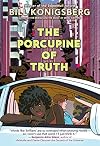
Carson and his mom live in New York City, but they have returned to Billings, Montana for the summer. Carson’s dad, an alcoholic who chose alcohol over his family, is dying. Carson’s mom feels an obligation to help care for him, and she wants Carson to have a relationship with his estranged dad.
Aisha is the most beautiful girl Carson has ever seen. Soon after meeting Carson, she confides in him that her father, a pastor, kicked her out of the house when he discovered she was a lesbian. Aisha has been living in a secluded area of the zoo. Carson invites Aisha back to his dad’s house so that she has a safe place to stay.
When Carson comes across some letters that hint that his grandfather, who left many years ago, may still be alive, Carson wants to find him. Soon Carson and Aisha head out on a road trip to find Carson’s grandfather. Along the way they discuss religion and if there even is a God. The two of them tackle the reality of being “walking wounded” and attempt to help each other through the pain and challenges they have both been facing. What Carson discovers will change the lives of all those he loves.
The conversations about religion echo many conversations that I have had with others about religion. Is there a God? Why are Christians so awful to others? What is the purpose of religion? The conversations and experiences that Carson and Aisha have on their road trip add to their questions. There might also be some answers. Their ideas and thoughts about show more religion do change. This is an excellent book about pain, healing, God, identity, friendship, and family.
Listen to an interview with the author. https://azpbs.org/books/2015/07/the-porcupine-of-truth-by-bill-konigsberg/ show less
Aisha is the most beautiful girl Carson has ever seen. Soon after meeting Carson, she confides in him that her father, a pastor, kicked her out of the house when he discovered she was a lesbian. Aisha has been living in a secluded area of the zoo. Carson invites Aisha back to his dad’s house so that she has a safe place to stay.
When Carson comes across some letters that hint that his grandfather, who left many years ago, may still be alive, Carson wants to find him. Soon Carson and Aisha head out on a road trip to find Carson’s grandfather. Along the way they discuss religion and if there even is a God. The two of them tackle the reality of being “walking wounded” and attempt to help each other through the pain and challenges they have both been facing. What Carson discovers will change the lives of all those he loves.
The conversations about religion echo many conversations that I have had with others about religion. Is there a God? Why are Christians so awful to others? What is the purpose of religion? The conversations and experiences that Carson and Aisha have on their road trip add to their questions. There might also be some answers. Their ideas and thoughts about show more religion do change. This is an excellent book about pain, healing, God, identity, friendship, and family.
Listen to an interview with the author. https://azpbs.org/books/2015/07/the-porcupine-of-truth-by-bill-konigsberg/ show less
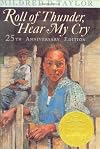
Roll of Thunder, Hear My Cry tells the story of the Logan family in 1930s Mississippi. Told through the eyes of nine-year-old Cassie, the story includes humor along with the terror that comes when white folks are unhappy about the fact that Cassie's black family owns land. Cassie is just beginning to learn that the color of her skin means others look down on her. Through her grandmother, she learns how that came to be, and through her own experiences, she learns about the challenges she will face. This book touches on many of the same themes that we are seeing today. What part of history should we learn? What is systemic racism? What is the truth in our history? How has our history shaped where we are today?
For more information about Mildred D. Taylor and the books that tell the story of her family: https://www.teachertube.com/videos/34581
For more information about Mildred D. Taylor and the books that tell the story of her family: https://www.teachertube.com/videos/34581