
George Takei
Author of They Called Us Enemy
About the Author
George Hosato Takei was born on April 20, 1937. He is an American actor and author, best known for his role as Hikaru Sulu, helmsman of the USS Enterprise in the television series Star Trek. Takei is also a proponent of gay rights and active in state and local politics apart from his continued show more acting career. He has won several awards and recognition in his work on human rights and Japanese-American relations, including his work with the Japanese American National Museum. Takei enrolled in the University of California, Berkeley, where he studied architecture. Later he attended the University of California, Los Angeles, where he received both a Bachelor of Arts and a Master of Arts in theater. He attended the Shakespeare Institute at Stratford-upon-Avon in England, and Sophia University in Tokyo, Japan. In Hollywood, he studied acting at the Desilu Workshop. In 2004, the government of Japan named Asteroid 7307 "Takei" after him. In June 2012, the American Humanist Association gave Takei the LGBT Humanist Award. His book, Oh Myyy! (There Goes The Internet) was released on December 21, 2013 and became a New York Times bestseller in 2014. (Bowker Author Biography) show less
Image credit: George Takei
Series
Works by George Takei
Heroes Season 1: Company Man 1 copy
Strangers from the Sky 1 copy
Associated Works
The City on the Edge of Forever: The Original Teleplay that Became the Classic Star Trek Episode (1977) — Afterword, some editions — 589 copies, 17 reviews
Going for Broke [2006 documentary film] — Narrator — 2 copies
True Justice: The Complete First Season — Actor — 1 copy
Tagged
Common Knowledge
- Canonical name
- Takei, George
- Legal name
- Takei, George Hosato
- Other names
- 武井 穂郷 (Takei Hosato)
- Birthdate
- 1937-04-20
- Gender
- male
- Education
- University of California, Berkeley
University of California, Los Angeles (M.A. ∙ Theater ∙ 1964)
Shakespeare Institute
Sophia University
Los Angeles High School
Desilu Workshop - Occupations
- actor
author - Organizations
- East West Players
Japanese American National Museum - Awards and honors
- Asteroid Namesake (7307 Takei)
Order of the Rising Sun, Gold Rays with Rosette
LGBT Humanist Award (2012) - Nationality
- USA
- Birthplace
- Los Angeles, California, USA
- Places of residence
- Rohwer War Relocation Center, Arkansas, USA
Tule Lake War Relocation Center, California, USA - Associated Place (for map)
- California, USA
Members
Reviews

George Takei is, of course, best known as Star Trek's Mr. Sulu, and this autobiography was published after the 25th anniversary of Star Trek and is, perhaps, in part a celebration of that. But it covers a great deal more than Star Trek. Takei talks about his experiences being imprisoned in Japanese-American internment camps as a kid with a perspective that combines childhood memories and adult understanding. He talks about his acting career, and specifically about his experiences as a show more Japanese-American actor. He also talks about his involvement in politics and political activism. And, yes, he also talks about Star Trek, featuring lots of anecdotes and musings, his feelings about his co-workers (including some very frank opinions about William Shatner), and the story of his constant campaigning to see Sulu getting some career advancement or character development.
There's nothing particularly grand or glamorous here, really, but Takei is an interesting guy who's had an interesting life, and certainly has some interesting perspectives on the world, so I found this generally very engaging and worthwhile. Honestly, it would be entirely worthwhile just for the parts where he's talking about the internment camps, as that's a story that absolutely needs to be told, and to be heard. Although for those who are interested in reading about that, but perhaps not so much the rest of it, he also has a graphic novel on the subject, They Called Us Enemy, which I'm fully intending to read at some point, as well.
There are, by the way, also some moments where he's very funny. I genuinely laughed out loud at his comically over-the-top declarations of how much he hated Walter Keonig before he actually met (and liked) the guy, and even louder at his horrified vision of what a Star Trek movie directed by Shatner might look like as soon as he'd heard Shatner'd been given the job.
There is one thing that feels odd and notable in retrospect here, though. At the time this was written, Takei was still more or less in the closet, so while there is plenty of focus on his identity as a Japanese-American, there's no discussion of what things were like for him as a gay man as well, and his now-husband, Brad Altman, who I believe he was already involved with at the time, gets no more than a brief mention as a "good friend" and a rather coded-feeling nod in the acknowledgments. show less
There's nothing particularly grand or glamorous here, really, but Takei is an interesting guy who's had an interesting life, and certainly has some interesting perspectives on the world, so I found this generally very engaging and worthwhile. Honestly, it would be entirely worthwhile just for the parts where he's talking about the internment camps, as that's a story that absolutely needs to be told, and to be heard. Although for those who are interested in reading about that, but perhaps not so much the rest of it, he also has a graphic novel on the subject, They Called Us Enemy, which I'm fully intending to read at some point, as well.
There are, by the way, also some moments where he's very funny. I genuinely laughed out loud at his comically over-the-top declarations of how much he hated Walter Keonig before he actually met (and liked) the guy, and even louder at his horrified vision of what a Star Trek movie directed by Shatner might look like as soon as he'd heard Shatner'd been given the job.
There is one thing that feels odd and notable in retrospect here, though. At the time this was written, Takei was still more or less in the closet, so while there is plenty of focus on his identity as a Japanese-American, there's no discussion of what things were like for him as a gay man as well, and his now-husband, Brad Altman, who I believe he was already involved with at the time, gets no more than a brief mention as a "good friend" and a rather coded-feeling nod in the acknowledgments. show less
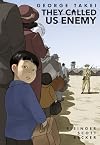
You probably know George Takei from his role as Hikaru Sulu in the original Star Trek series. You may know him as a LGBTQ and civil rights activist. But I didn’t know that, as a child, he had been interned, along with his family, at the easternmost Japanese internment camp, Rohwer Camp in Arkansas.
He was only four when his family was removed from their home in California and incarcerated. Like many kids of that age, as long as he was with his family, it seemed like an adventure – even in show more their first home in the horse stalls at the Santa Anita racetrack.
This graphic novel includes his experiences as a child and his deeper knowledge of events as an adult, including the despair and humiliations his parents endured. It ends talking about the kids incarcerated at the US border.
I learned so much from it. It’s deeply relevant today. I would love to see copies in American junior high and highschool classrooms as kids today so need to know this chapter of American history. show less
He was only four when his family was removed from their home in California and incarcerated. Like many kids of that age, as long as he was with his family, it seemed like an adventure – even in show more their first home in the horse stalls at the Santa Anita racetrack.
This graphic novel includes his experiences as a child and his deeper knowledge of events as an adult, including the despair and humiliations his parents endured. It ends talking about the kids incarcerated at the US border.
I learned so much from it. It’s deeply relevant today. I would love to see copies in American junior high and highschool classrooms as kids today so need to know this chapter of American history. show less
The Publisher Says: A stunning graphic memoir recounting actor/author/activist George Takei's childhood imprisoned within American concentration camps during World War II. Experience the forces that shaped an American icon -- and America itself -- in this gripping tale of courage, country, loyalty, and love.
George Takei has captured hearts and minds worldwide with his captivating stage presence and outspoken commitment to equal rights. But long before he braved new frontiers in Star Trek, he show more woke up as a four-year-old boy to find his own birth country at war with his father's -- and their entire family forced from their home into an uncertain future.
In 1942, at the order of President Franklin D. Roosevelt, every person of Japanese descent on the west coast was rounded up and shipped to one of ten "relocation centers," hundreds or thousands of miles from home, where they would be held for years under armed guard.
They Called Us Enemy is Takei's firsthand account of those years behind barbed wire, the joys and terrors of growing up under legalized racism, his mother's hard choices, his father's faith in democracy, and the way those experiences planted the seeds for his astonishing future.
What is American? Who gets to decide? When the world is against you, what can one person do? To answer these questions, George Takei joins co-writers Justin Eisinger & Steven Scott and artist Harmony Becker for the journey of a lifetime.
THIS WAS AN INTER–LIBRARY LOAN FROM MY LOCAL LIBRARY. THANKS, Y'ALL!
My Review: A graphic memoir? Me? And give it five stars?!? Never. Will not happen.
Yet here we are:
The horror of interning United States citizens based solely on the color of their skins!
Oh wait...we do that now..."interning" being synonymous with "incarcerating"...well, anyway, it's appalling and abominable. The Takei family is rousted out of their Los Angeles home by Executive Order 9066. They're shipped as far away from the Pacific Ocean as they can get: The Great State of Arkansas! *shudder* A swampy bit, as well...the Takeis weren't familiar with the climate, hot and humid summers with cold and snowy winters; the worst of all possible worlds for Mediterranean-climate natives!
George, brother Henry, and sister Nancy are lucky, however, as their father is a take-charge kind of a guy with a glad-handing streak as well as organizational capabilities, patience in abundance, and a generous heart. Mama Takei is sure her family will be okay despite everything because she is going to by-god *make* things okay. Her efforts to clothe and entertain her family, her strenuous work ethic keeping the children clean and as healthy as she can, mean that they're better off than many...so the Takeis help them. Because of course...those with nothing find a way to share with those who have even less.
There were good times as well as bad. Takei senior, as a helpful and useful inmate, got the family occasional privileges, like the use of a Jeep for a day out:
Not everyone in Arkansas thought the Japanese belonged in the camps. Not everyone in the US agreed with this vile act, this blot on the national escutcheon.
But tell that to the men who were young and patriotic enough to want to serve their country in the global war against fascism.
Their mistreatment at the hands of the democratic institutions designed to defend a citizen's life, liberty, and ability to pursue an existence that will make them happy radicalized them, leading to protests and horrors of oppression still worse than internment at Federal penitentiaries.
The tale ends, as we all know, when the war is over...but the country's wounds aren't healed so much as papered over. Now the returning African Americans, veterans and war workers, would need to gain civil rights...and there were injustices against the Japanese Americans unaddressed...and so on and so forth, to this good day, with others now in the victim role. Takei specifically draws parallels with the Muslim refugee crisis and the Hispanic emigration atrocities. He lived it. His voice carries authority: What we-the-people are allowing, even (I am nauseated to say) enjoying, to occur to Hispanic families is unconscionable, inexcusable, and proof that the lessons of history are lost on far too many of us.
Takei's journey took him into our living rooms on Star Trek: The Original Series, and its many sequels. He's spent his many years since riding that amazing introduction back into our lives advocating for positive social changes and fairer, more equal access to the USA's immense and unprecedented benefits for all. His life has been very well-lived and spent generously working to bring the American Dream into reality, only for *all* Americans.
Be like George, as the meme says.
(Only I like this one better.) show less
I doubt a book about immigrants and children of immigrants being snatched from their homes and placed in camps with awful conditions could possibly be more timely than it is right now. George Takei was one of those children. His father was born in Japan and his mother was a US citizen born in CA, but that did not matter. After Pearl Harbor no one of Japanese heritage was safe.
At first I questioned the logic of telling this story via a graphic novel, but I was not far into it when I realized show more what I brilliant idea it was. It's a perfect medium to capture both the innocence and horror of a child facing such an awful time. He was so young that he and his little brother thought it was a great adventure until they were hungry and cold, or stuck in a swampy camp down South.
George and his family were incarcerated for four long years. They lost their family cleaning business and their home and had to start from scratch when they were finally released. They were forced to live on the street for a while, as were thousands of others. I would have thought this was incomprehensible behavior by the federal government, but now I know better.
Highly recommended if you can handle it. show less
At first I questioned the logic of telling this story via a graphic novel, but I was not far into it when I realized show more what I brilliant idea it was. It's a perfect medium to capture both the innocence and horror of a child facing such an awful time. He was so young that he and his little brother thought it was a great adventure until they were hungry and cold, or stuck in a swampy camp down South.
George and his family were incarcerated for four long years. They lost their family cleaning business and their home and had to start from scratch when they were finally released. They were forced to live on the street for a while, as were thousands of others. I would have thought this was incomprehensible behavior by the federal government, but now I know better.
Highly recommended if you can handle it. show less
Lists
Youth: DEI (1)
Awards


You May Also Like


Associated Authors
Statistics
- Works
- 13
- Also by
- 58
- Members
- 3,898
- Popularity
- #6,496
- Rating
- 4.1
- Reviews
- 174
- ISBNs
- 42
- Languages
- 5
- Favorited
- 1

