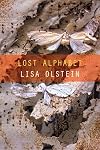
Culture asks much of the writer: filter the cacophony, exceed vernacular, deliver art. The writer may use familiar language to build an extraordinary world, to make an unusual character an analog for the self, to transform that self into a friend. She may excel at documentation, recording observations in exquisite lines that juxtapose agricultural ritual with scientific discovery, interior reflection with external reproach. Poet Lisa Olstein is this writer. In “Lost Alphabet” (Copper Canyon, 2009) she gives readers a collection of moths, a mysterious companion, a dark hut in an unusual country, and the eyes of a lepidoptrist asking perennial questions: What does it mean to know? Are there limits to understanding? Even in company are we anything but alone?
Each poem is an illustrated plate colored by detail — the work of writer as collector. We learn that Vladimir Nabokov’s “Speak, Memory” brushes against the atmosphere of Marco Polo’s travel diaries, that Olstein was captivated by a landscape of moth wings. Holding a hand to the eye and rounding the fingers, the speaker of “Lost Alphabet” acts as the writer acts: narrowing focus, targeting detail.
In her new poems, myriad voices extend Olstein’s investigation. Mentions of medical experiments appear beside anecdotes of space travel. Reflection is compelled by fact, doubt undergirds perception.
Thus Olstein asks us to consider knowledge as ephemeral, relational. She critiques certainty, exposes fact. These are important poems. They walk us to the borderline of what we take for granted and stand unflinching at the chasm, compelling us to wonder what it’s possible to know.
~Carlin M. Wragg, Editor, Open Loop Press show less
Slowly, the absence of pain arrives like
snow falling. It was on a day like this when, visiting, Ilya
decided to stay. At least, never left. It is customary here to
accompany the wounded. Whoever is able, and near.
Each poem is an illustrated plate colored by detail — the work of writer as collector. We learn that Vladimir Nabokov’s “Speak, Memory” brushes against the atmosphere of Marco Polo’s travel diaries, that Olstein was captivated by a landscape of moth wings. Holding a hand to the eye and rounding the fingers, the speaker of “Lost Alphabet” acts as the writer acts: narrowing focus, targeting detail.
I want nothing to end, not a single observation,show more
despite longing for what remains
unknown. For one thing:
weight. Another: ratio. Flight’s beat, beat, glide. And
constantly, the interruption: sometimes circling for days, a
wary insistent stray.
In her new poems, myriad voices extend Olstein’s investigation. Mentions of medical experiments appear beside anecdotes of space travel. Reflection is compelled by fact, doubt undergirds perception.
Either the mute child spoke
in full sentences alone in the dark
or the monitors picked up ghosts
of deliverymen and pelicans
streaming over the bridge.
Thus Olstein asks us to consider knowledge as ephemeral, relational. She critiques certainty, exposes fact. These are important poems. They walk us to the borderline of what we take for granted and stand unflinching at the chasm, compelling us to wonder what it’s possible to know.
~Carlin M. Wragg, Editor, Open Loop Press show less
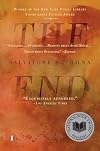
If the act of creation is the epitome of elegance, a waltz between the writer’s conscious and unconscious mind, then Salvatore Scibona has performed the dance perfectly. A telephone call to his grandmother on her birthday, a patch of conversation overheard and written down, the view from his writing desk of a clothesline drying laundry — these are this language artist’s broadest strokes, transformed by his conscious mind into crucial, telling details. In “The End,” Scibona’s award-winning first novel, the elaborate weave and turn of story through language whirls the reader through the overlapping lives of five unique characters: an elderly abortionist, an abandoned husband, a teenage boy, an absent mother, a dedicated baker, and a lonely jeweler. In rendering these characters’ lives, Scibona transitions from anecdote to anecdote with implicitly elaborate footwork, the dance of free indirect style, so the gesture comes bearing all the import of direct action, and the absence of events is as telling as their presence.
In “The End,” Scibona challenges his characters’ tangibility. He implicitly asks what it means to be perceived. ‘What are the consequences of community?’ The reader wonders, watching these ordinary, extraordinary lives. Is the reflection in the mirror one of comfort? Or does it manifest deep-seated regrets; repetition, routine, anonymity — by what are these broken? We discover, in “The End,” that tragedy is one disruptive mode.
Readers of “The End” will find this story about a community lost to time an opportunity for total reading immersion. By the last line, they will know this place and these people in the way they know their own, and they will find in it the satisfaction of particulars, an antidote to the mysterious void.
~Carlin M. Wragg, Editor, Open Loop Press show less
“The man on the bridge watches her ascending the hill. She is stooped by the weight of an enormous sack on her back, so touchingly like a mule, like an enduring animal that slowly carries on its back a burden as large as itself.show more
It would be impossibly sweet and satisfying to follow her. The sweetness of saying ’she’ is the intimation of somebody else, of something else that’s really out there being real, that isn’t an idea or a ghost but
a person, definite, completed.
But he’s watching her now. He can’t not. And while he watches her, he is turning her back into an idea, so he must act fast. She has already begun to disappear.” (Pg. 112.)
In “The End,” Scibona challenges his characters’ tangibility. He implicitly asks what it means to be perceived. ‘What are the consequences of community?’ The reader wonders, watching these ordinary, extraordinary lives. Is the reflection in the mirror one of comfort? Or does it manifest deep-seated regrets; repetition, routine, anonymity — by what are these broken? We discover, in “The End,” that tragedy is one disruptive mode.
“How long do you have to live in a place before you notice it? The whole morning was a dream. Around every corner was a view that should have been same old, same old, but today impressed itself on his mind as if for the first time and for all time. As in, Look, there’s a kid licking the streetcar tracks, wearing short pants-only it seemed to Rocco that he’d never seen the tracks or a child in short pants before and he was never going to forget this. As on a day when the ruler dies and everybody, without even trying, holds on to the slightest spec of mental lint from that day for years.” (Pgs. 20 – 21.)
Readers of “The End” will find this story about a community lost to time an opportunity for total reading immersion. By the last line, they will know this place and these people in the way they know their own, and they will find in it the satisfaction of particulars, an antidote to the mysterious void.
~Carlin M. Wragg, Editor, Open Loop Press show less
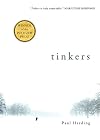
Paul Harding's prose is like the interior of an antique clock; the copper wires of rhythm bound to sentences like brass gears that control the movement of loss. These marvelous mechanics propel readers through the provinces of memory —- the angle of winter light on ankle-deep snow, the clink of metal spoons in wooden drawers, the missing father and his mule-drawn wagon making their way away from the embracing warmth of home.
The movements of departure — of a husband from his family, of time from its timepieces, of a wife from the alliance of marriage — are rendered in language grounded in the precision of words.
Paul Harding creates an immersive experience in which the present recedes naturally into the past on a journey through the frozen backwoods of New England, where an act of kindness elicits the gift of an American treasure, and the silences that deepen over dinner are the residue of love lost to the void of poverty, to illness, to unanswered prayers. Paul Harding’s steady hand pulls us in and leads us on, turning back the layers of legend to brighten its shadows with the reviving light of beautiful prose.
~Carlin M. Wragg, Editor, Open Loop Press show less
“God hear me weep as I fill out receipts for tin buckets, and slip hooch into coat pockets for cash, and tell people about my whip-smart sons and beautiful daughters. God know my shame as I push my mule to exhaustion, even after the moon and Venus have risen to preside over the owls and mice, because I am not going back to my family — my wife, my children — because my wife’s silence is not the forbearance of decent, stern people who fear You; it is the quiet of outrage, of bitterness. It is the quiet of biding time. God forgive me. I am leaving.” (Pg. 122)
The movements of departure — of a husband from his family, of time from its timepieces, of a wife from the alliance of marriage — are rendered in language grounded in the precision of words.
“The house was gone. Kathleen stopped walking and looked around. The clouds that had colored the dawn copper had advanced and were now fastened overhead like a lid of stone. Flurries of snow spun in the wind. Kathleen surely stood in the right place and the doctor’s house surely wasshow more
vanished.” (Pg. 91)
Paul Harding creates an immersive experience in which the present recedes naturally into the past on a journey through the frozen backwoods of New England, where an act of kindness elicits the gift of an American treasure, and the silences that deepen over dinner are the residue of love lost to the void of poverty, to illness, to unanswered prayers. Paul Harding’s steady hand pulls us in and leads us on, turning back the layers of legend to brighten its shadows with the reviving light of beautiful prose.
~Carlin M. Wragg, Editor, Open Loop Press show less
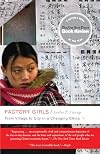
In the early aughts Leslie T. Chang was a foreign correspondent reporting for the “Wall Street Journal” on the transformative effects of socioeconomic change in China. Her exploration of the lives of the people she met led her, in 2004, to publish an article whose subject would eventually fill 432 pages of prose and become Chang’s first book, “Factory Girls” (Speigel & Grau, 2008), an impeccably-written survey of the lives female migrant workers—the young women who “go out” from China’s rural villages to find work in its urban factory cities. Over three years of reporting in Dongguan, one of a number of urban centers in China’s Pearl River Delta, Chang met women compelled by the promise of opportunity to leave home to find work, to jump from factory to factory in pursuit of higher wages, better working conditions, to be with a friend, a sister, a boyfriend. She encountered women who were in the shadows, women who worked in karaoke bars, women who taught themselves English at night school, women buffeted by the pleasures and pitfalls of new friendship.
"When you did make a friend, you did everything for her. If a friend quit her job and had nowhere to stay, you shared your bunk despite the risk of a ten-yuan fine, about $1.25, if you got caught. If she worked far away, you would get up early on a rare day off and ride hours on the bus, and at the other end your friend would take leave from work--this time, the fine one hundred yuan--to spend the day show more with you. You might stay at a factory you didn't like, or quit one you did, because a friend asked you to. Friends wrote letters every week, although the girls who had been out longer considered that childish. They sent messages by mobile phone instead." -Pg. 3 to 5
Unconvinced that decade-old reports about inhuman working conditions examined factory life from all sides, Chang began her investigation with a question: What do migrant workers make of their own experience? Along the way she discovered previously unrevealed facets of the factory story, where individual ambition, hard work, lying, and personal pluck lead to advancement, where life is fast-paced but monotonous, anonymous, in which work and workers are depersonalized, except to each other, where women came in from the provinces and return to them, their connections severed, if they can find their way back.
"The girls talked constantly of leaving. Workers were required to stay six months, and even then permission to quit was not always granted. The factory held the first two months of every worker’s pay; leaving without approval meant losing that money and starting all over somewhere else. That was a fact of factory life you couldn’t know from the outside: Getting into a factory was easy. The hard part was getting out." –Pg. 4
Told in part through the close observation of two women, Wu Chunming and Lu Qingmin, she meets while reporting, in part through an account of Chang’s own family’s history, and in part through descriptions of the city of Dongguan, Leslie T. Chang presents a picture of a culture beset with change, whose rapidly evolving economic landscape offers pressures and perils in quick step with opportunity, where millions of ambitious, hard-working individuals live lives on the brink of explosive transformation. Chang challenges her readers to discard received notions of China and discover it anew—as a place full of energy, bursting with the promise of advancement, of individual success, where lives beset by setback, ravaged by history, always have the potential to be renewed.
~Carlin M. Wragg, Editor, Open Loop Press show less
"When you did make a friend, you did everything for her. If a friend quit her job and had nowhere to stay, you shared your bunk despite the risk of a ten-yuan fine, about $1.25, if you got caught. If she worked far away, you would get up early on a rare day off and ride hours on the bus, and at the other end your friend would take leave from work--this time, the fine one hundred yuan--to spend the day show more with you. You might stay at a factory you didn't like, or quit one you did, because a friend asked you to. Friends wrote letters every week, although the girls who had been out longer considered that childish. They sent messages by mobile phone instead." -Pg. 3 to 5
Unconvinced that decade-old reports about inhuman working conditions examined factory life from all sides, Chang began her investigation with a question: What do migrant workers make of their own experience? Along the way she discovered previously unrevealed facets of the factory story, where individual ambition, hard work, lying, and personal pluck lead to advancement, where life is fast-paced but monotonous, anonymous, in which work and workers are depersonalized, except to each other, where women came in from the provinces and return to them, their connections severed, if they can find their way back.
"The girls talked constantly of leaving. Workers were required to stay six months, and even then permission to quit was not always granted. The factory held the first two months of every worker’s pay; leaving without approval meant losing that money and starting all over somewhere else. That was a fact of factory life you couldn’t know from the outside: Getting into a factory was easy. The hard part was getting out." –Pg. 4
Told in part through the close observation of two women, Wu Chunming and Lu Qingmin, she meets while reporting, in part through an account of Chang’s own family’s history, and in part through descriptions of the city of Dongguan, Leslie T. Chang presents a picture of a culture beset with change, whose rapidly evolving economic landscape offers pressures and perils in quick step with opportunity, where millions of ambitious, hard-working individuals live lives on the brink of explosive transformation. Chang challenges her readers to discard received notions of China and discover it anew—as a place full of energy, bursting with the promise of advancement, of individual success, where lives beset by setback, ravaged by history, always have the potential to be renewed.
~Carlin M. Wragg, Editor, Open Loop Press show less
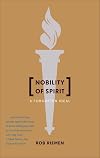
If Rob Riemen were a writer with a different voice, who punctuated his ideas with footnotes and framed his anecdotes with jargon, his elegant volume, “Nobility of Spirit: A Forgotten Ideal,” might be on heavy rotation in philosophy courses worldwide. But Riemen is a humanist with a literary impulse who takes great pleasure in the creative act. Writing, as he says, in “the small hours of the night” when he can put his work at the Nexus Institute, the independent organization he runs in The Netherlands, to one side and explore the terrain of his own mind, Riemen has produced a text that eschews the traditional definition of critical analysis; it is neither an extended philosophical essay, nor a work of academic criticism. For this reason it is hard to decide whether to shelve it in one’s personal library beside Anthony Kenny’s “A Brief History of Western Philosophy,” or if it instead belongs next to Joan Didion’s “Slouching Towards Bethlehem.” Yet it is this protean nature that makes “Nobility of Spirit” as much a pleasure to read as Herman Hesse’s “Siddhartha,” or Kahlil Gibran’s “The Prophet.” Riemen understands that in enjoyable reading there is opportunity for learning.
A passionate student of the German writer Thomas Mann, Riemen expresses his ideas in stories, animating conversations between great thinkers of the past. He breathes life into the meditative walks of Friedrich Nietzsche, and recounts Socrates’ trial in Athens, show more giving us a ringside seat for one of Western philosophy’s most crucial speeches. By doing so, he encourages contemporary readers to reconnect with some of history’s most elegant concepts: Beauty, Truth, Goodness, the importance of language. These concepts were once impartial moral guideposts, but today they are subjective measures whose definitions often rely upon individual opinion for their import. Riemen suggests that there is still room for certainty, that there are unassailable truths, and that morality and human decency have a crucial role to play in contemporary culture:
Rob Riemen sees his life “as a kind of mission to restore the meaning of certain words.” When one closes the covers of “Nobility of Spirit” for the last time, one does so with the sense that communication itself is at the very heart of being human, and that in the face of incredible challenge one has the resources to persevere.
~Carlin M. Wragg, Editor, Open Loop Press show less
A passionate student of the German writer Thomas Mann, Riemen expresses his ideas in stories, animating conversations between great thinkers of the past. He breathes life into the meditative walks of Friedrich Nietzsche, and recounts Socrates’ trial in Athens, show more giving us a ringside seat for one of Western philosophy’s most crucial speeches. By doing so, he encourages contemporary readers to reconnect with some of history’s most elegant concepts: Beauty, Truth, Goodness, the importance of language. These concepts were once impartial moral guideposts, but today they are subjective measures whose definitions often rely upon individual opinion for their import. Riemen suggests that there is still room for certainty, that there are unassailable truths, and that morality and human decency have a crucial role to play in contemporary culture:
“No, for the sake of human dignity the free individual is not allowed to ignore universal, timeless values. Intellectuals in particular should resist this kind of nihilism. Not everything is allowed. Human freedom is in essence relative; it is subordinate to the immortal and never completely attainable ideal of human dignity. Furthermore, absolute freedom obliterates justice. There are transcendental absolute values that have priority and are obligatory for everyone.” –“Nobility of Spirit,” page 70
Rob Riemen sees his life “as a kind of mission to restore the meaning of certain words.” When one closes the covers of “Nobility of Spirit” for the last time, one does so with the sense that communication itself is at the very heart of being human, and that in the face of incredible challenge one has the resources to persevere.
~Carlin M. Wragg, Editor, Open Loop Press show less
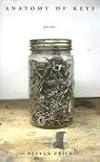
At 135 pages, Steven Price's Anatomy of Keys is no slim volume of verse; how could it be? Tracing the track of a famous life full of remarkable acts, Price transforms a historical figure into a fictional character, rendering his story in verse. Harry Houdini, whose incredible escapes made him one of the most well-known men of his day, is revealed in Price’s work to have been a playful child, a vulnerable performer, a loyal husband, a grief-besieged son, as well as the escape artist we know, that man of the modern age. So Price explores the interior of persona, challenging our assumptions about headline-makers and revealing the human interior of fame:
Offstage, he looked
too ordinary in his strength to be so;
short and stumpish like a pugilist, he lived
by his fists, all ox-neck and thick root,
all barrel-chest, battered like a kitchen chair.
We find ourselves immersed in a work of imagination, a fictionalized biography that proceeds from Houdini’s childhood, through adolescence and into adulthood, exploring the years Houdini’s escapes were known around the world.
Through closed forms—the sonnet, the ghazal—and intricate interior rhythms, regulated rhyme scheme, free verse, prose poems, sections in series, Price crafts a collection of astute observations:
So that, trembling, fingering my skin, I began to doubt: had I
accomplished this, who was not remarkable, no more than others?
This, which sang in me for a time, then fell silent.
Months of dust and rain, abandoned, in show more flickering railcars. It is true: to
live without illusion is to live without hope.
Thus the fragility of the self is alive in even the most incredible acts. So Price gives us a three-dimensional Harry Houdini with an interior life as rich as his performing one.
Though “Anatomy of Keys” is not a biography, not in the technical sense, through his capacity for empathy Steven Price offers something equally compelling: a life story rich in detail which challenges our expectations and lingers long after we finish the final line.
–Carlin M. Wragg, Editor, Open Loop Press show less
Offstage, he looked
too ordinary in his strength to be so;
short and stumpish like a pugilist, he lived
by his fists, all ox-neck and thick root,
all barrel-chest, battered like a kitchen chair.
We find ourselves immersed in a work of imagination, a fictionalized biography that proceeds from Houdini’s childhood, through adolescence and into adulthood, exploring the years Houdini’s escapes were known around the world.
Through closed forms—the sonnet, the ghazal—and intricate interior rhythms, regulated rhyme scheme, free verse, prose poems, sections in series, Price crafts a collection of astute observations:
So that, trembling, fingering my skin, I began to doubt: had I
accomplished this, who was not remarkable, no more than others?
This, which sang in me for a time, then fell silent.
Months of dust and rain, abandoned, in show more flickering railcars. It is true: to
live without illusion is to live without hope.
Thus the fragility of the self is alive in even the most incredible acts. So Price gives us a three-dimensional Harry Houdini with an interior life as rich as his performing one.
Though “Anatomy of Keys” is not a biography, not in the technical sense, through his capacity for empathy Steven Price offers something equally compelling: a life story rich in detail which challenges our expectations and lingers long after we finish the final line.
–Carlin M. Wragg, Editor, Open Loop Press show less
Karla Kelsey’s well-polished poetic objects remind one of sculpture, of solid materials worked and reworked until they acquire, by the sculptor’s hands, freedom of movement in the face of restraint, bounded energy, artful repose.
daily begun from.
The blue paper crane
hangs in the tree,
arc of thrust and drag. You
left plumed. You
arrived telling of golden sands
and a golden sea, sidereal navigation
bringing the bird home
over bright blooms
of fire, explosion
Her poems are literally shaped by punctuation. Stanzas are broken by asterisks; a cacophony of backslashes populates a single line; images reach toward other images from the far edge of a page. In this way Kelsey bestows on her readers one of poetry’s greatest gifts: the space for contemplation.
Gone to the window, light there wood-glossy and in non-repose
*
As in pick up the seeds and throw them into the street
*
As in 1 color, gone gold and so seeing, all blurred around the edges and walking
A reader’s journey through her first book, "Knowledge, Forms, the Aviary," is like a twilit walk through a walled garden rich with juxtaposition; everyday objects keep company with blooming botanicals, birds alight on the branches of trees. Inspired by Plato’s image of the mind at work, an aviary populated by diverse and divergent species of birds, his symbols of knowledge, Kelsey invites her reader to examine contemporary experience through the optics of the past. An eighteenth century gardener’s dictionary becomes a touchstone show more for descriptions of flora; an epic Romantic poem teaches the value of scientific language. These elements and others work together to make poetry that is smooth, seamless, whose beautiful moments are path through today’s crashing babel.
Patterns on the siding,
amber waves of
decibels to perform the particles
a waking as if we slept,
here, the street going on before
as the street
goes on
in moments
of reverberation
Now, in her new work, "Iteration Nets," a contemporary take on the sonnet form, forthcoming from Ahsahta Press, Kelsey curates an exhibit of sound sculptures, their strict, formal framework a structure for musical language buttressed by rhyme scheme and rhythm. The first section, comprised strictly of sonnets, is “exploded out” in the second into related prose poems that are, in the third, erased to lyrical fragments. In this way Karla Kelsey illustrates the transitory nature of meaning, reminding us that understanding is mutable, and art full of possibility.
Carlin M. Wragg, Editor
Open Loop Press show less
daily begun from.
The blue paper crane
hangs in the tree,
arc of thrust and drag. You
left plumed. You
arrived telling of golden sands
and a golden sea, sidereal navigation
bringing the bird home
over bright blooms
of fire, explosion
Her poems are literally shaped by punctuation. Stanzas are broken by asterisks; a cacophony of backslashes populates a single line; images reach toward other images from the far edge of a page. In this way Kelsey bestows on her readers one of poetry’s greatest gifts: the space for contemplation.
Gone to the window, light there wood-glossy and in non-repose
*
As in pick up the seeds and throw them into the street
*
As in 1 color, gone gold and so seeing, all blurred around the edges and walking
A reader’s journey through her first book, "Knowledge, Forms, the Aviary," is like a twilit walk through a walled garden rich with juxtaposition; everyday objects keep company with blooming botanicals, birds alight on the branches of trees. Inspired by Plato’s image of the mind at work, an aviary populated by diverse and divergent species of birds, his symbols of knowledge, Kelsey invites her reader to examine contemporary experience through the optics of the past. An eighteenth century gardener’s dictionary becomes a touchstone show more for descriptions of flora; an epic Romantic poem teaches the value of scientific language. These elements and others work together to make poetry that is smooth, seamless, whose beautiful moments are path through today’s crashing babel.
Patterns on the siding,
amber waves of
decibels to perform the particles
a waking as if we slept,
here, the street going on before
as the street
goes on
in moments
of reverberation
Now, in her new work, "Iteration Nets," a contemporary take on the sonnet form, forthcoming from Ahsahta Press, Kelsey curates an exhibit of sound sculptures, their strict, formal framework a structure for musical language buttressed by rhyme scheme and rhythm. The first section, comprised strictly of sonnets, is “exploded out” in the second into related prose poems that are, in the third, erased to lyrical fragments. In this way Karla Kelsey illustrates the transitory nature of meaning, reminding us that understanding is mutable, and art full of possibility.
Carlin M. Wragg, Editor
Open Loop Press show less
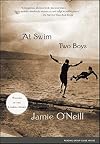
In 2001 Jamie O’Neill’s novel, “At Swim, Two Boys,” was published to international acclaim. O’Neill was compared favorably with James Joyce and called the “next big thing” by critics around the globe. The story of Jim and Doyler, “At Swim, Two Boys” explores the complexity of two boys’ emerging love for each other against the backdrop of Ireland’s 1916 Easter Rising.
"The Lancers had charged here too, it was told. There was a dead horse down the way. All about the steps, flowers were strewn and trampled, where the flower-sellers’ stalls had been toppled. Barricades blocked the side streets, erected of particular things: bicycles jumbled and piled in one, hunks of marble for another, bales of newsprint—the work of disparate guilds whimsically chosen. Trams had been overturned. There were no trams running. No juice, the tram-man told him. Even trains: the Sinn Feiners had dug up the lines. And no polis. No polis anywhere. Withdrawn to barracks. Every last pigeon-hearted lily-livered chicken-gutted sneak of them. It was pandemonium. It was Donnybrook Fair. It was all ballyhooly let loose. (U.K. Edition, pages 563 – 564)"
Thus begins the move toward Irish independence, a long and bloody war of subversion, disagreeable compromise, and betrayal. But “At Swim, Two Boys” is as much a book about love as it is a book about revolution. In fact, descriptions of the uprising come only in the novel’s last chapters. It is the heady confusion of the show more boys’ affection for each other and the complex portrait of emerging Irish nationhood that spur the reader on.
Pegged at 200,000 words, “At Swim, Two Boys” is also a book made rich by the possibilities of the English language: animated spoken speech, diverging, difficult accents, lyrical writing interrupted by abrupt pivots from one point of view to another. These add a magnificent texture to O’Neill’s deftly rendered history, animating his questions about Irish culture through characters that embody the myriad walks of early twentieth century Irish life:
"There goes Mr. Mack, cock of the town. One foot up, the other foot down. The hell of a gent. With a tip of his hat here and a top of the morn there, tip-top, everything’s dandy. He’d bare his head to a lamppost.
"A Christian customer too. Designate the charity, any bazaar you choose, up sticks the bill in his shop. ‘One Shilling per Guinea Spent Here Will Aid the Belgian Refugees.’ ‘Comforts for the Troops in France.’ ‘Presentation Missions up the Limpopo.’ Choose me the cause, he’s a motto to milk it. See him of a Sunday. Ladies’ Mass by the sixpenny-door, stays on for the Stations for his tanner’s worth. Oh, on the up, that’s Mr. Mack, a Christian genteelery grocerly man. (U.K. Edition, page 3)"
In the years since its publication the critics’ compliments for “At Swim” have rippled through the culture. They inform book club picks, course syllabi, the recommendations of one friend to another. This, it seems, is true evidence of the novel’s success: these concentric circles; these expanding rings.
~Carlin M. Wragg, Editor, Open Loop Press show less
"The Lancers had charged here too, it was told. There was a dead horse down the way. All about the steps, flowers were strewn and trampled, where the flower-sellers’ stalls had been toppled. Barricades blocked the side streets, erected of particular things: bicycles jumbled and piled in one, hunks of marble for another, bales of newsprint—the work of disparate guilds whimsically chosen. Trams had been overturned. There were no trams running. No juice, the tram-man told him. Even trains: the Sinn Feiners had dug up the lines. And no polis. No polis anywhere. Withdrawn to barracks. Every last pigeon-hearted lily-livered chicken-gutted sneak of them. It was pandemonium. It was Donnybrook Fair. It was all ballyhooly let loose. (U.K. Edition, pages 563 – 564)"
Thus begins the move toward Irish independence, a long and bloody war of subversion, disagreeable compromise, and betrayal. But “At Swim, Two Boys” is as much a book about love as it is a book about revolution. In fact, descriptions of the uprising come only in the novel’s last chapters. It is the heady confusion of the show more boys’ affection for each other and the complex portrait of emerging Irish nationhood that spur the reader on.
Pegged at 200,000 words, “At Swim, Two Boys” is also a book made rich by the possibilities of the English language: animated spoken speech, diverging, difficult accents, lyrical writing interrupted by abrupt pivots from one point of view to another. These add a magnificent texture to O’Neill’s deftly rendered history, animating his questions about Irish culture through characters that embody the myriad walks of early twentieth century Irish life:
"There goes Mr. Mack, cock of the town. One foot up, the other foot down. The hell of a gent. With a tip of his hat here and a top of the morn there, tip-top, everything’s dandy. He’d bare his head to a lamppost.
"A Christian customer too. Designate the charity, any bazaar you choose, up sticks the bill in his shop. ‘One Shilling per Guinea Spent Here Will Aid the Belgian Refugees.’ ‘Comforts for the Troops in France.’ ‘Presentation Missions up the Limpopo.’ Choose me the cause, he’s a motto to milk it. See him of a Sunday. Ladies’ Mass by the sixpenny-door, stays on for the Stations for his tanner’s worth. Oh, on the up, that’s Mr. Mack, a Christian genteelery grocerly man. (U.K. Edition, page 3)"
In the years since its publication the critics’ compliments for “At Swim” have rippled through the culture. They inform book club picks, course syllabi, the recommendations of one friend to another. This, it seems, is true evidence of the novel’s success: these concentric circles; these expanding rings.
~Carlin M. Wragg, Editor, Open Loop Press show less
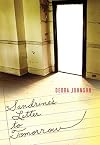
A nine-year-old girl wakes up on the morning she is to leave her mother’s New Orleans home. Sandrine Miller will spend the summer with her father, and she will visit her grandmother, who she adores most of all, who lets her bring the collard greens in from the garden, teaches her to make jam, takes her to the library for more of the books she loves. Sandrine can already feel the strength in her grandmother’s fingers working cornrows into her hair. Even so, anxiety dilutes Sandrine’s excitement: will her mother discover her? She is standing on a stool, wiping down the tops of the kitchen cabinets, early, before her mother (Sandrine hopes) is awake, righting an oversight, that, if caught, would be considered a grave one. Will her mother keep Sandrine in New Orleans as punishment?
“I stopped in the doorway, my clothes for the drive still on the floor where they had fallen off when Mama picked up the suitcases; I tucked the clothes under my arm. ‘You keep your mouth shut. He asks you about me or this house you just say ‘fine,’ hear me?’ When I left, she was muttering, ‘He don’t want to live with me, he don’t get to know what goes on in my goddamn house…’” (Pg. 3)
So begins Sandrine’s Letter to Tomorrow, Dedra Johnson's impeccable first novel, hopeful and hurtful by turns, where reader and narrator walk together along a path of prose that wends its way through Sandrine’s troubling childhood.
Through Sandrine we encounter the quandaries of adult show more authority, explore the specter of loneliness, and observe unusual resilience in the face of trouble, all of which compels us to examine questions of responsibility: of adults to children, of children to themselves, of readers to the characters they learn to love.
“Mama cooked breakfast every morning before work and I ate just enough to stop the pains in my stomach. Soon I’d be eating biscuits and grits and hard-rind bacon and homemade jelly every morning for the rest of my life. In church on Sunday I stood, kneeled, said words without thinking about them until it was time to go home and even though I usually couldn’t wait for Lent each year because once a week our class did the Stations of the Cross and I could look at the stained-glass windows showing the Mysteries up close, the paper-white Jesus, the drops of blood, Mary’s face turned up to heaven, begging God to save her son just for her, no other reason, just because she loved Him and wanted Him, I didn’t even glance at the windows and didn’t care about any of it. (Pgs. 67 – 68)”
We come to know Sandrine as we know the interior angles of our own assumptions. Yet we also know her as we know the child who sits beside our son at school, the girl we see, day in and day out, at the library, the one we caught once out on the sidewalk admonishing her sister. Dedra Johnson has affected a difficult, disconcerting, yet delicious writerly effect: the unreliable narrator. Sandrine tells us what’s happening, accurately renders her encounters, but does so in a voice that reflects a child’s vision of the world. It is us, Dedra Johnson’s readers, who recognize another layer of meaning; we know Sandrine’s challenges should not be hers to face alone. Thus we are bound to her, and to each other, by our concern: Will anyone step in? Are we the one’s who must do our best to help?
It is in this way we recognize the power of fiction—that it compels us to care for those who are, in fact, imagined, that it shows us the most difficult things and makes it possible to look. Fiction is a window through which we view the experience of others, those whose lives may be different from our own, but who we are drawn to through the fact of our mutual humanity. It is this gift that Dedra Johnson gives her readers: a character that elicits our compassion, who reminds us that that the power for change lies in what draws us beyond the borders of the self.
Carlin M. Wragg, Editor
Open Loop Press show less
“I stopped in the doorway, my clothes for the drive still on the floor where they had fallen off when Mama picked up the suitcases; I tucked the clothes under my arm. ‘You keep your mouth shut. He asks you about me or this house you just say ‘fine,’ hear me?’ When I left, she was muttering, ‘He don’t want to live with me, he don’t get to know what goes on in my goddamn house…’” (Pg. 3)
So begins Sandrine’s Letter to Tomorrow, Dedra Johnson's impeccable first novel, hopeful and hurtful by turns, where reader and narrator walk together along a path of prose that wends its way through Sandrine’s troubling childhood.
Through Sandrine we encounter the quandaries of adult show more authority, explore the specter of loneliness, and observe unusual resilience in the face of trouble, all of which compels us to examine questions of responsibility: of adults to children, of children to themselves, of readers to the characters they learn to love.
“Mama cooked breakfast every morning before work and I ate just enough to stop the pains in my stomach. Soon I’d be eating biscuits and grits and hard-rind bacon and homemade jelly every morning for the rest of my life. In church on Sunday I stood, kneeled, said words without thinking about them until it was time to go home and even though I usually couldn’t wait for Lent each year because once a week our class did the Stations of the Cross and I could look at the stained-glass windows showing the Mysteries up close, the paper-white Jesus, the drops of blood, Mary’s face turned up to heaven, begging God to save her son just for her, no other reason, just because she loved Him and wanted Him, I didn’t even glance at the windows and didn’t care about any of it. (Pgs. 67 – 68)”
We come to know Sandrine as we know the interior angles of our own assumptions. Yet we also know her as we know the child who sits beside our son at school, the girl we see, day in and day out, at the library, the one we caught once out on the sidewalk admonishing her sister. Dedra Johnson has affected a difficult, disconcerting, yet delicious writerly effect: the unreliable narrator. Sandrine tells us what’s happening, accurately renders her encounters, but does so in a voice that reflects a child’s vision of the world. It is us, Dedra Johnson’s readers, who recognize another layer of meaning; we know Sandrine’s challenges should not be hers to face alone. Thus we are bound to her, and to each other, by our concern: Will anyone step in? Are we the one’s who must do our best to help?
It is in this way we recognize the power of fiction—that it compels us to care for those who are, in fact, imagined, that it shows us the most difficult things and makes it possible to look. Fiction is a window through which we view the experience of others, those whose lives may be different from our own, but who we are drawn to through the fact of our mutual humanity. It is this gift that Dedra Johnson gives her readers: a character that elicits our compassion, who reminds us that that the power for change lies in what draws us beyond the borders of the self.
Carlin M. Wragg, Editor
Open Loop Press show less
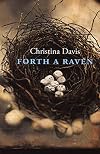
Christina Davis is “carving out a place in the noise.” Hers is a syntax stripped bare, absent of the “ums,” the “likes,” the half-starts and premature stops of everyday speech. In that syntax one finds evidence of the contemporaneous density and paucity of text. A few words in succession reveal the locked chambers of childhood, loves longed for and lost, the vigor of grief.
We are each what never leaves us, what we never see
the back of
is the self. But what loves us
is at the back, as Eurydice was
escorting him out
without his knowing.
Her concerns are the interchangeability of opposites and the human community; the need not only to speak, but for speech to reach an intended.
I want to tell you all the little wrongs between us,
the ones they don’t arrest.
If you were here, you’d bend into me,
low as a fountain’s stump of water, and whisper
“Once everyone’s dreamed, we will sleep.”
In “Forth a Raven,” her first collection of poetry, this is embodied by the raven itself. It is the bird, and the flight of the bird. It is the recollection of mourning, and the act of having loved. So we learn to read these poems not only as independent vessels, but also as a poetic sequence.
Thus, in the deep of winter, we find ourselves on foot in a New England landscape where the seasonal cycles are in gentle juxtaposition with the cycles of human experience: life being lived, imbued as it is with loss, and loathing, and loneliness. Overhead, the birds fly south.
show more
Carlin M. Wragg, Editor
Open Loop Press show less
We are each what never leaves us, what we never see
the back of
is the self. But what loves us
is at the back, as Eurydice was
escorting him out
without his knowing.
Her concerns are the interchangeability of opposites and the human community; the need not only to speak, but for speech to reach an intended.
I want to tell you all the little wrongs between us,
the ones they don’t arrest.
If you were here, you’d bend into me,
low as a fountain’s stump of water, and whisper
“Once everyone’s dreamed, we will sleep.”
In “Forth a Raven,” her first collection of poetry, this is embodied by the raven itself. It is the bird, and the flight of the bird. It is the recollection of mourning, and the act of having loved. So we learn to read these poems not only as independent vessels, but also as a poetic sequence.
Thus, in the deep of winter, we find ourselves on foot in a New England landscape where the seasonal cycles are in gentle juxtaposition with the cycles of human experience: life being lived, imbued as it is with loss, and loathing, and loneliness. Overhead, the birds fly south.
show more
Carlin M. Wragg, Editor
Open Loop Press show less
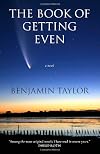
Benjamin Taylor is a writer in full control of the tools available to a practitioner of the language arts. His prose is elegant, his language intoxicating; the stories he tells are rich in detail, full of import, and of intricate disposition. His techniques have been assembled over a lifetime of reading: Nabokov, Bellow, Hemingway, Cather, Isherwood, Woolf. From these and others he has learned unconventional dialog, the trick of presenting action by catalog, the appropriation of history and science, psychology and religion, all of which he brings to bear in the creation of “fully fleshed and blooded” characters. It seems possible to descend from the “L” to a corner in Chicago and encounter Gabriel Geismar from Taylor’s latest novel, “The Book of Getting Even,” walking slowly past, musing over the material composition of the cosmos:
It was simultaneously dawning on the three or four best cosmological minds: the multiverse, universes budding from one another, a profusion of universes without beginning or end, our own the merest upstart in the myriad. Universes without beginning or end — this bright idea, with its reintroduction of eternity, infinite regress and infinite progress, universes forever abounding, whispered to Gabriel that perhaps he hadn’t come so far from Terpsichore Street after all since, soberly considered, he was only putting eternal Nature where the eternal God of Abraham, Isaac, and Jacob used to be.” (Pgs. 85-86)
One might even chance show more upon the magical puppeteer from “Tales Out of School” who, on one’s way home in the afternoon, might approach with his spelling board and introduce himself:
“Old? He was older than old. With a neck as skinny as a cart shaft; and bug-eyes, signifying pathos; and nowhere the trace of a smile.
“Who are you, mister?” Felix asked at the corner of Post Office and Twelfth. He in particular, and Galveston in general, were interested to know.
The ancient of days said nothing, unbuckling his grip instead and taking from it a little board furnished with the letters of the alphabet. S-c-h-m-u-l-o-w-i-c-z, he spelled, pointing to each letter in turn. I—a-m—S-c-h-m-u-l-o-w-i-c-z.” (Pgs. 121-122)
Taylor’s characters are made for a particular time and place, but they embody what persists in human experience, regardless of context: the pain of youth, the pleasure of tenderness, the bewitching impulse to create. In this last he is as much a student as he is a teacher. Every sentence is expertly wrought, designed to wake the brain, combining, as the best writing does, meaning with music and artifice with import. From such language he builds authentic albeit imagined worlds wherein satisfying, sometimes painful, dramas unfold, proving that in contemporary literature one finds, even on a single page, the artful, the imaginative, the credible and the fantastic.
— Carlin M. Wragg, Editor, Open Loop Press show less
It was simultaneously dawning on the three or four best cosmological minds: the multiverse, universes budding from one another, a profusion of universes without beginning or end, our own the merest upstart in the myriad. Universes without beginning or end — this bright idea, with its reintroduction of eternity, infinite regress and infinite progress, universes forever abounding, whispered to Gabriel that perhaps he hadn’t come so far from Terpsichore Street after all since, soberly considered, he was only putting eternal Nature where the eternal God of Abraham, Isaac, and Jacob used to be.” (Pgs. 85-86)
One might even chance show more upon the magical puppeteer from “Tales Out of School” who, on one’s way home in the afternoon, might approach with his spelling board and introduce himself:
“Old? He was older than old. With a neck as skinny as a cart shaft; and bug-eyes, signifying pathos; and nowhere the trace of a smile.
“Who are you, mister?” Felix asked at the corner of Post Office and Twelfth. He in particular, and Galveston in general, were interested to know.
The ancient of days said nothing, unbuckling his grip instead and taking from it a little board furnished with the letters of the alphabet. S-c-h-m-u-l-o-w-i-c-z, he spelled, pointing to each letter in turn. I—a-m—S-c-h-m-u-l-o-w-i-c-z.” (Pgs. 121-122)
Taylor’s characters are made for a particular time and place, but they embody what persists in human experience, regardless of context: the pain of youth, the pleasure of tenderness, the bewitching impulse to create. In this last he is as much a student as he is a teacher. Every sentence is expertly wrought, designed to wake the brain, combining, as the best writing does, meaning with music and artifice with import. From such language he builds authentic albeit imagined worlds wherein satisfying, sometimes painful, dramas unfold, proving that in contemporary literature one finds, even on a single page, the artful, the imaginative, the credible and the fantastic.
— Carlin M. Wragg, Editor, Open Loop Press show less
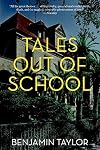
Benjamin Taylor is a writer in full control of the tools available to a practitioner of the language arts. His prose is elegant, his language intoxicating; the stories he tells are rich in detail, full of import, and of intricate disposition. His techniques have been assembled over a lifetime of reading: Nabokov, Bellow, Hemingway, Cather, Isherwood, Woolf. From these and others he has learned unconventional dialog, the trick of presenting action by catalog, the appropriation of history and science, psychology and religion, all of which he brings to bear in the creation of “fully fleshed and blooded” characters. It seems possible to descend from the “L” to a corner in Chicago and encounter Gabriel Geismar from Taylor’s latest novel, “The Book of Getting Even,” walking slowly past, musing over the material composition of the cosmos:
It was simultaneously dawning on the three or four best cosmological minds: the multiverse, universes budding from one another, a profusion of universes without beginning or end, our own the merest upstart in the myriad. Universes without beginning or end — this bright idea, with its reintroduction of eternity, infinite regress and infinite progress, universes forever abounding, whispered to Gabriel that perhaps he hadn’t come so far from Terpsichore Street after all since, soberly considered, he was only putting eternal Nature where the eternal God of Abraham, Isaac, and Jacob used to be.” (Pgs. 85-86)
One might even chance show more upon the magical puppeteer from “Tales Out of School” who, on one’s way home in the afternoon, might approach with his spelling board and introduce himself:
“Old? He was older than old. With a neck as skinny as a cart shaft; and bug-eyes, signifying pathos; and nowhere the trace of a smile.
“Who are you, mister?” Felix asked at the corner of Post Office and Twelfth. He in particular, and Galveston in general, were interested to know.
The ancient of days said nothing, unbuckling his grip instead and taking from it a little board furnished with the letters of the alphabet. S-c-h-m-u-l-o-w-i-c-z, he spelled, pointing to each letter in turn. I—a-m—S-c-h-m-u-l-o-w-i-c-z.” (Pgs. 121-122)
Taylor’s characters are made for a particular time and place, but they embody what persists in human experience, regardless of context: the pain of youth, the pleasure of tenderness, the bewitching impulse to create. In this last he is as much a student as he is a teacher. Every sentence is expertly wrought, designed to wake the brain, combining, as the best writing does, meaning with music and artifice with import. From such language he builds authentic albeit imagined worlds wherein satisfying, sometimes painful, dramas unfold, proving that in contemporary literature one finds, even on a single page, the artful, the imaginative, the credible and the fantastic.
— Carlin M. Wragg, Editor, Open Loop Press show less
It was simultaneously dawning on the three or four best cosmological minds: the multiverse, universes budding from one another, a profusion of universes without beginning or end, our own the merest upstart in the myriad. Universes without beginning or end — this bright idea, with its reintroduction of eternity, infinite regress and infinite progress, universes forever abounding, whispered to Gabriel that perhaps he hadn’t come so far from Terpsichore Street after all since, soberly considered, he was only putting eternal Nature where the eternal God of Abraham, Isaac, and Jacob used to be.” (Pgs. 85-86)
One might even chance show more upon the magical puppeteer from “Tales Out of School” who, on one’s way home in the afternoon, might approach with his spelling board and introduce himself:
“Old? He was older than old. With a neck as skinny as a cart shaft; and bug-eyes, signifying pathos; and nowhere the trace of a smile.
“Who are you, mister?” Felix asked at the corner of Post Office and Twelfth. He in particular, and Galveston in general, were interested to know.
The ancient of days said nothing, unbuckling his grip instead and taking from it a little board furnished with the letters of the alphabet. S-c-h-m-u-l-o-w-i-c-z, he spelled, pointing to each letter in turn. I—a-m—S-c-h-m-u-l-o-w-i-c-z.” (Pgs. 121-122)
Taylor’s characters are made for a particular time and place, but they embody what persists in human experience, regardless of context: the pain of youth, the pleasure of tenderness, the bewitching impulse to create. In this last he is as much a student as he is a teacher. Every sentence is expertly wrought, designed to wake the brain, combining, as the best writing does, meaning with music and artifice with import. From such language he builds authentic albeit imagined worlds wherein satisfying, sometimes painful, dramas unfold, proving that in contemporary literature one finds, even on a single page, the artful, the imaginative, the credible and the fantastic.
— Carlin M. Wragg, Editor, Open Loop Press show less
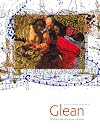
Joshua Kryah’s poems slip easily off the contemporary tongue, and yet they would be as at home in the mouth of a monk in medieval France, a Brazilian missionary, the courtier to his beloved. Their art is shelter to the questions of a young father, a poet living in Las Vegas, who wonders whether language can do justice to man’s desire to know. What meaning lives in the pull of faith? Is there craft in longing? Is there reality in myth? Questions that come to the reader as voices twining like a pair of dancers: she, what is revered; he, what is from life:
the adored giving itself, unabashedly, over
to the adorer.
What I have only just begun to gather up
in my arms.
The stone rolled back.
Your body no longer.
The poet engages our most persistent doubts, our hopes, the range of our desires. Inspired by Saint Augustine, in the tradition of Dante, he presses onward, pursues the religious and transcends it, spilling in his wake a drizzle of words that slide slowly toward the well from which one draws meaning. These drops, colored by the spectrum of contemporary poetics, feature fractured lineation, words as if whispered, the working pause:
shape—
thou dismembered,
dismemberer.
~
Necessary, or else
said to be so, the damage
made all the more real by my thirst for it.
A reader interested in other then the seeker’s struggle toward the divine will find in these poems that which is decidedly human: the beauty and fragility of the body, life at the mercy of chance, resilience in the show more face of destruction. She will grapple with the speaker’s yearning, the speaker’s isolation, the way it mimics her own daily dip into company and drop back out again.
Joshua Kryah’s work is the lover who closes his eyes, believing, as he sinks into sleep, that ritual and solitary journey, his beloved will be beside him until “the coming of light.”
~Carlin M. Wragg, Editor, Open Loop Press show less
the adored giving itself, unabashedly, over
to the adorer.
What I have only just begun to gather up
in my arms.
The stone rolled back.
Your body no longer.
The poet engages our most persistent doubts, our hopes, the range of our desires. Inspired by Saint Augustine, in the tradition of Dante, he presses onward, pursues the religious and transcends it, spilling in his wake a drizzle of words that slide slowly toward the well from which one draws meaning. These drops, colored by the spectrum of contemporary poetics, feature fractured lineation, words as if whispered, the working pause:
shape—
thou dismembered,
dismemberer.
~
Necessary, or else
said to be so, the damage
made all the more real by my thirst for it.
A reader interested in other then the seeker’s struggle toward the divine will find in these poems that which is decidedly human: the beauty and fragility of the body, life at the mercy of chance, resilience in the show more face of destruction. She will grapple with the speaker’s yearning, the speaker’s isolation, the way it mimics her own daily dip into company and drop back out again.
Joshua Kryah’s work is the lover who closes his eyes, believing, as he sinks into sleep, that ritual and solitary journey, his beloved will be beside him until “the coming of light.”
~Carlin M. Wragg, Editor, Open Loop Press show less
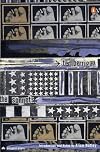
Ryan Murphy, author of Down With the Ship, on Ted Berrigan's "The Sonnets":
"I’m a great admirer of poetic sequences because I think they can bring so many things into the poems and still have them work so well together that they’re a constant delight."
(Interview by Open Loop Press)
"I’m a great admirer of poetic sequences because I think they can bring so many things into the poems and still have them work so well together that they’re a constant delight."
(Interview by Open Loop Press)

Ryan Murphy, author of Down With the Ship, on Gilbert Sorrentino's poem "The Crown" which concludes The Orangery:
"Why do I love this poem?
...that balance of striking images with that kind of dull, “nothing is the thing that rhymes with orange,” and the repetition of, “Laredo, Laredo, chime and chime, corona, corona.” It has a sort of hypnotic structure that I think I find at once soothing and startling."
(Interview by Open Loop Press)
"Why do I love this poem?
...that balance of striking images with that kind of dull, “nothing is the thing that rhymes with orange,” and the repetition of, “Laredo, Laredo, chime and chime, corona, corona.” It has a sort of hypnotic structure that I think I find at once soothing and startling."
(Interview by Open Loop Press)
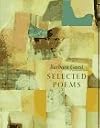
Ryan Murphy, author of Down With the Ship, on Barbara Guest's influence on his writing:
"...one of the things I thought that I would read a little bit of is Barbara Guest’s 'Red Lilies,' which is one of my favorite poems, and has certainly been a pretty direct influence on my writing.
[T]he reason that I want to read that poem, aside from the fact that it’s a pretty beautiful poem, is I have a poem called 'The Mingulay Boat Song,' [which] essentially takes its construction directly from 'Red Lilies.'"
(Interview by Open Loop Press)
"...one of the things I thought that I would read a little bit of is Barbara Guest’s 'Red Lilies,' which is one of my favorite poems, and has certainly been a pretty direct influence on my writing.
[T]he reason that I want to read that poem, aside from the fact that it’s a pretty beautiful poem, is I have a poem called 'The Mingulay Boat Song,' [which] essentially takes its construction directly from 'Red Lilies.'"
(Interview by Open Loop Press)
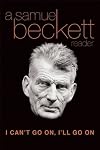
Ryan Murphy, author of Down With the Ship on the work of Samuel Beckett:
"Bill Erwin did some of BECKETT’s 'Texts for Nothing,' which, again, does that sort of beautifully, the 'I can’t go on I’ll go on,' and Bill Erwin, of course, is a magnificent performer, but hearing it out loud he had to dramatize that text and privilege one utterance over another which, the lack of that has always been what struck me as what is so successful about a lot of BECKETT on the page."
(Interview by Open Loop Press)
"Bill Erwin did some of BECKETT’s 'Texts for Nothing,' which, again, does that sort of beautifully, the 'I can’t go on I’ll go on,' and Bill Erwin, of course, is a magnificent performer, but hearing it out loud he had to dramatize that text and privilege one utterance over another which, the lack of that has always been what struck me as what is so successful about a lot of BECKETT on the page."
(Interview by Open Loop Press)
The Grove Centenary Editions of Samuel Beckett Boxed Set: Contains Novels I and II of Samuel Beckett, The Dramatic Works of Samuel Beckett, and The Poems, ... of Samuel Beckett (Grove Centenary Editions) by Samuel Beckett

Ryan Murphy, author of Down With the Ship on the work of Samuel Beckett:
"Bill Erwin did some of BECKETT’s 'Texts for Nothing,' which, again, does that sort of beautifully, the 'I can’t go on I’ll go on,' and Bill Erwin, of course, is a magnificent performer, but hearing it out loud he had to dramatize that text and privilege one utterance over another which, the lack of that has always been what struck me as what is so successful about a lot of BECKETT on the page."
(Interview by Open Loop Press)
"Bill Erwin did some of BECKETT’s 'Texts for Nothing,' which, again, does that sort of beautifully, the 'I can’t go on I’ll go on,' and Bill Erwin, of course, is a magnificent performer, but hearing it out loud he had to dramatize that text and privilege one utterance over another which, the lack of that has always been what struck me as what is so successful about a lot of BECKETT on the page."
(Interview by Open Loop Press)
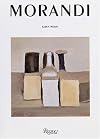
Ryan Murphy, author of Down With the Ship on the inspiration for his poem, "Morandi Sequence":
"...I think that I had been looking at a lot of MORANDI’s pictures, and I think I’d read a little biography of him at about the time, and I think that I felt, in writing this, that there was something I wanted to try to say to MORANDI."
(Interview by Open Loop Press)
"...I think that I had been looking at a lot of MORANDI’s pictures, and I think I’d read a little biography of him at about the time, and I think that I felt, in writing this, that there was something I wanted to try to say to MORANDI."
(Interview by Open Loop Press)
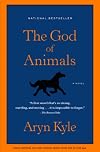
A run-down ranch, a family divided by chasms in close proximity, an immersive, increasingly untenable way of life—"The God of Animals" is the story of a thirteen-year-old girl, but it is also the story of a disappearing lifestyle once crucial to the American narrative: work on the land, the horse and its rider, survival because of, in spite of the natural world.
“The people who lived on our side of town had been born here, and their parents before them. There were no new restaurants, no clean white houses. No one complained of dry skin. As the valley transformed around us, the locals relied on the history of weather to discriminate between those who could be trusted and those who could not.”
In a library of novels driven by precocious child-narrators, Aryn Kyle's Alice Winston stands out, not for her gifts, but because she does not posses the right ones. Coming of age in a culture that rewards remarkable riders, Alice is an outsider, a diligent worker, a utilitarian rancher and a child struggling with classic conundrums, textured by context: the strictures of family, the opacity of human relationships, the right-angled road away from home. To earn a livelihood, she and her family must perpetuate their clients’ idea that animals' principle utilities are entertainment and pleasure, while behind the scenes the Winston’s work brings them into daily contact with life’s brutality. Through Alice’s attentive observation, Kyle explores the contradictions that emerge show more when a way of life is reduced to fetishized culture.
“The boarders whispered and giggled like children, addressing each other as girls—‘Girls, we need more drinky-drinks,’ and, ‘I’ve had the most fabulous idea, girls!’ … And while I didn’t want to pay attention to them, didn’t want to admit that I noticed them at all, they always seemed to be having more fun than anyone else. I couldn’t stop watching.”
In "The God of Animals," readers confront an America in transition, the threat posed by homogeneity, and the loneliness that envelops those who live at its threshold.
~Carlin M. Wragg, Editor, Open Loop Press show less
“The people who lived on our side of town had been born here, and their parents before them. There were no new restaurants, no clean white houses. No one complained of dry skin. As the valley transformed around us, the locals relied on the history of weather to discriminate between those who could be trusted and those who could not.”
In a library of novels driven by precocious child-narrators, Aryn Kyle's Alice Winston stands out, not for her gifts, but because she does not posses the right ones. Coming of age in a culture that rewards remarkable riders, Alice is an outsider, a diligent worker, a utilitarian rancher and a child struggling with classic conundrums, textured by context: the strictures of family, the opacity of human relationships, the right-angled road away from home. To earn a livelihood, she and her family must perpetuate their clients’ idea that animals' principle utilities are entertainment and pleasure, while behind the scenes the Winston’s work brings them into daily contact with life’s brutality. Through Alice’s attentive observation, Kyle explores the contradictions that emerge show more when a way of life is reduced to fetishized culture.
“The boarders whispered and giggled like children, addressing each other as girls—‘Girls, we need more drinky-drinks,’ and, ‘I’ve had the most fabulous idea, girls!’ … And while I didn’t want to pay attention to them, didn’t want to admit that I noticed them at all, they always seemed to be having more fun than anyone else. I couldn’t stop watching.”
In "The God of Animals," readers confront an America in transition, the threat posed by homogeneity, and the loneliness that envelops those who live at its threshold.
~Carlin M. Wragg, Editor, Open Loop Press show less

Ryan Murphy shows us the potential of the language collage. Evoking the Expressionist school of painting, Murphy distorts reality to enhance his poetry’s emotional effect. Though populated by the features of our familiar world, the world of his poems is parsed, fragmented, its disparate images lashed together with the bonds of lineation and lyric space (“What black light founders your words. / This ringing quiet. Nostalgia debris in the shipyard.”)
Murphy can trace his lineage to the juxtapositions in Kurt Schwitters’ angular acts of assemblage, but Murphy is a poet at play in the architecture of his own time, a time when database-driven cultural objects proliferate, objects whose fundamental structure depends, as in Schwitters, on the act of assemblage: montage in film, on television, edited sequences of independent images over which trademarked names, advertising slogans, and scrolling headlines have been superimposed. Murphy’s poems teach us there is a unique kind of beauty in these hyper-mediated forms: (“patchwork bulk of sea-script. / Needlepoint night. / The last breath I hear / is always out / And the second hand.”)
Murphy offers poetry for the present, and in doing so, gives us literature that is timeless. Its luxurious rhythms, linguistic precision and demanding silences are an antidote to the onslaught of that which is discordant around us.
~Carlin M. Wragg, Editor, Open Loop Press
Murphy can trace his lineage to the juxtapositions in Kurt Schwitters’ angular acts of assemblage, but Murphy is a poet at play in the architecture of his own time, a time when database-driven cultural objects proliferate, objects whose fundamental structure depends, as in Schwitters, on the act of assemblage: montage in film, on television, edited sequences of independent images over which trademarked names, advertising slogans, and scrolling headlines have been superimposed. Murphy’s poems teach us there is a unique kind of beauty in these hyper-mediated forms: (“patchwork bulk of sea-script. / Needlepoint night. / The last breath I hear / is always out / And the second hand.”)
Murphy offers poetry for the present, and in doing so, gives us literature that is timeless. Its luxurious rhythms, linguistic precision and demanding silences are an antidote to the onslaught of that which is discordant around us.
~Carlin M. Wragg, Editor, Open Loop Press