
Rob Riemen
Author of Nobility of Spirit
About the Author
Series
Works by Rob Riemen
Nexus 2 copies
NEXUS 25 1 copy
L'ART D'ESDEVENIR HUMA 1 copy
Terugkeer naar de Toverberg 1 copy
Skola zivota 1 copy
Škola života: razgovori 1 copy
Strategieën van vergetelheid 1 copy
Associated Works
Tagged
Common Knowledge
- Birthdate
- 1962
- Gender
- male
- Occupations
- essayist
oprichter/directeur Nexus Instituut in Tilburg - Short biography
- Zie www.robriemen.nl
- Nationality
- Netherlands
- Associated Place (for map)
- Netherlands
Members
Reviews
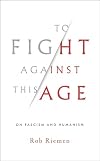
Only about a fourth (and it's a small enough section given how short the book is) of this work was what I was expecting and interested in, the reasons for fascism's persistence, the warning signs of its resurgence, and ways to combat it's pernicious spread. And all things considered it's a succinct, pithy analysis of the issue, I found it intriguing and educational, and I had high hopes for the rest of the book. Another volume on exclusively those topics would suit me just fine.
The rest I show more could honestly do without. The author suddenly shifts tone and perspective, writing more of a travel log than a political essay, complete with his musings and preferences on a couple elite European hotels. For the last 120 pages or so fascism and it's spread are only obliquely mentioned, the loss of morals, the decline of European values, and the spiritual bankruptcy of science and commerce take center stage instead. I found it difficult not to interpret this whole latter section of the book as merely the soliloquy of a conservative, upper class, Euro-centric academic, secure and sheltered in his ivory tower of grand hotel symposiums and conferences with like minded intellectuals. At it's very worst it reminded me of a common, irritating scenario in which an older individual lays out exactly what they think is wrong with the world today (overemphasis on speed and quantity, superficiality, addiction to immediate gratification, the examples in this book are so ubiquitous in today's society I need hardly list them,I could just as easily being the sentence "Kids these days..." and let you fill in the gaps with the same complaints we've all heard before), without a clear solution to these apparently evident problems let alone a word on how they relate to fascism. Needless to say It's not what I anticipated or care for and it makes for terribly dull reading. show less
The rest I show more could honestly do without. The author suddenly shifts tone and perspective, writing more of a travel log than a political essay, complete with his musings and preferences on a couple elite European hotels. For the last 120 pages or so fascism and it's spread are only obliquely mentioned, the loss of morals, the decline of European values, and the spiritual bankruptcy of science and commerce take center stage instead. I found it difficult not to interpret this whole latter section of the book as merely the soliloquy of a conservative, upper class, Euro-centric academic, secure and sheltered in his ivory tower of grand hotel symposiums and conferences with like minded intellectuals. At it's very worst it reminded me of a common, irritating scenario in which an older individual lays out exactly what they think is wrong with the world today (overemphasis on speed and quantity, superficiality, addiction to immediate gratification, the examples in this book are so ubiquitous in today's society I need hardly list them,I could just as easily being the sentence "Kids these days..." and let you fill in the gaps with the same complaints we've all heard before), without a clear solution to these apparently evident problems let alone a word on how they relate to fascism. Needless to say It's not what I anticipated or care for and it makes for terribly dull reading. show less
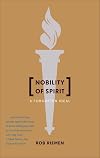
If Rob Riemen were a writer with a different voice, who punctuated his ideas with footnotes and framed his anecdotes with jargon, his elegant volume, “Nobility of Spirit: A Forgotten Ideal,” might be on heavy rotation in philosophy courses worldwide. But Riemen is a humanist with a literary impulse who takes great pleasure in the creative act. Writing, as he says, in “the small hours of the night” when he can put his work at the Nexus Institute, the independent organization he runs show more in The Netherlands, to one side and explore the terrain of his own mind, Riemen has produced a text that eschews the traditional definition of critical analysis; it is neither an extended philosophical essay, nor a work of academic criticism. For this reason it is hard to decide whether to shelve it in one’s personal library beside Anthony Kenny’s “A Brief History of Western Philosophy,” or if it instead belongs next to Joan Didion’s “Slouching Towards Bethlehem.” Yet it is this protean nature that makes “Nobility of Spirit” as much a pleasure to read as Herman Hesse’s “Siddhartha,” or Kahlil Gibran’s “The Prophet.” Riemen understands that in enjoyable reading there is opportunity for learning.
A passionate student of the German writer Thomas Mann, Riemen expresses his ideas in stories, animating conversations between great thinkers of the past. He breathes life into the meditative walks of Friedrich Nietzsche, and recounts Socrates’ trial in Athens, giving us a ringside seat for one of Western philosophy’s most crucial speeches. By doing so, he encourages contemporary readers to reconnect with some of history’s most elegant concepts: Beauty, Truth, Goodness, the importance of language. These concepts were once impartial moral guideposts, but today they are subjective measures whose definitions often rely upon individual opinion for their import. Riemen suggests that there is still room for certainty, that there are unassailable truths, and that morality and human decency have a crucial role to play in contemporary culture:
Rob Riemen sees his life “as a kind of mission to restore the meaning of certain words.” When one closes the covers of “Nobility of Spirit” for the last time, one does so with the sense that communication itself is at the very heart of being human, and that in the face of incredible challenge one has the resources to persevere.
~Carlin M. Wragg, Editor, Open Loop Press show less
A passionate student of the German writer Thomas Mann, Riemen expresses his ideas in stories, animating conversations between great thinkers of the past. He breathes life into the meditative walks of Friedrich Nietzsche, and recounts Socrates’ trial in Athens, giving us a ringside seat for one of Western philosophy’s most crucial speeches. By doing so, he encourages contemporary readers to reconnect with some of history’s most elegant concepts: Beauty, Truth, Goodness, the importance of language. These concepts were once impartial moral guideposts, but today they are subjective measures whose definitions often rely upon individual opinion for their import. Riemen suggests that there is still room for certainty, that there are unassailable truths, and that morality and human decency have a crucial role to play in contemporary culture:
“No, for the sake of human dignity the free individual is not allowed to ignore universal, timeless values. Intellectuals in particular should resist this kind of nihilism. Not everything is allowed. Human freedom is in essence relative; it is subordinate to the immortal and never completely attainable ideal of human dignity. Furthermore, absolute freedom obliterates justice. There are transcendental absolute values that have priority and are obligatory for everyone.” –“Nobility of Spirit,” page 70
Rob Riemen sees his life “as a kind of mission to restore the meaning of certain words.” When one closes the covers of “Nobility of Spirit” for the last time, one does so with the sense that communication itself is at the very heart of being human, and that in the face of incredible challenge one has the resources to persevere.
~Carlin M. Wragg, Editor, Open Loop Press show less

I won't summarize Nobility of Spirit (2008) because others have done a good job already, and truthfully it's resistant to summary, as artful books are, each person seems to take away something different. What was most powerful for me was the notion of freedom and the danger of democracy turning into totalitarianism if truth is subverted in the name of ideology (socialism, capitalism); it is perhaps cliche to mention our "dangerous times" since this has always been the case, yet in America show more and elsewhere, we seem to be in a period of ideological re-examination and firming up post-Cold War, 9/11 and Great Recession. It's impossible to predict the future, but one thing is certain, if we politicize everything to the point truth becomes relative and subjective, it's a sure road to barbarism and anti-civilization, as seen in the early 20th century. This book is a reminder to be more vigilant about seeking the truth, no matter where it lies on the political spectrum, and to not fall into the trap of subjectivism and nihilism which is all-pervasive in popular culture/politics.
This is a short book, a long essay, but one to read slowly and carefully over a number of days. It's literary antecedents will appeal to anyone with a literary passion, seekers of meaning in life, what it means to live a good life. show less
This is a short book, a long essay, but one to read slowly and carefully over a number of days. It's literary antecedents will appeal to anyone with a literary passion, seekers of meaning in life, what it means to live a good life. show less
I probably write an extended review later because I have to find the right words.
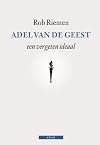
In totality this felt like a nostalgic book. Reiemen is referring to his cultural heroes (like Thomas Mann, Spinoza and Socrates) who contemplated truth, righteousness and beauty as values in there own rights. These values that are seen as universals in the platonic sense and should not be combined with political thought, because political thought is narrow minded, it only permits his own ideology.
The universal show more singular notion of truth (or one of the other values) caused some epistemological distress for me. His axiom is that there is something as truth above there as in the platonic sense. This truth is unknown, always partly behind a veil, and intellectuals must be open for this. This imposes a dualistic relation between a transcendent dominant object, the value and a passive artist or intellectual. In this receiving the artist shows a truth.
This seems to be a to simplistic notion of reality. An artist is also a historic being that plays with the current possibilities and shows something in that play. To state that the artist only receives from some higher value seems to favour one part of the relation above the other. An ideology where complex circular relations are replaced, and man becomes a being with just a relation of the transcendent. Men is rooted and free. This paradox is not addressed enough in this work and vital for a re-appreciation of these humanistic values in the 21th century.
Reason to read this anyway are Riemens good writing skills and the using of stories to (try to) show his ideas. Besides this it forms a good stair in thinking for yourself on these big concepts of truth, justice, beauty, fee will, creativity etc. show less
In totality this felt like a nostalgic book. Reiemen is referring to his cultural heroes (like Thomas Mann, Spinoza and Socrates) who contemplated truth, righteousness and beauty as values in there own rights. These values that are seen as universals in the platonic sense and should not be combined with political thought, because political thought is narrow minded, it only permits his own ideology.
The universal show more singular notion of truth (or one of the other values) caused some epistemological distress for me. His axiom is that there is something as truth above there as in the platonic sense. This truth is unknown, always partly behind a veil, and intellectuals must be open for this. This imposes a dualistic relation between a transcendent dominant object, the value and a passive artist or intellectual. In this receiving the artist shows a truth.
This seems to be a to simplistic notion of reality. An artist is also a historic being that plays with the current possibilities and shows something in that play. To state that the artist only receives from some higher value seems to favour one part of the relation above the other. An ideology where complex circular relations are replaced, and man becomes a being with just a relation of the transcendent. Men is rooted and free. This paradox is not addressed enough in this work and vital for a re-appreciation of these humanistic values in the 21th century.
Reason to read this anyway are Riemens good writing skills and the using of stories to (try to) show his ideas. Besides this it forms a good stair in thinking for yourself on these big concepts of truth, justice, beauty, fee will, creativity etc. show less
Awards

You May Also Like


Associated Authors
Statistics
- Works
- 34
- Also by
- 1
- Members
- 454
- Popularity
- #54,063
- Rating
- 3.7
- Reviews
- 14
- ISBNs
- 44
- Languages
- 10