
Pieter Steinz (1963–2016)
Author of Made in Europe de kunst die ons continent bindt
About the Author
Image credit: Pieter Steinz - © Inge Mol/HH
Works by Pieter Steinz
Lezen op locatie atlas van de wereldliteratuur : 60 kaarten, 90 landen, 1200 titels, 45 talen (2004) 35 copies, 1 review
Het web van de wereldliteratuur welke 100 boeken hebben de literaire X-factor? (2007) 26 copies, 1 review
Macbeth heeft echt geleefd een reis door Europa in de voetsporen van 16 literaire helden (2011) 20 copies
Dracula heeft echt geleefd een reis door Europa in de voetsporen van 16 literaire helden (2014) 18 copies
Associated Works
Tagged
Common Knowledge
- Birthdate
- 1963-10-06
- Date of death
- 2016-08-29
- Gender
- male
- Education
- Universiteit van Amsterdam (geschiedenis + Engels)
- Occupations
- journalist
non-fiction author
literary critic - Organizations
- NRC Handelsblad
Nederlands Letterenfonds - Awards and honors
- Stichting Gouden Ganzenveer ‘ereveer’ (2014)
EuroNederlander Award (2014) - Relationships
- Steinz, Jet (daughter)
- Nationality
- Netherlands
- Birthplace
- Rotterdam, Netherlands
- Place of death
- Haarlem, Netherlands
- Associated Place (for map)
- Netherlands
Members
Reviews

Some people never go crazy. What truly horrible lives they must lead. - Bukowski
Steinz takes us for a little flight through madness in literature. He gives a real nice taste of the different tastes of madness, form psychopaths to paranoia and depression. He does this by treating the subject in books about madness, mad writers, and psychotherapist. Excellent choose because it makes this very short essay and vast subject very readable.
In doing this he gives a a insight of the way writes show more visions of mental disorders, asylums and doctors - who are scapegoats for almost all of them - trough (mainly modernity) time . It probably also shows where the people of their time wanted to read about, and concluding from that fact, which questions they where asking.
When I ask myself 'what are today's madness themes in books I've read', it would be the madness in a society that is scientific and performance (read Houellebecq), technology and peer pressure (The Circle), the search for a solid identity in a diverse world (Dit zijn de Namen).
In the final chapter he asks if not all of literature is fuelled by a madness of some sort... and to be true, to be reading about an all-to-normal life is likely not the most interesting thing to do :). So all of us who are short in madness and live horrible lives, luckily we got literature. show less
Steinz takes us for a little flight through madness in literature. He gives a real nice taste of the different tastes of madness, form psychopaths to paranoia and depression. He does this by treating the subject in books about madness, mad writers, and psychotherapist. Excellent choose because it makes this very short essay and vast subject very readable.
In doing this he gives a a insight of the way writes show more visions of mental disorders, asylums and doctors - who are scapegoats for almost all of them - trough (mainly modernity) time . It probably also shows where the people of their time wanted to read about, and concluding from that fact, which questions they where asking.
When I ask myself 'what are today's madness themes in books I've read', it would be the madness in a society that is scientific and performance (read Houellebecq), technology and peer pressure (The Circle), the search for a solid identity in a diverse world (Dit zijn de Namen).
In the final chapter he asks if not all of literature is fuelled by a madness of some sort... and to be true, to be reading about an all-to-normal life is likely not the most interesting thing to do :). So all of us who are short in madness and live horrible lives, luckily we got literature. show less
Pieter Steinz gives an overview of insanity in world literature - in his discussion he makes a 'tour' of the Dolhuys Museum in Haarlem, using the different exhibition rooms in the museum to discuss different ways in which insanity crops up in literary works: he discusses insane characters, insane authors, psychiatrists in novels and psychiatric hospitals in novels.
Though brief, Steinz manages to give quite a comprehensive overview of the ways in which insanity plays a role in literature, show more with a wealth of examples.
I very much enjoy Steinz' writing style - though he does succeed in writing a scholarly essay, he still writes in a style that is easy and fun to read. A good introduction to the topic. show less
Though brief, Steinz manages to give quite a comprehensive overview of the ways in which insanity plays a role in literature, show more with a wealth of examples.
I very much enjoy Steinz' writing style - though he does succeed in writing a scholarly essay, he still writes in a style that is easy and fun to read. A good introduction to the topic. show less

Columns van Pieter Steinz over literatuur, gerelateerd aan zijn leven als ALS-patiënt. Bijzonder hoe iemand die zo ziek is, zijn gevoel voor humor weet te bewaren en op relativerende toon de meest heftige symptomen beschrijft. De bijgaande tekeningen zijn prachtig. Iedere illustratie zegt iets over het besproken boek in de column en op bijna iedere tekening staat ook Pieter Steinz.
Steinz gids voor de wereldliteratur in416 schrijvers, 104 meesterwerken, 26 one-book wonders, 52 boekwbben, 26 thema's, 26 quizzen en 52 landkaarten by Pieter Steinz
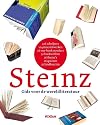
Successful result of a crazy enterprise by a dying man: trying to map the most important literature of the world. Based on( but revised and extended )
Lezen &etcetera (2003) and lezen op locatie (2004), which were extensions and redesigning of articles in NRC-Handelsblad.
A good way to evaluate your own life as a reader and also beautiful conversation-piece.
Lezen &etcetera (2003) and lezen op locatie (2004), which were extensions and redesigning of articles in NRC-Handelsblad.
A good way to evaluate your own life as a reader and also beautiful conversation-piece.
Lists
Awards


You May Also Like


Associated Authors
Statistics
- Works
- 24
- Also by
- 3
- Members
- 688
- Popularity
- #36,763
- Rating
- 4.0
- Reviews
- 16
- ISBNs
- 40
- Languages
- 2
