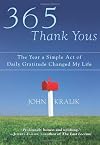
365 Thank Yous is the story of how focusing on gratitude can truly change your life. While John Kralik's story may be more extraordinary than most the power of gratitude is explored in ways that can help improve anybody's life. By choosing to focus on being thankful for what we have rather than focusing on what we hope to attain or obtain we can bring ourselves more happiness and bring happiness to others by acknowledging their role in bettering our lives, in helping us, and generally just by being themselves and being there.
While I don't intend to set out on my own journey of writing 365 thank you notes I will be sure to send out handwritten thank you notes for every gift I received this holiday season, no matter how large or how small.
Kralik's book is truly a joy to read and is also a nice quick read that would probably be a helpful gift to any teenager or young adult to help them learn the power of a well written, well timed thank you note. This is a beautiful book that I would recommend to friends and family.
While I don't intend to set out on my own journey of writing 365 thank you notes I will be sure to send out handwritten thank you notes for every gift I received this holiday season, no matter how large or how small.
Kralik's book is truly a joy to read and is also a nice quick read that would probably be a helpful gift to any teenager or young adult to help them learn the power of a well written, well timed thank you note. This is a beautiful book that I would recommend to friends and family.
 This review was written for LibraryThing Early Reviewers.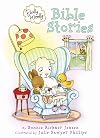
Really Wooly Bible Stories by Bonnie Rickner Jensen and illustrated by Julie Sawyer Phillips is an excellent introduction to some of the most common and well known Bible stories. Really Wooly Bible Stories is a padded cover boardbook and is very sturdy in its construction making it suitable for even the youngest of readers and children.
Its pastel illustrations are adorable and each Bible story is summarized in a brief poem on one page with a cute matching illustration on each facing page. In the lower left hand corner of each story is a small drawing of the Really Wooly Bible characters. For older readers beneath each illustration it states where the full story can be found in the Bible for further reading and study.
Really Wooly Bible Stories would make an excellent stocking stuffer for Christmas and would make an equally great Easter gift given its small size and pastel colours. Not that the small size should deter you from purchasing this book. While it might feel small in adult hands its big enough to easily turn the pages and hold the book, but the book is sized with small children in mind.
If you're looking for a fun and gentle way to introduce the most well known Bible stories to very young children then this is definitely the book you're looking for.
One thing I will add is that the cover gets dirty *very* easily. I've only had the book for a few days and have already had to wipe the cover off twice. It attracts dirt like a magnet, but it is easy to wipe clean show more and the book still looks good as new.
(I received a complimentary copy of this book from the publisher via Booksneeze.) show less
Its pastel illustrations are adorable and each Bible story is summarized in a brief poem on one page with a cute matching illustration on each facing page. In the lower left hand corner of each story is a small drawing of the Really Wooly Bible characters. For older readers beneath each illustration it states where the full story can be found in the Bible for further reading and study.
Really Wooly Bible Stories would make an excellent stocking stuffer for Christmas and would make an equally great Easter gift given its small size and pastel colours. Not that the small size should deter you from purchasing this book. While it might feel small in adult hands its big enough to easily turn the pages and hold the book, but the book is sized with small children in mind.
If you're looking for a fun and gentle way to introduce the most well known Bible stories to very young children then this is definitely the book you're looking for.
One thing I will add is that the cover gets dirty *very* easily. I've only had the book for a few days and have already had to wipe the cover off twice. It attracts dirt like a magnet, but it is easy to wipe clean show more and the book still looks good as new.
(I received a complimentary copy of this book from the publisher via Booksneeze.) show less
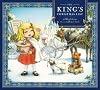
The King's Christmas List is a beautifully illustrated picture book by Eldon Johnson and illustrated by Bonnie Leick. The target audience is 4 - 8 year olds, however 4 - 6 year olds may need to have an adult read the book to them. The vocabulary is not too challenging but the story does contain longer words like "honorable" and "celebrate" that some younger readers might stumble over.
The story itself is a sweet one of imagination and charity in the spirit of Christmas and based on the Bible verse Matthew 25:40. The main character, Emma, is a young girl of an undetermined age which should be appealing to many younger readers since it can be implied that she is the same age as them, and therefore, just like them. And who doesn't enjoy reading stories about kids like themselves? It makes the story easier to relate to and easier for children to be invested in.
The King's Christmas List would make a lovely Thanksgiving gift because if you're going to read this it's probably best to read it before Christmas so that children can grasp the full meaning of the story which is that Christmas is about giving to others in need and not receiving gifts. Although the book would make a nice Christmas present as well it might not have the same re-read value after the holidays have already passed. Johnson's book would make a wonderful addition to a Christian family's library or to a church book collection. The book's religious overtone is not obvious at the beginning of the story but by show more the end of the book it's clear that The King is Jesus and, therefore, if you are opposed to overly religious stories this book might be one to pass on although its message of giving to those in need has universal appeal.
(I received a complimentary copy of this book from the publisher via Booksneeze.) show less
The story itself is a sweet one of imagination and charity in the spirit of Christmas and based on the Bible verse Matthew 25:40. The main character, Emma, is a young girl of an undetermined age which should be appealing to many younger readers since it can be implied that she is the same age as them, and therefore, just like them. And who doesn't enjoy reading stories about kids like themselves? It makes the story easier to relate to and easier for children to be invested in.
The King's Christmas List would make a lovely Thanksgiving gift because if you're going to read this it's probably best to read it before Christmas so that children can grasp the full meaning of the story which is that Christmas is about giving to others in need and not receiving gifts. Although the book would make a nice Christmas present as well it might not have the same re-read value after the holidays have already passed. Johnson's book would make a wonderful addition to a Christian family's library or to a church book collection. The book's religious overtone is not obvious at the beginning of the story but by show more the end of the book it's clear that The King is Jesus and, therefore, if you are opposed to overly religious stories this book might be one to pass on although its message of giving to those in need has universal appeal.
(I received a complimentary copy of this book from the publisher via Booksneeze.) show less
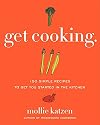
I wish I had found this book before trying other more complicated and less well written recipes from other cookbooks. My talents in the kitchen are modest, at best, and while I can roast a chicken quite well thanks to Nigella Lawson that and grilled cheeses pretty much rounds out my repetoire.
This cookbook not only provides recipes that call for few, if any, exotic ingredients, it provides incredibly detailed instructions. While other cookbooks might instruct you to "cook the pasta" Mollie Katzen tells you how much water to put in your pasta pot, when to check it for doneness, how to taste test it to determine if its cooked, and instructions or whether or not the pasta should be rinsed after cooking (in most cases, it shouldn't because it removes the starches the sauces should be sticking to).
With the detailed instructions provided in this cookbook, as well as the ability to freestyle and customize with the suggestions Katzen provides in the sidebars with each recipe, I was able to fix a delicious Pasta Shells with Chickpeas and Arugula. In full disclosure, I substituted fresh baby spinach for the arugula per the sidebar suggestions and it turned out great! I can't wait to try the Mango and Chickpea Curry and the Chocolate & Peanut Butter Things.
Each chapter begins with a description of the basics concering the types of food and dishes included in the chapter and this is an enormous resource for novice cooks. While there are books like Joy of Cooking that provide an show more encyclopedic knowledge of food, I found such large books to be overwhleming. Get Cooking provides all the necessary information to be successful in the kitchen and, unlike many recent cookbooks, Get Cooking provides a photograph for each and every recipe.
I can't begin to tell you how much I wish I had found this cookbook last year instead of last week at the library. Although I did check this book out from the local library it is absolutely worth owning a copy as I think the recipes are absolutely worth repeating. This cookbook would also make an excellent housewarming gift. show less
This cookbook not only provides recipes that call for few, if any, exotic ingredients, it provides incredibly detailed instructions. While other cookbooks might instruct you to "cook the pasta" Mollie Katzen tells you how much water to put in your pasta pot, when to check it for doneness, how to taste test it to determine if its cooked, and instructions or whether or not the pasta should be rinsed after cooking (in most cases, it shouldn't because it removes the starches the sauces should be sticking to).
With the detailed instructions provided in this cookbook, as well as the ability to freestyle and customize with the suggestions Katzen provides in the sidebars with each recipe, I was able to fix a delicious Pasta Shells with Chickpeas and Arugula. In full disclosure, I substituted fresh baby spinach for the arugula per the sidebar suggestions and it turned out great! I can't wait to try the Mango and Chickpea Curry and the Chocolate & Peanut Butter Things.
Each chapter begins with a description of the basics concering the types of food and dishes included in the chapter and this is an enormous resource for novice cooks. While there are books like Joy of Cooking that provide an show more encyclopedic knowledge of food, I found such large books to be overwhleming. Get Cooking provides all the necessary information to be successful in the kitchen and, unlike many recent cookbooks, Get Cooking provides a photograph for each and every recipe.
I can't begin to tell you how much I wish I had found this cookbook last year instead of last week at the library. Although I did check this book out from the local library it is absolutely worth owning a copy as I think the recipes are absolutely worth repeating. This cookbook would also make an excellent housewarming gift. show less
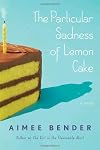
The Particular Sadness of Lemon Cake is a melancholy novel. In some ways it reminds me of The Catcher in the Rye with its tale of a child growing up and not completely being able to parse and understand the world around him or her, but Rose retains more hope and optimism than Holden and her hope and optimism, at least for a while, serve her well.
This novel suits itself to reading on the Kindle due to its brief chapters and it's an easy book to put down and pick up again to resume reading as the continuity is phenomenal without being redundant or repetitive. Some readers may also find the book a bit emotionally overwhelming as Aimee Bender is a masterful wordsmith and her writing is very evocative. It is difficult to read The Particular Sadness without also "watching" it in your mind. Bender includes a loving amount of detail which also contributes to the sometimes overwhelming emotion.
This book is one to read slowly and leisurely, not one to race through in one afternoon at the pool or beach.
This novel suits itself to reading on the Kindle due to its brief chapters and it's an easy book to put down and pick up again to resume reading as the continuity is phenomenal without being redundant or repetitive. Some readers may also find the book a bit emotionally overwhelming as Aimee Bender is a masterful wordsmith and her writing is very evocative. It is difficult to read The Particular Sadness without also "watching" it in your mind. Bender includes a loving amount of detail which also contributes to the sometimes overwhelming emotion.
This book is one to read slowly and leisurely, not one to race through in one afternoon at the pool or beach.
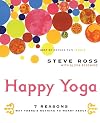
This book makes an excellent introduction to yoga for both people who have never done yoga before and for new yoginis who are still looking to learn more about the practice of yoga both on and off the mat. Happy Yoga is also just an excellent book for anyone looking for a fun, easy to read, self help book. Steve Ross encourages you to stop worrying throughout the book and includes both yoga poses, with pictures demonstrating the poses, as well as mental and written exercises to help you acheive "happy yoga" and go about your daily life with less worry and anxiety. He also includes soundtrack suggestions to help enhance your yoga practice.
What set this book apart from other yoga books for me was the inclusion of modifications for yoga poses that can either be done in bed (yes, in bed! Like immediately after waking up in the morning or right before settling in to sleep for the night) or in your chair at your desk while at work. Ross' ideas of doing a little bit of yoga everyday wherever you are really embodies the idea that yoga is more than just going to a class to get a flatter stomach (although yoga can certainly do that to) but that yoga is about enjoying life and accepting who you are and the unique abilities your body has.
Happy Yoga is one of the first books I read about yoga (I must admit, I was drawn in by the colourful cover and yes, I know what they say about judging a book by its cover but this book truly delivers) and is one that I return to and re-read often. show more This book is well worth buying and adding to your personal library whether yoga is something you already do everyday or if it's something you would like to incorporate into your life more frequently. show less
What set this book apart from other yoga books for me was the inclusion of modifications for yoga poses that can either be done in bed (yes, in bed! Like immediately after waking up in the morning or right before settling in to sleep for the night) or in your chair at your desk while at work. Ross' ideas of doing a little bit of yoga everyday wherever you are really embodies the idea that yoga is more than just going to a class to get a flatter stomach (although yoga can certainly do that to) but that yoga is about enjoying life and accepting who you are and the unique abilities your body has.
Happy Yoga is one of the first books I read about yoga (I must admit, I was drawn in by the colourful cover and yes, I know what they say about judging a book by its cover but this book truly delivers) and is one that I return to and re-read often. show more This book is well worth buying and adding to your personal library whether yoga is something you already do everyday or if it's something you would like to incorporate into your life more frequently. show less
I would recommend buying this book *now* while it's still free. It would certainly be worth the $1.99 list price, but free is even better.
If you've read any of Dumas' other novels you'll probably like this one. It begins rather slowly and without drama but the intensity quickly builds as does the intrigue and violence. Writing reviews about mysteries is challenging because I don't want to give too much away but I do want to encourage fans of Dumas' other works, Edgar Allan Poe's short stories, and those who just enjoy period literature to read this book because it really is a good one.
The characters are lively and there is even a strong secondary female character. Dumas' writing, while not overly emotional in and of itself, definitely provokes emotion in defense of his strong characters. The villian is repulsive and unlikeable while the soon to be identified hero is awkwardly charming and by turns wiley.
I thoroughly enjoyed reading this book, but in the spirit of full disclosure I was an English major that primarily dealt with British literature so perhaps that's why I enjoyed this book so much. For non-English majors this book might be too stilted or old timey but for anyone who enjoys mysteries, suspense, or gardening this book is a great freebie to download.
If you've read any of Dumas' other novels you'll probably like this one. It begins rather slowly and without drama but the intensity quickly builds as does the intrigue and violence. Writing reviews about mysteries is challenging because I don't want to give too much away but I do want to encourage fans of Dumas' other works, Edgar Allan Poe's short stories, and those who just enjoy period literature to read this book because it really is a good one.
The characters are lively and there is even a strong secondary female character. Dumas' writing, while not overly emotional in and of itself, definitely provokes emotion in defense of his strong characters. The villian is repulsive and unlikeable while the soon to be identified hero is awkwardly charming and by turns wiley.
I thoroughly enjoyed reading this book, but in the spirit of full disclosure I was an English major that primarily dealt with British literature so perhaps that's why I enjoyed this book so much. For non-English majors this book might be too stilted or old timey but for anyone who enjoys mysteries, suspense, or gardening this book is a great freebie to download.
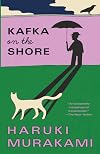
This is the second book I've read by Haruki Murakami (The first being What I Talk About When I Talk About Running (Vintage International) which is entirely different) so I didn't know what to expect. From other reviewers and the synopsis available here I gathered that it would have a philosophical bent, which it did, however many of the philosophy references were completely over my head not being well versed in philosophy myself. Even without getting every reference the novel was still a beautiful read.
At times Murakami telegraphs what will happen next but the structure of the novel still allows for a great deal of suspense as the chapters alternate between Kafka, a runaway fifteen year old from Tokyo, and Nakata, an elderly man beginning a journey of his own. The storytelling becomes very sweet towards the end of the novel which contrasts nicely with the raw realism from the earlier chapters.
This book is certainly not recommended for everyone. Some might find it too abstract or outlandish. It combines traditional literary storytelling with elements of fantasy and science-fiction without truly being a genre work. It's also a compelling story full of literary and philosophy references that enrich the narrative. With that in mind I would recommend the book to current and former college English and/or philosophy majors, fans of Plato, and readers looking for a very different work of fiction to read. It does have some cursing and explicit material so I would not recommend show more it for children or students, although high school juinors and seniors may enjoy it as an extracurricular read. show less
At times Murakami telegraphs what will happen next but the structure of the novel still allows for a great deal of suspense as the chapters alternate between Kafka, a runaway fifteen year old from Tokyo, and Nakata, an elderly man beginning a journey of his own. The storytelling becomes very sweet towards the end of the novel which contrasts nicely with the raw realism from the earlier chapters.
This book is certainly not recommended for everyone. Some might find it too abstract or outlandish. It combines traditional literary storytelling with elements of fantasy and science-fiction without truly being a genre work. It's also a compelling story full of literary and philosophy references that enrich the narrative. With that in mind I would recommend the book to current and former college English and/or philosophy majors, fans of Plato, and readers looking for a very different work of fiction to read. It does have some cursing and explicit material so I would not recommend show more it for children or students, although high school juinors and seniors may enjoy it as an extracurricular read. show less
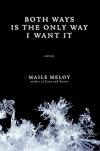
I loved this book. But sometimes the most glowing book reviews are the hardest to write. There are only so many synonyms for amazing.
"It was great!" The end.
Maile Meloy's short stories are conflicting at their best moments. They are heartfelt and heartbreaking. They are triumphic and tragic. They are disturbing and delightful all at the same time. Meloy carefully crafts characters in a very short space and despite the brevity, as a reader I fell in love with her characters; I wanted to hug them and cheer for them. And then Meloy does what only the best writers can do without us getting angry with them...she leaves us hanging. Not entirely. Each story has enough of a conclusion that we can surmise what will happen next, but Meloy doesn't end any story with a neat little bow where all the ends are conveniently tied off and we can close the book with a satisfying snap. Each story leaves something (sometimes a little something, sometimes a lot of something) to the reader's imagination. We each know what we want to happen at the conclusion, but rarely does Meloy explicitly share those moments with us. We are left to our own devices, to marvel and wonder. And that is Meloy's genius. And why this is a short story collection worth rereading.
"It was great!" The end.
Maile Meloy's short stories are conflicting at their best moments. They are heartfelt and heartbreaking. They are triumphic and tragic. They are disturbing and delightful all at the same time. Meloy carefully crafts characters in a very short space and despite the brevity, as a reader I fell in love with her characters; I wanted to hug them and cheer for them. And then Meloy does what only the best writers can do without us getting angry with them...she leaves us hanging. Not entirely. Each story has enough of a conclusion that we can surmise what will happen next, but Meloy doesn't end any story with a neat little bow where all the ends are conveniently tied off and we can close the book with a satisfying snap. Each story leaves something (sometimes a little something, sometimes a lot of something) to the reader's imagination. We each know what we want to happen at the conclusion, but rarely does Meloy explicitly share those moments with us. We are left to our own devices, to marvel and wonder. And that is Meloy's genius. And why this is a short story collection worth rereading.
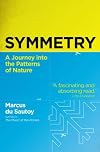
Symmmetry: A Journey Into the Patterns of Nature shows a lot of potential. There simply aren't many books targeted to a lay audience exploring the complex concept of symmetry. But does Sautoy deliver a successful and accessible tome outlining symmetry and the nature of mathematical patterns?
Pros: Well designed cover; Interesting topic; Fusion of math & memoir
Cons: Condescending tone; Frequent redundancies; Lack of preface
Like most recent science and math books, Symmetry is divided into chapters with accurate and descriptive subheadings within each chapter. There are twelve chapters in all, each titled with a different month, representing the author's personal journey to turning 40 and beyond.
While this is a somewhat novel arrangement for a math book, what Symmetry lacks is a preface. A preface is much appreciated at the outset of a work of non-fiction. The preface typically serves to introduce the topic at hand, as well as to provide a helpful lesson to the reader regarding any technical terms and jargon necessary to the understand the remainder of the book.
Despite the lack of a preface, Sautoy does briefly define, or provide an illustration for, each of the higher level mathematical terms as they are discussed. However, even with this assistance from the author some concepts are just too advanced for a general popular readership.
One such concept is the idea of greater than three-dimensional objects and space. While this concept may indeed be too difficult for all show more of Symmetry's readers to grasp, Sautoy's condescending tone when discussing multi-dimensional objects is wholly unnecessary and made me want to put the book down and not pick it up again.
Another flaw impairing the overall readability of Symmetry: A Journey Into the Patterns of Nature is the repetitiveness of certain observations from Sautoy's mentors. While these observations are undoubtably important to Sautoy and to the concept at hand, Symmetry's audience should be given some credit. It is a rare reader that forgets what occured in Chapter 1 before completing Chapter 2, and likewise for Chapters 2 and 3.
Symmetry is also nearly entirely lacking in footnotes but it does have an endnotes and a futher reading section at its conclusion which could be helpful for higher-level math students doing research projects.
This book is only recommended for those with an advanced understanding of higher level mathematics and readers with a high degree of patience who can overlook a condescending tone and dull repetition. show less
Pros: Well designed cover; Interesting topic; Fusion of math & memoir
Cons: Condescending tone; Frequent redundancies; Lack of preface
Like most recent science and math books, Symmetry is divided into chapters with accurate and descriptive subheadings within each chapter. There are twelve chapters in all, each titled with a different month, representing the author's personal journey to turning 40 and beyond.
While this is a somewhat novel arrangement for a math book, what Symmetry lacks is a preface. A preface is much appreciated at the outset of a work of non-fiction. The preface typically serves to introduce the topic at hand, as well as to provide a helpful lesson to the reader regarding any technical terms and jargon necessary to the understand the remainder of the book.
Despite the lack of a preface, Sautoy does briefly define, or provide an illustration for, each of the higher level mathematical terms as they are discussed. However, even with this assistance from the author some concepts are just too advanced for a general popular readership.
One such concept is the idea of greater than three-dimensional objects and space. While this concept may indeed be too difficult for all show more of Symmetry's readers to grasp, Sautoy's condescending tone when discussing multi-dimensional objects is wholly unnecessary and made me want to put the book down and not pick it up again.
Another flaw impairing the overall readability of Symmetry: A Journey Into the Patterns of Nature is the repetitiveness of certain observations from Sautoy's mentors. While these observations are undoubtably important to Sautoy and to the concept at hand, Symmetry's audience should be given some credit. It is a rare reader that forgets what occured in Chapter 1 before completing Chapter 2, and likewise for Chapters 2 and 3.
Symmetry is also nearly entirely lacking in footnotes but it does have an endnotes and a futher reading section at its conclusion which could be helpful for higher-level math students doing research projects.
This book is only recommended for those with an advanced understanding of higher level mathematics and readers with a high degree of patience who can overlook a condescending tone and dull repetition. show less
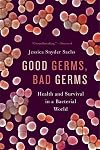
Good Germs, Bad Germs: Health and Survival in a Bacterial World, by Jessica Snyder Sachs, is an exploration of humans' interactions with bacteria throughout time with an emphasis on modern history and developments of the twentieth and twenty-first centuries, such as the widespread use of antibiotics in people and animals for both therapeutic and non-therapeutive, or preventative, measures.
The book's prologue begins with a narrative about Ricky Lannetti and his battle with antibiotic resistant MRSA, a particularly destructive strain of Staph. This narrative begins Sach's exploration of how humans and bacteria coexist and how this once symbiotic relationship of man and bug is transforming with the development of new antibiotics and evolving bacteria.
Sach explores stories of patients infected with bacteria, patients who use bacteria as part of a CAM (Complementary and Alternative Medicine) treatment, doctors who developed and are developing new antibiotics, food companies exploring the use of probiotics in their products, and microbiologists who are discovering how bacteria evolve, share information, and develop antibiotic resistance.
Unlike many non-fiction science books, such as The Brain That Changes Itself: Stories of Personal Triumph from the Frontiers of Brain Science (James H. Silberman Books), Good Germs, Bad Germs is organized into seven distinct parts plus a very brief coda, rather than the standard chapters that readers have come to expect.
Sachs' book begins show more with a brief glossary of seven key terms used throughout the book. The glossary explains these sometimes complex parts of scientific jargon in laymen's terms.
Each of the seven parts in the main section of the book are well-organized and each part includes specific and well researched examples with copious supporting endnotes.
The glossary, coupled with Sachs' accessible writing and concise well titled sections within each part, makes her ideas available to readers of all levels and backgrounds. A specialized advanced degree in science isn't necessary to enjoy reading Good Germs, Bad Germs.
This book is recommended for anyone concerned with the proliferation of antibiotics in our bodies and in our food. Hopefully this book will allow patients to make better informed decisions regarding their use of broad spectrum antibiotics for common ailments and maladies.
Good Germs, Bad Germs is also recommended reading for high school and college students considering majors or careers in the biological sciences, specifically microbiology. show less
The book's prologue begins with a narrative about Ricky Lannetti and his battle with antibiotic resistant MRSA, a particularly destructive strain of Staph. This narrative begins Sach's exploration of how humans and bacteria coexist and how this once symbiotic relationship of man and bug is transforming with the development of new antibiotics and evolving bacteria.
Sach explores stories of patients infected with bacteria, patients who use bacteria as part of a CAM (Complementary and Alternative Medicine) treatment, doctors who developed and are developing new antibiotics, food companies exploring the use of probiotics in their products, and microbiologists who are discovering how bacteria evolve, share information, and develop antibiotic resistance.
Unlike many non-fiction science books, such as The Brain That Changes Itself: Stories of Personal Triumph from the Frontiers of Brain Science (James H. Silberman Books), Good Germs, Bad Germs is organized into seven distinct parts plus a very brief coda, rather than the standard chapters that readers have come to expect.
Sachs' book begins show more with a brief glossary of seven key terms used throughout the book. The glossary explains these sometimes complex parts of scientific jargon in laymen's terms.
Each of the seven parts in the main section of the book are well-organized and each part includes specific and well researched examples with copious supporting endnotes.
The glossary, coupled with Sachs' accessible writing and concise well titled sections within each part, makes her ideas available to readers of all levels and backgrounds. A specialized advanced degree in science isn't necessary to enjoy reading Good Germs, Bad Germs.
This book is recommended for anyone concerned with the proliferation of antibiotics in our bodies and in our food. Hopefully this book will allow patients to make better informed decisions regarding their use of broad spectrum antibiotics for common ailments and maladies.
Good Germs, Bad Germs is also recommended reading for high school and college students considering majors or careers in the biological sciences, specifically microbiology. show less
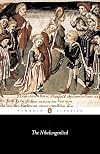
The Nibelungenlied was one of many epics assigned for my World Literature class. It is a German war epic thought to be written in the 13th century although its author is unknown. I haven't read any other translations of this epic poem but A.T. Hatto's prose translation kept me interested throughout the entire story with a good balance of dialogue and action. This story of rivalry and love contains many twists and turns, none of which I want to mention for fear of giving away too much, but I will say it is a story that will surprise you with each new page. What I found particularly helpful with this Penguins Classics edition is The Glossary of Characters' Names located in the back of book.
The Edge of Physics: A Journey to Earth's Extremes to Unlock the Secrets of the Universe by Anil Ananthaswamy
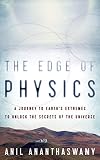
The Edge of Physics is a highly enjoyable non-fiction book that explores physics through geography and travel. Ananthaswamy travels to some of the most incredibly extreme places on Earth to visit the experiments and projects that are hoping to provide new insights in the field of particle physics.
The entire book has a nice colloquial tone to it which makes the hard science understandable to lay readers by combining the most scientific explanations with the author's personal experiences and thoughts. Each chapter features a visit to one unusual location, from California's Mt. Wilson to the Franco-Swiss border where CERN's Large Hadron Collider lays miles underground.
I thought this book was easier to read than Leon Lederman's The God Particle: If the Universe Is the Answer, What Is the Question?. The Edge of Physics doesn't provide the same in-depth scientific explanations that Lederman's book offer, but both books are very interesting and informative reads. Ananthaswamy's descriptions and reflections on the places he visits outshine his explanations of the science he witnesses. The explanations of particle physics that Ananthaswamy provides should be understandable to any reader with a bachelor's degree but for readers who are wholly unfamiliar with science and physics the book offers two detailed appendices for reference.
The Edge of Physics is a unique science book as it examines the foundations of modern science, the potential impact on future science due to the show more current experiments and new scientific theories being developed, how the experiments are being done, and where all this amazing science is taking place both in the US and abroad. Because this book relies heavily on travel and location it also makes mention of climate change and global warming as these changes can adversely effect the experiements and projects he visited.
I would recommend this book to high schoolers thinking about majoring in science once they get to college, readers who enjoyed The God Particle, fans of extreme travel, and people who are curious about the Large Hadron Collider as fears about the LHC have been widely publicized in the media and the information provided in this book may help to allay some of those fears.
I checked this book out from the library and I'm glad I checked it out rather than purchasing it because it doesn't have a high re-read value for me, but I don't work in the scientific field and am not engaged in any scientific research. For researches, science majors and those working in the scientific industries I think this book is well worth purchasing. show less
The entire book has a nice colloquial tone to it which makes the hard science understandable to lay readers by combining the most scientific explanations with the author's personal experiences and thoughts. Each chapter features a visit to one unusual location, from California's Mt. Wilson to the Franco-Swiss border where CERN's Large Hadron Collider lays miles underground.
I thought this book was easier to read than Leon Lederman's The God Particle: If the Universe Is the Answer, What Is the Question?. The Edge of Physics doesn't provide the same in-depth scientific explanations that Lederman's book offer, but both books are very interesting and informative reads. Ananthaswamy's descriptions and reflections on the places he visits outshine his explanations of the science he witnesses. The explanations of particle physics that Ananthaswamy provides should be understandable to any reader with a bachelor's degree but for readers who are wholly unfamiliar with science and physics the book offers two detailed appendices for reference.
The Edge of Physics is a unique science book as it examines the foundations of modern science, the potential impact on future science due to the show more current experiments and new scientific theories being developed, how the experiments are being done, and where all this amazing science is taking place both in the US and abroad. Because this book relies heavily on travel and location it also makes mention of climate change and global warming as these changes can adversely effect the experiements and projects he visited.
I would recommend this book to high schoolers thinking about majoring in science once they get to college, readers who enjoyed The God Particle, fans of extreme travel, and people who are curious about the Large Hadron Collider as fears about the LHC have been widely publicized in the media and the information provided in this book may help to allay some of those fears.
I checked this book out from the library and I'm glad I checked it out rather than purchasing it because it doesn't have a high re-read value for me, but I don't work in the scientific field and am not engaged in any scientific research. For researches, science majors and those working in the scientific industries I think this book is well worth purchasing. show less
Eating Animals was at times very difficult to read. Not because the vocabulary is challenging and not because it is poorly written, but rather because it is difficult to really know where our food comes from and to read about and understand how factory farming works. But despite the difficulty with reading this book and being able to enjoy my dinner later that night, I'm glad I read this book. I don't consume a lot of meat, at least not compared to your typical American, and after reading this book I consume even less meat, however, regardless of the amount of meat you do or do not consume I think Eating Animals is an important book to read because without an understanding of our current food system it is impossible to understand why change is necessary and why changing our food system could have a very positive impact on our planet.
Eating Animals also led me to read Animal, Vegetable, Miracle by Barbara Kingsolver which is another very worthwhile book about food and how we eat and another must read for every American with an appetite.
Eating Animals also led me to read Animal, Vegetable, Miracle by Barbara Kingsolver which is another very worthwhile book about food and how we eat and another must read for every American with an appetite.
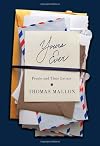
Yours Ever was not the book I expected it to be. I thought it would be a collection of letters from a variety of people and characters throughout history along with brief asides, historical commentary, and the like by Thomas Mallon. Instead Yours Ever is organized in thematic chapters on nine broad topics like Friendship, Advice, and War. Also, it does not include full reprints of letters, but instead utilizes block quotes interspersed with historical information and commentary about the function of letters in that particular period or setting.
While it was not what I expected it to be at all, it is still a lovely read. The thematic organiztion works well as Mallon is able to combine a variety of historical people and settings within one chapter, and it is marvelous to see the similarities and differences between two nineteenth century African-American women writing to one another and two wealthy American and European women writing to each other in the twentieth century.
Yours Ever is lengthy and full of details without being long-winded. I found myself rereading certain quotes and passages from letters that were especially memorable. Mallon's historical details are also spot on. They provide enough context to gain a greater understanding of the letters and their writers without being distracting from the subject of letter writing.
While I very much enjoyed reading this book I'm glad I borrowed it from the library instead of purchasing it; I'm not sure that it has a high show more reread value. However, if I were still enrolled in grad school the reread and research potential would be greatly increased and it would then be a book worth purchasing.
Also, the extensive bibliography is great if you are looking for further reading on this subject. show less
While it was not what I expected it to be at all, it is still a lovely read. The thematic organiztion works well as Mallon is able to combine a variety of historical people and settings within one chapter, and it is marvelous to see the similarities and differences between two nineteenth century African-American women writing to one another and two wealthy American and European women writing to each other in the twentieth century.
Yours Ever is lengthy and full of details without being long-winded. I found myself rereading certain quotes and passages from letters that were especially memorable. Mallon's historical details are also spot on. They provide enough context to gain a greater understanding of the letters and their writers without being distracting from the subject of letter writing.
While I very much enjoyed reading this book I'm glad I borrowed it from the library instead of purchasing it; I'm not sure that it has a high show more reread value. However, if I were still enrolled in grad school the reread and research potential would be greatly increased and it would then be a book worth purchasing.
Also, the extensive bibliography is great if you are looking for further reading on this subject. show less
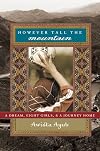
Awista Ayub's However Tall the Mountain is an inspiring tale of her own experiences as an Afghan-American and the opportunity and challenges she provides to eight Afghani girls.
Ayub's account of the events is neither too heart-warming or too melancholy. Events are recounted in a realistic and pratical manner showcasing both the positive and negative effects of the work on herself and her eight proteges. The best parts of the books are those that intersperse the changes Ayub personally experiences with the changes the young female athletes experience.
Having read Three Cups of Tea: One Man's Mission to Promote Peace...One School at a Time it was easier to understand the challenges the eight girls from Afghanistan faced. Ayub casually mentions one of the girl's journey through the Khyber Pass from Pakistan to Afghanistan without providing much detail, but with the detailed descriptions Mortenson provided in his book of the geography of the region, it is much easier to grasp the truly grueling and difficult nature of her journey.
The willingness of the eight girls to risk being ostracized or punished for playing soccer is courageous. Several of them realize that they are not taking these risks only for themselves, but also so that other Afghan women and girls can have the same opportunity as well.
This book is an excellent pre-Olympic or pre-World Cup read for adults, high school students, soccer players, and anybody wanting to better understand the difficulties faced by show more female athletes in developing countries and societies. show less
Ayub's account of the events is neither too heart-warming or too melancholy. Events are recounted in a realistic and pratical manner showcasing both the positive and negative effects of the work on herself and her eight proteges. The best parts of the books are those that intersperse the changes Ayub personally experiences with the changes the young female athletes experience.
Having read Three Cups of Tea: One Man's Mission to Promote Peace...One School at a Time it was easier to understand the challenges the eight girls from Afghanistan faced. Ayub casually mentions one of the girl's journey through the Khyber Pass from Pakistan to Afghanistan without providing much detail, but with the detailed descriptions Mortenson provided in his book of the geography of the region, it is much easier to grasp the truly grueling and difficult nature of her journey.
The willingness of the eight girls to risk being ostracized or punished for playing soccer is courageous. Several of them realize that they are not taking these risks only for themselves, but also so that other Afghan women and girls can have the same opportunity as well.
This book is an excellent pre-Olympic or pre-World Cup read for adults, high school students, soccer players, and anybody wanting to better understand the difficulties faced by show more female athletes in developing countries and societies. show less
Duality is the debut novel from up and coming fantasy author Aaron Chumbris. This first work firmly sets him in the realm of David Eddings and other first-rate science-fiction and fantasy writers who enchant readers with epic tales of life, loss, and struggle in worlds very different from our own but with societies and situations strikingly similar to our own experiences.
Duality is set in a physical world like our Earth but with some additions most Earth-dwelling citizens are unaccustomed to, namely floating continents, teleporters and supernatural powers. Society is divided by both ethnicity and geography and the ongoing dispute between Mendora and Solei has undertones of current global conflicts, but Duality is far more engaging than our nightly world news.
Cyrus, Duality's young protagonist, grows up in the first half of the novel, encountering the beginnings of his epic struggle, which continues until the very last page. Cyrus battles his upbringing, his past, his peers, and his demonic nemesis while learning to harness his special powers of Animus Activation.
While the beginning of Duality is slow, as all science-fiction and fantasy novels are with the set-up and introduction of a new set of characters, settings, and the unique properties of their imagined worlds, the pace picks up after chapter six and the action continues to rise and increase throughout the book.
I read the novel in approximately two days and enjoyed every minute of it and am eagerly anticipating show more the second novel in the planned trilogy.
I would recommend this book to fans of David Eddings, manga readers, and anime watchers. Duality is appropriate for both adult and young adult readers. show less
Duality is set in a physical world like our Earth but with some additions most Earth-dwelling citizens are unaccustomed to, namely floating continents, teleporters and supernatural powers. Society is divided by both ethnicity and geography and the ongoing dispute between Mendora and Solei has undertones of current global conflicts, but Duality is far more engaging than our nightly world news.
Cyrus, Duality's young protagonist, grows up in the first half of the novel, encountering the beginnings of his epic struggle, which continues until the very last page. Cyrus battles his upbringing, his past, his peers, and his demonic nemesis while learning to harness his special powers of Animus Activation.
While the beginning of Duality is slow, as all science-fiction and fantasy novels are with the set-up and introduction of a new set of characters, settings, and the unique properties of their imagined worlds, the pace picks up after chapter six and the action continues to rise and increase throughout the book.
I read the novel in approximately two days and enjoyed every minute of it and am eagerly anticipating show more the second novel in the planned trilogy.
I would recommend this book to fans of David Eddings, manga readers, and anime watchers. Duality is appropriate for both adult and young adult readers. show less
The Age of Wonder: The Romantic Generation and the Discovery of the Beauty and Terror of Science (Vintage) by Richard Holmes
Oh my goodness! I'm a fast reader and this book took me forever to read (I returned it a week overdue after renewing it once for an additional three weeks) but it was worth every minute.
Holmes' exploration of how the sciences began to flourish during the Romantic generation is incredibly interesting and covers everything from astronomy to anthropology, biology to chemistry, and everything in between. At no point was I ever bored by this book and everytime I put it down I looked forward to opening it up again.
Now, to be honest with you, I'm a big fan of non-fiction books and a big fan of science books. If I weren't already a big fan of these types of books I'm not sure I would've lasted through the entire thing. It is a long book with a lot of information. But for geeky people like me? It's perfect!
Holmes' exploration of how the sciences began to flourish during the Romantic generation is incredibly interesting and covers everything from astronomy to anthropology, biology to chemistry, and everything in between. At no point was I ever bored by this book and everytime I put it down I looked forward to opening it up again.
Now, to be honest with you, I'm a big fan of non-fiction books and a big fan of science books. If I weren't already a big fan of these types of books I'm not sure I would've lasted through the entire thing. It is a long book with a lot of information. But for geeky people like me? It's perfect!
My Fair Lazy: One Reality Television Addict's Attempt to Discover If Not Being A Dumb Ass Is the New Black, or, a Culture-Up Manifesto by Jen Lancaster
Imagine if Chelsea Handler toned it down a bit, and was a bit funnier and you'd have Jen Lancaster. Lancaster's cultural explorations and intellectual journeys were fun to follow along with and My Fair Lazy made me feel a whole lot better about the amount of reality TV I watch.
Lancaster also comes across as the girl next door. I sure don't know much about theater or how to behave properly at a celebrity studded gathering but I found myself rooting for her and wanting her to succeed and wanting her to do well and make a name for herself all while not making a fool of herself.
I thoroughly enjoyed My Fair Lazy and am looking forward to reading some of Lancaster's other memoirs.
Lancaster also comes across as the girl next door. I sure don't know much about theater or how to behave properly at a celebrity studded gathering but I found myself rooting for her and wanting her to succeed and wanting her to do well and make a name for herself all while not making a fool of herself.
I thoroughly enjoyed My Fair Lazy and am looking forward to reading some of Lancaster's other memoirs.
When I read a review of the Baltimore Book Festival held this past September I had to read it twice because I couldn't believe that there was actually a panel dedicated to Zombies Vs. Unicorns and then I realized it was actually a real book and it's a really good book at that! I'm definitely on Team Zombie but the unicorn stories are interesting in their own weird sunshine and rainbows way.
For me the highlight of this short story collection is the stories about zombies and oh, so many different types of zombies. There are compassionate zombies who are somewhat considerate about the fact that they hunger for brains, there are the shambling diseased zombies intent on taking over the world, there are zombies who are just bored and tired of hanging out with other zombies, and then there are your typical run of the mill zombies who just want to eat your brains. Mmm! Brains!
Each story offers a different interpretion on zombies (or unicorns) and each story is equally delightful. This is a wonderful offbeat book for fans of fantasy books and anyone looking for a good laugh or squirm (because yes, some parts did make me a bit squeamish).
For me the highlight of this short story collection is the stories about zombies and oh, so many different types of zombies. There are compassionate zombies who are somewhat considerate about the fact that they hunger for brains, there are the shambling diseased zombies intent on taking over the world, there are zombies who are just bored and tired of hanging out with other zombies, and then there are your typical run of the mill zombies who just want to eat your brains. Mmm! Brains!
Each story offers a different interpretion on zombies (or unicorns) and each story is equally delightful. This is a wonderful offbeat book for fans of fantasy books and anyone looking for a good laugh or squirm (because yes, some parts did make me a bit squeamish).